Swimming lakes, dusty trails, ticks, and a coat that never stops shedding: summer grooming has its own demands. Here's the routine that gets your dog's coat, ears, paws, and skin through the warm season, including the five-step routine for after a day at the lake.
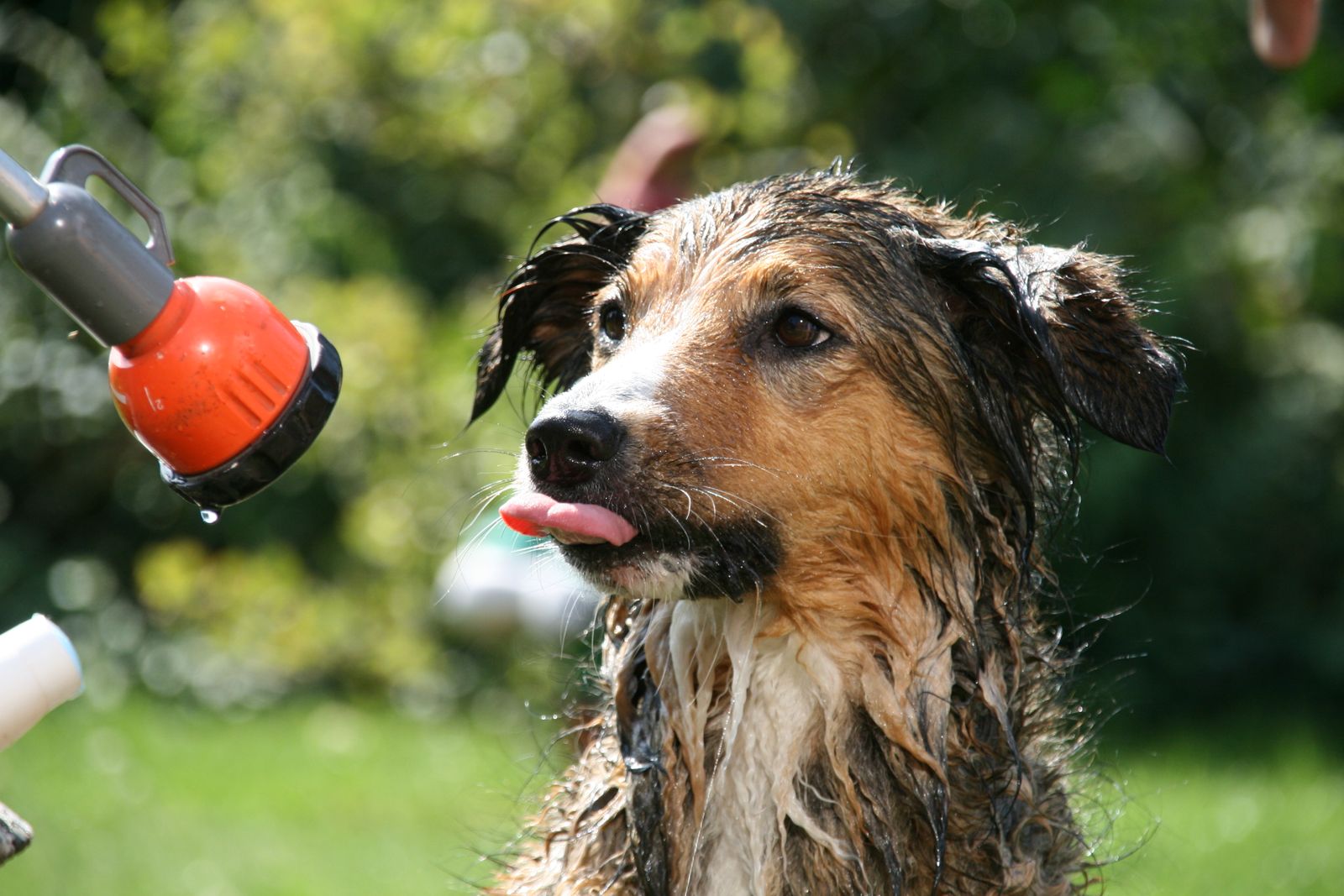
Summer with a dog smells like sunscreen, lake water, and, let's be honest, wet dog in the trunk of the car. It's the best season to be outside together, and also the one where fur flies off in clumps, ears stay damp after every swim, and a tick could be hiding in any blade of grass.
e've covered the big summer dangers like heatstroke and hot cars elsewhere. This post is about the everyday stuff instead: the grooming routine that gets your dog through the warm months. What actually helps the coat, why drying matters more than you'd think, and how five simple steps after a day at the lake can turn into a habit.
Summer grooming comes down to this: comb out loose undercoat regularly before it mats, because only an unmatted coat can do its job as insulation. After a swim in a lake, the sea, or a pool, rinse your dog off with clear water and dry them thoroughly, otherwise the damp coat turns into a breeding ground for skin inflammation.
On top of that come three quick checks that pair well with brushing: ears after swimming, paws after the walk, ticks every day. It sounds like a lot, but once it's a habit it only takes a few minutes. You'll find the whole routine as a step-by-step guide further down.
Many double-coated dogs shed an impressive amount of undercoat in spring and early summer. Anyone who has brushed a German Shepherd, Golden Retriever, or Husky through the month of May knows the feeling: it seems like you could build two more dogs out of what comes off one.
This combing out is about more than keeping fur off your floors. Loose, dead undercoat that stays in the fur mats over time, and matting is doubly bad news in summer: it traps heat against the body and blocks the very insulation layer that also protects your dog from the heat. A well-groomed, breathable double coat works in both directions: it keeps warmth in during winter and keeps oven-like summer air off the skin.
One thing worth clarifying: the brush doesn't replace the clippers, it makes them unnecessary for most dogs. You can read the full case for why a summer shave usually does more harm than good on double coats in our guide to shaving your dog in summer. For the combing itself, two tools are enough: an undercoat rake or a coarse comb for the deep layer, and a slicker brush to finish. During shedding season, every other day is a good rhythm, after that, once a week is usually enough depending on the coat.
Two special cases: curly and Doodle coats don't shed the same way, they just keep growing, which means they mat that much faster. You'll find the matching routine in our guide to coat care for Poodles, Maltipoos, and other curly breeds. And if you run into a solid mat while brushing, remove it dry before the next bath. Never cut mats with scissors: a wet mat tightens up and sits even closer to the skin afterward.
The good news first: a dog who swims in the lake regularly doesn't need constant shampoo baths because of it. Shampooing too often strips the skin of its natural oils and dries it out. For most dogs, a proper bath every few weeks to a few months is plenty, whenever odor or dirt actually calls for one.
What almost always makes sense in summer, though, is rinsing with clear water. Salt water from the sea, chlorine from the kiddie pool, and algae or bacteria residue from lake water don't belong in the coat, they irritate the skin and get licked off during grooming. Garden hose or shower, lukewarm, no shampoo, done. For what to watch out for on the outing itself, including blue-green algae and limber tail, check our guide to swimming rules for lakes and the sea.
If it does turn into a shampoo bath, please use dog shampoo. Human shampoo is formulated for our noticeably more acidic skin, while dog skin sits close to neutral, at a pH of about 6.2 to 7.5, and is also thinner. A product made for people, even a gentle baby shampoo, can disrupt your dog's skin barrier.
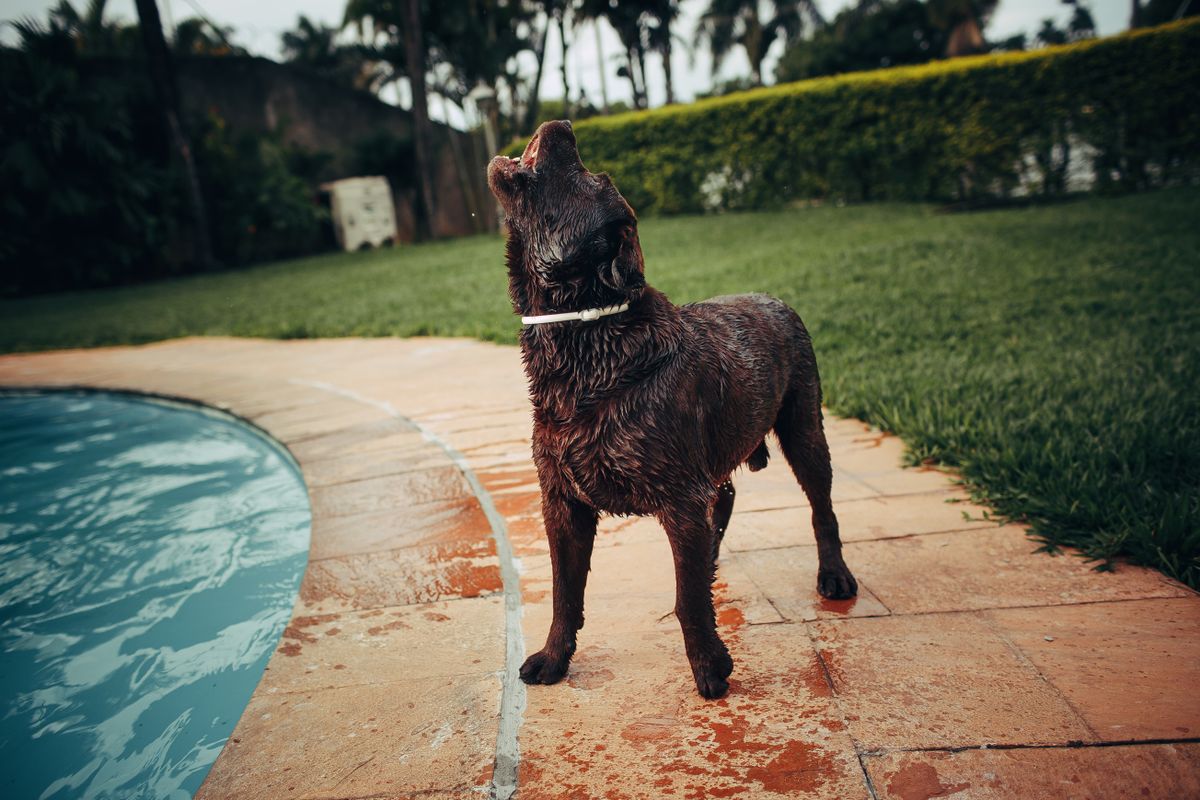
Be honest: after a day at the lake, your dog shakes three times and the wind from the car ride does the rest, right? That's exactly where one of the most common summer skin problems starts. Moisture stays trapped in dense fur for hours, and a warm, damp environment right against the skin is the perfect starting condition for a hot spot, a painful, oozing patch of skin inflammation that can grow from coin-sized to palm-sized within a few hours. For how to spot one and what to do next, see our guide to hot spots on dogs.
Prevention is unglamorous: dry your dog thoroughly. Rub them down firmly with a towel, especially in spots where the coat is dense and gets poor airflow: armpits, groin, neck folds, the area around the ears, and on fluffy dogs, the feathering on the back legs too. If you use a blow dryer, keep it on the low or cool setting and hold it at a distance, since dog skin burns faster than ours. On warm days, the rest can air dry, as long as the critical dense spots are already towel dry.
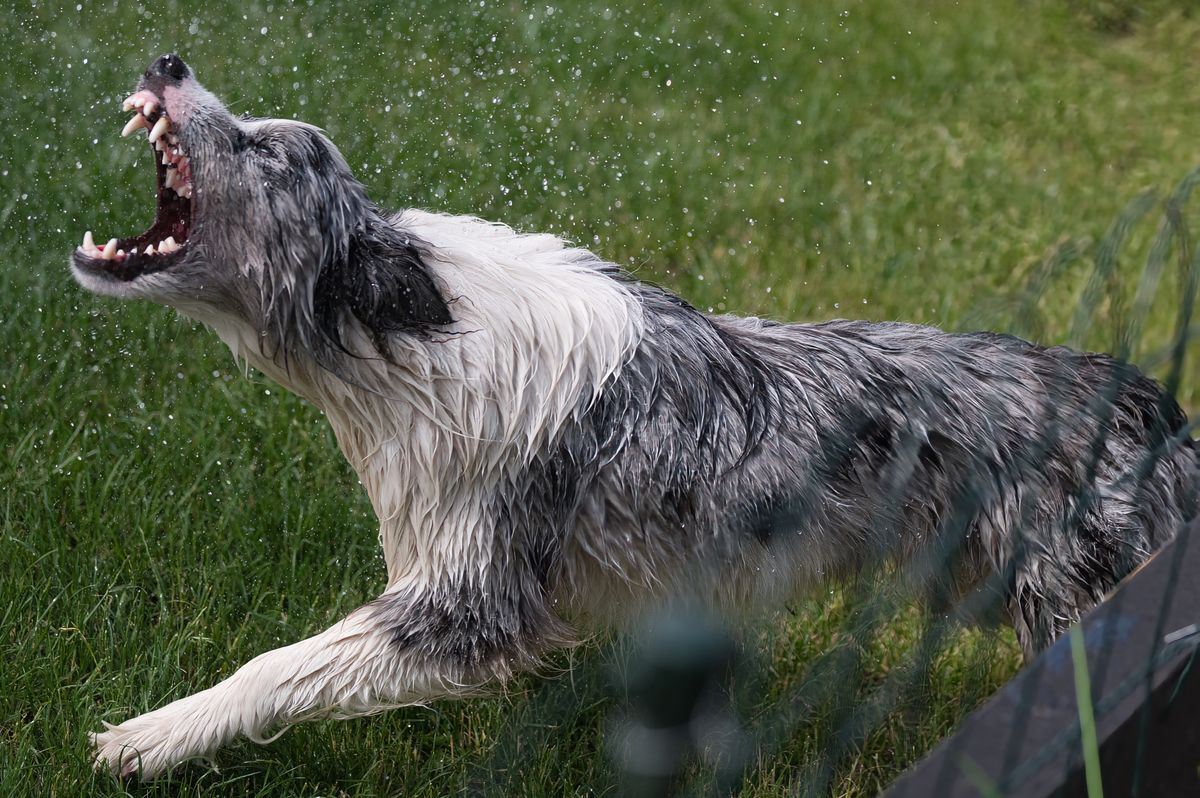
Water in the ear canal is one of the classic triggers for otitis externa, an outer ear infection. Yeast and bacteria multiply much more easily in a warm, damp, poorly ventilated ear canal, and dogs with floppy ears or heavily furred ear canals are hit especially often, since almost no air circulates under the ear flap.
The routine for this is deliberately simple. After every swim day: lift the ear flap, dry the inside of the flap and the visible entrance with a soft cloth or cosmetic pad, then give it a quick sniff and look. Healthy ears are pale pink and barely smell of anything. A sweetish or yeasty smell, redness, brown discharge, head tilting, or noticeable scratching are reasons to see a vet, not cases for home remedies. Our guide to itchy ears in dogs explains what can be behind itchy ears and why it isn't always an allergy.
And because it matters so much, let's be completely clear about it: never use cotton swabs in your dog's ear canal. They push discharge deeper in and can injure the eardrum.
Summer ground is hard on paws: sun-baked asphalt, hot sand, dry stubble fields. You might already know the basic rule for hot surfaces from our paw protection guide: if you can't hold the back of your hand on the ground pain-free for seven seconds, it's too hot for your dog's paws too.
For the grooming routine, that means a quick paw check after every walk. Grass awns, those sharp, spiky grass seeds that can burrow through the skin, tend to get stuck between the toes, and constant licking at one paw is the typical warning sign here. Dry, cracked paw pads can get a dab of paw balm in the evening, since supple pads handle heat and rough ground much better.
When it comes to nails, summer actually works in your favor: lots of movement on hard ground wears them down naturally. You still can't fully rely on it, though, since light dogs and dogs who mostly walk on grass tend to grow more nail than they wear off. The kitchen floor click test will tell you where you stand, and the full how-to, including technique for dark nails, is in our guide to trimming a dog's nails.
Your daily brushing and cuddle session has a second job in summer: it's your early warning system. As your hands move through the coat, you'll notice ticks, bald patches, scabs, and tiny orange specks on the paws and belly before they turn into a bigger problem.
On ticks specifically, the European parasitology association ESCCAP recommends a daily check during the warm season, with one important addition: a daily tick check complements tick prevention, it never replaces it. A tick often isn't found until hours or days later, and by then it may already have transmitted pathogens. Feel around the favorite spots: head, ears, neck, armpits, groin, and between the toes. If one's already attached, our guide to removing a tick from your dog walks you through it. If your dog is mainly itchy on the paws and belly and you spot orange dust there, it's worth reading our guide to harvest mites on dogs.
While brushing, you naturally get a look at the spots where your dog carries little fur: the bridge of the nose, ear tips, belly, and anywhere that's been shaved. Those are exactly the spots where dogs can get sunburned, especially dogs with light or thin fur and pink skin. For long days in the sun, sunscreen made specifically for dogs exists, and our guide to sunburn in dogs covers which spots are at risk, which products work, and when redness needs a vet visit. It's also the reason freshly shaved dogs should become shade fans in the height of summer.
To turn all of this into a habit, here's the complete summer routine for after a swim or a hike, in the order that works best in practice:
Once it's a habit, the whole thing takes less than ten minutes, and most dogs treat it as an extended petting session. If you don't want to keep the rhythm in your head: you can set a reminder for grooming checks in the Souldog app, so the routine sticks even in vacation chaos.
Summer grooming isn't a science, it's a handful of small habits: brush, rinse, dry, check. Your dog gets petting with a purpose, and you catch things while they're still small: the tick before it attaches, the damp patch before it turns into a hot spot.
For what the full at-home grooming session with all seven stations looks like, check our guide to grooming your dog at home. And for everything else summer has in store, our big overview of summer dangers for dogs has you covered. But for now: head to the lake. The towel's already waiting.
 Souldog