New Year's Eve is not decided on December 31st, it is decided in the days before. Here is the plan: vet appointment, walk timing, safe room, chip check, and what still counts as normal on January 1st.
id December, at the weekly farmers market, the fireworks stand is already set up. Someone ahead of you in line mentions that their dog jumped the garden fence last year. You nod, buy your mulled wine, think briefly of your own dog who shakes through every New Year's Eve, and push the thought away. There is still time before the 31st.
Not quite as much as it feels like. The things that actually help your dog on New Year's Eve, a prescription, a secured safe room, an up to date chip entry, almost all need lead time. Wait until December 30th and the important windows have already closed. Here is the plan, in order, from the days before to the morning after. We already covered the actual fear training, the weeks to months of getting a dog used to bang sounds, in our article on fear of fireworks in dogs. This piece is the organizational companion to that one: what needs to happen when, so the evening itself runs as calmly as possible.
The order is not arbitrary. Medication needs a trial period that cannot be made up for on New Year's Eve itself. The urge to flee is strongest in the hours when it is already getting dark outside but nobody has started with the fireworks yet. And the after effects often only show up once everyday life has long resumed.
The reason for the lead time is medical, not bureaucratic. Every anti-anxiety medication for noise fear has to be individually tailored, and that can only be figured out on a firework free day. Give the first dose on December 31st for the first time, and you are testing the drug and the trigger at once, with no second chance left that evening if something is off. Veterinary sources such as VCA Animal Hospitals explicitly recommend an appointment two to four weeks before firework season, including a test dose on an ordinary day. With benzodiazepines such as alprazolam, roughly one in ten dogs shows a paradoxical reaction and becomes more agitated instead of calmer. Nobody wants to discover that for the first time on New Year's Eve itself.
For dogs with pronounced, situational noise anxiety, there is now a gel containing the active ingredient dexmedetomidine, the only medication specifically authorized in the EU for this indication. It is applied to the cheek pouch between gum and lip, works through the oral mucosa, and should be given 30 to 60 minutes before the expected noise. A repeat dose is possible at the earliest after two hours, and a dog that is still visibly sedated should not get another dose. Behavioral medicine also uses drugs like trazodone or gabapentin off label, which take effect within one to two hours. Which drug, dose, and combination fits your dog is a decision that belongs entirely to your vet. No human medication, no leftovers from your own medicine cabinet, no dosing by feel.
On December 31st itself, the afternoon matters most. Take the last, generous walk before dusk sets in, on quiet routes, far from places where testing already starts early. After that, the dog stays inside. This one point is often underestimated: stray fireworks now go off days before New Year's Eve, not just at midnight, and a dog that startles on an open street can twist out of a collar it has worn without issue for years.
That is why a stricter rule applies for this particular afternoon: leash on, even for dogs that are normally reliable off leash at home, and the security doubled up. A harness with snug, well fitted straps combined with a second connection to the collar catches exactly the moment a panicked dog breaks free of a single point of attachment. A collar alone is not enough on this day, because a raised, tense neck can slip through a clip a dog never touches on any other day. Anyone with a garden should check the fence and gate deliberately once more. A gap that never mattered in summer becomes an escape route this evening.
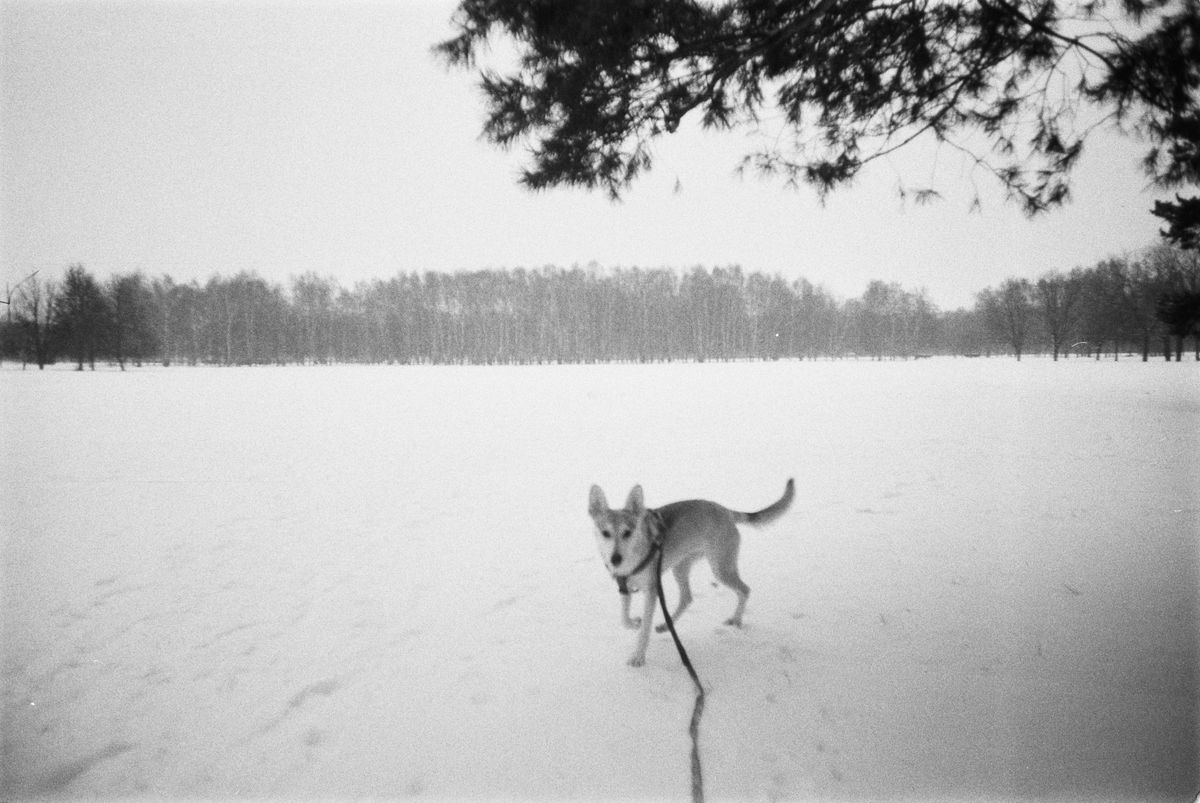
Once it gets dark, the retreat space moves indoors for good. Many dogs pick their own dark, sheltered corner: the bathroom, the space under a desk, a den built from blankets. Set this spot up in the afternoon already, before stress levels rise: a soft surface, something you have worn recently, water within reach. Keep windows and shutters closed, which dampens not just the sound but also the effect of the light flashes. A radio, television, or steady background noise helps cover the sharpest bang sounds.
Stay close if your dog seeks that out. Calm petting and a steady voice do not reinforce the fear, that is a myth we address in detail in our article on fear of fireworks in dogs. Your own nervousness does transfer to your dog though, so take a breath before you go to them. One point people forget when guests are over: the front door gets extra attention this evening, and if someone rings the bell, the dog is secured before the door even opens. These brief moments, door open, guests in, fireworks outside, are when most escapes inside the home actually happen.
That figure does not come from a scare campaign, it comes from the annual statistics of TASSO e.V.: on the two days of the 2025 into 2026 New Year transition, 376 dogs and 507 cats were reported missing nationwide in Germany. The 2025 daily average was around 72 dogs, meaning New Year's Eve and Day saw roughly two and a half times the usual rate. Most of the missing animals over the year did find their way back, and according to TASSO that comes down to one unremarkable factor above all: keeping registration data current.
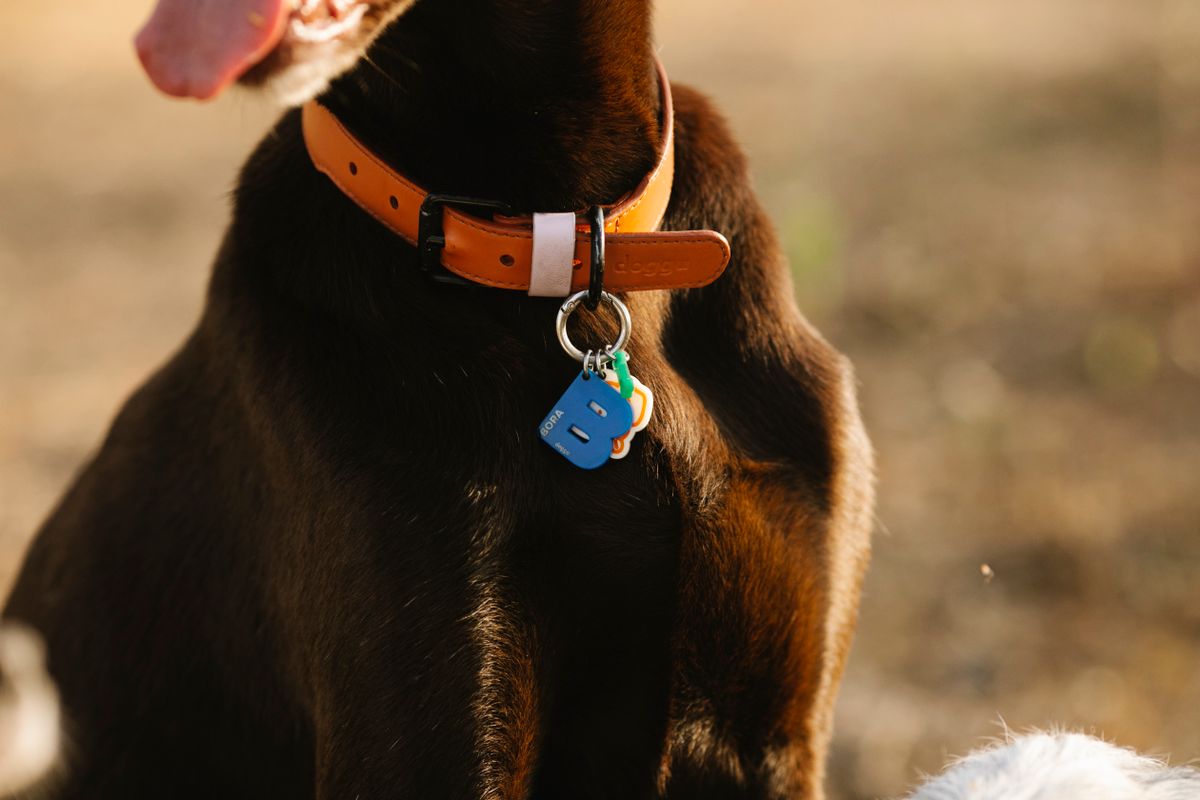
A microchip only stores a number. Without an entry with a pet registry such as TASSO or Findefix, it is worthless to a shelter scanning a found dog. Take five minutes before New Year's Eve to check online whether your phone number and address are still correct, something people easily forget after a move or a change of provider. Germany has no unified nationwide chip requirement, individual federal states regulate this differently in their dog laws. Regardless of the legal side, the practical point stands: add an address tag to the collar with a current phone number. It can be read instantly, no scanner needed, and that is exactly what matters in the first panicked hour after an escape.
Sometimes even the best plan falls short. Your dog pants anyway, drools, shakes all over, or tries to squeeze behind the wardrobe. At that point, only relief matters, not training. Do not force them out of hiding, do not push closeness on them if they do not want it right now, and do not put treats in front of a dog that will not touch them anyway. A dog that has stopped eating is too frightened for positive association, and at that point only calm, dimmed light, and your quiet presence help, if needed right next to their hiding spot without touching them.
If the panic lasts for hours, breathing becomes fast and shallow, or your dog shows signs of self injury such as raw licking or scratching at doors, that is not a situation to wait out. Call the emergency veterinary line at that point. Many practices and clinics stay reachable on New Year's Eve precisely because this call is so common. An already prescribed as needed medication can be given following your vet's instructions in this situation. Everything else belongs in professional hands, not in a spontaneous reach for a home remedy.
If you live in a multi unit building, mention it ahead of time. A note in the stairwell or a quick word to your direct neighbors explains why your dog might bark or whine that evening, and takes off some of the social pressure that otherwise adds to your own tension.
On January 1st the night is over, but your dog does not know that right away. Many dogs seem tired in the morning, sleep longer than usual, or show little appetite, which is normal after a restless, tense night and does not call for a vet visit. Plan a calm morning, with a short, relaxed walk instead of the usual level of activity, and expect stray late fireworks to still make them jump for days.
It looks different if your dog stays jumpy for more than a week, avoids sounds that were never an issue before, or generally withdraws, eats less, and stops playing. That can point to anxiety settling in for good, which rarely resolves on its own. In that case, talk to your vet or a veterinary behaviorist before the pattern sets further. For more on how to read behavior changes in your dog in general, and when they go beyond a normal reaction, see Dog shaking: when it is harmless and when it is not.
If you notice that your dog's firework anxiety is actually part of a bigger pattern, our article on thunderstorm anxiety in dogs covers the parallels to a related but differently triggered noise fear.
Firework anxiety cannot be planned away in a single night, the training for that starts months ahead. But New Year's Eve itself does not have to be a string of coincidences either. Once the vet appointment is set, the registration details are current, and the safe room is ready, all that is left on December 31st is working through your own plan, one point at a time.
In the Souldog app, you can set reminders for the vet appointment and the chip check, and note how your dog responded to this year's preparation. Next year you will already know what worked, and that farmers market thought in December turns into a line on a list instead of a guilty conscience. For an overview of preventive care and dog health topics, see our complete health guide.
 Souldog