The first hot day, your dog is lying flat, and the clippers suddenly look like the obvious answer. For most dogs, though, a summer shave does the opposite of cooling them down. Here is which dog you can safely shave, which one you should not, and what to do instead.
The first really hot day, your dog is lying in the hallway panting, and somewhere in the back of your mind a thought shows up: without all that fur, wouldn't they feel so much better? The clippers are right there in the drawer, after all. Please leave them there, at least until you reach the end of this article. Because for most dogs, a summer shave does the exact opposite of what it is meant to: it strips away the dog's built-in sun and heat protection instead of cooling them down.
t sounds counterintuitive at first. We humans take our jacket off in summer, so surely less fur must feel better for the dog too. The catch: a dog's coat does not work like a sweater. Let us sort this out calmly, so you know exactly what is right for your own dog.
Whether shaving makes sense in summer depends entirely on the coat type. Dogs with a double coat, meaning Huskies, Golden Retrievers, German Shepherds and most fluffy breeds, should not be shaved: their undercoat insulates against heat and the top layer shields against the sun. Take that coat off and the risk of sunburn goes up, and in some dogs it grows back patchy and dull.
Shaving is part of normal grooming only for breeds with a single, continuously growing coat, such as Poodles, Maltese or Doodles. For everyone else, the right summer care is this: comb out the loose undercoat regularly, provide shade and water, and keep the clippers away. And if your dog has already been shaved too short, you will find what helps further down.
The whole mistake comes from one thing we wrongly carry over from our own bodies. Humans sweat all over, our skin is one big air conditioner. A dog's skin is not. A dog has functioning sweat glands essentially only in the paw pads, and their contribution to cooling is small. The rest of the heat leaves through panting, through the moist tongue and airways, plus through the well-supplied ears and face.
That means: whether there are three centimetres of fur on the body or none at all makes little difference to the dog's main cooling system. What does change a great deal is the protection. A double coat has two layers. On top the coarser guard hair, underneath the fine, dense undercoat. Together they hold a still layer of air against the body, and that layer of air slows the exchange of heat in both directions. In winter it keeps body warmth in, in summer it keeps the oven-like air and the sun's radiation out. Veterinary bodies therefore describe the coat as a natural insulating layer whose removal makes the dog more prone to overheating.
On top of that comes the sun protection. The guard hair works like a built-in UV filter. Once it is gone, the sun hits the skin directly. The coat you want to remove is, in summer, more part of the solution than of the problem.
To decide whether your dog may go near the clippers, you only need to answer one question: does it have a double coat or a single coat? That difference is the whole key.
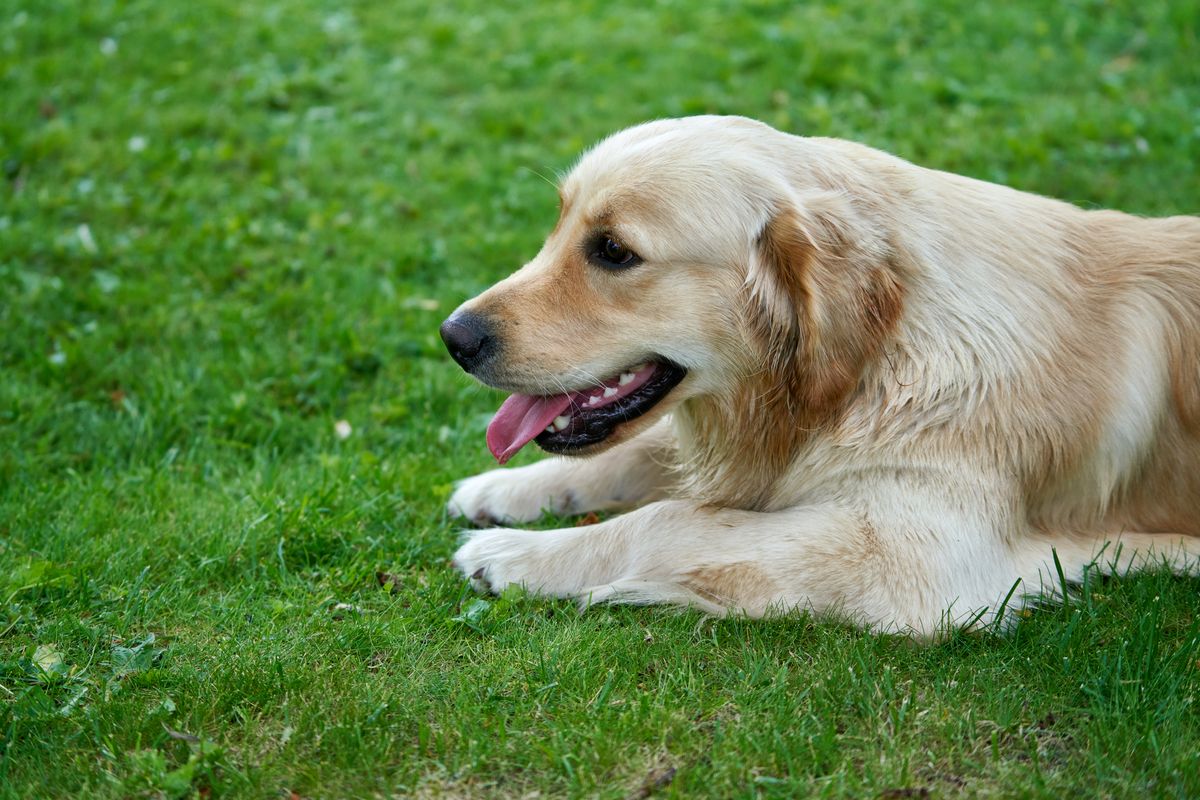
A double coat is what the typical fluffy breeds have. They shed their undercoat twice a year, and then the wool tufts end up all over the house. This group includes, among others, the Husky, Alaskan Malamute, Samoyed, Spitz and Pomeranian, Golden and Labrador Retriever, German Shepherd, Australian Shepherd, Border Collie, Bernese Mountain Dog, Chow Chow, Newfoundland and Corgi. Their coat is built as a seasonal protection system, not to be cut down completely.
A single coat belongs to dogs without a real insulating undercoat, whose hair instead keeps growing continuously, much like human hair. They barely shed, but they do need regular haircuts, because the coat otherwise never stops growing. This includes the Poodle, Maltese, Bichon Frisé, Yorkshire Terrier and the many Poodle crosses like the Labradoodle or Goldendoodle. For them the haircut is not a summer idea but normal grooming all year round.
One special case for the record: some breeds that are treated like single-coat dogs in daily life actually carry a double coat according to their breed standard, the Shih Tzu for example. When in doubt, always go by the practical coat check rather than the drawer in your head. How to do it is right below in the table.
Instead of a long discussion, here is the quick reference. Find your dog or its coat type and read on the right what applies.
| Dog or coat type | Shave in summer? |
|---|---|
| Husky, Malamute, Samoyed, Spitz, Pomeranian | No, the double coat insulates against heat too |
| Golden Retriever, Labrador, Aussie, Border Collie | No, comb out the undercoat instead |
| German Shepherd, Bernese Mountain Dog, Chow, Newfoundland | No, the dense double coat protects and cools |
| Poodle, Maltese, Bichon, Yorkshire, Doodle | Yes, this coat type gets cut anyway |
| Short-haired dogs like Beagle, Boxer, Dachshund, Pug | Only if needed, short fur needs no shave |
| Mixed breed or unsure about the coat type | Careful, do the coat check first |
The coat check for anyone unsure takes less than a minute and runs in three steps:
Two yes answers on the first two points mean: hands off the clippers, combing is the way. If the third point applies, the grooming appointment is perfectly fine.
The coat type decides, yet the question almost always arrives in the shape of a specific breed. Here are the ones people ask about most, with the honest answer for each. If your breed is not listed, look it up in our dog breed profiles and check whether it carries a double coat.
Samoyed. A textbook double coat, and a northern breed on top. Shaving a Samoyed strips exactly the layer that reflects heat and sun, and northern breeds are among those whose coat most often grows back slowly or unevenly. Even in the warmer months the answer stays the same: do not shave, brush out the loose undercoat instead. More in the Samoyed profile.
Shih Tzu. It looks like one long single coat, but the breed standard describes a double coat. A short, practical summer trim from a groomer is fine and often kinder for the dog, yet shaving down to the skin is not the goal. Aim for a tidy length, not a bald dog. Details in the Shih Tzu profile.
Poodle. The exception that proves the rule: a Poodle carries a single, continuously growing coat with no seasonal shed, so regular clipping is simply normal grooming, not a heat measure. Keeping it cooler is not the reason. A Poodle regulates its temperature by panting like every other dog, and the cut is about coat care and matting. The upside is that clipping a Poodle does no harm the way it does on a double coat. See the Poodle profile.
Long-haired dogs in general. Length alone does not tell you whether to reach for the clippers. A long single coat like a Poodle or a Maltese is cut as routine care; a long double coat like a Samoyed, a Collie or a Bernese Mountain Dog is combed out, never shaved down. When in doubt, look up the breed and let the coat type decide.
On a double-coated dog, a summer shave is not a harmless short back and sides but an intervention with consequences that often show up only weeks later.
The first risk is sunburn. Without the protective guard hair, the skin lies unfiltered in the sun, especially on the back, nose, ears and belly, and above all on light-skinned, light-coated dogs. Sunburn in dogs is not just a nuisance, repeated sun damage raises the long-term risk of skin changes up to skin cancer.
The second risk carries the clunky name post-clipping alopecia. Behind it lies an observation many owners make only after the first shave: in some double-coated dogs the coat grows back slowly, unevenly or in patches. Normally shaved fur is back within three to four months. If that fails to happen, full regeneration can take one to two years, and often the woolly undercoat shoots back faster than the smooth guard hair. The result is a duller, cottony coat that only distantly resembles the original. The plush northern breeds like the Husky, Malamute and Samoyed are especially prone to it. The exact trigger is not conclusively understood scientifically. What matters is the honest framing: permanent baldness is rare, most dogs do get their coat back. Just not always as beautiful as before, and no one can tell you in advance whether your dog is one of the affected ones.
Add to that the smaller but unpleasant side effects: irritated skin, a higher risk of hot spots, meaning weeping inflamed patches, and a coat that loses its water- and dirt-repellent function. And the actual reason you reached for the clippers, the cooling, barely happens anyway, as described above.
So shaving is not evil in general, it is just rarely the right answer to plain summer heat. There are good reasons where a cut serves the dog's welfare rather than harming it.
The most common is heavy matting. A widely matted coat pulls at the skin, cuts off circulation and gives parasites a hiding place. Once the matting is so far gone that the comb no longer gets through, a short shave is the gentlest solution, often at the vet and under sedation if needed. A cut is also justified for skin conditions and their treatment, to prepare for surgery, as a hygiene trim around the paws and rear, and for old or mobility-restricted dogs for whom thorough brushing is painful or no longer possible. In all these cases you are best off deciding together with your vet or groomer, not on gut feeling alone.
And when you do shave, one simple rule of thumb applies: not down to zero. A remaining length of about two to three centimetres still leaves the skin a basic shield against the sun. Shaved completely bare, a double-coated dog is defenceless in sunlight.
The long, stiff hairs on the muzzle, above the eyes and on the chin are not ordinary coat hairs but whiskers. They are a sensitive sensory organ the dog uses to perceive closeness, air movement and obstacles. These vibrissae must never be trimmed along with the coat. Cutting them off takes away part of the dog's orientation.
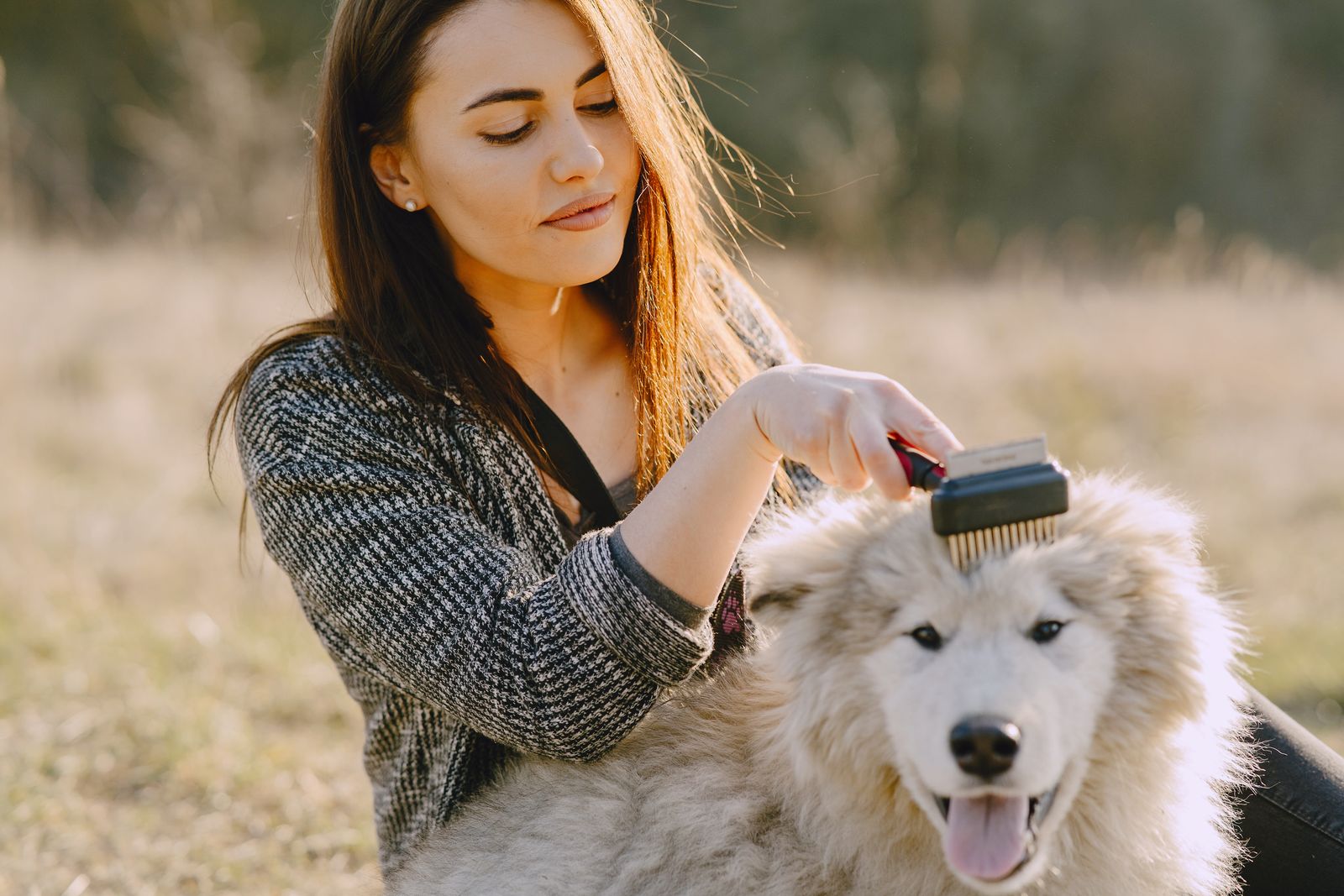
The good news for all double-coat owners: there is a method that genuinely brings your dog relief, and it is not called shaving but combing out. With an undercoat rake you remove the dead, dense undercoat while the guard hair stays put. That is a fundamental difference from a shave: you take away the heat-trapping woolly layer but leave the coat its protective structure. Air reaches the skin better, and the insulation and UV protection remain. This is exactly what veterinary bodies recommend as summer care for thick-coated dogs. During shedding season it can happily be several times a week. For how to de-mat curly and Poodle coats properly, read our detailed piece on grooming Poodles, Maltipoos and friends.
The rest of the cooling happens not at the coat but through the surroundings. Shade, cool floors, walks moved into the early morning and late evening hours, always fresh water. To actively cool your dog down, bring water where it works: to the belly, armpits, paws and ears, plus air movement from a draught or a fan. A common mistake, by the way, is the wet towel laid over the dog. As soon as it dries out, it blocks air circulation and can even trap the heat rather than carry it away. So put it under the dog at most, not over them. You will find many more everyday ideas in our guide on how to cool your dog down properly in summer. For an overview of all the summer hazards, from heatstroke to hot asphalt under the paws, see our big guide to your dog in summer.
With these signs every minute counts: heavy panting that does not ease, heavy drooling, staggering or disorientation, dark red or pale gums, vomiting, seizures, collapse. Get the dog into the shade immediately, cool it with whatever water is available on the belly and paws, and drive to the vet. All the first-aid steps are in our guide to heatstroke in dogs.
Maybe you are reading this only after the clippers already ran. No reason to feel bad, it happens to plenty of people, and in the vast majority of cases the dog comes through it just fine. The important thing now is above all one thing: sun protection.
For the next few weeks, keep your dog out of the direct midday sun, and during the harshest hours stay in the shade or skip the walk altogether. On the critical spots, meaning the bridge of the nose, ear edges and the thinly covered areas, you can use a sunscreen that is explicitly made for dogs. Human sunscreen is not automatically suitable, as some ingredients are not safe for dogs if licked off. When in doubt, ask your vet for a suitable product. A light, airy dog shirt can serve as extra mechanical sun protection on outings.
And then it is a matter of waiting. In most dogs the coat grows back within three to four months. If it returns more slowly or unevenly, that is annoying but rarely permanent. Should bald patches remain after several months or the skin look irritated, have it checked by a vet, because then another cause may be behind it. For next time you will know better: comb out instead of shaving.
In the end, the summer shave is a well-meant idea that backfires on most dogs. The coat that looks like too much is in truth a finely tuned system of insulation and sun protection that your dog needs precisely when it gets hot. Comb out instead of shaving off, shade and water instead of clippers, and when in doubt a quick call to the groomer or the vet: that carries your dog cooler and healthier through the summer than any haircut.
In the Souldog app you can record your dog's coat type and grooming and set a reminder for when the next combing session or groomer appointment is due. That way coat care stays a routine you no longer have to think about, and your dog keeps its built-in summer protection right where it belongs.
 Souldog