Looking into the bowl tells you little, your hands tell you more. How to find out whether your dog is too heavy, what a target weight could look like and how to slim down without the puppy-eyes drama.
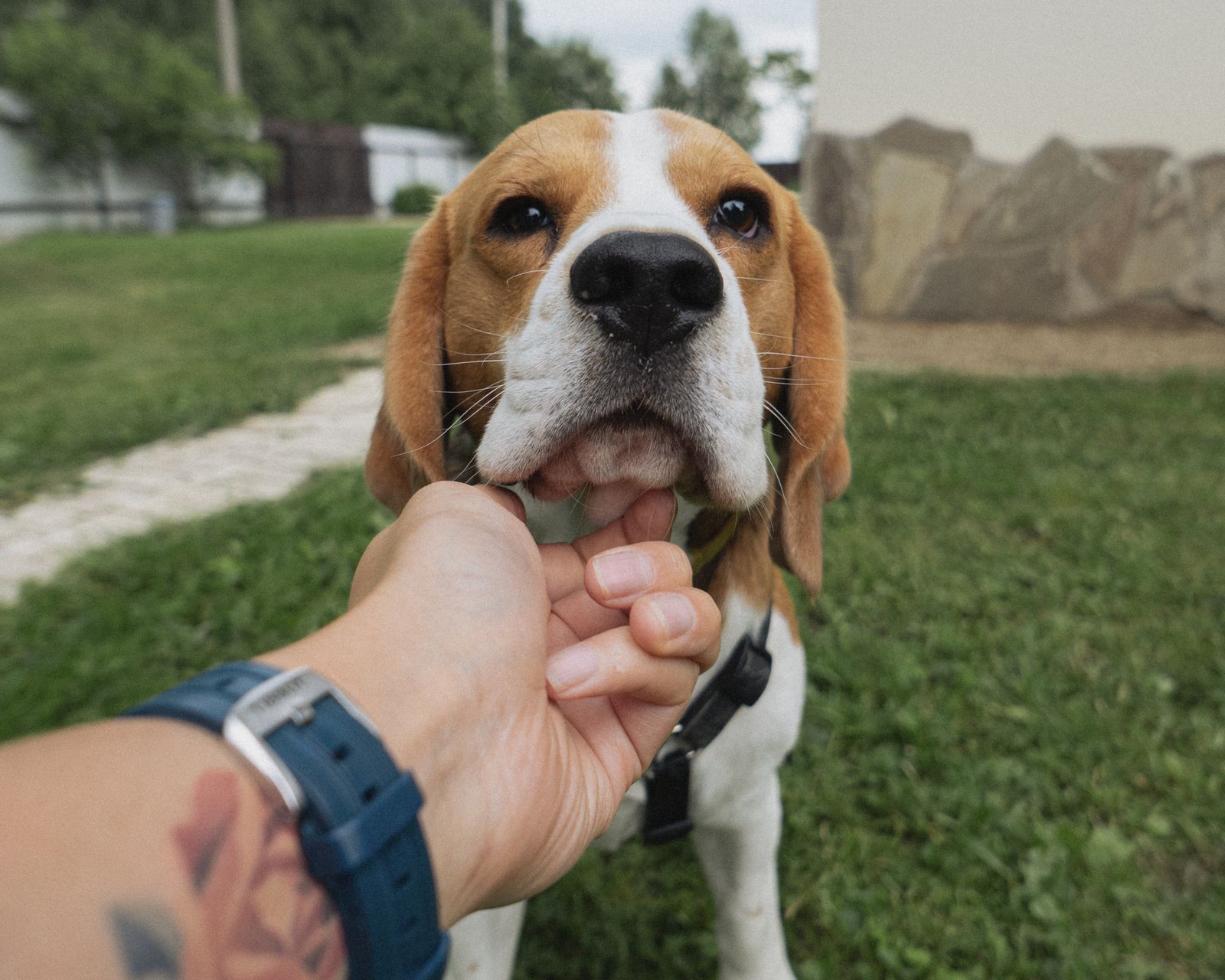
t is just after seven, you open the fridge, and someone is already standing behind you. He did not say anything, he just breathed very quietly and very convincingly. Your dog finished dinner ten minutes ago and is working hard to look like a dog who has not been fed for days.
You have noticed that he looks more round than athletic. But when does "sturdy" turn into "too heavy"? And what helps without taking away something he needs?
The rest of this article turns that impression into a number, a goal and a plan. The daily food amount itself is calculated elsewhere; more on that below.
You can spot overweight by three things: the ribs are hard to feel, there is no waist from above, and the belly line does not rise toward the hips when seen from the side. The scale alone is not enough, because two dogs of the same weight can be solidly built or covered in fat. Your hands and eyes measure more precisely here.
The rib check is the fastest. Have your dog stand and stroke the sides of the chest with flat fingers. At a healthy weight you feel the ribs under a thin layer, a bit like the knuckles on the back of your hand when it is relaxed and open. If you have to search and press, there is a layer of fat on top. In most breeds you should feel the ribs of a dog at a healthy weight, but not see them.
Next, look from above at your standing dog. Behind the ribs the body should narrow into a waist. A straight line or an outward bulge there points to too much fat. Finally, the side view: in a dog at a healthy weight the belly line rises from the chest toward the hind legs, the belly is "tucked up". If it hangs level with the chest or further back, that is another sign.
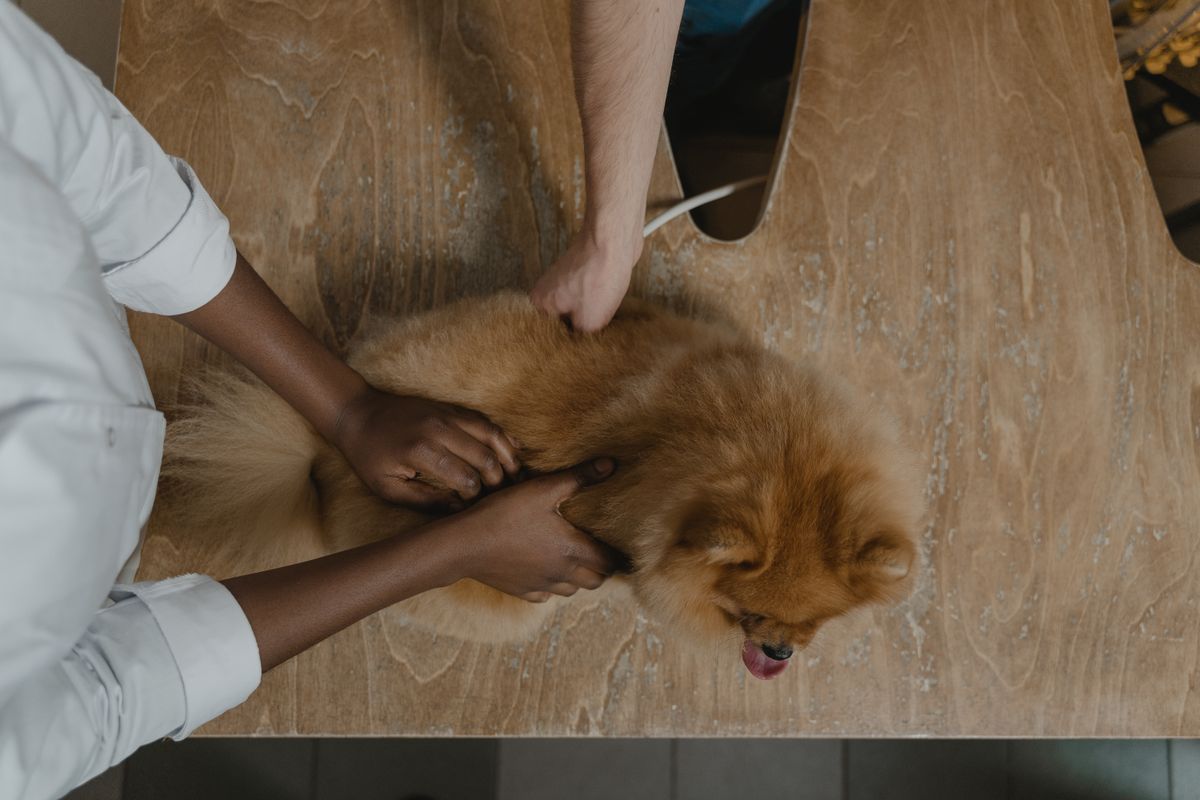
If your dog has long or dense fur, your eyes can fool you. In poodles, doodles, Havanese or Bolonkas the body disappears under curls, and only your hands show what is underneath. Always touch, do not just look.
The body condition score is a scale from 1 to 9 that vets use to rate a dog's body shape; 4 to 5 is ideal. WSAVA, the World Small Animal Veterinary Association, publishes the scale as a standard tool. It describes how ribs, waist and belly look and feel at each score.
| BCS | Rating | Ribs | Waist and belly line |
|---|---|---|---|
| 1 to 3 | too thin | visible from outside, little fat | very clear waist, strongly tucked belly |
| 4 to 5 | ideal | easily felt, not visible | waist visible from above, belly tucked from the side |
| 6 | slightly overweight | still felt, light fat cover | waist visible but not pronounced |
| 7 | overweight | felt only with pressure, clear fat cover | waist barely visible, fat deposits over the back and tail base |
| 8 to 9 | obese | barely or not felt, thick fat cover | no waist, belly sags or bulges |
The table is a paraphrase of the basic idea, not a replacement for the original chart. If you are unsure, ask for a BCS assessment at the next appointment. It takes two minutes, and you get a second opinion without puppy eyes.
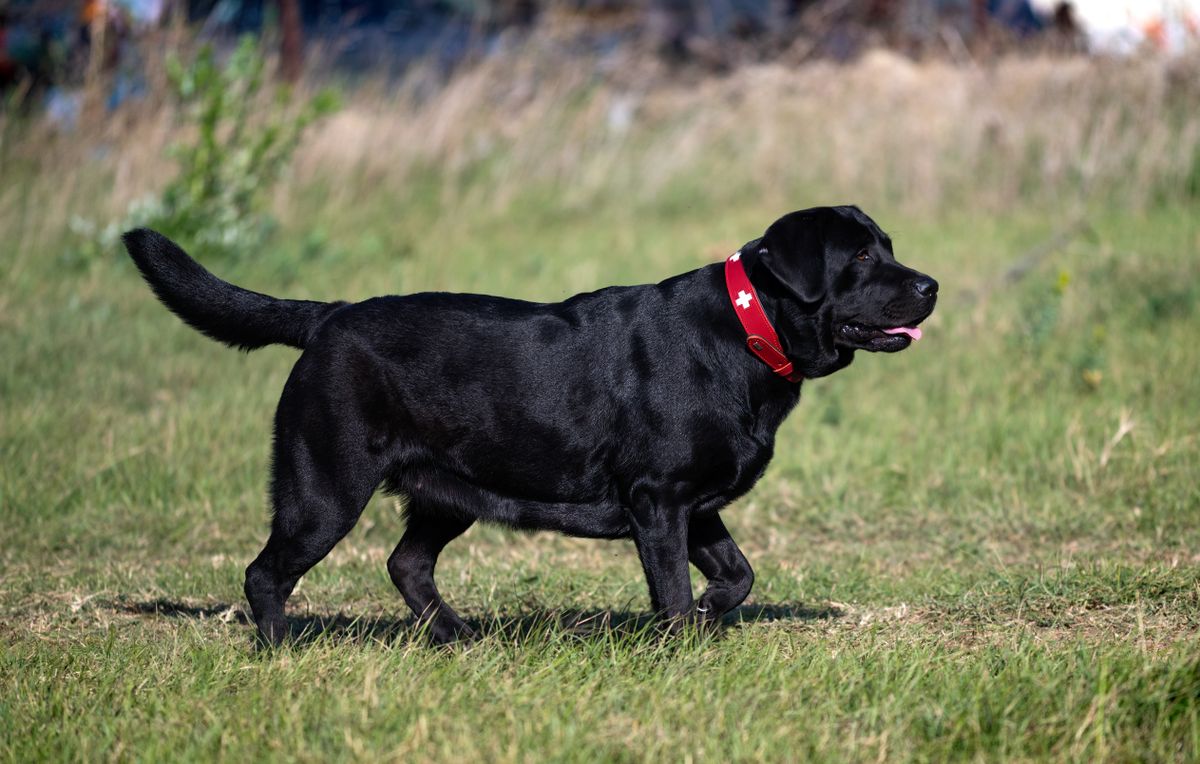
Your dog's ideal weight is not a fixed number from a breed table, but the weight at which his BCS is 4 to 5. Breed tables only give ranges, and those ranges are wide. A Labrador can differ by several kilos depending on bone structure and bloodline and still be lean. Mixed breeds have no table at all.
Breed standards are therefore a first reference point, nothing more. A more useful question: what did your dog weigh as a young adult in good shape? If you remember, that is often a workable starting value. For mixed breeds, the weight at the end of the first year is a rough guide, as long as the dog was not already too round then.
Vets usually proceed like this: they determine the current BCS and calculate a target weight from it. As a rule of thumb, each point above the ideal equals about 10 percent of the current weight. Cornell states it that way; other sources put it closer to 10 to 15 percent of body fat per point. Treat the calculation as a guideline that your vet confirms or adjusts at the first appointment.
Two examples to make the math concrete:
| Dog | Current | BCS | Rough estimate | Target weight as a guideline |
|---|---|---|---|---|
| Labrador mix | 30 kg | 7 | about 20 percent too much (two points above 5) | about 24 kg |
| Toy poodle (example) | 2.35 kg | 6 | about 10 percent too much (one point above 5) | about 2.12 kg |
The toy poodle is a worked example here, not a diagnosis. For a dog that size every gram counts: a single BCS point equals roughly 235 grams, and two or three extra cubes of cheese a day add that up over weeks. So do not round target weights to whole kilos; keep the decimals.
Excess weight strains joints and organs and can shorten life expectancy. It shows most often in the joints: extra weight worsens arthritis, and fat tissue itself releases messenger substances that fuel inflammation in the body. Add faster panting and tiring, a higher anesthesia risk and less desire to move.
The best-known figure on life expectancy comes from a 2002 study by Kealy and colleagues. 24 pairs of Labrador siblings were fed for life; one dog of each pair received about 25 percent less food than the other. The leaner dogs lived a median of 13 years, the comparison group 11.2 years: a difference of about 1.8 years. The lean group also showed signs of arthritis later. It is a single study in one breed, but it remains the clearest indication of how much weight can matter in a dog's life.
Diabetes deserves some context, because it is often oversimplified. In cats, excess weight is a clear risk factor for diabetes. In dogs the link is weaker: obesity makes dogs less sensitive to insulin, but the typical "adult-onset diabetes as in humans" rarely develops from it. An indirect route is possible, for example through inflammation of the pancreas, which is more common in overweight dogs. So excess weight is not healthy for dogs either; it just has different focal points than in cats.
A dog loses weight safely when the vet first looks for causes, the target weight is set together and the weight drops slowly, with a common target of about 1 to 2 percent of body weight per week. A crash diet backfires: losing weight too fast risks muscle loss and nutrient deficiencies.
Some conditions promote excess weight, above all an underactive thyroid (hypothyroidism) and Cushing's disease. Certain medications can also cause weight gain. Have this checked first, especially if your dog suddenly gained weight on the same amount of food. At the appointment you set the target weight together. It can change again at recheck visits, which is normal.
Do not cut the current food on a hunch. Simply halving the normal complete-food ration also removes vitamins, minerals and protein. Your vet may recommend a weight-loss diet instead: it has less energy per bowl and usually more fiber so your dog feels full. Measure the portion on a kitchen scale. A heaped measuring cup can weigh clearly more than a level one, and over weeks that adds up. How to calculate energy needs is covered in detail in our article How much food does my dog need. The formula is there; repeating it here would only duplicate it.
Treats, chews and leftovers are part of the daily ration. As a rule of thumb they make up at most about 10 percent of daily calories. If you train with food a lot, subtract the rewards from the bowl portion. Vegetable pieces such as cucumber or carrot can be a low-calorie reward in between, as long as your dog tolerates them and the total ration is right. For an overview of foods, see What can dogs eat.
Exercise helps when you increase it step by step. A dog who usually walks little does not start with a ten-kilometer hike. Lengthen the walks slowly; swimming and calm walking are easy on the joints. If your dog has arthritis or heart problems, agree on the amount with your vet first.
Weigh your dog every two weeks at first, later about every two to four weeks, preferably at the same time of day. For dogs around 30 kilograms, 1 to 2 percent per week is about 0.3 to 0.6 kilograms. For a toy poodle at 2.35 kg it would be 23.5 to 47 grams per week, values a normal household scale cannot show reliably. For very small dogs, use a scale with gram accuracy or weigh at the vet. If your dog loses weight faster, that is not a reason to celebrate but to ask: either the ration is too small, or there is an illness behind it. If the weight stalls for several weeks, the vet adjusts the plan.
The most common mistakes are imprecisely measured portions, forgotten extras and cutting too fast. Usually it is not a lack of discipline but calories from side sources that nobody counts.
The treat on the walk, the chew in the evening and the piece of sausage for the pill add up to more than you think, especially in small dogs. Then there is the household: if one person is strict and two others feed in secret, the plan cannot work. Agree briefly on who gives what and when, and hang a list on the food cupboard.
Some owners only weigh the dog and never look at the shape. A BCS check every few weeks shows progress even when the scale stalls, for example because the dog is building muscle. And some give up after the first week because the dog looks so reproachful. The hungry look is standard equipment for every dog and says nothing about his needs. Give the usual attention as play, sniffing or a shared walk instead.
For dogs after neutering, it pays to watch the portion from the start, because energy needs drop slightly while the appetite often stays.
Go to the vet if your dog gains weight without more food, develops a swollen belly or loses weight quickly and unintentionally. These signs always need to be checked before you start a weight-loss plan.
Breathing difficulty, blue gums or a suddenly hard, bloated belly is an emergency: go to the nearest vet or animal hospital immediately.
With weight loss you rarely see progress in the mirror, and your dog does not give you a progress display either. This is where Souldog can help: in the health area you enter your dog's weight and see the history as a curve instead of trying to remember the number from four weeks ago. The app also shows breed ideal weights as a rough guide, a food calculator, and can put together a health report for the vet so the appointment starts with numbers instead of feelings. It does not replace a veterinary diagnosis; it helps you keep track. More in our overview The best app for dog owners. The health area is part of our big guide to dog health.
And your dog? He will watch you reproachfully at the fridge for the first few weeks. His joints will thank you later.
 Souldog