After a walk through the summer meadow, your dog suddenly starts gnawing at his paws, and tiny orange dots appear between his toes. Chances are, these are harvest mites. Here's how to spot them with confidence, what helps with the itch, and how to prevent the next round.
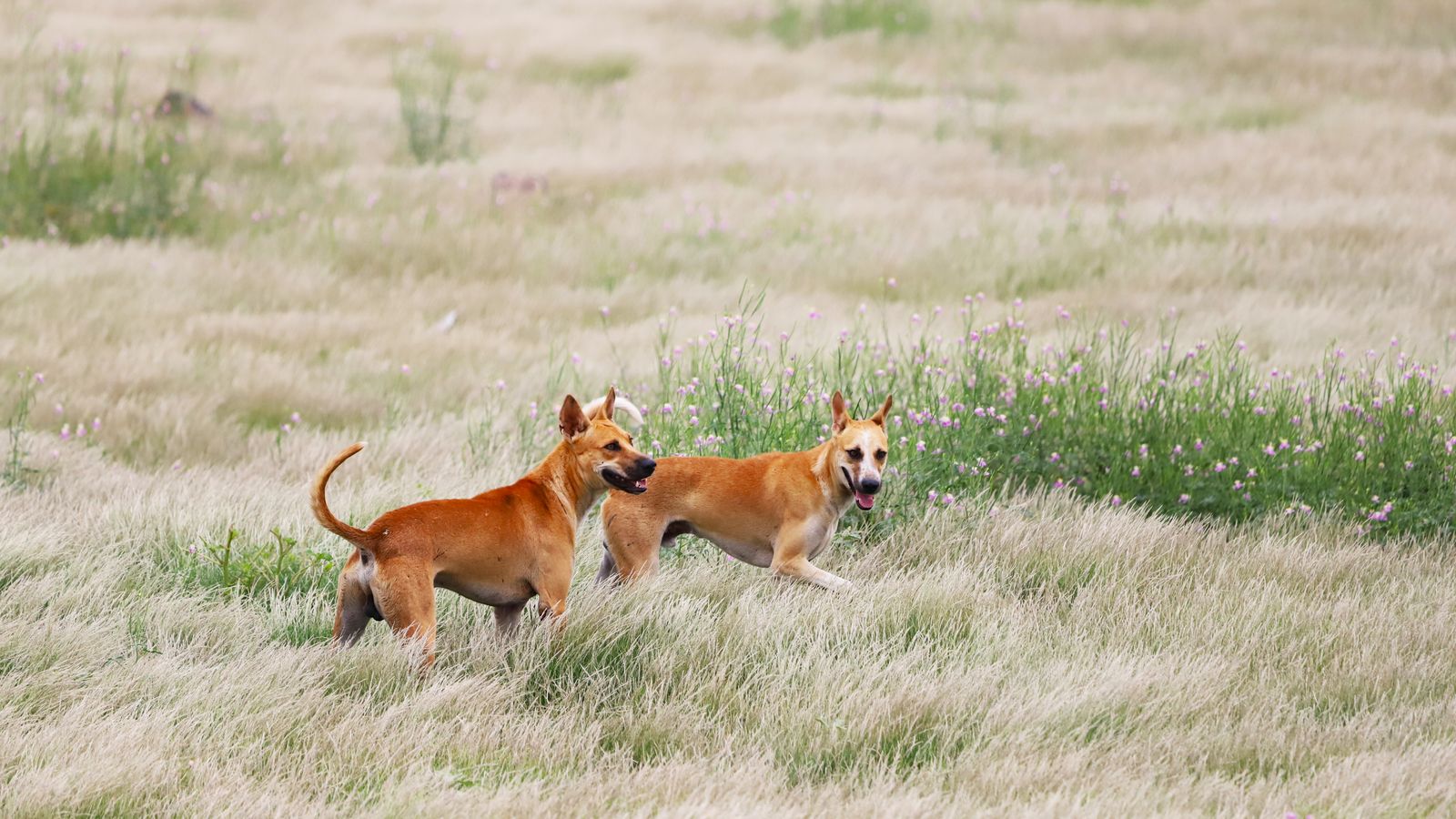
You were at your dog's favorite meadow, the sun was low, everything as usual. Back home, your dog starts gnawing persistently at his paws, and when you look closer, you spot tiny orange dots, like fine paprika dust. Welcome to harvest mite season. These larvae, also known as chiggers, are barely bigger than a grain of salt, but they can leave your dog with a surprisingly stubborn itch.
he good news first: harvest mites are usually annoying but not dangerous. What matters is recognizing them with confidence, getting the itch under control, and preventing the next round a little better. Let's start with the question of what you're actually dealing with.
Harvest mites, or more precisely, the larvae of the harvest mite, appear as tiny orange dots mainly on the paws, between the toes, on the belly, ears, and around the eyes and muzzle. They cause intense itching, which can last for several days even after the larvae have long since dropped off.
The main season runs from late summer into fall, roughly July through October. There's no product specifically approved for treating harvest mites; vets relieve the itching and often use flea or tick products off-label. You can help prevent them by avoiding known infested meadows during the season and rinsing your dog's paws after walks.
Harvest mite, redbug, harvest bug, hay mite: these are all names for the same species. The twist lies in the life cycle. Only the six-legged larval stage is parasitic. The adult mites and their intermediate stages live freely in the soil and feed as predators; they have no interest in your dog at all. So it's exclusively the tiny larvae that climb onto your dog.
These larvae are orange-red and only about 0.2 to 0.4 millimeters in size, slightly larger once engorged. Unlike ticks, they don't suck blood. They nick the skin, release an enzyme-containing secretion that liquefies tissue, and then feed on that fluid. The intense itching is an allergic reaction to this saliva, which is why some dogs barely react while others scratch themselves nearly raw. Living in the soil of meadows, gardens, and forest edges, the larvae wait for a passing host on warm, sunny days.
The first thing owners usually notice is a change in behavior: the dog gnaws at his paws, licks himself noticeably, scratches his belly, or shakes his head. Look closer, and you'll find orange to reddish dots on the affected areas, sometimes small bumps or crusts. With heavy scratching, you may also see red, occasionally weeping patches of skin.
Because the larvae climb on close to the ground, the low-lying, thin-skinned regions are affected most: the paws and the area between the toes, the legs, the belly and groin, the armpits, the ears and ear margins, and the skin around the eyes and lips. One important detail: the itching doesn't stop the moment the larvae drop off. It can persist for several days to about two weeks, because the allergic skin reaction lingers.
You can often tell for yourself whether it's really harvest mites, with good light and a bit of patience. Here's how:
If you want to know for sure, a vet can examine the affected areas. A skin scraping viewed under a microscope confirms the diagnosis there. A tape-strip sample can be tried as a supplement, but it's not an established standard method for harvest mites. Since intense itching has many possible causes, a vet visit is worthwhile if you're unsure.

Harvest mites are a seasonal issue. The larvae are active on warm, sunny, and dry days, usually once temperatures climb above sixteen degrees Celsius, and they prefer sunny, dry ground. In warm years, the season can start earlier and last longer.
| Time Period | Harvest Mite Activity |
|---|---|
| Spring through June | usually low |
| July and August | rising, midsummer heat |
| September and October | peak season, which is exactly why they're called harvest mites |
| From November on | tapering off with the cold |
The name harvest mite can be a bit misleading, since the trouble often starts as early as midsummer. So if your dog starts working on his paws in July, it's worth taking a look between his toes.
Itching can have many causes, and harvest mites are easily confused with other skin problems. The overview below helps with a first assessment, but it doesn't replace a veterinary diagnosis.
| Cause | Typical Pattern |
|---|---|
| Harvest mites | Seasonal, summer through fall, orange dots, paws and belly, after time in meadows |
| Flea infestation | Possible year-round, flea dirt as black crumbs, often lower back and base of tail |
| Food allergy | Year-round, often also affects ears and digestion, independent of meadows |
| Environmental allergy (atopy) | Often recurs seasonally, paws and face, usually starting at a young age |
Because harvest mites especially like the ears, the itching there is sometimes mistaken for a simple ear infection. To learn why an allergy isn't automatically the first explanation for itchy ears, check out our guide on itchy ears in dogs.
For everyday purposes, you can relax: the real risk isn't a transmitted pathogen but what the dog does to himself when he scratches his skin raw out of sheer itchiness. Bacteria can enter through these open areas and trigger a secondary infection.
Two points for context, so you understand the situation correctly. First, researchers have discussed whether harvest mites could theoretically carry pathogens such as Borrelia; so far, only genetic material has been detected in individual larvae, and actual transmission to dogs hasn't been proven. So this shouldn't be presented as either a confirmed danger or something fully ruled out. Second, very rare cases have been described in which massive infestation led to neurological symptoms. That's the absolute exception and not a typical harvest mite symptom. In practice, this means: usually harmless, but if your dog seems wobbly, listless, or feverish after a heavy infestation, he should see a vet right away.
And the common worry about humans? Harvest mite larvae can bite us too and cause the well-known itch, sometimes called harvest itch. But there's no direct transmission from dog to human. Both pick up the larvae independently from the vegetation.
Honesty matters here, since plenty of supposed miracle cures circulate online. There's no product approved specifically for treating harvest mites. That's why vets work with two levers: relieving the itching and inflammation so your dog doesn't hurt himself, and removing the larvae as much as possible.
In practice, that means: rinsing or wiping down the affected areas, especially the paws, with water after time in a meadow can help mechanically remove some of the larvae. As for how effective products are, some acaricidal active ingredients like fipronil and certain permethrin combinations have shown effectiveness against harvest mites in studies, but they're used outside their actual approval. The modern isoxazoline-class flea and tick chewables work against other mites, but there's no solid study data for harvest mites, so using them remains purely off-label. And for home remedies like coconut oil or black cumin oil, there's no proof of effectiveness; don't rely on them if the itching is severe, and get veterinary advice instead.
You can hardly prevent harvest mites entirely during peak season, but you can significantly reduce exposure. The most important and best-supported measure is avoiding known infested meadows and sunny, dry areas during the season, especially if your dog has picked up dots there before.
A few other tricks count as common practice, even if they're not in every professional guideline: checking and rinsing the paws and belly after walks, keeping your own lawn short, and running a simple test in your garden. For the test, place a light-colored cloth or a white plate in the grass. If larvae are present, they often collect on it as orange dots, letting you know the area is currently infested. That way, you can reroute your walks for a few weeks. Harvest mites are one of many small summer hazards covered in our comprehensive guide to dogs in summer, from hot asphalt to insect stings.
Harvest mites are a classic late-summer nuisance: tiny, hard to avoid, but usually harmless. If you recognize them by their orange dots, take the itching seriously, and give the paws a quick rinse after time in the meadow, you take away most of the worry. And if the itching persists, a trip to the vet is always the safest choice.
In the Souldog app, you can log when and where your dog picked up harvest mites, and keep track of affected meadows for the season. Over time, you'll spot your own little pattern and can steer clear of the next round of itching.
 Souldog