Not every body of water is harmless, and not every dog is built for swimming. Which rules really matter at the lake and the sea, which dangers you should know, and what limber tail is all about.
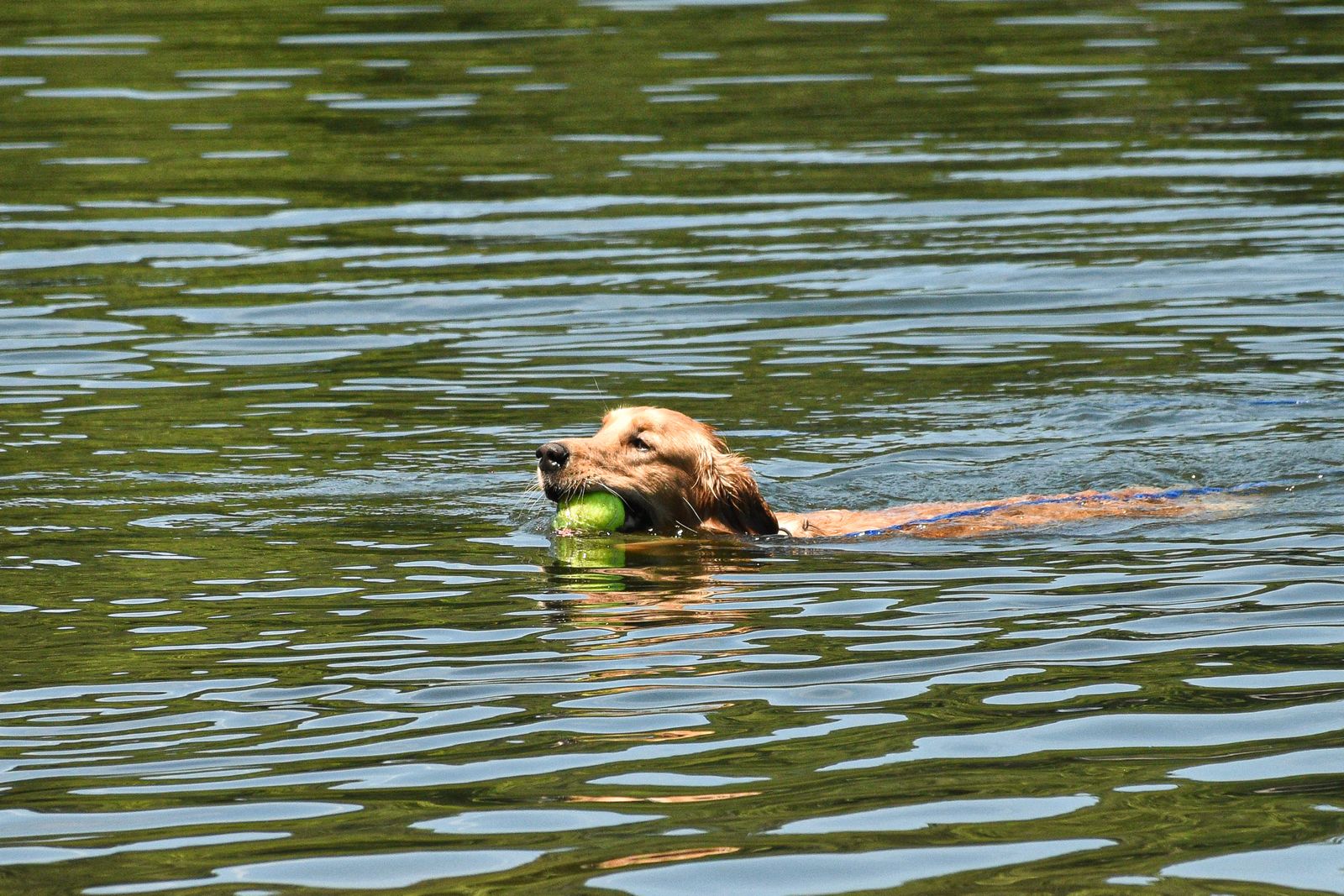
First really hot day, you are standing at the shore, and your dog is already half in the water before you have even unclipped the leash. For many dogs, swimming is one of the best things about summer: it cools them down, it is gentle on the joints, and it is simply fun. But a lake is not a paddling pool, and the sea is not one big water bowl. Between blue-green algae, currents, salt water, and a tail that suddenly hangs limp, there are a few things that can turn a lovely day sour.
his guide is the safety side of the fun: the water rules for dogs at the lake and the sea, the dangers of fresh and salt water cleanly separated, and an honest, thorough look at limber tail, a topic surrounded by half-knowledge online. How to teach a nervous dog to swim in the first place is covered in its own guide; here, the point is that the trip ends well for both of you.
A lake and the sea are not the same job. Fresh water hides different dangers than salt water, and knowing that makes the day more relaxed to plan. This table sorts the main differences before we go through each point in detail.
| Topic | At the lake (fresh water) | At the sea (salt water) |
|---|---|---|
| Biggest poisoning risk | blue-green algae, leptospirosis | swallowing salt water (salt poisoning) |
| Swallowed while playing | too much water (water intoxication) | sand (sand impaction) |
| Danger in the water | river currents, steep banks, cold | waves, undertow, tides in the mudflats |
| Always in the bag | fresh drinking water, set breaks | fresh drinking water, set breaks |
| After the swim | rinse off, dry the ears | rinse salt off, dry the ears |
And above all of it stands the same question, lake or sea: is your dog built for the water at all? More on that in a moment.
Put simply: never walk away from the shore while your dog is in the water, offer fresh drinking water throughout, do several short rounds rather than one long one, avoid very cold water and a full stomach beforehand, and consistently skip any water with a film, foam, or algae mat. The rest is detail.
A few rules are worth spelling out:
Not every dog is a natural swimmer, and a few can barely manage it. The reflex to paddle in water does not make a safe swimmer, because whether a dog stays effortlessly afloat depends heavily on his build. If your dog belongs to one of these groups, it does not mean water is off limits. It means shallow water, a life jacket, and you staying close.
For all of these dogs, and for any weak swimmer, a life jacket is not a gimmick but real safety. Look for a good fit and a handle on the back you can use to lift your dog out of the water if needed. It also belongs on a boat, when stand-up paddling, and in any current.
A word on puppies: when a young dog may swim is a different question from when you may bathe or wash a puppy. A puppy should not really swim until his coordination and strength are up to it, usually from around six months, and he should only enter open water after his full course of initial vaccinations. How to teach a fearful or inexperienced dog to swim step by step is covered in detail in our own guide to teaching a dog to swim.
A calm swimming lake looks harmless, and most of the time it is. Still, there are a few fresh-water risks you should know, because you cannot see them in the water.
Blue-green algae are the most dangerous of them. Blue-green algae, actually cyanobacteria, can be fatal to dogs. Their toxins damage the liver and the nervous system, and signs can appear within minutes to a few hours: vomiting, diarrhea, heavy drooling, muscle tremors, seizures, weakness, difficulty breathing, collapse. There is no antidote. Avoid any water with a blue-green film, foam, algae mats, or a colored sheen on the surface. Important: a toxic bloom cannot be told apart from a harmless one by eye, even if the water beside it looks clear. If you suspect contact, go to the vet immediately and do not wait. Why the risk is especially high in warm summers, and how to recognize an affected lake, is described in detail in our guide to blue-green algae and dogs.
Leptospirosis is a bacterial infection that reaches the water through the urine of rodents and wildlife. The risk is highest in warm, standing water and mud, often after rain. The disease can attack the kidneys and liver and can be passed to humans. A vaccine against the main forms exists and is now among the recommended standard vaccinations. Ask your vet whether your dog's protection is up to date, especially if he swims a lot in nature.
Water intoxication sounds paradoxical, but it is real. If a dog swallows large amounts of water over a longer period while playing, for instance during hours of retrieving, diving, or snapping at the garden hose, the sodium in his blood can become dangerously diluted. This is rare, but it can be fatal. It mostly affects small breeds and obsessive retrievers who will not stop on their own. Signs are lethargy, a bloated belly, vomiting, stumbling, a glazed look, and drooling, and seizures in severe cases. Preventing it is simple: take regular breaks, do not let him retrieve for hours, and skip biting games with the hose stream. If you suspect it, go to the vet at once.
Then there are the classics that are easy to forget. Currents in rivers are often stronger than the calm surface suggests. Steep or slippery banks are treacherous, because a dog can swim well but be unable to climb out; exhaustion is the most common reason a dog gets into trouble in the water. Your dog should not drink from puddles and standing water, as it can upset his stomach and gut through germs and Giardia. And sometimes fishing hooks, broken glass, or debris wait on the bottom. A quick look at the water before your dog charges in saves some trouble.
The sea comes with its own rules that many people underestimate on a first beach day. Salt, sand, and tides play a part here that they do not at the lake.
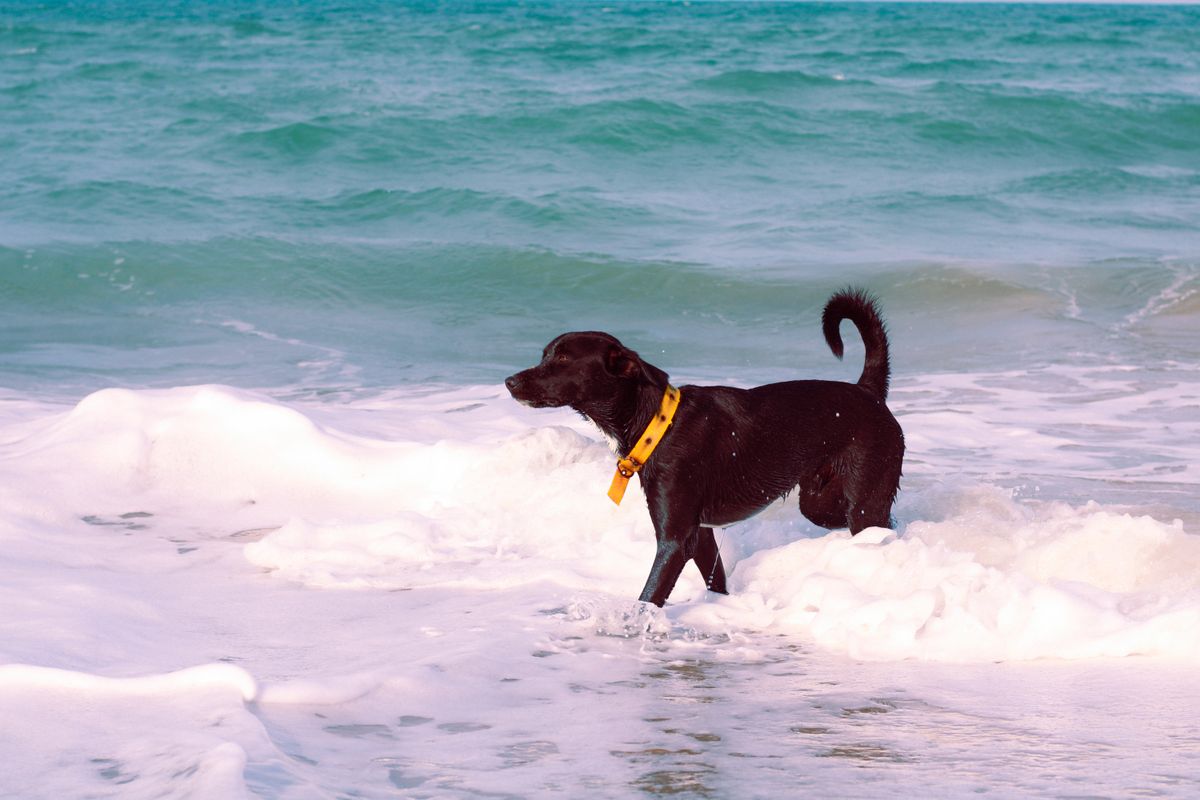
Swallowing salt water is the most important point. If your dog repeatedly swallows water while playing in the sea, snapping at waves or retrieving, salt can build up in his blood. Mild effects like vomiting or diarrhea after a beach day are relatively common. In rarer but serious cases, this becomes salt poisoning, with lethargy, repeated vomiting, tremors, seizures, or an unsteady gait, and untreated it can be fatal. The key protection is simpler than it sounds: offer your dog fresh water throughout the beach visit, make set drinking breaks, and curb excessive snapping at waves. If he shows unusual lethargy, persistent vomiting, tremors, or an unsteady gait after sea swimming, go to the vet immediately.
Sand is the second, often overlooked danger. If your dog repeatedly eats sand at the beach, while digging or off sandy balls and sandy fur, the wet sand can compact into a solid mass in his gut and block it. This is a serious emergency, known as sand impaction. Signs often appear only twelve to forty-eight hours later: vomiting, loss of appetite, lethargy, abdominal pain or a hard, bloated belly, no bowel movements. If they appear after a beach day, have your dog examined promptly. Most cases are managed with fluids and the right measures, while severe ones need surgery. Prevention works best: do not throw balls straight onto the sand, rinse sandy toys, and keep an eye on dogs that love to dig.
Jellyfish usually cause only local irritation, on the nose, mouth, or paws, but in rare cases the reaction can be stronger. Important: dead, washed-up jellyfish can still sting, as their stinging cells stay active for hours to days. Do not rub an affected spot, as that triggers more stinging cells. If your dog has trouble breathing, swelling in the mouth, or several stings, he belongs at the vet. On the North and Baltic Sea, lion's mane jellyfish are turning up more often, even if they are not a constant like in the Mediterranean.
On the North Sea, a danger comes into play that has little to do with swimming itself: the mudflats. The tide rises surprisingly fast, sometimes several centimeters per minute, tidal channels fill up and cut off the way back, and sea fog can take your visibility within minutes. In the Wadden Sea National Park, dogs must be leashed. Treat the tides with respect and never go so far out that you lose track of the time. Otherwise, at the sea as at the lake, big waves, visible undertow, and strong currents are off limits for swimming.
Two things concern the beach, not the water. Hot sand burns paws just like asphalt; the simple back-of-the-hand test helps, and if you cannot hold your hand comfortably on the sand for a few seconds, it is too hot for the pads too, more on this in our guide to paw protection in summer. Sunburn, in turn, is a real issue for light, thin-coated dogs with a pink nose or belly, carrying a long-term skin cancer risk. Shade helps best. If you use sunscreen, use only a product made for dogs, because many human creams contain ingredients that are toxic when licked off.
Your dog had a wonderful day of swimming, and by evening the tail hangs limp or sticks out only horizontally before it drops. He will not sit down properly, seems subdued, and does not want you to touch the tail. Behind this is often limber tail, medically an acute caudal myopathy, and it deserves a closer look, because a lot of confusing information circulates about it online.
Limber tail is a painful strain of the muscles at the base of the tail, the ones your dog wags with. It is not a disc or nerve problem and not a fracture, even if it looks dramatic. It goes by many names: cold water tail, limber tail, swimmer's tail, or dead tail all mean the same thing.
How does it happen? The main trigger is thought to be extensive swimming, especially in cold water, along with heavy exertion of the tail, long confinement on a car ride, and the first long swim of an untrained dog. A study of Labradors did find a clearly higher risk in swimmers, in working dogs, and in colder regions. But an honest framing matters: swimming is a risk factor, not a requirement. In the same study, some affected dogs had never swum, and one had simply wagged too excitedly with joy. Limber tail is also far from a rare exception. In the Labrador group, nearly one in ten dogs was affected during the study period, and only a small share of owners even went to the vet with it.
How do you recognize it? The telltale signs are the limp or horizontally drooping tail, pain at the base, sometimes raised fur there, and reluctance to sit or to squat to poop. Some dogs whimper, lick at the tail, or seem restless. The signs usually show within a day of the trigger. And yes, it genuinely hurts; in surveys, owners rated their dogs' pain at around six out of ten on average. So your dog is not being dramatic.
What helps? Rest, above all. Limber tail resolves on its own in most cases, on average after around three and a half days, sometimes only after one to two weeks. Because the tail hurts, the vet often prescribes an anti-inflammatory painkiller. Never give your dog a painkiller from your own medicine cabinet: ibuprofen, paracetamol, and similar human drugs are toxic to dogs. A warm compress can feel pleasant, but it is not a cure, only comfort.
When to see the vet? Have limber tail checked by a vet, especially the first time. There is no test that proves it; the exam serves to rule out more serious causes, such as a fracture, a spinal problem, blocked anal glands, or, in males, the prostate. Your dog belongs at the practice at once if there is also swelling, an open wound, bleeding, severe pain, weakness in the hind legs, or trouble passing stool and urine, or if there is no improvement after a few days. That is no longer simple limber tail.
Can it be prevented? Not with certainty, but the risk drops with a few habits that experts derive from the known triggers: build up fitness slowly before the swimming season, avoid very cold water for an untrained dog, do not overdo the first long swim, dry your dog off and keep him warm afterward, and do not leave him confined wet in the car for hours. If it happens anyway, it is not a disaster: the outlook is very good, and lasting damage is the exception. It can recur, though, as dogs that have had limber tail once tend to get it again, usually shorter than the first time.
Before you both head home happy, a quick look over the wet dog pays off. These few minutes catch most of the small problems.
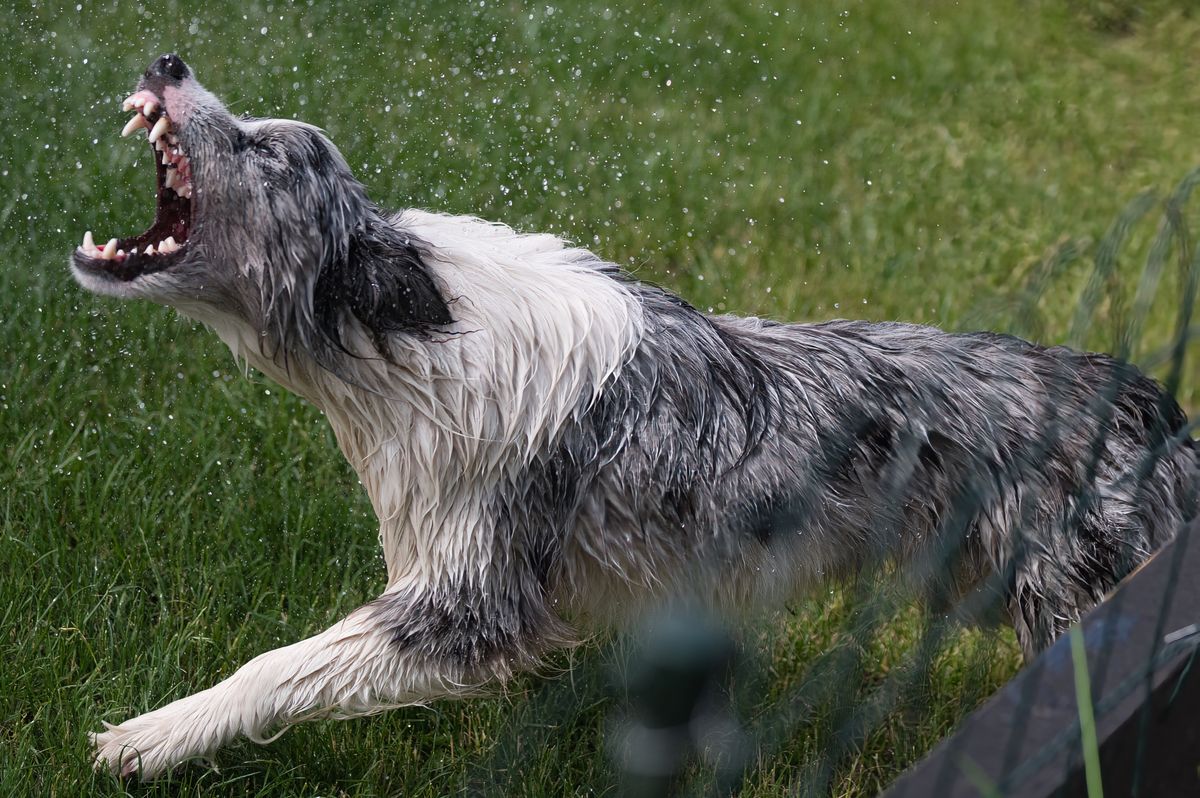
Rinse your dog off with clean fresh water, after the lake just as after the sea. At the sea, this washes away the salt and sand that would otherwise dry out and irritate the skin. After the lake, you remove clinging algae and germs before your dog licks them off while grooming. Dry the ears, because water in the ear canal encourages ear infections, especially in dogs with floppy ears. Go over the paws for sand between the toes, broken glass, or small cuts, and towel the coat dry rather than letting your dog shiver wet.
A word on a common fear. Again and again you read about "dry drowning" that supposedly strikes healthy dogs hours after a harmless swim. This term is considered outdated and misleading in medicine. What really matters: if your dog nearly drowned or inhaled a lot of water, breathing problems can develop over the following hours, and that is an emergency. After a normal, uneventful swim, on the other hand, you do not need to panic. After a genuine incident, watch your dog for coughing, labored or fast breathing, blue gums, or unusual weakness, and drive to the vet immediately at these signs. At the beach, also think of shade and water, because a dog can overheat even at the cooling sea; more on that is in our big summer guide for dogs.
Swimming with your dog is one of summer's great gifts: the cool-off, the joy, that worn-out, happy dog on the drive home. None of it needs to be spoiled by a guilty conscience. Once you know whether your dog swims safely, understand the dangers in fresh and salt water, and read limber tail correctly, little of the risk is left and almost all of the fun remains.
If you are looking for more ideas for the outdoors, the big overview of things to do with your dog has plenty, from hiking to dog sports. Lovely swimming lakes and dog-friendly beaches near you are shown by Souldog right on the map, so you do not have to search long for where to head today.
 Souldog