Some dogs romp through the snow in short fur, others start shivering at ten degrees above freezing. Here is why, and how to tell what your own dog actually needs.
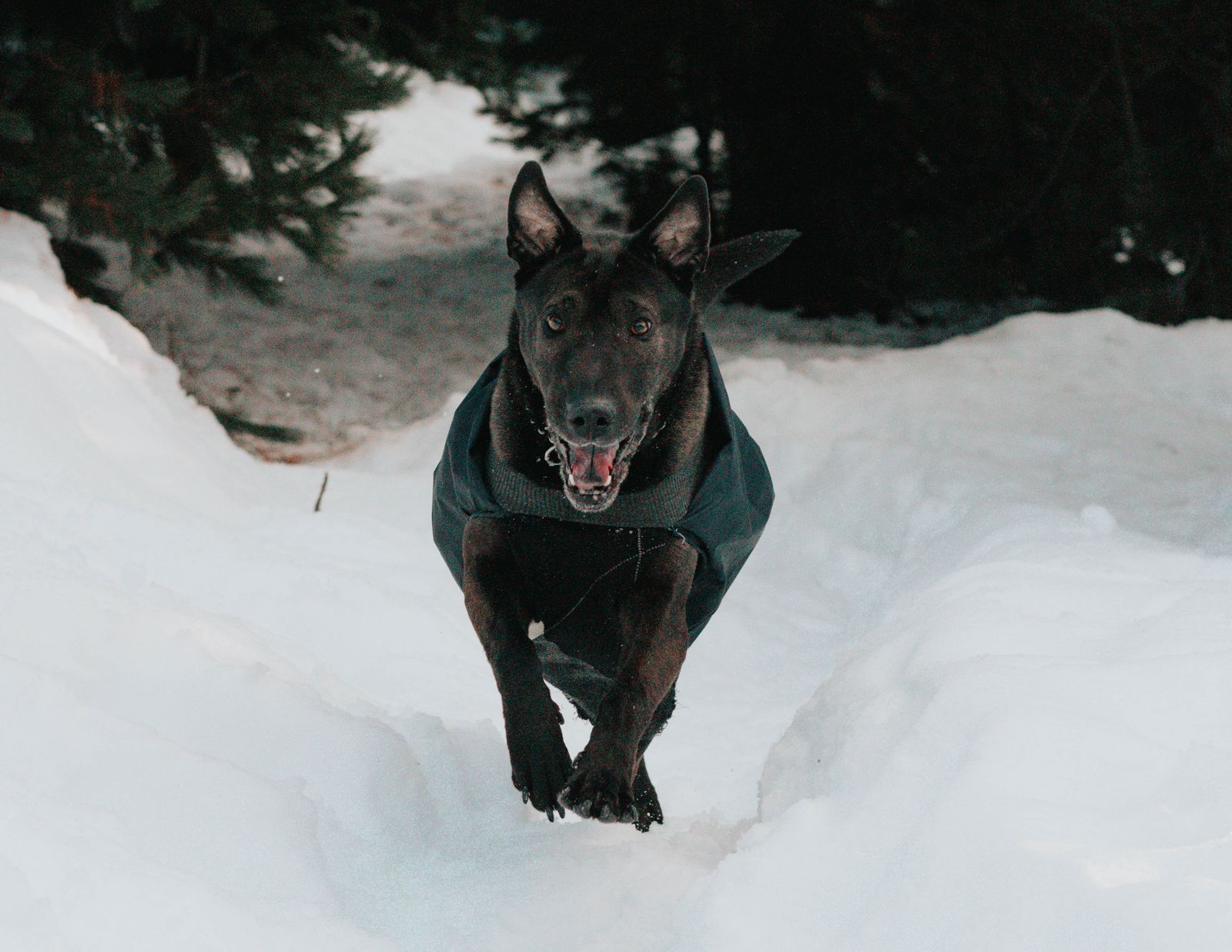
You are standing at the door with the leash in hand, the first frost is sitting on the sidewalk outside, and your dog stops dead on the doormat. No tail wag, no rush for the handle, just a skeptical look shuttling between you and the cold outside. Next door, the exact same scene plays out completely differently. That dog is already bolting out before the door is even fully open, and five minutes later he is rolling around in the snow with obvious delight.
wo dogs, two completely different reactions to the same temperature. It is not about training or personality. It comes down to something a lot of owners underestimate: cold tolerance in dogs is not a fixed trait, it depends heavily on the individual animal. That is exactly why "does my dog need a coat" cannot be answered with a single temperature that applies to every dog. Let us look at what actually drives the difference.
The biggest factor is the coat itself, or more precisely, how it is built. Dogs with a double coat have two layers: a coarser outer layer of guard hairs and, underneath, a dense, soft undercoat. That undercoat traps air between the hairs, and this trapped layer of air is the actual insulation. Breeds like the Siberian Husky, Alaskan Malamute, Samoyed, Bernese Mountain Dog, Greater Swiss Mountain Dog, Newfoundland, and Chow Chow were bred over generations around exactly this principle. Many of them are more comfortable below freezing than in summer heat.
Dogs with a single coat do not have that second insulating layer. Their fur is just the outer layer, with no warming undercoat beneath it. Sighthounds like Greyhounds and Whippets fall into this group, along with Dobermans, Miniature Pinschers, and most toy breeds such as the Chihuahua. Body heat escapes much faster in these dogs simply because the protective air layer is not there.
There is plenty of overlap and individual variation between these two extremes, of course. Coat structure is the biggest lever, but it is not the only one.
Several other factors stack on top of coat type, and they often reinforce each other. Start with body size, and the mechanism here is pure physics: small dogs have a larger surface area relative to their weight than large dogs, so they lose relatively more heat. Low body fat makes this worse, which is why lean sighthounds can still freeze faster than a stockier mixed breed of similar size, even with a somewhat denser coat.
Short-legged dogs have it even harder. They sit closer to the ground, and that is exactly where winter is least forgiving. Dachshunds, Basset Hounds, and similarly built breeds drag their bellies through snow and wet leaves, which soaks and chills them faster than it would a long-legged dog.
Age shifts cold regulation too, in both directions. Puppies do not yet have a fully developed coat and carry little body fat. In older dogs it is often a slower metabolism, plus joint issues that flare up noticeably in cold weather. For what that means day to day with a senior dog, see our guide to quality of life in older dogs.
And then there are dogs that lose their natural protection temporarily: sick animals and freshly clipped or shaved dogs. After a shave, even a thick-coated breed loses its insulating effect for weeks, and chronic conditions like arthritis make cold noticeably more uncomfortable by adding strain to already stiff joints.
A cold dog usually shows several of these signs at once, not just one. Shivering is the most obvious signal, but it is far from the only one.
If your dog shows one or more of these signs, that is a clear cue to shorten the walk or add protection. This is normal, unpleasant cold. It is not yet a medical emergency.
Here Souldog draws a firm line, because this distinction matters. Hypothermia is a different thing from the ordinary cold discomfort above, and you should know where the boundary sits.
Veterinary sources classify hypothermia by core body temperature: mild hypothermia sits just below normal body temperature, with the muscles still able to counteract it through shivering. In moderate and severe hypothermia, that mechanism increasingly fails. These exact numbers are something a veterinarian measures with a thermometer, not a value to estimate at home. What matters for you are the visible warning signs.
| Normal cold | Hypothermia emergency |
|---|---|
| Shivering, improves quickly once warmed up | Lethargy, listlessness, seems checked out |
| Tense posture, responds normally when spoken to | Muscles seem stiff, little response |
| Heart rate and breathing unremarkable | Pulse and breathing noticeably slowed |
| Gums normal pink | Gums pale or bluish |
The most dangerous warning sign is a paradox: if shivering suddenly stops without the dog looking any better, that is not a good sign. It means the body has run out of energy to keep fighting the cold. If your dog shows lethargy, stiff muscles, a slow pulse, or pale gums, get him warm immediately and head straight to a veterinarian or emergency clinic. This is not a situation to wait out.
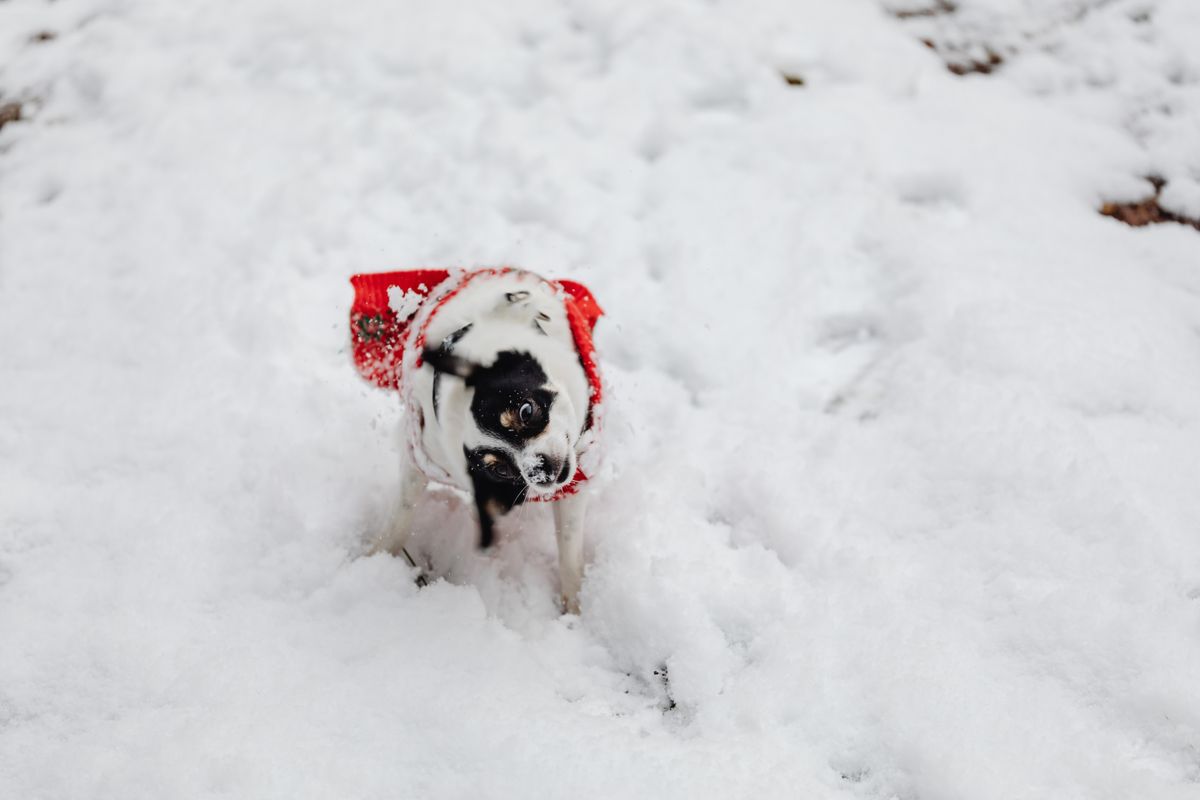
For certain dogs, a coat is not a fashion choice, it is real protection. That includes dogs with a single coat and low body fat like sighthounds, small and toy breeds such as the Chihuahua or Miniature Pinscher, hairless breeds, freshly clipped dogs, short-legged breeds that need belly coverage, puppies, seniors, and sick or weakened dogs. For all of these groups, the right coat can be the difference between a relaxed walk and one that gets cut short far too soon.
For healthy dogs with a dense double coat, the picture flips. Their undercoat is already doing the insulating work, and a coat that fits too tightly or wrong compresses exactly that layer of trapped air that is supposed to keep them warm. Instead of extra protection, the dog can end up with less insulation than if he wore nothing at all.
Then there are the practical problems. A poorly fitted coat rubs at the armpits, neck, or back and can cause pressure sores that only show up after a while. Active double-coated dogs, who warm up quickly through movement anyway, risk overheating in a coat rather than freezing. And a wet coat is worse than no coat at all, because damp material actively pulls heat away instead of trapping it. Always swap a soaked coat for a dry one right away, or skip it entirely.
A good dog coat needs to meet three basic requirements at once, and most disappointments trace back to one of them being missed.
Fit matters most. The coat should not restrict the shoulders or armpits, so your dog can walk, run, and lie down normally. It is worth measuring chest girth and back length from shoulder to tail base before buying, rather than guessing from breed or weight alone. For short-legged breeds, the coat should also cover the belly.
Next comes the question of whether you need warmth or protection from wet weather, since those are not the same thing. A plain rain shell keeps a dog dry but barely warms him. A lined winter coat adds warmth but should also be water-resistant, otherwise it soaks through in snow and rain and turns heavy and cold. For very wet, cold days, a combination of both makes sense.
Finally, check the fine print on materials. Look for cutouts for the leash and harness so nothing rubs or catches, and for washable fabric, since a winter coat gets wet and dirty on every muddy walk. Reflective elements are a useful extra given how early it gets dark in winter. For more on that, see our overview of dog health.
There is no single temperature that applies to every dog, and that is not a dodge, it is the honest position taken by veterinary sources. As a rough guide: well above freezing, most healthy dogs with a normal coat get by just fine. Cold-sensitive dogs, meaning the risk groups listed above, can already feel cold in the low single digits above freezing, especially with wind or wet ground, both of which make the cold feel considerably worse. As temperatures drop further below freezing, many owners naturally shorten walks for their sensitive dogs anyway, sticking to quick bathroom breaks instead of longer outings.
When in doubt, trust your dog's behavior over a thermometer. The signs from earlier, shivering, limping, curling up, reluctance, will tell you more reliably how he is actually doing than any number ever could.
In the end it comes down to one simple habit: your dog will tell you what he needs, you just have to know what to watch for. Once you have consciously noted these signs a couple of times, you will recognize them instantly the next time the temperature drops. In the Souldog app, you can log observations like these directly on your dog's profile, so you can track whether anything changes over the course of the winter. And maybe your dog eyes that coat with the same suspicion he showed at the door earlier. After a few walks with warm paws, that hesitation tends to turn into eagerness pretty fast.
 Souldog