Few grooming tasks make dog people as nervous as the nail clippers. But trimming nails is a skill you can learn: with the right tool, the right technique, and a dog who has learned that cooperating pays off. Here is how to get both right.
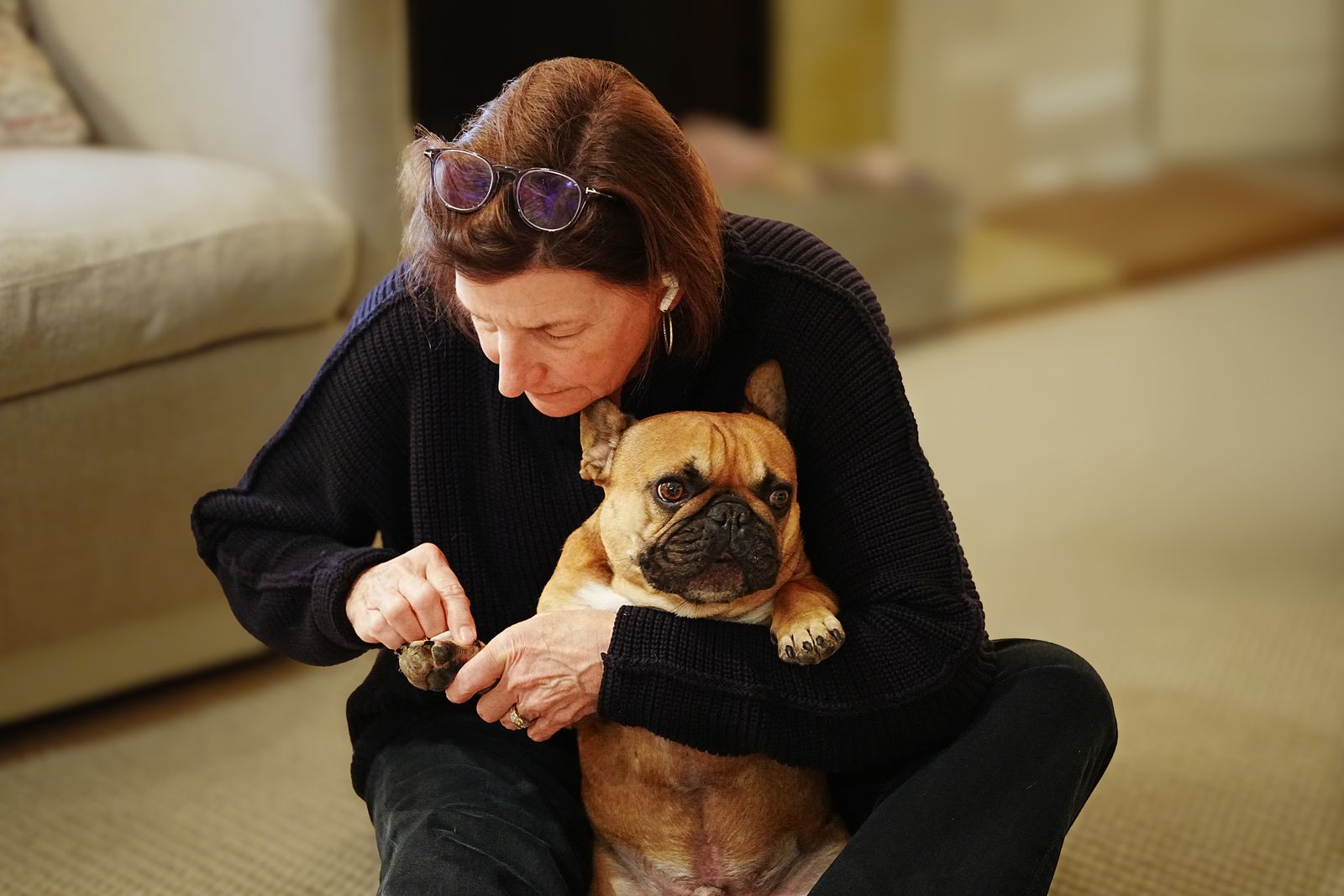
It's Sunday evening, your dog trots across the hardwood floor, and there it is again: click, click, click. You have been meaning to trim those nails for a while now. But then there was that one time it bled, or your friend's story about the time it bled, and ever since, the nail clippers have been sitting in the drawer like a guilty conscience.
f that sounds familiar, welcome to the club, it's a big one. Nail trimming is the grooming task dog people dread most. The good news: with a little anatomy knowledge, the right technique, and a dog who does not experience the whole thing as an ambush, this fear-inducing task becomes a routine that takes just a few minutes. Let's go through it calmly.
Nails that touch the ground when your dog is standing, or click audibly on hard flooring, are too long. Every nail contains the blood-and-nerve-supplied quick, so you always trim in thin slices from the tip: for light nails, stop about 2 to 3 millimeters before the pink core; for dark nails, stop as soon as a small dark dot appears in the cut surface.
For tools, scissor-style nail clippers or a nail grinder are your best bet. Most dogs need a trim about every three to four weeks, depending on how much their nails wear down naturally. And if it does bleed: pressure and styptic powder stop it almost every time. You'll find everything else here, including training for dogs who refuse.
Long nails are not just a cosmetic issue. A UK analysis of more than two million dogs under veterinary care found that nail problems come up at the vet for more than one in twenty dogs every year. The most common issues: overgrown or ingrown nails. Small dogs under 10 kilograms are affected especially often: exactly the couch potatoes who rarely put in miles on asphalt.
What actually happens when nails get too long? They touch the ground while your dog stands or walks and push against the toe joint with every step. That changes how the toes sit and how your dog moves, costs them traction on smooth floors, and can simply hurt. Experts believe this ongoing strain also puts extra stress on the joints over the long term, though a direct scientific link in that chain has not yet been proven. What is well documented is the extreme case: a neglected nail can curl so far that it grows into the paw pad. That is painful, gets infected quickly, and needs veterinary treatment.
Then there is everyday life: nails that are too long catch on rugs and blankets, splinter more easily, and tear off more often. Regular trimming is part of the basics of preventive dog health care, right alongside vaccinations and dental care.
This test costs nothing and works in the background. Next time your dog walks through the kitchen, just listen: a dog with the right nail length moves across their paw pads almost silently. The click happens when nail meets floor, and that is exactly what should not happen when your dog is standing still or walking calmly.
Two caveats apply. First, the dewclaw does not count, it never touches the ground and needs its own check, more on that shortly. Second, the test does not replace looking at each nail individually: even when the overall length is fine, a single nail can still splinter or grow crooked.
A dog's nail is not just dead keratin. At its core runs the nail quick: a strand of tissue supplied with blood vessels and nerves that nourishes the nail from the inside. Cut into it and it bleeds, and it hurts. That is exactly what everyone dreads, which is why it pays off to understand the quick instead of fearing it.
That's because the quick moves. If nails go untrimmed for a long time, the quick grows forward with them, until it reaches almost to the tip. At that point, the first trim can only take off a little without hitting it. The reverse is true too, luckily: with regular, careful trimming, the quick slowly recedes over the course of weeks. So a dog with badly overgrown nails does not reach the ideal length in one session, but through many small trims spaced one to two weeks apart. That is not failure, that is the plan.
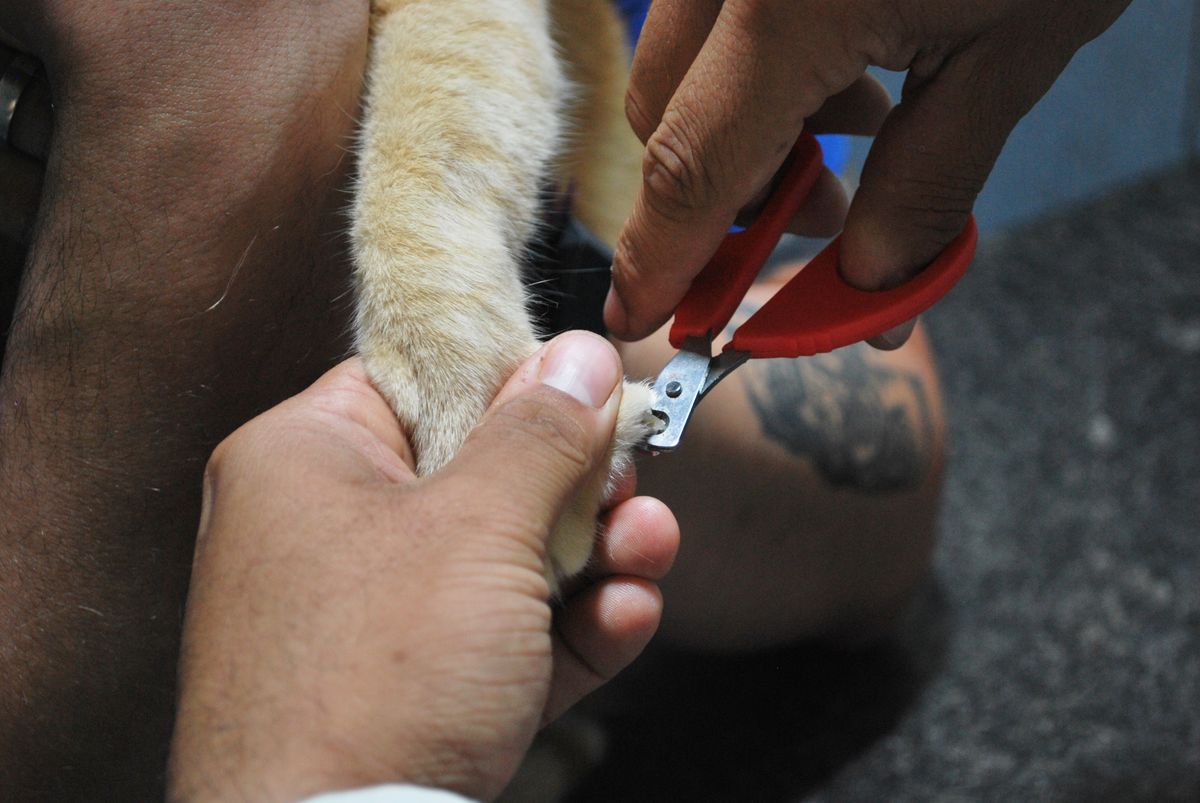
Light nails are the easy mode. Hold the paw up against the light and you will see the pink core clearly. Position the clippers a few millimeters before its end, angle the cut slightly forward and down, and you're done.
Dark nails just need more patience, nothing more. The technique: only 1 to 2 millimeters per cut, checking the cut surface after every slice. At first it looks dry and crumbly. Eventually a light, chalky white ring appears: that is your warning, from here every further cut should be paper-thin. Once a small dark or gray dot appears in the center with a slight moist sheen, you have arrived right at the edge of the quick: stop, that nail is done.
Many dark nails can be lit up from behind, too. Hold your phone's flashlight directly behind the nail: the quick often shows up as a dark shadow inside the lighter nail. This does not replace the slice-by-slice approach, but it gives you a good sense of roughly how much room you have.
A large share of bad nail-trimming experiences comes down to dull or unsuitable tools. Here's an overview:
| Tool | Who it's for |
|---|---|
| Scissor-style nail clippers | The first choice for most dogs, cuts cleanly instead of crushing, works well even on thick nails |
| Guillotine-style clippers | Not really: often crushes the nail instead of cutting it, which is uncomfortable |
| Nail grinder (electric) | Good for noise-tolerant dogs and dark nails, smooths edges, needs some getting used to |
| Nail file | For smoothing sharp edges after trimming |
| Human nail clippers | No: not designed for a dog's rounded nails, splinters the keratin |
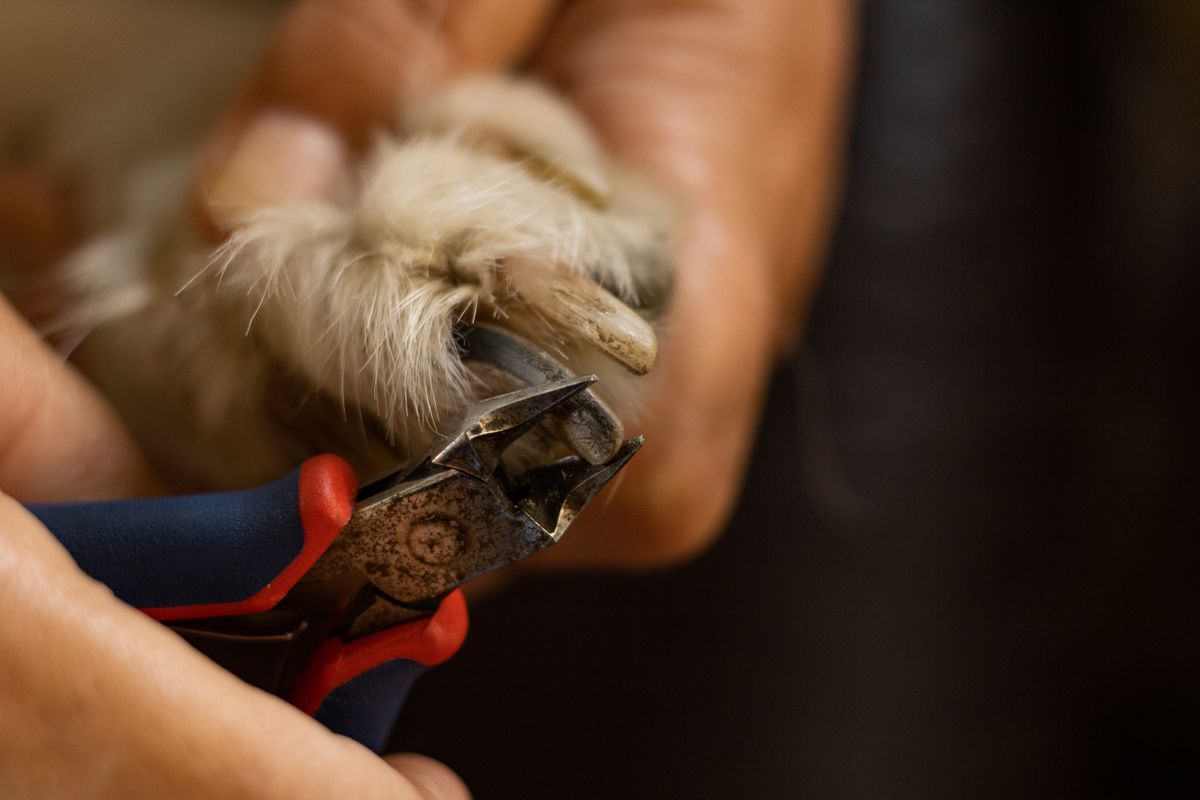
Veterinary recommendations clearly favor the scissor type: two blades pass by each other and cut the nail cleanly. Sharpness matters, a dull pair of scissor-style clippers will crush the nail too. Small dogs do better with small clippers, which are easier to control precisely.
A grinder is a real alternative, especially for dark nails, because you can work forward in tenths of a millimeter. Two things to know: friction heats up the nail. Grind for only one to two seconds per spot and keep the tool moving. And keep long fur well away from the grinding head so nothing gets caught in it; for fluffy paws, an old nylon stocking pulled over the paw with just the nails poking through works well.
Pick a calm moment, not right after a wild play session. Small dogs do well on your lap or up on a non-slip table, large dogs can stand or lie relaxed on their blanket. A second person handing out treats up front is worth its weight in gold, but not a must.
On the inside of the front legs, a bit above the paw, many dogs have a dewclaw, a kind of thumb. Some dogs have them on the back legs too. Because it never touches the ground while walking, it never wears down: no click test, no natural wear, nothing. Left unchecked, it slowly keeps curving forward until the tip presses into the pad or grows in.
So the rule is: check and trim the dewclaws every time you trim nails. On long-haired dogs, they tend to hide in the fur, so a quick rummage through is worth it. An ingrown dewclaw is a classic problem especially in less active dogs and seniors, and a monthly check reliably prevents it.
First, for reassurance: a nicked quick is painful and bleeds surprisingly dramatically, but in healthy dogs it is not a dangerous injury. Right now, your dog needs one thing above all: you, staying calm.
Press a clean cloth firmly onto the nail tip for five to ten minutes. If the bleeding has not stopped by then, press styptic powder or a styptic pencil onto the spot; cornstarch or flour, pressed on firmly, works as a substitute. If the nail is still bleeding after fifteen to twenty minutes, or it has torn off high up or near the base: see a vet. A deeply torn nail with the nail bed exposed is painful, at risk of infection, and always needs veterinary treatment.
Styptic powder is inexpensive and available at pet stores or your vet's office; it belongs in every dog's first-aid kit, ideally before the first time you actually need it. One more thing: a single incident does not ruin everything. Give your dog a few days off, then continue with extra treats and paper-thin slices.
The best technique doesn't help much if your dog bolts under the sofa at the sight of the clippers. Behavioral medicine organizations agree on this: restraining and pushing through is not a solution. Pinning down a resistant dog and cutting against their resistance does not solve the problem, it trains fear instead; next time the resistance starts earlier and stronger. Do not restrain and force it: practice in small steps instead, or hand the task over to your vet's office or a groomer for now.
The path to a relaxed dog is called cooperative care training, and it is less dramatic than it sounds. You break nail trimming down into tiny steps and pay well for each one:
With puppies, you get the easiest start: pair paw touching and the sound of the clippers with treats from day one, and they never even learn the drama. With adult dogs who have had bad experiences, building this up takes weeks, not days. That is normal and worth every minute, because nail trimming stays part of life for as long as your dog does.
The standard answer is: check about every three to four weeks and trim as needed. The honest answer is: it depends on wear. A dog who walks on asphalt and concrete every day files down their nails somewhat on their own; a meadow-and-forest dog or a lap dog barely does at all. In summer, many dogs spend more time on hard ground, in winter less; you can find more on seasonal differences in our summer grooming routine.
| Life stage | Rule of thumb |
|---|---|
| Puppy | Trim minimally every two to three weeks, mainly as training |
| Adult dog | Check every three to four weeks, use the click test as an everyday check |
| Senior | Check more often: less movement, less wear, often thicker nails |
Seniors deserve their own paragraph, because several things add up here. Older dogs' nails often get thicker, harder, and more brittle, while wear drops off because of shorter walks. At the same time, many joints are not as young as they used to be: hold the paw in its natural position instead of twisting it sideways, and let your dog lie down if standing is hard for them. Shorter sessions, more often, are the kindest approach for senior paws.
If you'd like some help keeping the rhythm: in the Souldog app, you can set a recurring reminder for the nail check, so the task nudges you before the floor starts clicking again.
Trimming nails yourself is not a test of courage. There are good reasons to hand off the task: an ingrown or deeply torn nail, badly overgrown nails with the quick grown far forward, a dog who panics despite training, or simply your own gut feeling. At the vet's office or a groomer, nail trimming usually costs a low two-digit amount and is done in a few minutes; many practices are happy to show you the technique on your own dog if you ask.
A sensible middle ground: have a professional do the first trim and show you the right length, then keep up with small steps at home afterward. You can read how nail care fits into a complete at-home grooming session in our guide to at-home dog grooming. And if your dog belongs to the curly-coated and Doodle crowd, where nails love to hide in the fur, our guide to coat care for Poodles, Maltipoos, and friends will help.
Nail trimming will never be your dog's favorite hobby, but it can become one of those rituals that just happens in the background: two minutes, a few treats, done. The click test tells you when it's time, the slice-by-slice technique protects the quick, and the training makes sure the clippers eventually become about as exciting as the brush.
Start small, maybe today it's just one paw in your hand and a treat. Your dog will remember exactly that. And on your next Sunday walk across the hardwood floor, you will hear: nothing. That is exactly how it should sound.
 Souldog