Scratching, head shaking, a strong smell from the ear: there is rarely just one cause behind it. This guide sorts out the suspects and shows you when watching and waiting is enough, and when it's time for the vet.
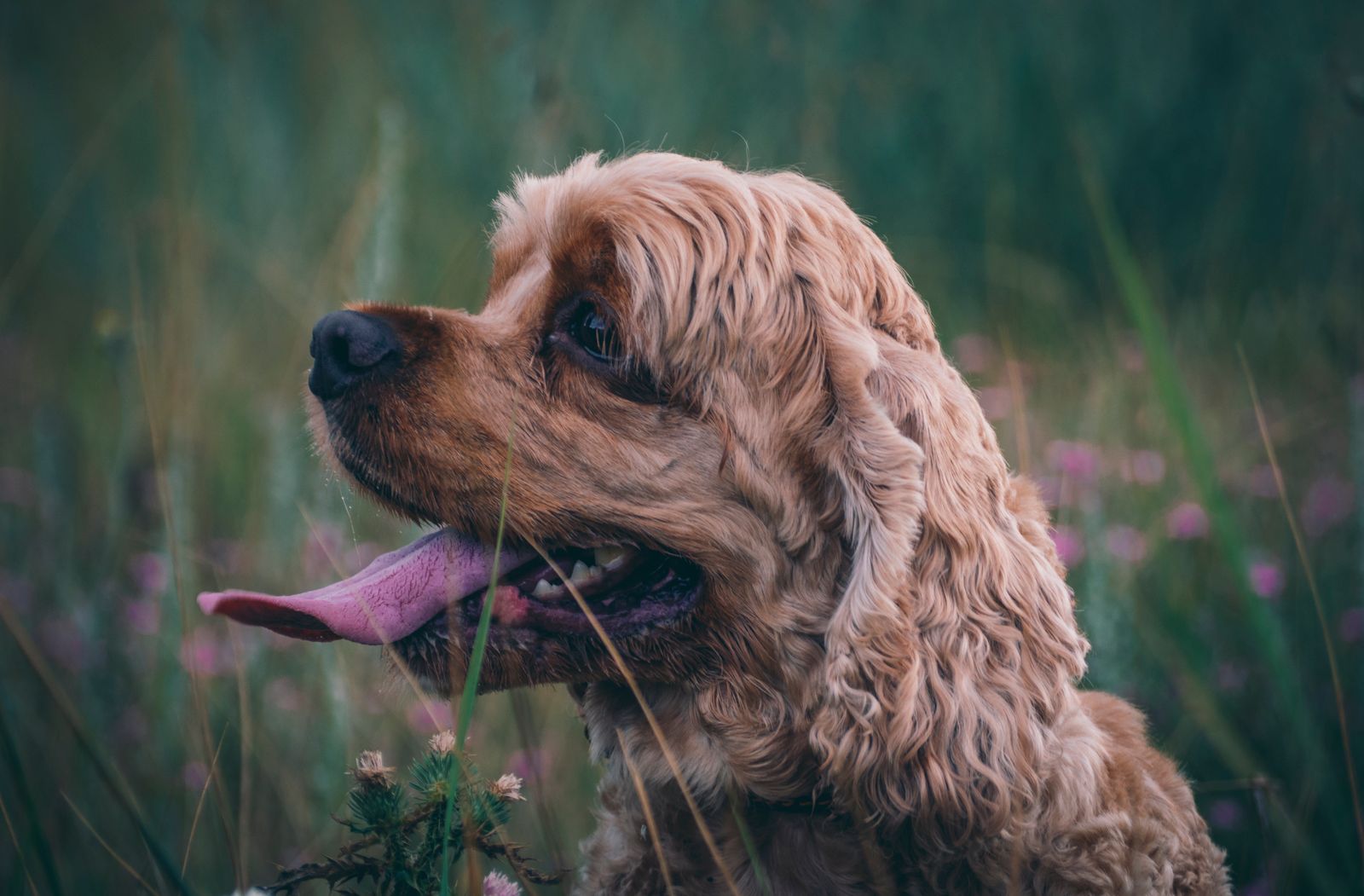
t usually starts at night. That rhythmic scratching next to the bed, then the flap of ears as your dog shakes its head, loud enough to startle you awake. The next morning you lean down, lift the ear flap, and a smell hits you that you have never noticed before. Sweetish, sharp, somehow wrong. And the first reflex, often echoed by the internet, is: "It must be an allergy."
Maybe. Maybe not. Itchy ears are one of the most common problems dogs face, and this is exactly the case where the quick answer is often the wrong one. Behind an itchy ear there is rarely just a single cause; usually it is a combination of several. Anyone who jumps straight to "allergy" can easily miss the mite, the grass awn, or the yeast overgrowth that has already joined the party. Let's sort it out.
Itchy ears in dogs can have several possible causes: allergies, ear mites, yeast, bacteria, foreign objects like grass awns, or anatomical factors like floppy ears. Allergies are the most common underlying cause behind recurring problems, but they are only one of several. If there is pain, pus, a strong smell, or a head tilt, the ear needs to see a vet soon.
That sounds like a lot of possibilities, and that is exactly the point. An ear infection, known medically as otitis externa, is almost never a single-cause story. That is why it helps to think of the ear as a small ecosystem, one where several things can fall out of balance at the same time.
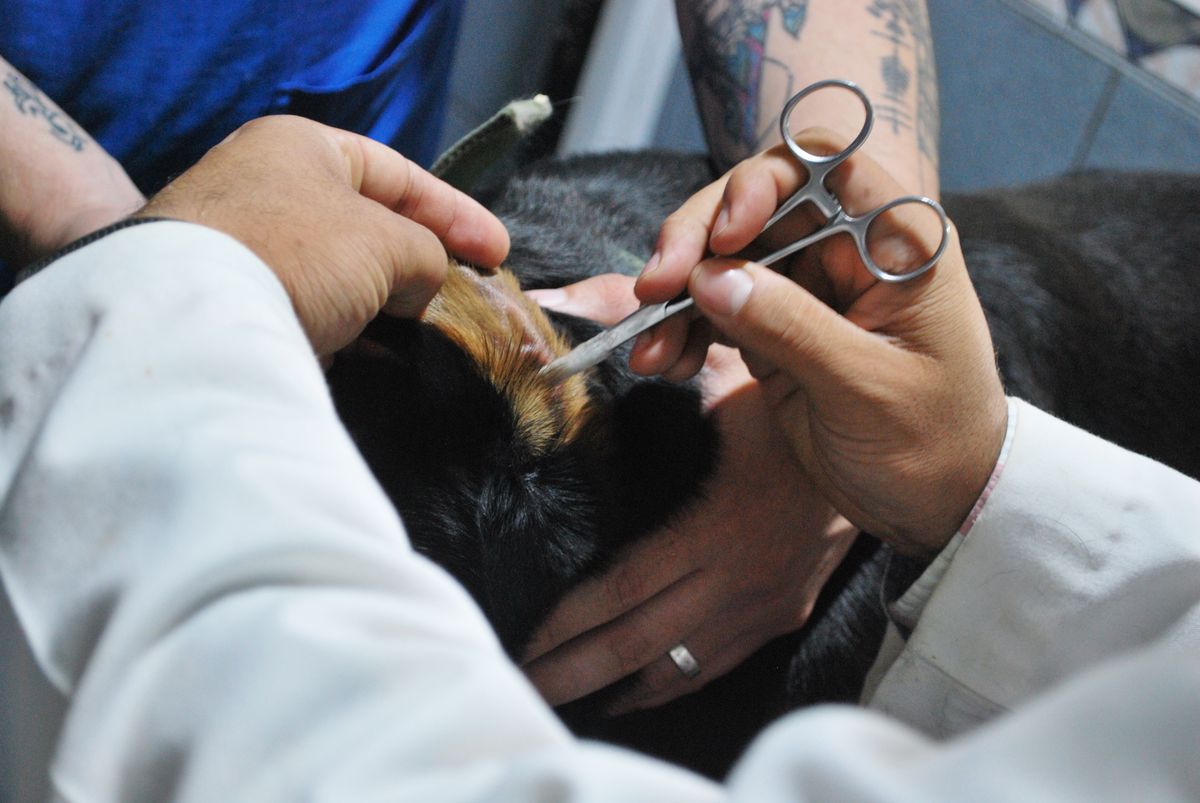
Vets think about ear problems in four layers, and that framework can help you understand the whole picture too. First there are the predisposing factors: things that make an ear more vulnerable without triggering the inflammation themselves. Floppy ears that ventilate the ear canal poorly. A narrow or heavily haired ear canal. A lot of moisture from bathing or swimming. According to a large British study, dogs with drop ears get otitis almost twice as often as dogs with erect ears.
Then come the primary causes, the ones that actually light the fire. Allergy tops the list here: in recurring ear infections, an underlying allergic condition, meaning atopy or a food allergy, is involved in 43 to 75 percent of cases, depending on the study. But not always. Ear mites, a foreign object, hormonal disorders, or disorders of skin keratinization can just as easily be behind it.
And finally the secondary factors: bacteria and yeast that overgrow in an already disrupted ear. They are what smells and looks the worst, but they are a consequence, not a cause. That is the key mistake in the allergy-only reflex, and in the cleaning-only reflex too: anyone who just wipes away the yeast or only treats the suspected allergy leaves the actual cause untouched. And it reliably comes back.
A small rule of thumb from practice: if the itching suddenly affects only one ear, vets first think of a foreign object. If both ears are affected, that points more toward a systemic cause like an allergy. It is a rule of thumb, not a law, but it helps when you are observing.
Before you read on, an important note: the table below is meant to help you look more closely and report more precisely to your vet. It is not a diagnosis. Whether yeast, bacteria, or both are sitting in the ear can only be confirmed under a microscope, with an ear swab, known as cytology. Color and smell only give you a suspicion, nothing more.
| Suspect | Typical Discharge & Smell | Notable Signs |
|---|---|---|
| Allergy / Atopy | little to waxy, often both ears | most common underlying cause in recurring cases, often also paw or skin itching |
| Ear Mites | dry, dark brown to black, like coffee grounds | very intense itching, contagious; rarer in adult dogs than commonly thought |
| Yeast (Malassezia) | brownish, waxy and greasy | yeasty, musty, rancid smell |
| Bacteria | yellowish and pus-like to creamy, chronically slimy-green | strong, foul smell, often painful |
| Foreign Object (Grass Awn) | usually one ear only, little discharge | sudden violent shaking, visibly restless, painful |
A few things are worth knowing in more detail. Ear mites are the usual suspect in popular belief, but in adult dogs they are actually a comparatively rare cause, far rarer than in cats. In puppies and in multi-pet households with cats, however, they are a real concern, and then every animal in the household needs treatment, because they are highly contagious.
Yeast like Malassezia is actually a normal resident of every dog's ear. It only becomes a problem once the environment tips out of balance, for example through moisture or an underlying allergy. That is exactly why it does not help to fight the yeast alone while ignoring the cause.
And the grass awn, that small barbed seed, is the classic summer culprit. Its shape means it only ever moves deeper, never back out, and it can travel all the way to the eardrum. A dog that suddenly shakes its head wildly and whines on a field path often has nothing more complicated than this. It is a case for the vet's office, usually under light sedation, and not something to handle yourself.
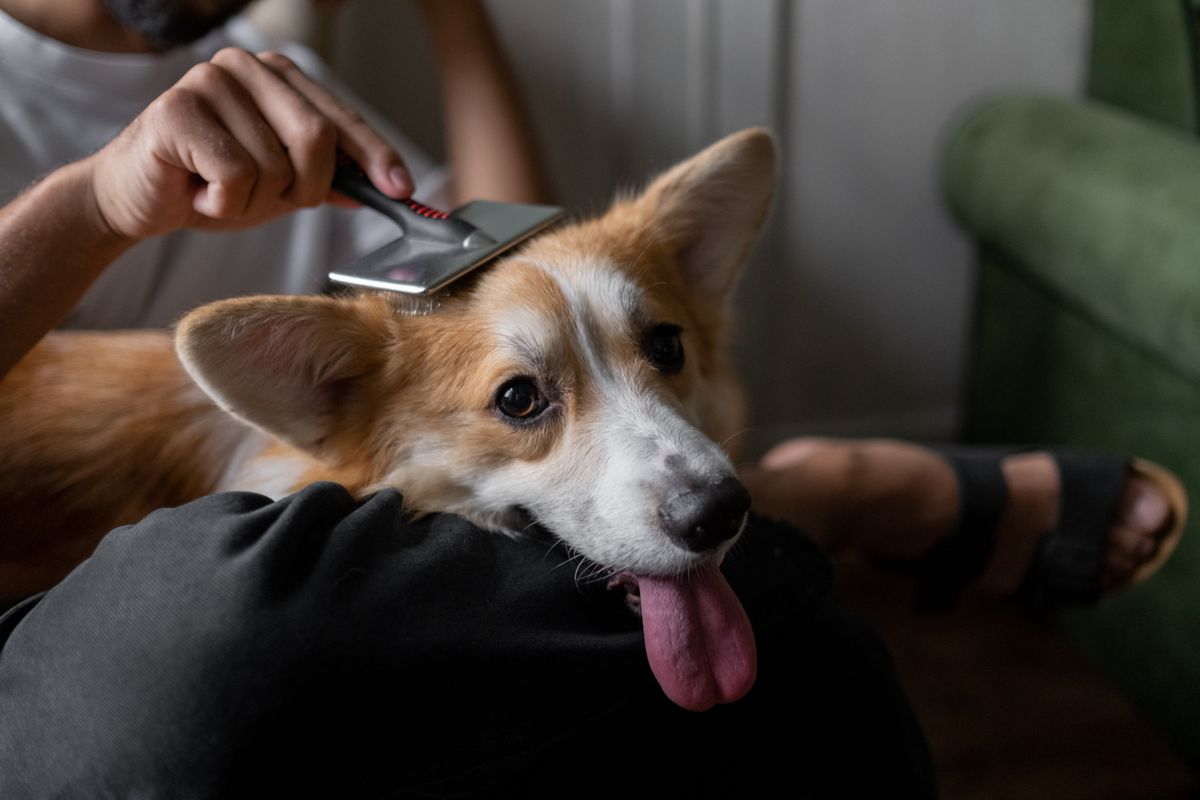
The good news: a healthy dog ear needs almost no care. It largely cleans itself, and constant wiping tends to irritate the sensitive skin rather than help it. Over-cleaning can actually encourage otitis to develop. A light brown residue of earwax with little smell is completely normal and does not need to be removed. Regular cleaning only makes sense for certain dogs, such as floppy-eared breeds or after swimming, and ideally after talking it through with your vet.
If you do clean, do it properly. Put a suitable ear cleaner into the ear canal, gently massage the base of the ear, let your dog shake its head, and then wipe only the outer, visible area with a cotton pad or gauze. The basic rule is simple: never clean deeper than you can see.
Beyond that, it becomes a safety issue, and this is where things stop being casual. Cotton swabs have no place in the ear canal, they push wax further in and can cause injury. And please skip home remedies: no oil, which traps moisture in, no vinegar water, which can burn a sore ear, no hydrogen peroxide. A dog's L-shaped ear canal holds such liquids in rather than letting them evaporate, and the damp environment feeds exactly the germs you are trying to get rid of.
Most important: never use leftover ear drops from a previous treatment. The reason is medically serious. Some active ingredients, including antibiotics like gentamicin or neomycin, as well as chlorhexidine and cleaners containing isopropyl alcohol, can damage the inner ear if the eardrum is perforated. Only a vet can check with an otoscope whether it is intact. That is why diagnosis always comes before treatment, never the other way around.
Watching and keeping things gently clean is one thing. With the following signs, doing it yourself is over, and the ear belongs in professional hands.
| Situation | Recommendation |
|---|---|
| Head tilt, stumbling, eye flickering, sudden deafness, one side of the face drooping | Get this checked immediately, it can indicate middle or inner ear involvement |
| Severe pain, your dog will not let you touch the ear anymore | See a vet soon |
| Pus-like or bloody discharge, significant swelling, a strong smell | See a vet soon |
| Sudden violent one-sided head shaking after a walk | See a vet, possible foreign object (grass awn) |
| Recurring ear infections despite treatment | See a vet, the underlying cause (often allergy) needs to be identified |
| Thick, tense swelling on the ear flap | See a vet, possible aural hematoma from violent shaking |
Two of these rows deserve an extra sentence. A head tilt combined with balance problems is never harmless: it suggests the inflammation sits deeper, in the middle or inner ear, and from there it can, in the worst case, spread further. And recurring ear infections are almost always a sign that the actual cause was never identified. If your dog has the same ear infection for the third time, the question is not "which drops", but "why does this keep happening". That is often the moment when an allergy work-up makes sense. You can find a good overview of how to keep an eye on your dog's overall health in our comprehensive guide to dog health (German article). And if your dog is a curly-coated or floppy-eared type, it is also worth a look at our care routine for coat, ears, and paws (German article).
An itchy ear is rarely dramatic, but it is a signal, and it is rarely as simple as your first guess makes it seem. The next time you hear that scratching, do not jump straight to allergy. Take a look, take a quick sniff, note whether it is one ear or both, and since when and how often. These observations are worth their weight in gold, and you can jot them down right in the Souldog app, so you are not left guessing at the vet appointment.
Most of the time, it is something that treats well once you know the real cause. And that cause is found almost every time, as long as someone looks closely enough. Your dog hears every rustle of the treat bag. It is only fair that you pay just as much attention to its ears.
 Souldog