



25 to 29 cm at the withers, about 5 kg per the FCI standard and a cloud of curls that demands grooming: here's how a Bichon Frise's size, character, health and costs fit into your daily life.
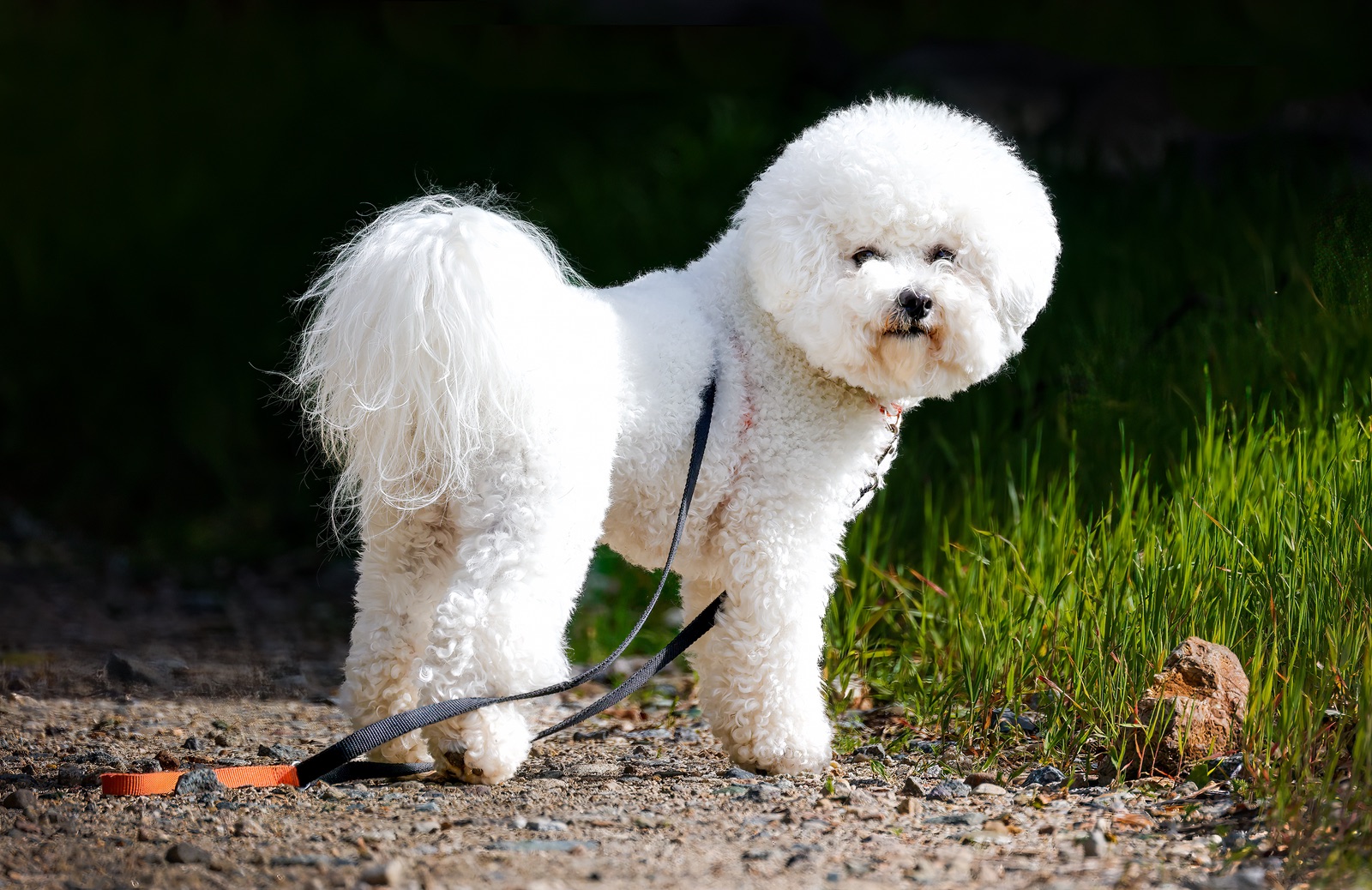
A full-grown Bichon Frise stands 25 to 29 cm tall under the FCI standard and weighs about 5 kg. You'll recognize him by his white cloud of curls, which looks as if someone pulled a poodle fresh out of the dryer. Behind it is a cheerful companion who loves to be included in everything, and whose coat means work you can plan for.
e sort out the measurements per the standard (including the numbers that circulate online but appear in no standard), look at the documented health topics and answer the allergy question without sugarcoating. On costs, we work without invented prices.
| Trait | Detail | Source |
|---|---|---|
| Origin | French-Belgian, patronage France and Belgium | FCI Standard No. 215 |
| Classification | Group 9, Section 1.1 (Bichons) | FCI Standard No. 215 |
| Height at withers | 25 to 29 cm | FCI Standard No. 215 |
| Weight | about 5 kg, depending on size | FCI Standard No. 215 |
| Coat | Loose corkscrew curls on top, fine silky undercoat | FCI Standard No. 215 |
| Color | pure white | FCI Standard No. 215 |
| Life expectancy | often around 12 to 13 years | UK Kennel Club Survey, small sample |
| Trait | Male | Female |
|---|---|---|
| Height at withers per standard | 25 to 29 cm | 25 to 29 cm |
| Tolerance | 1 cm more (up to 30 cm) | 2 cm less (down to 23 cm) |
| Weight per standard | about 5 kg | about 5 kg |
You measure the height at the withers from the ground to the spot between the shoulder blades while the dog stands straight. The curls don't count, even though they make the dog look bigger in photos.
The weight deserves a closer look. Online you'll find ranges of 3 to 8 kg, and some sound very sure of themselves. No standard we've read contains such a range. The FCI says "about 5 kg, depending on size", nothing more. The American AKC standard prefers 9½ to 11½ inches, which is roughly 24 to 29 cm, and gives no weight at all.
The standard measurements are not a diagnosis for the individual dog. Whether your Bichon has a good weight is something your vet judges from body structure, muscle and fat cover; the WSAVA recommends the Body Condition Score for this. Under curly fur, extra weight hides easily, so regular weighing and a hands-on rib check belong in your routine. Track the trend instead of comparing a single number with the standard.
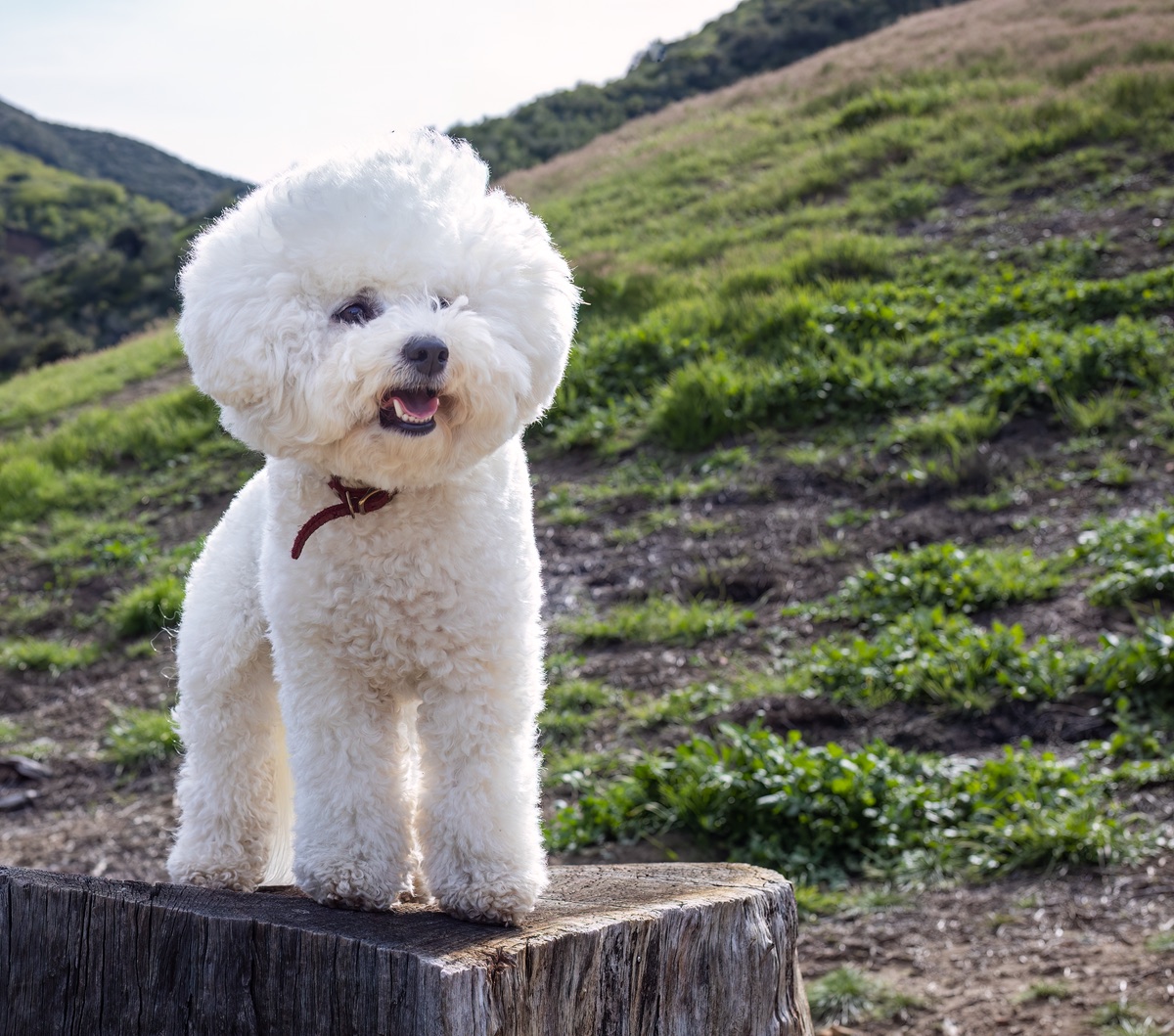
The name gives it away: "frisé" means frizzy or curled. The FCI describes the top coat as loose corkscrew curls, with a fine, silky undercoat beneath. The coat should be neither flat nor woolly nor matted. It may be trimmed: the standard explicitly says that clipping is accepted. Only the plume of the tail must not be shortened.
The color is pure white. Puppies may have a slight beige (champagne) tint until their first birthday, on no more than 10% of the coat. So if your puppy moves in with a beige hint, that's fine in a puppy. If an adult dog shows clearly more tint, the standard counts it as a fault.
On tear stains under the eyes, the standard says something striking: it counts them as a serious fault. That's a breeding criterion, not a health verdict, but it shows how common the issue is. We'll get to it in the grooming section.
Many breed portraits claim the Bichon comes from Tenerife and lived at the court of Henry III. The FCI standard doesn't say that. It describes how the Bichon frisé came from Italy to France during the Renaissance and was first called "Barbichon", a small version of the Barbet, from which "Bichon" later developed. In the 17th and 18th centuries the little dogs appear in numerous paintings. Under Napoleon III he was fashionable again and was called "Ténériffe". That's a name from that period, not proof of an origin on the island.
After the two world wars the breed almost disappeared. Breeders from France and Belgium saved it, and the current name "Bichon à poil frisé" was set in 1978, according to the FCI. You can tell the anecdotes about royal courts, but you should label them as tradition.
If you keep a Bichon, you rarely get a dog who retreats into a corner. He wants to be in the middle of things, while you cook, while you're on the phone, on the way to the mailbox. The standard calls him a "true companion who can easily be taken everywhere", never nervous or yappy. That's a lovely ideal. Your dog is still an individual, and whether he barks also depends on imprinting, socialization and training.
He's lively and likes to play, but doesn't need competitive sport. Daily walks with a bit of play and small thinking tasks are plenty for many Bichons. That suits an apartment, as long as exercise and activity don't get dropped.
The standard calls him very affectionate. Whether a dog stays alone calmly depends on experience and training, not on breed alone. That the Bichon is especially prone to separation anxiety is not scientifically documented. You should still practice early and in small steps. How that works, you can read in the post leaving your dog alone, and for real signs of panic the guide on separation anxiety helps. As with all small dogs, one more thing applies: more frequent walks and consistent training help with house training, more than a breed label does. You'll find help in the post puppy won't house train.
He can suit first-time owners if they plan time for grooming, training and company. Check three points before deciding: Who takes care of the daily brushing? Who looks after him when you're out? And do you have a budget for the groomer and the vet? How the individual dog handles visitors, children and noises, you'll see on personal visits before buying or adopting.
For the Bichon, the data is thin, and we say so openly. Many guides list a dozen diseases without naming a source. We limit ourselves to what we could document.
Bladder stones. The MSD Veterinary Manual lists the Bichon Frise among the small breeds that form calcium oxalate stones more often. These stones can't be dissolved with medication, they have to be removed. Signs are frequent passing of small amounts of urine, blood in the urine, pain when urinating or unsuccessful straining. That belongs at the vet's the same day. In a male who passes little or no urine, it is an emergency.
Patellar luxation. Here the kneecap jumps out of its groove, and a short hop or limp is typical. In a Swedish analysis of 1,071 Bichon records (Zanders et al. 2018) the frequency was 12%, and heritability was demonstrable. A knee check of the parent dogs therefore makes sense.
Cataracts. According to Gelatt et al. 2003, cataracts in the Bichon are probably hereditary and often affect dogs between 2 and 8 years old. The study comes from clinic populations, so its percentages can't be applied to all Bichons. A clouding of the lens should be checked by an eye specialist.
A few points are less well documented or general. Tear stains are common, and sometimes a narrowed tear duct is behind them. The British Kennel Club survey lists eye topics such as epiphora and tear duct problems. Dental problems are a small-dog topic; for the Bichon alone the data is weak, but dental care remains a must. Skin problems occur, and we could not document an established breed predisposition for atopy. Diseases such as Cushing's, pancreatitis or Legg-Calvé-Perthes, which appear in many portraits, we did not find confirmed for the Bichon and have therefore left out.
And what does that mean when buying? The Verband Deutscher Kleinhundezüchter (VK) in the VDH requires a breeding admission test and a DNA profile for breeding dogs. In the implementing regulations (as of June 2026) we found no breed-specific mandatory examinations for the Bichon, such as patella or eyes. So ask breeders for voluntary results on kneecaps and eyes. Results from the parent dogs are no guarantee for the individual puppy, but they're an honest start.
The coat is soft, dense and curled, and that is exactly what makes it prone to problems. Loose hairs often don't fall out but stay caught in the curls and mat if you don't brush them out. So plan on regular combing down to the skin, especially behind the ears, in the armpits and on the legs. There is no fixed number of weeks for the groomer; groomers often name intervals of several weeks, which is a rule of thumb, not a standard. What's practical in daily life, we show you in the post on grooming poodles, Maltipoos and co.. Whether and how short you should clip in summer is explained in the guide clipping your dog in summer.
Tear stains are brownish-red streaks under the eyes that stand out especially on light fur. Gently wipe the eye area with a damp, soft cloth and keep the hair at the corner of the eye short. If tearing, redness or blinking suddenly increases, have the eyes examined by a vet, because a foreign body, an inflammation or a disturbed tear drainage can also be behind it.
Low shedding is not the same as hypoallergenic. A dog breed that is proven allergen-free does not exist. Studies found no difference in the amount of the main allergen (Can f 1) in homes between supposedly hypoallergenic and other breeds. For the Bichon there is no data of its own. If you're allergic, you should spend longer time with the specific dog before getting one and get medical advice.
That many Bichons really do spread less hair around the home is an observation from many owners, not a study. The allergen is found mainly in saliva and dander, and those remain present even with a curly coat. You'll find more on the topic in the overview of small dogs that shed little.
Separate the purchase price from the running costs. For the puppy price there is no reliable range we could name responsibly: neither the FCI nor the VDH nor the breed club publishes one, and prices from classified portals say little about breeding and health. The Deutscher Tierschutzbund generally cites up to several thousand euros for purebred dogs from breeders. Breeders set prices themselves. A high price doesn't prove good breeding, and a very low one should make you suspicious.
The Tierschutzbund estimates the running costs for a dog at a minimum of 1,200 to 1,350 euros per year (tax, liability insurance, food, vaccinations, deworming), which works out to 100 to 112.50 euros per month. The figure is a minimum estimate for a medium-sized dog, not a Bichon flat rate. Vet visits, dog school and grooming come on top. With a small dog like the Bichon the food costs less, but regular groomer appointments are added.
| Cost item | What to clarify before getting a dog |
|---|---|
| Purchase or adoption | Ask the breeder or shelter for the total price in writing and the documents included |
| Starter equipment | Plan for harness, leash, sleeping place, transport option, brush and comb |
| Food and grooming | Check actual food costs and get a quote from the groomer for coat condition and cut; prices vary a lot locally |
| Tax and insurance | Check the local dog tax and insurance premiums; spread annual amounts over twelve months |
| Health | Preventive care plus a reserve for unexpected treatment, for example for bladder stones or the kneecap |
| Care | Add a sitter, vacation care or dog school if needed |
Which costs an insurance covers depends on the contract. Our guide to dog insurance explains the differences between liability, surgery and health insurance. A look at the dog tax 2027 is worthwhile too.
With a popular breed there are many providers, and not all of them work reputably. Make sure you may visit the mother and the litter's surroundings and that the puppies look cared for and well socialized. You should also be able to see the pedigree and any existing health results. A good breeder questions you too. The VDH recommends, among other things, visiting the puppies and the mother and checking the documentation. Bichons and Bichon mixes also occasionally wait in shelters or emergency placements; ask at local shelters.
And the mixes? Bichon-poodle mixes like the Bichpoo or Poochon sound like a healthy compromise. A large analysis (Bellumori et al. 2013) found some hereditary diseases more common in purebred dogs, but no difference in others, for example patellar luxation. So a mix is not automatically healthier. On top of that, designer mixes lack a breed standard and a VDH breed club. A dog becomes healthy through screened parent dogs, not through a label.
All four belong to the family of Bichons and related breeds (FCI Group 9, Section 1). The numbers come from the respective FCI standards:
| Breed | Height at withers | Weight per standard | Coat |
|---|---|---|---|
| Bichon Frise | 25 to 29 cm | about 5 kg | curly, pure white |
| Maltese | 20 to 25 cm | 3 to 4 kg | silky, long, pure white |
| Havanese | 23 to 27 cm (tolerance 21 to 29) | no specification | long, wavy, many colors |
| Coton de Tulear | male 26 to 28 cm, female 23 to 25 cm | male 4 to 6 kg, female 3.5 to 5 kg | cotton-like, white |
So the Bichon is built a bit taller than the dainty Maltese and carries a curl structure instead of silky long hair. If you have the choice, you should get to know all the candidates in person. You'll find a larger overview of small curly dogs in the guide to small curly-haired dog breeds.
The Bichon is a good choice if you're looking for a small, cheerful companion, spend a lot of time with him and accept the coat as a fixed item in your calendar. He fits into an apartment, likes to play and enjoys company. For people who want to take their dog along, he's made to measure.
He fits less well if you're out often and for long stretches, have little time or budget for grooming, or hope for a breed guarantee because of allergies. Bladder stones and the kneecap are also topics you should expect. Not sure whether it should be a Bichon at all? The breed quiz helps you sort it out, and you'll find the compact key facts in the Bichon Frise breed profile.
The Bichon Frise is a charming, affectionate companion, but not a dog you can keep on the side. He needs closeness, grooming and an eye on bladder and knees. If you bring that, you get a cheerful housemate who makes you smile even on gray days.
For daily life, you can record weight and health observations in your dog's profile in the Souldog app. A history helps you describe changes concretely at the next vet appointment; it doesn't replace an examination.
 Souldog