Toy Poodle, Maltipoo, Cavapoo, Cockapoo: on the street these little curly dogs look almost identical, yet in size, character and health they differ far more than their teddy-bear coats suggest. Here you'll find the one that fits your life.
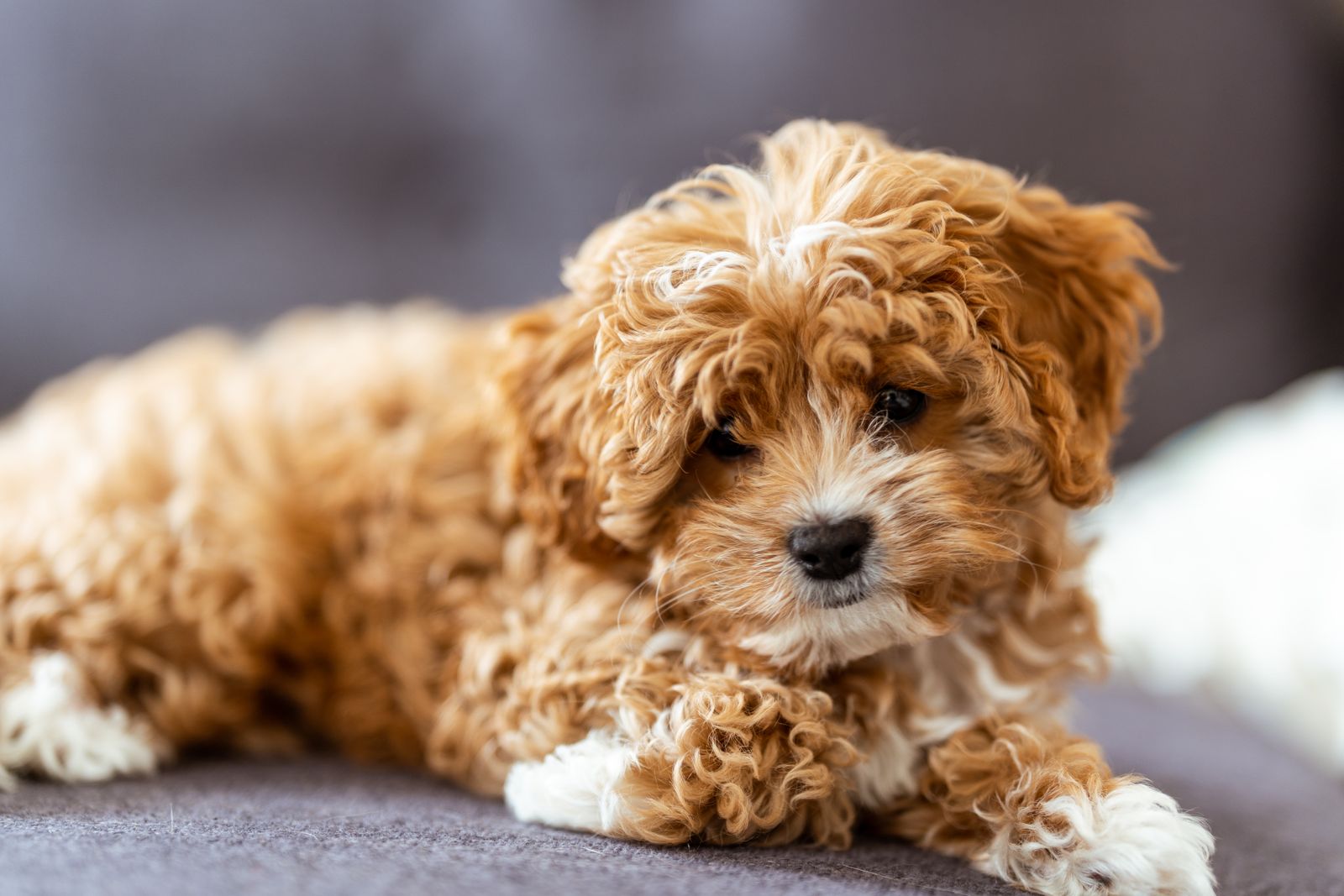
You're standing in the park and a little curly-haired dog comes wriggling around your legs. Cream-white, soft teddy-bear coat, button eyes, instantly adorable. But what exactly is it? A Toy Poodle? A Maltipoo? Maybe a Cavapoo or a Cockapoo? From the outside they're almost impossible to tell apart, yet once you look beneath the coat you're dealing with quite different dogs.
hat's exactly where we start. Most guides promote a single breed like a sales brochure, always the same three promises: low maintenance, hypoallergenic, great with kids. We do things differently and line up the whole family of small curly dogs side by side. How big do they really get, what are their personalities like, what's actually behind the hypoallergenic claim, and which health topics belong on your checklist. At the centre are the Toy Poodle and the Maltipoo, the two that get confused most often, with their closest relatives from the Cavapoo to the Bolognese arranged around them. By the end you'll know which small dog suits your life.
Before we go into detail, here's the whole group in a direct comparison. The figures are guidelines, not guarantees, because in mixed breeds a lot varies depending on the poodle parent. "Designer mix" means: no recognised standard. "Breed (FCI)" means: a fixed standard with controlled breeding.
| Breed | Size / Weight | Temperament | Life expectancy | Key health topics | Status |
|---|---|---|---|---|---|
| Toy Poodle | 24-28 cm / 2-4 kg | very intelligent, eager to learn | 13-16 yrs | Patella, PRA | Breed (FCI) |
| Maltipoo | 20-35 cm / 2-9 kg | affectionate, playful | 12-16 yrs | Patella, PRA, liver shunt | Designer mix |
| Cavapoo | 23-40 cm / 4-11 kg | gentle, people-oriented | 12-15 yrs | Heart (mitral valve), syringomyelia | Designer mix |
| Cockapoo | 23-38 cm / 3-14 kg | cheerful, eager to learn | 13-17 yrs | Ear infections, PRA | Designer mix |
| Havapoo | 20-38 cm / 3-10 kg | friendly, adaptable | 12-15 yrs | Eyes, patella | Designer mix |
| Yorkipoo | 18-38 cm / 2-7 kg | lively, wilful | 10-15 yrs | Liver shunt, trachea, teeth | Designer mix |
| Pomapoo | 20-25 cm / 2-7 kg | affectionate, alert | 12-16 yrs | Patella, trachea | Designer mix |
| Bichpoo / Poochon | 23-38 cm / 3-8 kg | playful, people-oriented | 12-15 yrs | PRA, patella, bladder stones | Designer mix |
| Maltese | 20-25 cm / 3-4 kg | affectionate, lively | 12-15 yrs | Liver shunt, patella | Breed (FCI) |
| Bichon Frisé | 25-29 cm / ~5 kg | cheerful, playful | 14-15 yrs | Bladder stones, patella | Breed (FCI) |
| Havanese | 21-29 cm / 3-6 kg | cheerful, sociable | 14-16 yrs | Cataracts, patella | Breed (FCI) |
| Bolognese | 21-26 cm / 2-5 kg | good-natured, affectionate | 12-16 yrs | Patella, teeth | Breed (VDH national) |
| Pomeranian | 18-24 cm / 2-4 kg | alert, lively | 12-16 yrs | Trachea, patella, Alopecia X | Breed (FCI) |
Two patterns stand out immediately. First: pedigree breeds have narrow size windows, while mixed breeds have wide ones. That's no coincidence; it follows directly from whether a standard exists. Second: almost all share the same small-dog health topics, above all the kneecap (patella) and the eyes. We'll look at both of those in more detail shortly.
This single distinction shapes almost everything else about every dog on this list, so it comes first. A Toy Poodle, Maltese or Havanese is a recognised breed with a fixed standard. That standard specifies how large the dog will be, what its coat should look like and which temperament traits are desired. A breeder registered with the Kennel Club must have their breeding animals assessed, litters are monitored and lineage is documented across generations. That's no guarantee of a perfect animal, but it is a close-knit safety net.
A Maltipoo, Cavapoo or Cockapoo has none of that. These "doodles", that is, poodle mixes, are not recognised as breeds by the FCI or any major kennel club. There is no size standard, no coat specification and no temperament description that anyone is obliged to follow. What appears as a "breed profile" on sales websites is an editorial summary, not a standard.
Then there's the genetics of the first crossbreeding generation. An F1 mix inherits half its genes from each parent breed, but which half is random. That's why littermates from the same litter can turn out different sizes, have different coats and behave quite differently. The abbreviations breeders use describe exactly that:
What this means for you: with a pedigree breed the adult size is predictable; with a mix it's an educated estimate. Anyone who promises you an exact adult weight for a doodle is promising more than biology can deliver.
No pair gets mixed up as often as these two, so let's look closely. The Toy Poodle is the breed; the Maltipoo is the mix of Maltese and Poodle. Almost everything else follows from that distinction: with the Toy Poodle you know fairly well what you're getting; with the Maltipoo you get a surprise.
| Toy Poodle | Maltipoo | |
|---|---|---|
| Status | Recognised breed (FCI) | Mixed breed, no standard |
| Size (shoulder height) | 24 to 28 cm | approx. 20 to 35 cm |
| Weight | 2 to 4 kg | approx. 2 to 9 kg |
| Temperament | very intelligent, eager to learn | usually affectionate, playful |
| Coat | dense curls, single layer | wavy to curly, varies |
The Toy Poodle is a small thinker. Poodles rank second in Stanley Coren's famous intelligence ranking, right behind the Border Collie, and you notice that in everyday life. They learn quickly, enjoy working with you and get bored when nothing is happening. Their reputation as a lap dog is misleading: beneath those curls is a former retriever with a genuine need for mental stimulation. Their size is clearly defined, 24 to 28 centimetres and two to four kilograms, fully grown usually by ten to twelve months.
The Maltipoo brings good qualities from both sides: the gentle affection of the Maltese and the eagerness to learn of the Poodle. Many are cuddly, playful family dogs that follow their person around the flat all day. How big they grow depends on the poodle parent. With a Toy Poodle parent they often stay around 20 to 25 centimetres; with a Miniature Poodle they can become noticeably larger. Because no standard defines their temperament, character is also less predictable than with the Toy Poodle.
One topic deserves honesty: strong attachment to people can tip into separation anxiety. Veterinary behaviour specialists see poodle mixes disproportionately often in their clinics for stress when left alone. What helps is the same for both dogs from the very beginning: practise being alone calmly and in small steps, rather than assuming it comes naturally.
And one point must be stated clearly, because it applies to all small curly dogs: stay away from "Teacup" dogs. Teacup is not a size category; it's a sales term for extremely miniaturised animals. The breeding practices that produce them carry a significantly elevated risk of hydrocephalus, an unclosed fontanelle in the skull, tracheal collapse, liver shunt and dangerous hypoglycaemia. A healthy small dog is bred to be small, not bred to breaking point.
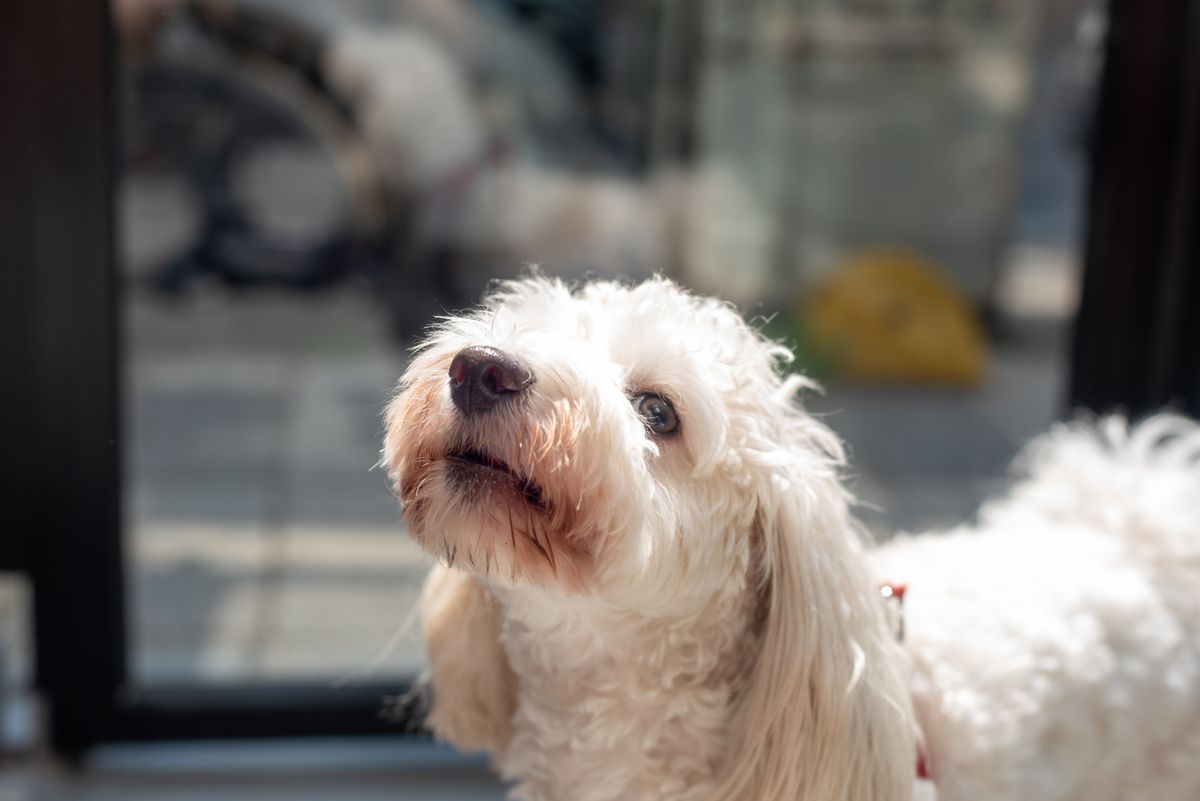
The Toy Poodle and Maltipoo are just two of many, and perhaps one of their relatives suits you better. Here are the most important poodle mixes in the small to medium size range, each with what makes them distinctive.
The Cavapoo (Cavalier King Charles Spaniel crossed with Poodle) is considered particularly gentle and people-oriented, an easy-going companion with no strong guarding instinct. Pay close attention to the Cavalier heritage here: mitral valve disease and the neurological condition syringomyelia are very common in the Cavalier. A conscientious breeder will therefore have the Cavalier parent examined by a cardiologist.
The Cockapoo (Cocker Spaniel crossed with Poodle) is the oldest of these mixes and one of the most cheerful, eager to learn and very family-oriented. Because of the Cocker's drop ears they are prone to ear infections, and the eye disease PRA is a concern in both parent breeds. They often bring somewhat more energy than the very smallest representatives.
The Havapoo (Havanese crossed with Poodle) combines the playfulness of the Havanese with the trainability of the Poodle, adaptable and a good choice for first-time owners. With the Yorkipoo (Yorkshire Terrier crossed with Poodle) some terrier stubbornness enters the picture: lively and vocal, but manageable with consistent, friendly training. It's worth keeping an eye on liver shunt, trachea and teeth here.
Smaller and quieter is the Pomapoo (Pomeranian crossed with Poodle), affectionate and alert, well suited to apartment life. And the Bichpoo or Poochon (Bichon Frisé crossed with Poodle) is among the lowest-shedding mixes, playful and very bonded to its people.
Anyone who prefers a small dog with a fixed standard will find similar charm in the pedigree alternatives: the Maltese as the classic, long-coated lap dog; the lively Bichon Frisé; the particularly long-lived and sociable Havanese; or the robust Bolognese, which is recognised as a national breed in Germany. The Pomeranian is the exception in this group: it carries a dense double coat, sheds heavily and is therefore not the first choice for allergy sufferers, however charming it looks.
Almost all dogs here carry a single-layer coat without dense undercoat and shed very little. That's the comfortable part. The less comfortable part: low shedding means a lot of grooming. Curls matt when left to themselves, and matted fur pulls at the skin and causes pain. Plan the following for every curly dog:
Now for the big promise that almost every one of these dogs is sold with: hypoallergenic. This claim does not hold up scientifically, and that's important enough to say clearly. No dog is allergen-free. The main allergen is called Can f 1 and is found primarily in saliva, skin flakes and urine, not in the hair itself. Every dog produces it.
A widely cited study in the Journal of Allergy and Clinical Immunology (Vredegoor and colleagues, 2012) compared supposedly hypoallergenic breeds with ordinary dogs and found no evidence to classify any breed as hypoallergenic. Poodles in particular showed some of the highest allergen levels in their coats. The American Kennel Club states plainly that there are no truly hypoallergenic dogs.
What is true: poodles and poodle mixes shed little, so less allergen reaches your home via loose hairs. "Allergy-friendly" is therefore not wrong; "allergen-free" is. With mixes there's the additional factor that the coat is not guaranteed to come out poodle-typical. If you or someone in your household reacts to dogs, there is only one reliable test: spend real time with the specific dog beforehand and see what your body says. The breed label on paper won't tell you.
This is the most serious section, so without embellishment. All the dogs here are small dogs, and small dogs share a range of typical problems: medial patellar luxation (a dislocating kneecap), hereditary retinal degeneration PRA that leads to blindness, dental problems caused by a small jaw, and in very small animals tracheal collapse. On top of that come breed-specific issues, such as liver shunt in the Maltese, heart disease from the Cavalier heritage in the Cavapoo, or eye conditions in the Havanese.
In the Toy Poodle patellar luxation is particularly well documented: a Japanese study found it in 38 per cent of examined puppies, with a clear hereditary component. In the Maltipoo the risks from both parent breeds add up: from the Poodle, patella and PRA; from the Maltese, liver shunt. If both parents carry the same hidden gene variant, a quarter of puppies can be affected. That is precisely why health-testing the parents is not less important in a mix than in a pedigree breed; if anything it is more so.
Which brings us to the most persistent sales argument: that mixed breeds are automatically healthier, the so-called "hybrid vigour" claim. Research takes a considerably more sober view. A large analysis from UC Davis (Bellumori, 2013) covering more than 27,000 dogs looked at 24 hereditary conditions: in exactly one case were mixed breeds more frequently affected; in ten cases it was pedigree dogs; in thirteen cases there was no difference. A recent study from the Royal Veterinary College (2024) compared Cockapoos, Cavapoos and Labradoodles with their parent breeds and found no difference in roughly 87 per cent of health measures. In a British database of more than half a million dogs, pedigree dogs actually lived a few months longer on average than mixed breeds.
The reason is straightforward: the protection offered by genetic diversity only works when the parent breeds carry different disease genes. Maltese and Poodle, however, share central risks such as patellar luxation and PRA. A mix is therefore not inherently healthier than its parents. Health comes from good breeding, not from the label "mixed breed."
Whatever small curly dog moves in with you, good preventive care will play a major role in a long, healthy life. You'll find everything on recognising hereditary conditions early, sensible vaccination, and keeping small dogs healthy in our full overview of dog health.
Purchase is only the beginning. A Toy Poodle from a Kennel Club breeder costs roughly 1,400 to 3,500 euros; a Maltipoo or Cavapoo from a reputable breeder, 2,000 to 4,000 euros. The fact that a mixed breed often costs as much as a pedigree dog comes down to demand alone, not to any verified added value. A price below around 1,000 euros for these dogs is not a bargain; it's a warning sign.
The ongoing costs are far more underestimated, and here all curly dogs agree, because every single one of them needs a groomer every six to eight weeks:
In total, after the first year you should budget roughly 1,200 to 1,900 euros per year, not counting illness costs. A small dog is not a small expense.
Precisely because poodles and poodle mixes are so popular, the market is full of unreliable sellers. In 2024 alone, the German Animal Welfare Association recorded 224 cases of illegal pet trading involving nearly a thousand animals, and in 2025 poodles and poodle mixes were the most frequently seized dog breed. Many of these puppies arrive sick and far too young from Eastern Europe. You protect yourself and the animal by looking for clear signs.
Signs of a good breeder:
These signs should make you cautious: handover in a car park or at a motorway service station, a mother dog that cannot be seen, puppies under eight weeks, missing or dubious paperwork, home delivery, time pressure such as "must go today," upfront payment for transport, or a suspiciously low price. When in doubt, one simple rule applies: keep looking rather than rescuing a sick puppy from a car boot, because every purchase keeps that trade running.
And there is a third way. Small poodles and poodle mixes do end up in rescue, often as adults whose temperament you can already assess. The German Poodle Club rehomes dogs in need; platforms such as shelta.tasso.net or tiervermittlung.de help with the search, and the rehoming fee of usually 200 to 500 euros typically covers vaccination, microchip and neutering. Shelters are full, and your ideal dog may already be waiting.
A quick orientation. If you want predictability and a highly intelligent dog, the Toy Poodle is a strong choice; similarly reliable are the Maltese, Havanese or Bolognese with their fixed standards. If the idea of a cross appeals and you find a breeder with health-tested parents, you won't go far wrong with a Maltipoo, Cavapoo or Havapoo, as long as you don't expect guarantees on size and coat.
Anyone wanting a calmer flat dog should look at the smaller, more relaxed types such as the Maltese, Pomapoo or Toy Poodle. Those who can handle a bit more energy will be happy with a Cockapoo or Yorkipoo. For families with very young children all of these are only partially suitable, because they are slight and easily hurt. And for allergy sufferers, across the board: low shedding yes, allergen-free no, and the only real test is a personal meeting.
What they all have in common, whichever you choose, is the most important thing: they want to be close to you. A small curly dog is not an ornament; it's an affectionate companion for the next decade and a half.
Whether it's a Toy Poodle, Maltipoo, Cavapoo or Havanese, in the end it's not a question of right or wrong but of clarity. Pedigree breeds give you predictability; mixes give you charm and surprise. All of them give you what makes small curly dogs so irresistible: closeness, character and a shadow that faithfully follows you around the flat.
Whatever you decide on, look more carefully than the sales brochure does. Ask about the parents, about the health tests, about how the puppies were raised. If you're still torn, browse our full dog breed directory or take the dog breed quiz to help narrow down the right curly companion for you. And once your small companion has moved in, Souldog helps with the rest: keeping track of weight, organising vet appointments and care in the health section, and discovering the best places near you together. The right dog is the one whose needs fit your life. The two of you take care of the rest.
 Souldog