Snow white, silky and a lapdog since antiquity: the Maltese is one of the oldest companion dogs in the world. Behind the elegant coat, though, are real topics, from the demanding grooming routine to a few health points that no sales brochure likes to mention. Here's the honest overview.
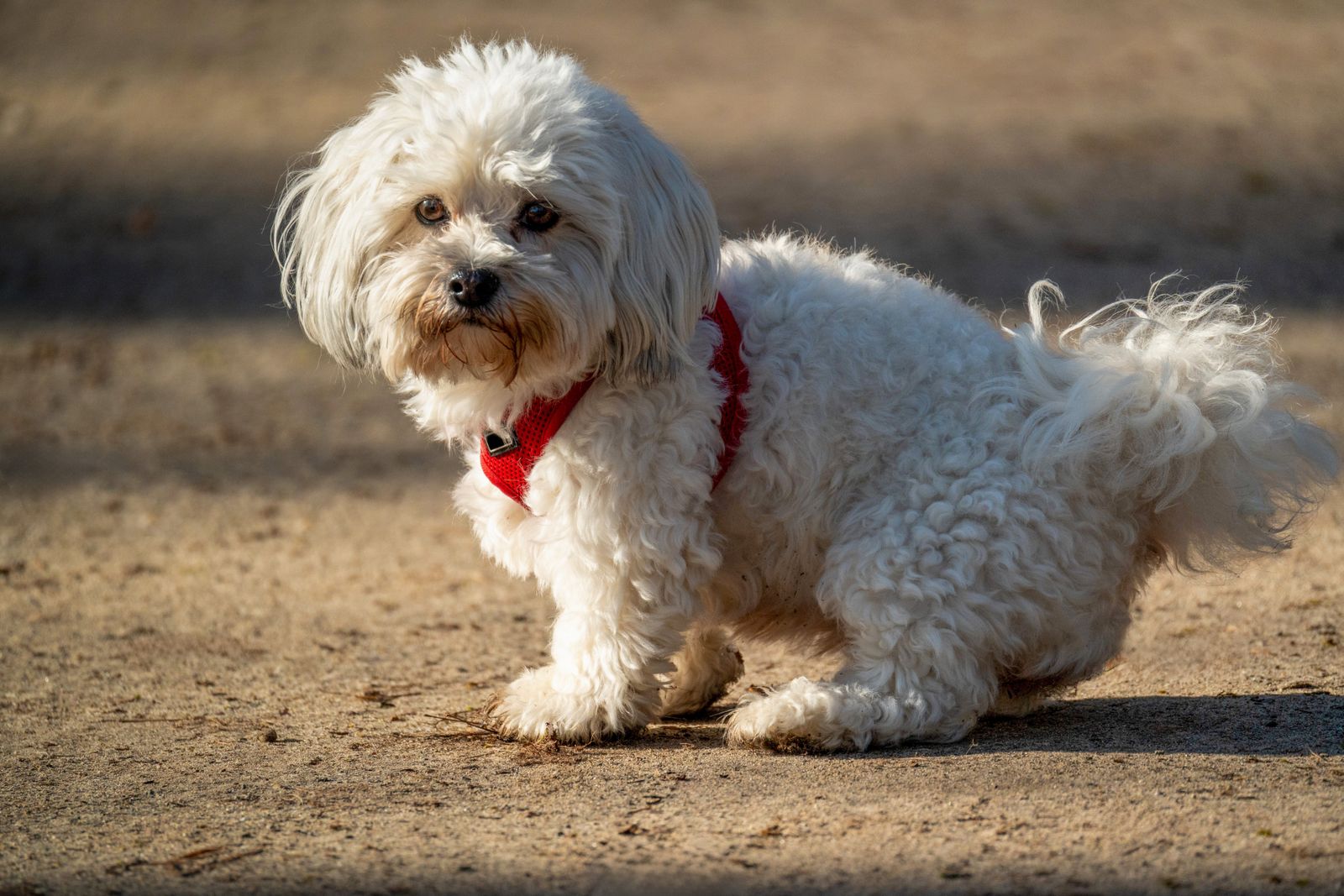
You know the picture: a snow-white little dog with silky, flowing fur, sitting on a cushion as if he was born for it. The Maltese looks like the epitome of the pampered lapdog, and in fact he has accompanied people since antiquity. Greek and Roman vases show small, long-haired little dogs that resemble him strikingly.
s elegant as he seems, the questions that really matter before getting one are down to earth: How much grooming does this coat require? What health issues does he bring along? And is it true that he's suitable for allergy sufferers? This guide answers that honestly, without any marketing shine. To see how the Maltese fits in among his small relatives, check out the full overview of small curly-haired dog breeds.
The Maltese is clearly one of the small dog breeds, but he's no fragile miniature. The international FCI standard specifies a shoulder height of about 21 to 25 cm for males and 20 to 23 cm for females, with a weight of 3 to 4 kg. Interesting for anyone comparing standards internationally: the American AKC standard sees the Maltese as noticeably lighter, preferring under three kilograms. Both describe the same breed, they just set the weight expectation differently.
The trademark is the coat: pure white, silky and glossy, long and heavy, falling straight down, with no undercoat at all. A light ivory tinge is allowed under the standard. Because there's no undercoat, there's no seasonal shedding season; instead, the hair keeps growing continuously, much like human hair, and that's exactly what leads to the heavy grooming workload we'll get to shortly.
If you keep a Maltese, you rarely have a dog who seeks much distance. This breed wants to be there, on your lap, next to your desk, in the same room. That makes him a wonderful companion for people who spend a lot of time with their dog, and a poor choice for anyone who regularly has to leave him alone for long stretches. A Maltese who's left to his own devices too often and for too long easily develops separation stress. For how to gently teach an affectionate dog to be okay being alone, read the post leaving your dog alone.
Despite his refined appearance, the Maltese is no passive sofa cushion. He's alert, loves to play and learns quickly. His watchfulness has a flip side: some Maltese reliably announce every sound and tend to bark, something that early, patient training can channel well. For older, considerate children he's a wonderful playmate. With toddlers, as with all miniature breeds, a delicate dog can be injured quickly and needs gentle handling.
We'll cover this section without embellishment, because accuracy matters here. A white coat doesn't make a healthy dog; what matters is what's in the breeding line.
The best-known topic is the portosystemic liver shunt. Here, a misrouted blood vessel bypasses the liver, so toxins aren't properly broken down. The Maltese is clearly overrepresented here; in veterinary literature and case series, he regularly appears among the most affected breeds. Signs can include stunted growth, lethargy after eating, or neurological abnormalities. One quirk makes diagnosis harder: in healthy Maltese, certain liver values can be elevated for breed-related reasons, which makes interpretation more challenging for the vet.
Then there are the classic small-dog issues. Medial patellar luxation, where the kneecap slips out of its groove, is a known predisposition in the Maltese and a standard screening point in reputable breeding programs; a typical sign is a brief, skipping limp. Dental problems are common because of the small jaw and crowded teeth, which is why regular dental care isn't a luxury but prevention. And tracheal collapse, a weakening of the windpipe, is among the documented risks in the Maltese; a sudden, honking cough is a warning sign that should be checked by a vet.
A few more points are often mentioned but are less well documented, and we'll say so plainly. For the retinal disease PRA, there's a genetic test for the Maltese, but solid frequency numbers specific to this breed are thin. The rare white shaker syndrome, a generalized tremor in young white dogs, is named after breeds like the Maltese but remains uncommon and usually responds well to treatment. A congenital heart defect, patent ductus arteriosus, is also listed as a predisposition in the Maltese; the claim circulating that he has the highest risk of any breed, though, can't be cleanly substantiated. The same conclusion applies to all of this: screened parent dogs and regular preventive care beat any promise.
The beautiful coat is a full-time job. Because the hair grows continuously and there's no undercoat to shed, loose hairs get caught in the coat and mat if it isn't brushed regularly. Daily brushing down to the skin is a must, plus a trip to the groomer every six to eight weeks, whether for a short, practical cut or maintenance of the full length. For what such a routine looks like day to day, see the post on coat care for poodles, Maltipoos and similar breeds.
One issue that concerns nearly every Maltese owner is tear stains: the reddish-brown streaks under the eyes. They're caused by a pigment in the tear fluid and are made worse by anatomical factors and hair near the corner of the eye. It often can't be avoided entirely, but regular, gentle eye cleaning and trimmed facial hair keep it well in check. If tearing or redness suddenly increases, it should be checked by a vet, since inflammation or a blocked tear duct can also be behind it.
Low shedding isn't the same as hypoallergenic. The Maltese is often marketed as an allergy-friendly dog, but the most important dog allergen sits in saliva and skin flakes, not in the fur. A widely cited study found no lower allergen levels in supposedly hypoallergenic breeds, and in some cases even higher ones. No dog has been proven to be hypoallergenic. Anyone prone to allergies should personally test the specific dog over an extended period.
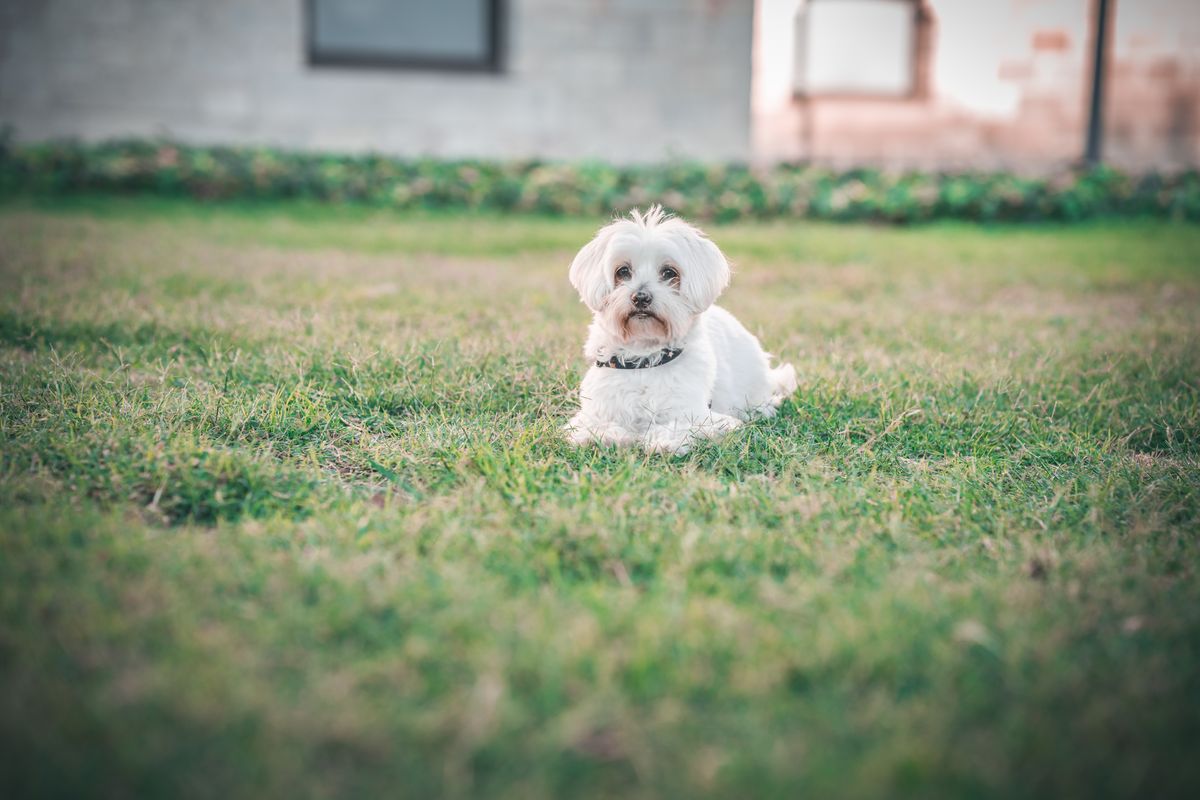
A Maltese puppy from a reputable breeder costs roughly 1,000 to 2,500 euros, depending on the bloodline, region and the parent dogs' health screenings. That's not price gouging. It reflects the cost of responsible breeding with health testing. Noticeably cheaper offers are almost always a warning sign.
The ongoing costs are often underestimated, and coat care is the big recurring expense here. If you don't clip the coat yourself, a groomer costs from about 60 euros per session, every six to eight weeks. Add food, checkups, vaccinations, insurance and a reserve for illness. All told, you should budget for ongoing costs of roughly 100 to 200 euros a month, not counting expensive individual treatments. Financially, the Maltese is not a cheap dog, precisely because of the grooming.
"Teacup" isn't a standard, it's deliberate dwarfing. No official breed standard recognizes the term, and organized dog breeding in Germany mandates a minimum weight and bans such extreme breeding. Artificially undersized dogs carry a higher risk of serious problems like hydrocephalus, breathing difficulty, low blood sugar and brittle bones. A cute photo isn't worth a suffering dog.
With a popular breed like the Maltese, there are many breeders, and not all of them work responsibly. Watch for a few things: Can you visit the breeder to see the mother dog and the litter's environment? Do they show health screening results for the parent dogs, for example on the patella and eyes? Do the puppies look well cared for, lively and well socialized? A good breeder also asks you plenty of questions, rather than just selling.
One more word on a common misunderstanding: a purebred dog isn't automatically healthy just because he matches the standard. The standard governs appearance and temperament, not health. Conversely, a Maltese mix like the Maltipoo isn't automatically healthier either, because if both parent breeds carry the same predispositions, a risk can actually add up rather than get diluted. A dog becomes healthy through screened parents, not through a label.
The Maltese is a great choice if you want a small, affectionate companion, spend a lot of time with him and are willing to invest in daily coat care. He fits well in an apartment, loves company, and makes an attentive, cuddly housemate. For quiet households and people who love having their dog around, he's practically made to order.
He's less suited if you're often out of the house for long stretches, have little time or budget for grooming, or want a rugged outdoor dog for wild adventures. And if allergies are the reason for choosing this breed, don't rely on the label, rely on real, repeated contact. For why that applies to all low-shedding breeds, see the overview of small dogs that shed little. If you'd like a similarly charming but slightly sturdier small dog, the Bolonka Zwetna is a good alternative.
The Maltese has rightly been popular for thousands of years: small, loyal, elegant and full of personality. But he's no low-maintenance beginner's dream. He's a dog with clear demands on your time, closeness and coat care. Anyone who can offer that gets one of the most charming companions there is. For the compact facts on size, weight and grooming in one place, take a look at the Maltese breed profile.
Once he's moved in with you, Souldog helps you stay on top of things: in the app you create his profile, track grooming appointments, weight and health observations, and always have his key information at hand. The rest, the silky coat on your lap, he'll take care of himself.
 Souldog