You want a small dog, but not the hair everywhere? This overview shows you the breeds that shed little, and tells you honestly what that really means for allergy sufferers and what grooming deal comes with it.
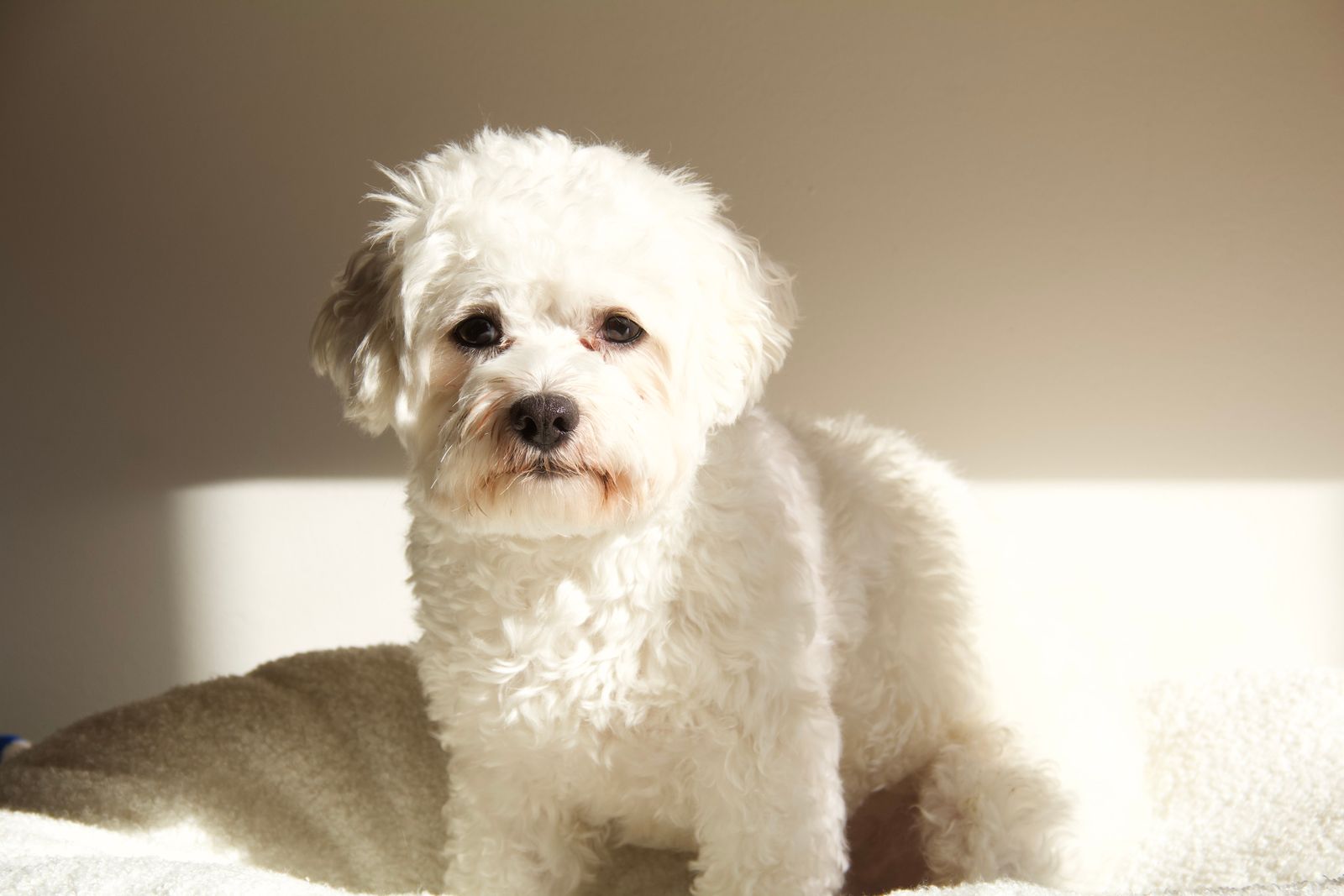
You love the idea of a small dog on the couch, but not the idea of dog hair on every pair of black pants. Maybe a family member's nose starts itching too, and still, a dog is supposed to move in. So you type "small dogs that shed little" into the search bar and get the same list everywhere, garnished with the promise "hypoallergenic."
hat's exactly where it gets dishonest. Because shedding little and being allergy-friendly are two different things, and shedding little almost always means more grooming, not less. This overview shows you the right breeds and tells you what's actually true. If you're especially interested in the curly-coated ones, you'll find more in the big overview of small curly-haired dog breeds.
Whether a dog sheds a lot or a little comes down to its coat type. And there's a fundamental difference here that most guides only touch on.
Most heavily shedding dogs have a double coat: a topcoat with a dense undercoat beneath it. Once or twice a year, triggered by light and temperature, a large part of this undercoat is shed all at once. This is the notorious coat blow, when tufts of hair drift through the apartment.
Dogs that shed little work differently. Some have a single coat with no undercoat, like the Maltese or the Yorkshire Terrier; their hair keeps growing continuously like human hair instead of falling out seasonally. Others, above all the Poodle and its relatives, have a curly, continuously growing coat. In both cases, the dead hairs don't fall to the floor but stay caught in the coat. That's why you see fewer hairs around the house, and it's also why these dogs need regular brushing: if the loose hairs stay in the coat too long, they mat all the way down to the skin.
No dog is proven to be hypoallergenic. The most important dog allergen is found in saliva, dander, and urine, not in hair. Studies found no lower allergen levels in supposedly hypoallergenic breeds, and in some cases even higher ones. If an allergy is involved, the only reliable test is repeated, personal contact with the specific dog, ideally with the guidance of an allergist.
Few myths are as persistent as the hypoallergenic dog. The problem starts with the misunderstanding that hair is the trigger. It isn't. The clinically most important dog allergen, known technically as Can f 1, is released through saliva, dander, urine, and skin oils, and then clings to hair and dust. The hair is just the carrier, not the source.
That's why the equation "sheds little, so it's low-allergen" falls short. A widely cited study compared coat and house dust samples from supposedly hypoallergenic breeds like the Poodle and Labradoodle with other dogs, and found no lower allergen levels in the supposedly safe breeds, and in the coat, even higher levels in some cases. A second study did find less allergen in the floor dust of some households, but no difference in the more relevant airborne dust. The major allergy associations agree: there are no truly allergen-free breeds.
Does that mean the coat type doesn't matter at all? Not quite. A dog that loses fewer hairs tends to spread less of the carrier material around the home that the allergen clings to. That can lower the exposure somewhat, but it's not a reliable effect and certainly not a guarantee. There are no credible figures on this, and anyone who promises you "90 percent fewer allergens" is making it up. If a real allergy lives in the household, there's no way around a personal test over several weeks, ideally accompanied by an allergist's evaluation.
These breeds are considered low-shedding. The table sorts them by size, coat type, and the reason why they shed so little. Important for context: a purebred dog with a fixed standard is fairly predictable in size and coat, a designer mix is not.
| Breed | Size / Weight | Coat Type | Why It Sheds Little |
|---|---|---|---|
| Toy and Miniature Poodle | 24-35 cm / 3-8 kg | curly, continuously growing wool coat | no coat blow, hairs stay in the coat |
| Maltese | 20-25 cm / 3-4 kg | silky single coat, no undercoat | continuous growth instead of shedding |
| Bichon Frise | 23-30 cm / 3-6 kg | curly, soft coat | grows back, barely sheds |
| Havanese | 23-27 cm / 3-6 kg | silky hair with no undercoat | no seasonal coat blow |
| Bolonka Zwetna | 20-26 cm / 3-4 kg | soft, wavy coat | barely any seasonal shedding, mats instead |
| Coton de Tulear | 22-28 cm / 4-6 kg | dense, soft cotton-like coat | little shedding, mats easily |
| Yorkshire Terrier | 20-23 cm / up to 3 kg | fine hair like human hair, no undercoat | grows continuously |
| Miniature Schnauzer | 30-35 cm / 4-8 kg | wiry coat with undercoat | sheds little, needs trimming |
| Shih Tzu | 20-27 cm / 4-7 kg | long, dense double coat | very little shedding, daily brushing |
A few quick portraits. The Poodle in its smaller varieties is the classic choice: highly intelligent, eager to learn, and with a coat that barely sheds but needs clipping every four to six weeks. The Maltese and the Havanese are silky lapdogs with no undercoat, affectionate and grooming-intensive; the Havanese often goes through a particularly mat-prone phase during puberty. The Bichon Frise is a cheerful bundle of energy whose curly white coat, according to the breed club, practically doesn't shed, but needs constant grooming. The sturdy Bolonka Zwetna and the Coton de Tulear round out the soft, low-shedding Bichon-type breeds. The Yorkshire Terrier has fine hair instead of fur. And the Miniature Schnauzer is the special case: its wiry coat sheds little but needs to be trimmed or hand-stripped, not clipped, or it loses its texture and color.
An honest note belongs with the popular designer mixes like the Maltipoo, Cavapoo, or Cockapoo: they have no fixed breed standard, and their coat isn't guaranteed. A first-generation mix can lean more toward the shedding parent breed, while a backcross with a Poodle tends to turn out curlier. If you're counting on low shedding, you're buying a probability here, not a promise. You'll find more on this in the individual guides to the Cavapoo and Cockapoo.
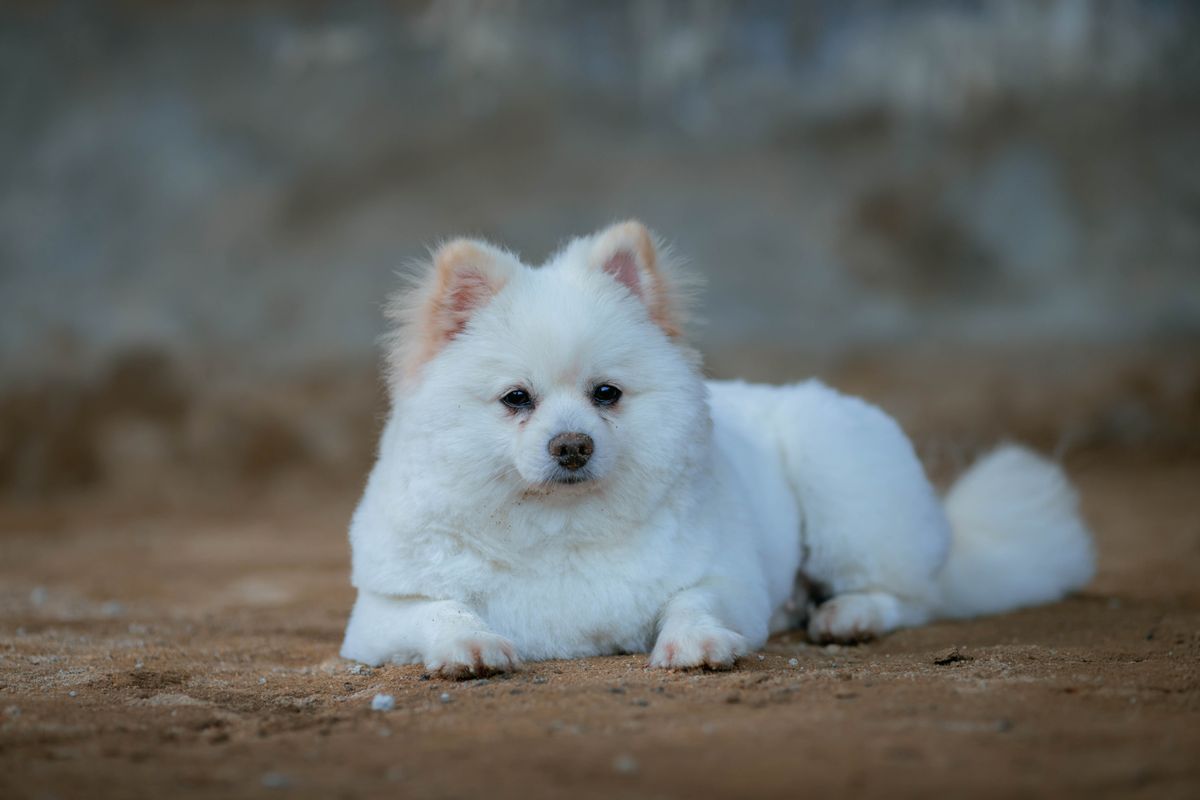
Not every little fluffball sheds little, and the Pomeranian, also known as the Zwergspitz, is the best example. It looks like a walking powder puff and so it often ends up, wrongly, on lists like this one. In reality, it has a true double coat with a dense undercoat and sheds moderately all year round, with strong bursts during the seasonal coat blow. For "sheds little," it's the wrong choice, charming as it is, and it's certainly not hypoallergenic.
The lesson here: looks don't reveal the coat type. A fluffy dog can be a heavy shedder, and a shaggy one can barely shed at all. What matters isn't how lush the coat looks, but whether an undercoat is shed or not.
Now for the part the glossy lists like to leave out. A dog that sheds little makes your home cleaner and your calendar fuller. Because the loose hairs stay in the coat, almost all of these breeds need regular brushing down to the skin, often daily, plus an appointment with a dog groomer every four to eight weeks for clipping or trimming. If that gets neglected, the coat mats, and matted fur can no longer be combed out, only shaved off.
This isn't an argument against these dogs, but an expectation you should know about going in. Plan on time for daily brushing and money for the groomer, which can add up to several hundred euros a year over time. You can read what such a grooming routine looks like in practice in coat care for Poodles, Maltipoos, and friends, and how expensive it gets with bigger shaggy dogs in the article on Doodle grooming.
As practical as it is to look at the coat, it says nothing about health. Shedding little doesn't make a dog healthy. All the breeds here are small dogs and share their typical issues: patellar luxation, meaning a kneecap that slips out of place, dental problems due to the small jaw, and in some breeds the hereditary retinal disease PRA. The coat type plays no role in any of this.
What actually protects against this is responsible breeding that has the parent dogs tested for exactly these issues, plus regular checkups. So choose your dog based on breeding and temperament, not just on whether it sheds. You'll find a broad overview of checkups and early warning signs in the article on dog health.
A small, low-shedding dog suits you well if hair around the house really bothers you and, in exchange, you're willing to put time and money into grooming. It also suits you if you're looking for an affectionate companion for apartment life, since most of these breeds are extremely people-oriented.
It suits you less if you have little time for brushing, don't want to pay for a groomer, or believe that "doesn't shed" also settles the allergy question. If a real allergy is the reason, it's not the breed list that decides, but the personal test. We introduce two of these breeds in detail: in the Maltese breed guide and in the profile of the Bolonka Zwetna.
In the end, coat type is just one piece of the puzzle. Shedding little is a real everyday advantage, but it's not a free pass on grooming, and it's certainly not a solution for an allergy. More important than the question "does it shed?" are temperament, health, and whether this dog fits your everyday life. If you're still comparing candidates, browse our full dog breed directory from A to Z or take the dog breed quiz to see which one actually suits your daily routine.
Once you've made your choice, Souldog helps you with the rest: in the app, you set up your dog's profile, keep track of grooming appointments and health observations, and stay on top of everything that matters. The hairs that still end up on your pants once in a while just come with the territory.
 Souldog