Few decisions get debated at the dog park as passionately, and backed by so little research. Here you'll find both: the proven benefits, the underestimated risks, and the question that comes before all the others: who is your dog, really?
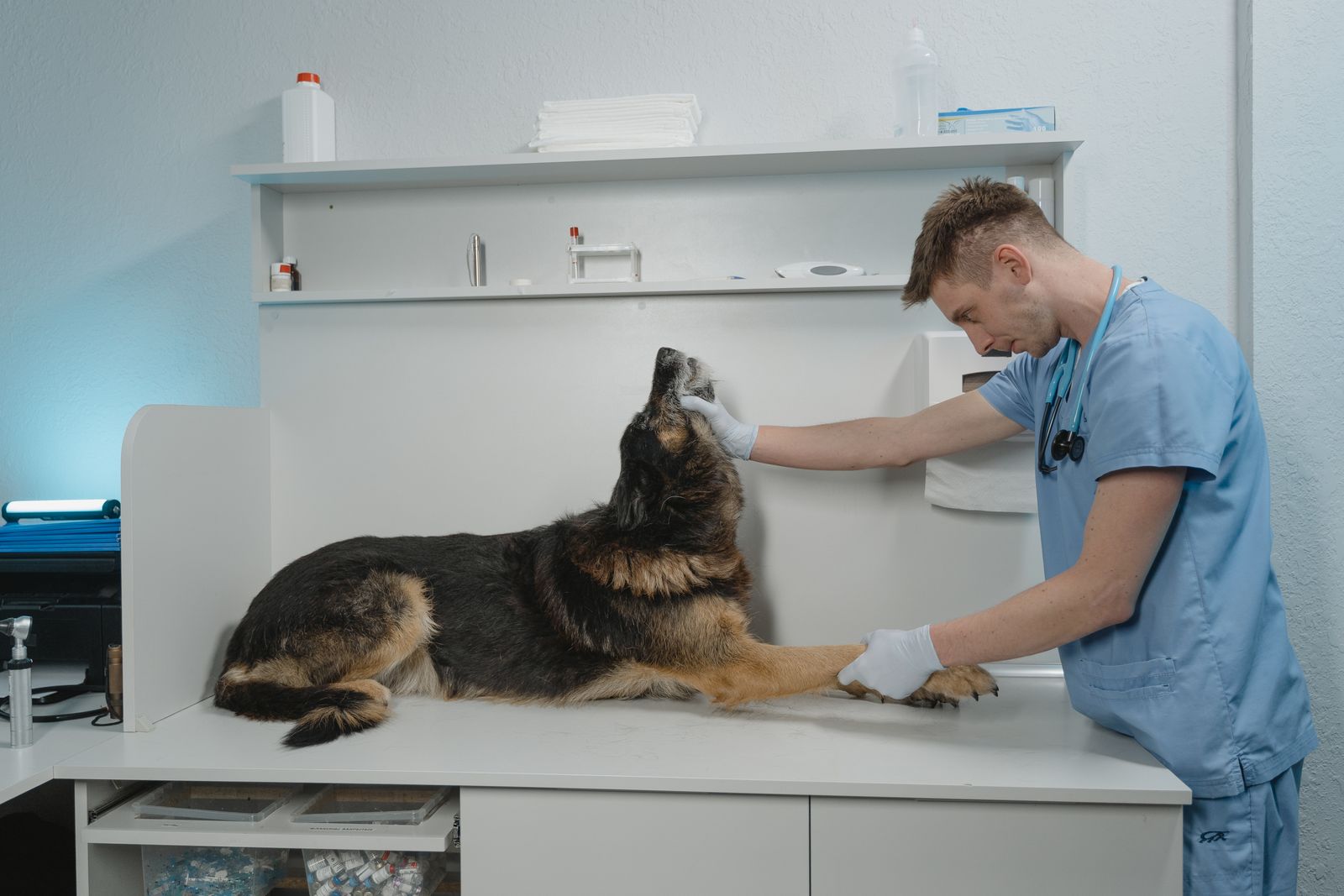
"So, when are you getting him neutered?" The question always comes, usually at the dog park, often uninvited, and with it a chorus of absolutely certain opinions. You have to do it, it will calm him down. You shouldn't, it will change him. Before the first heat, says one person; not too early, whatever you do, says the next.
ere's the confusing part: almost every one of these opinions has a grain of truth in it, and almost every one is wrong as a blanket rule. The research of the last fifteen years has thoroughly complicated the neutering question, in the best possible way. We now know that the right answer depends on your dog's breed, size, sex, age, and personality. That is exactly the nuanced answer you will get here, backed by the real numbers behind it.
So that this individual decision doesn't happen in the dark, let's sort through everything that matters: terminology, the legal situation, the pros, the cons, behavior, timing, and the temporary alternative.
In everyday language, people use the words loosely, often along the lines of "the male gets neutered, the female gets spayed." In veterinary medicine, spaying refers to the procedure in female dogs, removing the ovaries, and neutering refers to the procedure in male dogs, removing the testicles; neutering also serves as the umbrella term for the procedure in general, the medical term being gonadectomy. Either way, fertility and hormone production end, and that is the only kind of procedure this article covers. Sterilization, by contrast, only cuts the vas deferens or fallopian tubes; the dog stays hormonally who they were, complete with heat cycles, mounting behavior, and the hormone driven disease risks. That is why sterilization is rarely chosen for dogs.
For females, there are two surgical options: removing just the ovaries, or removing the ovaries along with the uterus. The research gives the all clear for the smaller procedure: both are considered equally effective, including for protection against pyometra, since without the ovaries, the hormonal environment that pyometra needs to develop simply isn't there.
Little known but true: under Germany's Animal Welfare Act, neutering is legally the exception, not the rule. Section 6 of the Tierschutzgesetz generally prohibits removing organs from vertebrate animals. Sterilizing a dog is only permitted under specific exceptions: when it is veterinarily indicated in the individual case, or to prevent uncontrolled reproduction or to allow the animal to continue being kept, as long as there are no veterinary objections. That small word "uncontrolled" carries a lot of weight: a dog kept alone, whose reproduction can be controlled through a leash, supervision, and management, doesn't automatically meet this exception.
The Tierärztliche Vereinigung für Tierschutz, Germany's veterinary association for animal welfare, has spelled this out clearly in its current position paper: neutering a dog in Germany is meant to always be an individual decision made after thorough veterinary and behavioral assessment, and the association rejects neutering before sexual maturity as a general rule. There is also a notable point for anyone adopting a dog from a shelter: blanket neutering clauses in adoption contracts are not legally enforceable, according to this assessment and rulings from individual local courts. In practice, this doesn't mean neutering is prohibited; it means it needs a justification, and ideally that is exactly what a conversation with your vet provides.
Let's start with the strongest argument, and it belongs to females: pyometra, a uterine infection. Large Swedish studies show that, on average, about one in four unspayed females develops pyometra by age ten, ranging from one in ten to one in two depending on the breed. It is a life threatening condition that typically requires emergency surgery, and spaying essentially eliminates it. Spaying also reliably ends heat cycles, along with the management work they bring, and recurring false pregnancies; you can read what both of those involve in our article on the dog heat cycle.
When it comes to mammary tumors, the second classic pro argument, we will be more honest than most guides. The famous statistic claiming that spaying before the first heat cycle cuts the risk to one two hundredth comes from a 1969 study whose methodology is weak by today's standards. A systematic review from 2012 concluded that the overall evidence for this protective effect is thin. A protective effect is plausible and still assumed by veterinary associations, but it is less well documented than it sounded for decades, and on its own, it no longer works as a knockout argument for early spaying.
In males, neutering prevents testicular tumors entirely, simply because the organ is gone; in older intact males, these tumors are by no means rare, even though many are benign. Then there is benign prostatic enlargement, which eventually causes symptoms in most older intact males and for which neutering is the standard treatment. For the full picture, it is worth noting: neutering does not protect against prostate cancer, though that is rare in dogs overall.
And life expectancy? A large American study of more than 70,000 clinical death records found that neutered dogs lived noticeably longer on average: 9.4 years versus 7.9 years. But this is an observation, not proof, and the authors say so themselves: people who neuter their dogs often also invest more in veterinary care overall. So neutering is associated with a longer life; that it causes one has not been established.
The other side of the equation is real, and it is the reason research has moved away from blanket recommendations.
Urinary incontinence in females. After spaying, about 5 to 20 percent of females develop a weakened sphincter muscle, usually within a few years of surgery: they leak urine in their sleep or when standing up. In large females over 20 kilograms, the risk is higher, up to 30 percent in some studies, and breeds like Rottweilers, Dobermans, Giant Schnauzers, and Boxers are considered especially prone to it. Very early spaying raises the risk further in large females. The condition is usually well managed with medication, but it is a lifelong issue that belongs in the decision; it can worsen with age, as our article on incontinence in older dogs shows.
Joints in large breeds. This is where the biggest research gains of recent years have happened. The research group led by Benjamin Hart at the University of California, Davis, analyzed how neutering age relates to joint disease across 35 breeds and mixed breeds grouped by weight class. The pattern: in small breeds, timing plays practically no role for the joints. From around 20 kilograms up, early neutering raises the risk of hip dysplasia, elbow dysplasia, and cruciate ligament tears, sometimes significantly; in very large males neutered before six months of age, the rate of joint disease tripled compared to intact dogs of the same breed. In Golden Retrievers, early neutering doubled the hip dysplasia rate, and cruciate ligament tears occurred almost exclusively in dogs neutered early. The mechanism is plausible: sex hormones help regulate when growth plates close, and shutting them down too early lets large dogs grow longer, and differently, than they otherwise would.
Certain tumors, breed specific. The same series of studies found increased rates of certain cancers after neutering in individual breeds, including Golden Retrievers and Rottweilers, where very early neutering significantly raised the risk of bone cancer. Context matters here: these associations depend on breed, sex, and timing, and they don't add up to a blanket claim that "neutering causes cancer." But they are another reason to base the decision on breed profile rather than gut feeling.
Weight. The least dramatic downside is the most common one: neutered dogs are almost twice as likely to become overweight, because energy needs drop noticeably after the procedure, by about a tenth on average, while appetite tends to increase. The good news: this is the one downside you can fully manage yourself. Adjust the food portions, keep an eye on the weight, done; for the actual math, see our article How Much Food Does My Dog Need.
By the way, you will read little here about the often cited "neuter coat." Changes in coat texture after neutering are described by groomers and breeders in some breeds, but they have barely been studied scientifically.
This is where the biggest misunderstandings live, so let's make it as clear as possible.
Neutering reliably affects only behavior that is directly tied to sex hormones: roaming after females in heat, mounting, marking indoors, becoming completely unresponsive the moment a female in heat is nearby. Even there, it is no guarantee: in the classic body of studies, this kind of behavior improved noticeably in the majority of males, but far from all of them, and neither the dog's age nor how long he had shown the behavior predicted whether neutering would help.
What neutering does not reliably change is temperament, energy level, prey drive, or learned behavior. And on the big topic of aggression, the modern data is sobering, even contradictory: large studies of tens of thousands of dogs found no reduction in aggression toward family members or unfamiliar dogs after neutering, and some found more fear and aggression related behavior in males neutered early. This lines up with what veterinary behaviorists have emphasized for years: aggression is rarely a pure hormone issue. Fear, insecurity, or learning history are usually behind it, and a scalpel cannot fix those.
Neutering is not behavior training. International guidelines and the Tierärztliche Vereinigung für Tierschutz explicitly warn against using neutering as a blanket fix for behavior problems: an unconsidered neutering decision can even make problem behavior worse, especially in insecure and anxious dogs, since testosterone also contributes to confidence. Any behavior related decision should be preceded by a behavioral assessment before surgery.
When you are unsure what you are seeing, it often helps to look at body language: what looks like dominance is frequently insecurity. Our article on dog body language can help you read it.
All of this leads to the most important practical takeaway of this article: there is no single right age to neuter "the dog," there is a right age for yours. Alongside the 35 breed profiles, the Davis research also provides rule of thumb figures for mixed breed dogs by weight class, and both the international guidelines and Germany's animal welfare veterinary association point in the same direction: no automatic default, later rather than sooner for large dogs, and ideally not before sexual maturity at all.
| Expected Adult Weight | Guidance for the Earliest Timing |
|---|---|
| under 10 kg | not time critical for the joints; after sexual maturity |
| 10 to 19 kg | after sexual maturity, usually from around one year |
| 20 to 39 kg | no earlier than around 12 months, after growth is complete |
| 40 kg and up | females after growth is complete, males ideally from age 2 |
This is explicitly a general guide, not a substitute for breed specific knowledge: a Golden Retriever is in a different risk category than a Labrador of the same weight, and your vet will know these differences. Bring the table into the conversation as a starting point, not as a fixed plan.

Spaying is performed under general anesthesia through an abdominal incision, and today it is often done as a minimally invasive procedure too. It is routine at any small animal practice, and routine really does mean routine here: in a review of nearly 1,900 procedures, the complication rate was around 7 percent, mostly minor issues like wound healing problems; serious complications are rare. A residual risk remains, as with any anesthesia, and it deserves to be named rather than brushed aside.
Afterward, the rule is about one to two weeks of rest, short leash walks instead of sprints across the meadow, and the famous cone or a recovery suit so the incision does not get licked. Most females bounce back faster than their humans would like; keeping them calm is your job.
In males, the procedure is shorter and less invasive: the testicles are removed through a small incision, and the same applies here too: it is a routine procedure with low complication rates, followed by one to two weeks of rest with a cone or recovery suit.
The real work with males happens before the surgery, in answering the question of why. If it is about preventing testicular tumors and prostate issues in an older male, the medical case is often clear. If it is about "he is just so much to handle," the responsible path leads back through the behavior section above first, and often through an intermediate step that only exists for males.
For males, there is a way to test drive neutering before making it permanent: a hormone implant (deslorelin) placed under the skin that shuts down hormone production for about six or twelve months, depending on the product. The male becomes temporarily infertile, testosterone drops to neutered levels, and afterward everything returns to normal. For decision making, this is a genuine gift: you get to see what the hormones are actually driving in your dog, and what is simply his character, without committing to anything irreversible.
Three things belong in the fine print. First, testosterone actually rises for the first few days after the implant is placed before it starts to fall; hormone driven behavior can briefly intensify, and the male is not infertile until about six weeks in, so he is still considered capable of mating until then. Second, the implant is officially approved for males only; using it in females is an off label special case and rarely makes sense. Third, the implant is a data point, not an oracle: a male responding well to it makes a good outcome from permanent surgery more likely, but it is no guarantee, since individual variation is too wide for that. Even so, as a reversible trial run before a behavior driven neutering decision, it is the smartest first step, and the animal welfare veterinarians recommend exactly this order too.
If you were hoping this article would give you a clear "yes, neuter" or "no, never": that would have been easier, but dishonest. Bottom line: for females, there are solid medical reasons in favor, pyometra above all, and incontinence risk and timing in large breeds argue against it. For males, the medical case is less often urgent, and behavior is less often the real reason than many people hope; but there is the implant as a trial run, the kind of dress rehearsal plenty of people would love to have before their own big decisions.
Bring the numbers from this article into the conversation with your vet, along with what only you know: how your dog is wired, what stresses him or her out, what your everyday life looks like. And whatever you decide, keep an eye on the weight afterward, for example with weight tracking in the Souldog app, since that is the one consequence of neutering you can manage completely. For more foundational knowledge on other health topics, check out our full overview of dog health.
 Souldog