Why a wagging tail guarantees nothing, which quiet signals reveal stress, and how to recognize the warning stages before a bite. Learn to read your dog as a whole, not in isolated pieces.
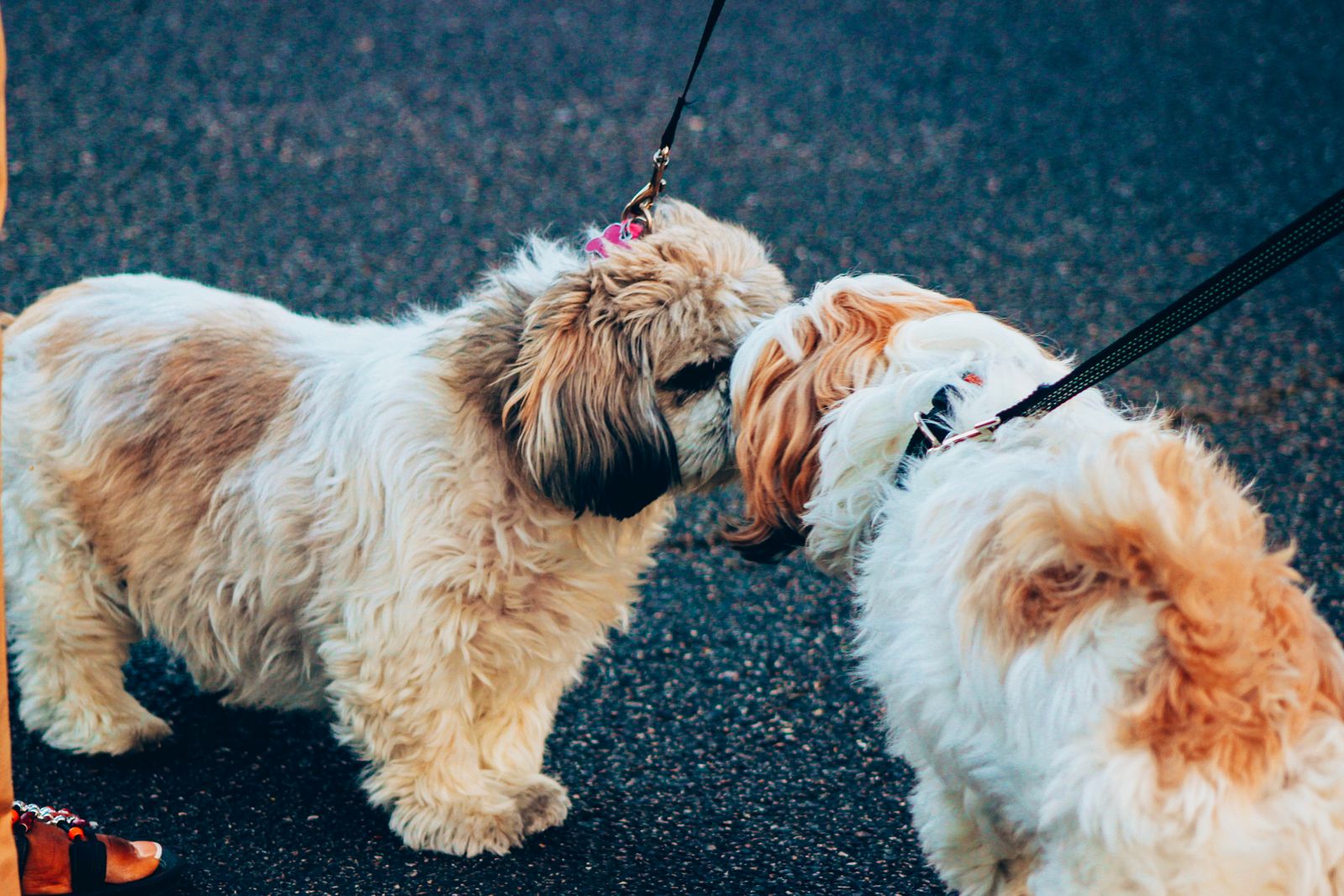
Two dogs meet on a field path, both wagging, and one owner says calmly: "He just wants to play." Two seconds later, it erupts. Not because one of the dogs was "bad," but because the wagging didn't mean joy at all, it meant tension, and no one read the other signals. Dogs talk to us constantly, just almost silently, through tail, ears, eyes, and posture. Whoever understands this language understands their dog and prevents misunderstandings that, in the worst case, hurt.
his guide will teach you to read your dog's body language properly: not memorizing signal by signal, but seeing the whole picture. We'll go through the individual body parts, look at the quiet calming signals, learn the warning stages before a bite, and clear up a few stubborn myths. For how your dog expresses himself vocally, through barking, growling, and whining, see the companion guide to what barking means.
The most important principle first, because almost every misreading traces back to it: a single signal, taken on its own, says very little. Almost every body part is ambiguous. The same wagging tail, the same raised hackles, the same yawn can mean opposite things. Only the combination of tail, ears, eyes, mouth, body tension, and pace, always read in the context of the situation, gives you a reliable picture.
Here's an example of how much context changes things: the same high tail means something completely different depending on what the rest of the body is doing.
| What you see | Likely meaning |
|---|---|
| High tail, loose wagging, soft gaze, relaxed body | joyful excitement, invitation |
| High tail, stiff, quivering wag, hard stare, weight shifted forward | strong tension, possible threat |
| Low tail, slow wagging, crouched body, gaze averted | uncertainty, appeasement |
| Tucked tail, ears pinned back, weight shifted back | fear |
Keep this one question in mind for every situation: what is the whole dog doing, not just his tail? With that lens in place, let's go through the individual parts.
No signal gets misread as often as the tail. "He's wagging, so he's happy" is the classic assumption, and it simply isn't accurate. Wagging, at its core, only means the dog is aroused and engaged with something. Whether that arousal is joy, uncertainty, or a threat is revealed only by how it happens.
Watch three things: height, speed, and stiffness. A tail carried at medium height, swinging loosely and broadly on a soft body, points to well-being. A tail held high and stiff, vibrating quickly in short bursts, is a sign of high tension, often just before a confrontation. A low tail, or one tucked between the hind legs, shows uncertainty to outright fear. A fast, low wag can be appeasement, not a burst of joy.
There's a fascinating nuance research has uncovered: dogs don't wag symmetrically. With pleasant stimuli, such as the sight of their person, the swing favors the right side; with unpleasant ones, it favors the left, and other dogs can even perceive this difference. That's fascinating, but only somewhat useful in everyday life, since this asymmetry is hard to spot reliably with the naked eye; researchers needed measuring equipment to detect it. Take it as proof that wagging is layered and complex, not as a new checklist item.
Your dog's face is full of information, once you know what to look for.
The ears show where attention is directed. Ears pricked forward mean alert focus on something; follow the direction of the gaze and you'll find the target. Ears pinned tightly against the head, combined with other stress signs, point to fear or feeling overwhelmed.
The eyes reveal the inner state. A soft, relaxed eye with loose lids belongs to a comfortable dog. A hard, staring gaze fixed on a target, paired with a tense face, is by contrast a serious signal and can precede an escalation. One especially important sign is the so-called whale eye, also called half-moon eye: the dog turns his head slightly away but keeps the trigger in view, so the whites become visible at the corner of the eye. This is a clear sign of discomfort and is often overlooked.
The mouth is the third carrier of information. A loose, slightly open mouth belongs to a relaxed dog. Frequent lip licking or nose licking, when there's no food involved, as well as yawning when the dog isn't tired, are stress and calming signals. Panting, when the dog is neither warm nor has been exerting himself, also belongs to this group.
How a dog distributes his weight reveals his intent. A confident, offensively minded dog makes himself big: head and tail up, weight shifted forward onto the front legs, ready to close the distance. A fearful dog makes himself small: crouched, weight shifted back, often turned away, trying to gain distance.
One point matters here more than any other, because it determines your safety: both states can end in a bite. Fear and offense share the same root, namely the wish for the trigger to go away. A fearful dog who has no way to flee will bite just as readily, sometimes even more readily. "He's just scared" is therefore not a reason to relax.
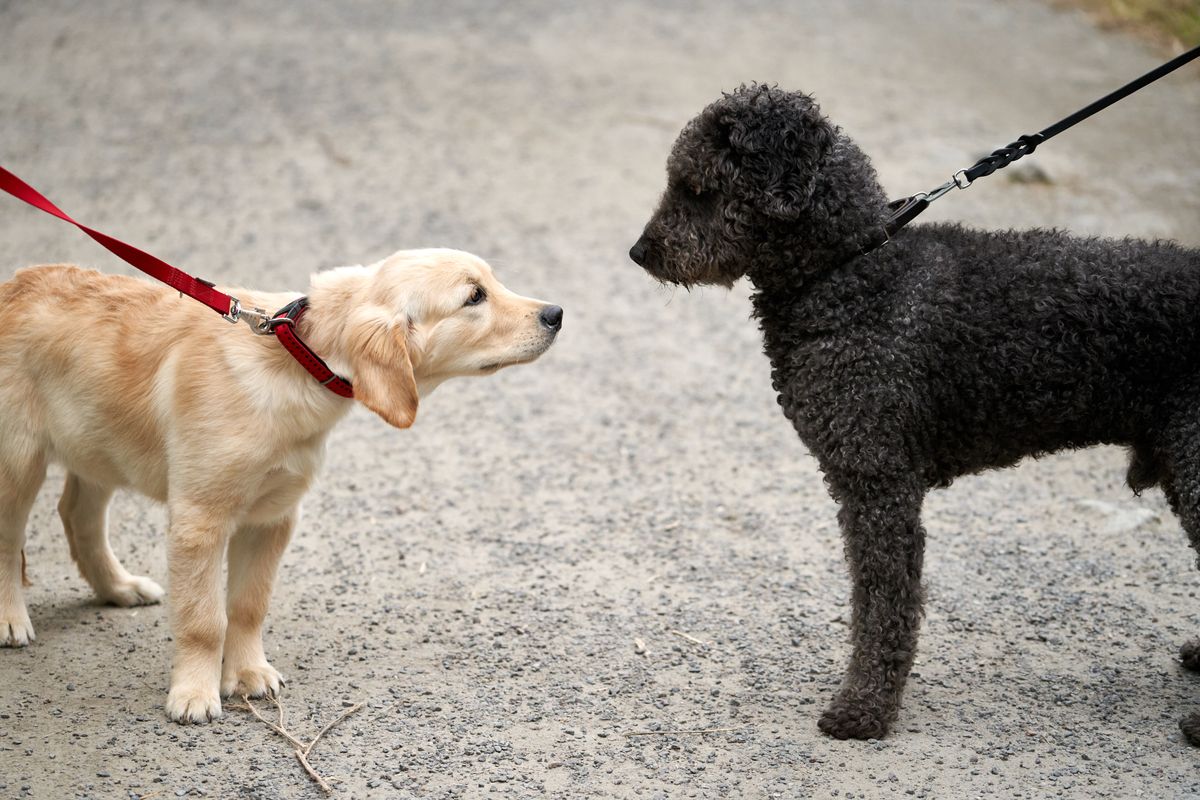
Two postures deserve a sentence of their own. Raised hackles, piloerection, are an involuntary sign of arousal, not automatically of aggression. A dog can raise them out of fear, excitement, or even joy; what's meant is, again, revealed by the rest of the body. The widespread rule of thumb that hackles raised toward the front mean aggression and toward the back mean fear has no scientific backing. And the play bow, in which the dog flattens his front legs and raises his rear end, is a meta signal: "Everything that follows is play." It invites play and restarts it after a pause.
Alongside the big gestures, there's a whole range of quiet signals that dogs show in uncertain or tense moments. The Norwegian dog trainer Turid Rugaas popularized them in the 1980s and named them calming signals. They include licking the nose, yawning, turning the head away, blinking, sniffing the ground for no obvious reason, slowing down, and walking in a curve instead of approaching head on.
Honesty matters here, because online sources often claim more than has actually been proven. What is certain: these signals reliably indicate that the dog showing them is stressed, uncertain, or wants distance. If your dog yawns, licks his lips, and turns his head away at the vet, he's telling you the situation feels unpleasant to him. Less certain is the stronger claim that a dog deploys these signals deliberately to actively calm another animal. Studies do find that the signals appear more often in stressful and socially tense situations, but a conscious intention to calm could not be clearly proven. For everyday life, this means: take these signals seriously as your dog's stress indicators, then give him space instead of pushing him further into the situation.
No dog bites "out of nowhere." Before a bite, there is almost always an entire chain of warning signals that escalates from quiet to loud. Experts call this the escalation ladder or aggression ladder, and knowing it is the best bite protection there is.
At the very bottom are the quiet signals we just discussed: looking away, blinking, licking the nose, yawning, turning the head away. If no one reacts and the pressure continues, the dog moves up a step: he freezes, goes stiff, shows the whale eye, raises his hackles. Only after that comes growling, then snapping at the air as a clear warning, and at the very top, the bite. Most "sudden" bites are, in truth, lower steps that were overlooked.
From this follows perhaps the most important sentence in this article: never punish a growl. A growl is a warning. If you punish it, your dog's discomfort doesn't disappear, only the advance warning of it does. The dog then learns to skip the warning and go straight to snapping or biting. A dog who is allowed to growl is safer to be around than one who has been trained out of growling. Instead of punishing the warning, take it seriously, create distance from the trigger, and work on the underlying cause.
A lot of half-knowledge circulates around dog language. A few of the most common misconceptions are worth setting straight.
"A wagging tail means the dog is friendly." No. Wagging means arousal, not friendliness. Only height, speed, stiffness, and the rest of the body show what's actually meant. This exact myth causes many avoidable incidents, especially around children.
"The dog is yawning, so he's tired." Often not. Yawning outside of genuine tiredness is usually a stress signal. Watch when it happens: at the vet, in a commotion, during a scolding, then it's tension, not sleepiness.
"The guilty look shows he regrets what he did." This one also persists stubbornly, but it isn't true. Studies show that the famous guilty look is not a reaction to an actual misdeed, but to the human's body language and tone of voice. Dogs showed it especially clearly even when they were scolded unfairly. It's an appeasement response to you, not a guilty conscience.
"Contagious yawning proves that dogs feel empathy." Tempting, but not proven. The research on this is contradictory, and there are simpler explanations than empathy. A nice topic for conversation, but not an established fact.
Not every dog is equally easy to read, and sometimes that comes down to body shape. Dogs with docked tails or cropped ears simply lack part of their expressive toolkit, both for us and for other dogs. Short-nosed breeds with flat faces can show less nuance in their facial expressions, which is why people easily misread them across the board as "always cheerful." And on very hairy or very dark-coated dogs, subtle signs like raised hackles, tail position, or facial expression simply disappear into the fur.
That doesn't mean you can't read such dogs. It means you should pay even closer attention to the remaining signals and to the overall impression: posture, pace, weight shifts, the whole scene.
Reading your dog's body language isn't some secret science, it's a matter of practice. The more often you consciously look, at the whole dog rather than just the tail, the more nuances you'll pick up. You'll notice sooner when something is becoming too much for him, you'll prevent conflicts before they arise, and your dog will experience you as someone who understands him. Almost nothing strengthens the bond as much as that.
If you want to dig deeper, the guide to what barking means covers the vocal side of this language, and you can read about how to stop excessive barking in the matching training guide. You'll find even more about relaxed life together with your dog at Souldog.
 Souldog