When an older dog suddenly starts leaking urine, it's rarely the end of something. It's usually treatable, and daily life can stay manageable with a few routines.
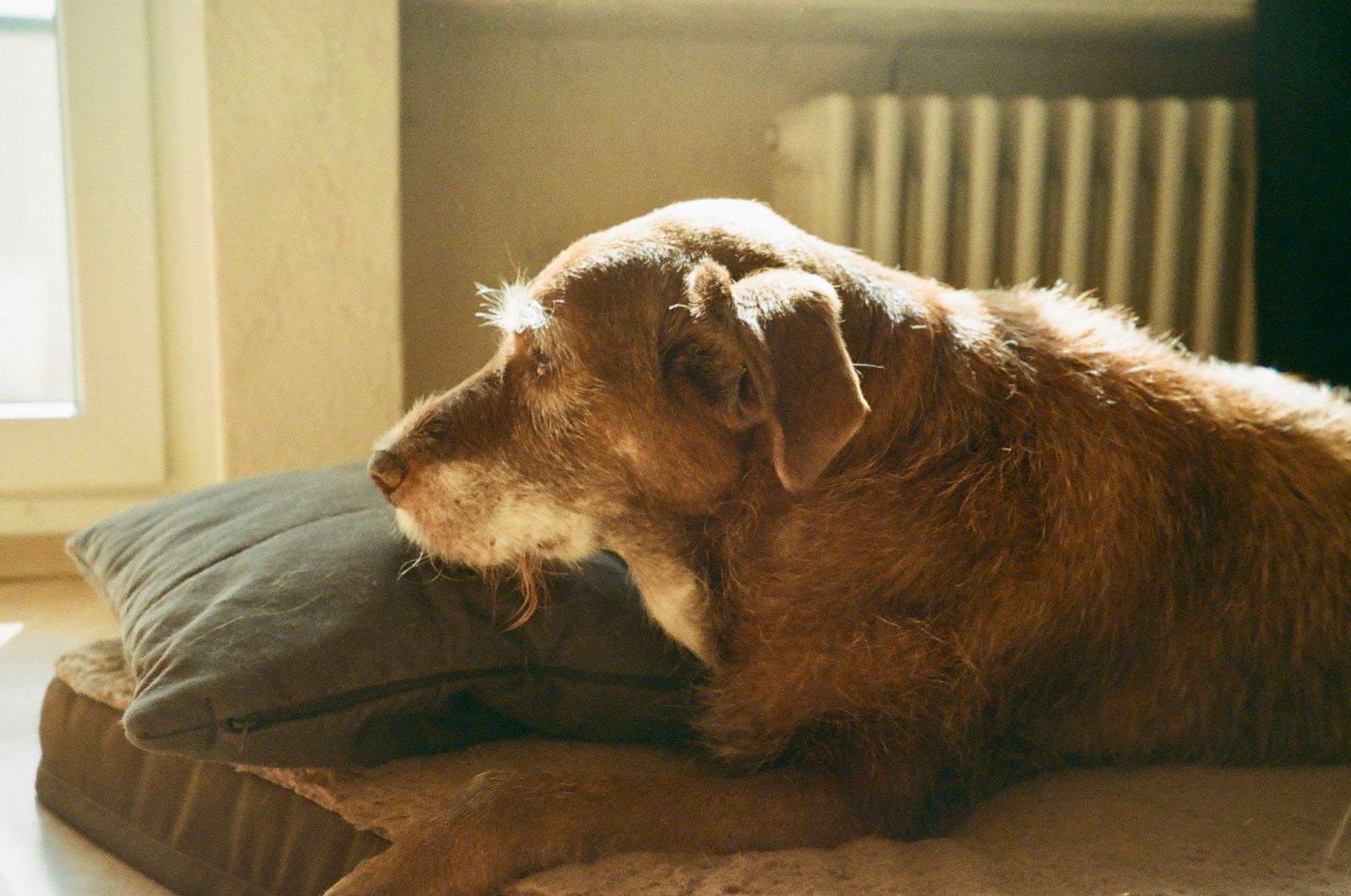
ou get up in the morning, walk over to the dog bed, and the blanket is wet. Your dog is lying next to it, not quite looking at you, seeming almost a little embarrassed. Your first thought is probably worry, maybe a bit of panic. What's going on, is this how it's going to be now, did you do something wrong.
The short answer first, because it clears away most of that worry right away: in most cases you didn't do anything wrong, and incontinence in older dogs is often very treatable. It's a topic almost nobody talks about, because it feels a little embarrassing, and that's exactly why so many owners feel alone with it. They don't have to.
Maybe you know this feeling from other situations too: not wanting to bring it up because it feels somehow embarrassing, even though your dog has done nothing wrong at all. That pressure to justify yourself isn't necessary. Incontinence is a medical issue like any other, not a training failure and not a sign that something is fundamentally going wrong. It's also just one of several things that can come with aging, for a broader overview see our gentle checklist for your dog's aging years (German article).
Incontinence means involuntary loss of urine, usually while sleeping or lying down, without your dog noticing or being able to control it. That's clearly different from deliberate marking, and also different from house soiling linked to declining orientation in old age, where an otherwise house-trained dog forgets to signal before going outside. Both look similar in the living room, but the causes are different.
You'll sometimes hear it called bladder weakness instead, it means the same thing: your dog is peeing without meaning to, and it has nothing to do with training or house-training slipping.
By far the most common cause in older, spayed females is a weakness of the urethral sphincter, known in veterinary terms as USMI. It affects an estimated one in five spayed females, more in large breeds, and often shows up only months or years after spaying. The sphincter simply stops holding reliably while your dog sleeps, when the muscles relax.
There are other possible causes a vet should rule out before assuming USMI automatically: urinary tract infections, diabetes, Cushing's syndrome, neurological problems such as a slipped disc, and in male dogs, prostate issues too. That's why a vet visit is worth it, rather than guessing on your own.
One more distinction matters here: in some older dogs, there's no involuntary incontinence at all, but early canine cognitive dysfunction instead. In that case your dog isn't losing bladder control, they're more likely forgetting they need to go out, or too disoriented to signal it. Typical accompanying signs include confusion, a changed sleep rhythm, or more anxiety than before. Both can also occur together, which is one more reason a urine test at the vet beats guessing at home.
| True incontinence | Dementia-related house soiling | |
|---|---|---|
| When | usually while sleeping or lying down | often while awake, sometimes right after coming back from a walk |
| What happens | dog doesn't notice, involuntary | dog forgets to signal or is disoriented |
| Accompanying signs | usually none, an isolated symptom | often confusion, changed sleep, more anxiety |
| What helps | usually treats well with medication | daily structure, environment adjustments, veterinary support |
This table doesn't replace a diagnosis, but it helps you walk into the vet conversation with a clearer observation instead of just saying "he's been having more accidents lately."
In many cases, yes, and often quite well. For USMI, treatment usually involves medication that increases sphincter tone, such as phenylpropanolamine, or hormonal options like estriol. Which one makes sense depends on the exact diagnosis, so this belongs in a vet's hands. Don't dose or experiment on your own, even if you read online about what worked for someone else's dog.
Once medication is started, it's normal for the vet to check back in after a few weeks to see whether the dose fits or needs adjusting. A full return to how things were isn't guaranteed for every dog, but a clear improvement is common, and often that's enough for daily life to feel normal again.
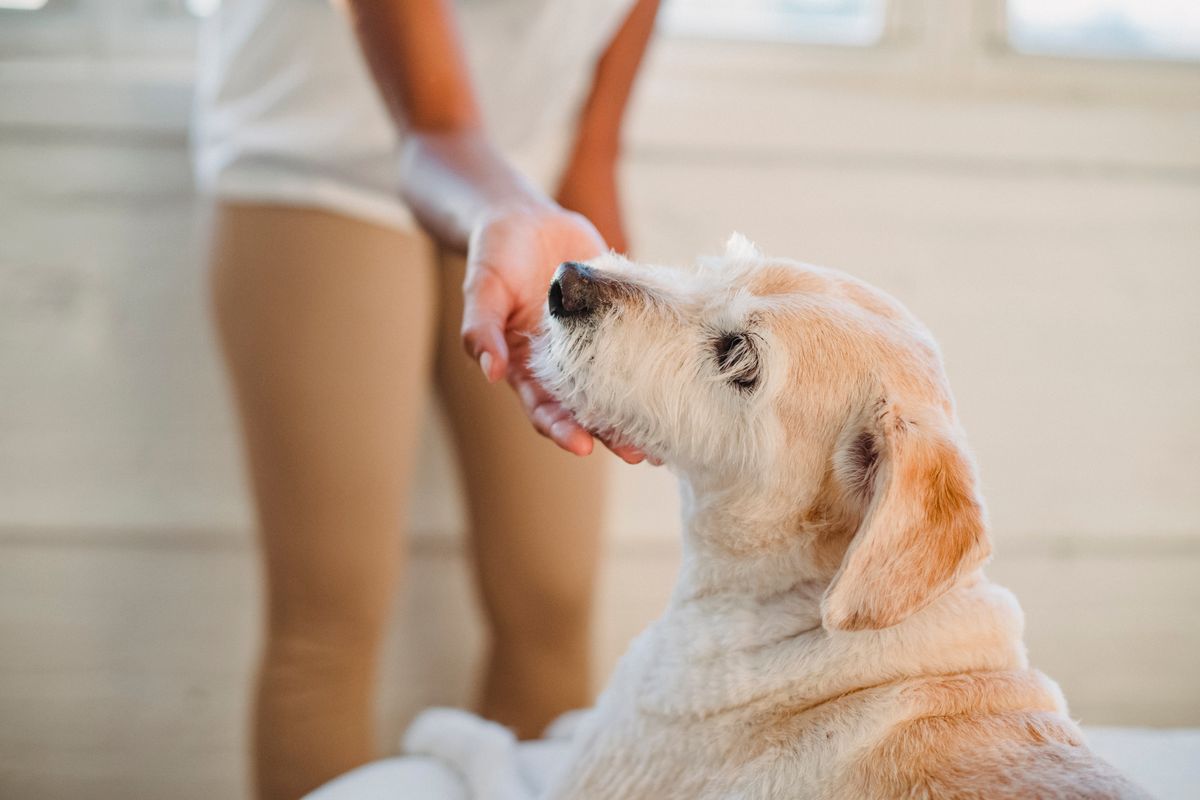
Belly bands for male dogs and diapers for either sex are pure management tools against the consequences, they don't fix the underlying cause and don't replace treatment. What they're good at: stopping every small leak from turning into a laundry event. It matters to change them regularly, several times a day depending on need, and to let the skin underneath dry out in between. If a dog stays too long in damp material, the risk of sore spots and even ascending urinary tract infections goes up, and then you've traded one problem for a bigger one.
Fit makes a real difference here. Too tight chafes, too loose slips and still leaks through anyway. It's worth trying a few sizes and models at the start until you find one that actually fits. Both washable and disposable versions exist, and for daily life a mix often works well: washable bands at home, disposable diapers for outings or travel when a quick change without a washing machine is more practical.
A quick skin check while changing is worth building in too. Redness, sore spots, or an unusual smell mean either you need to change more often or the model isn't quite the right fit, not that something is fundamentally wrong.
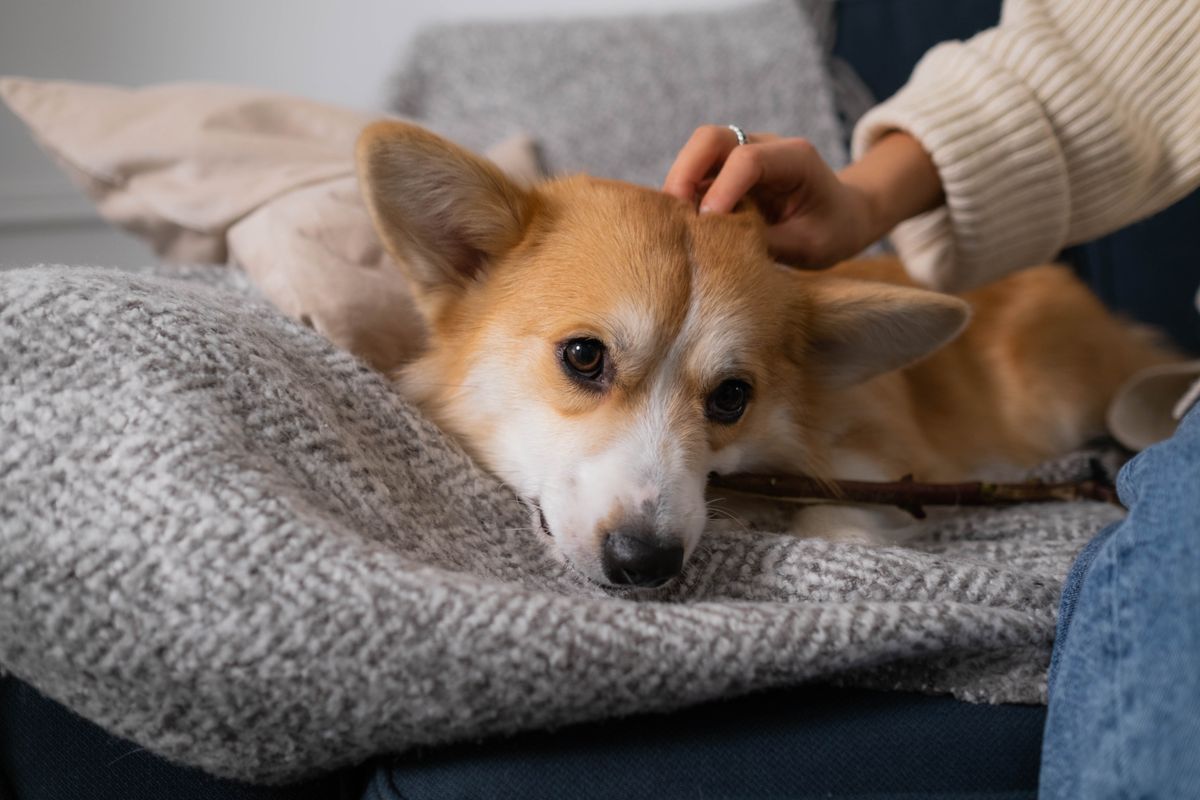
Waterproof, washable pads for the dog bed and favorite spots take a lot of pressure off the laundry question and keep your dog's skin drier. Slightly more frequent bathroom breaks, especially late at night and early in the morning, sometimes help reduce the amount of involuntary leaking indoors too, even though that doesn't fix the underlying cause itself.
What matters most in this phase: don't scold. Your dog has no control over what's happening, this isn't disobedience and it isn't forgotten house training. Scolding doesn't solve anything, it just adds unnecessary stress in a phase where your dog may already seem a little unsettled.
Some signs shouldn't just be watched, they should be checked out right away. Blood in the urine, pain or noticeable straining while urinating, a sudden, abrupt onset of incontinence, clearly increased drinking and urinating, fever, or an accompanying change in behavior all call for a prompt vet visit. That's especially true if several of these show up together. For how often an older dog should get a general checkup anyway, see our full guide to dog health (German article).
These signs don't belong in the wait-and-see category, they belong at the vet promptly, especially if more than one shows up at once.
| Sign | Why it matters |
|---|---|
| Blood in the urine | can point to infection, stones, or other causes |
| Pain or straining while urinating | unusual for pure incontinence, suggests a different cause |
| Sudden, abrupt onset | argues against slowly progressing USMI |
| Clearly increased drinking and urinating | possible sign of diabetes or Cushing's syndrome |
| Fever or behavior change | can point to an infection or another underlying condition |
Incontinence in old age feels bigger in the first moment than it usually turns out to be. With the right diagnosis, a few practical tools, and a bit more laundry in your routine, it's usually manageable without much else needing to change for your dog. For phases like this, it often helps to keep observations like frequency or anything unusual in one place, for example in the Souldog app, so you're not guessing from memory at your next vet appointment.
 Souldog