




When it is dark by five and the rain will not stop: indoor dog halls, classes under a roof, shops that let dogs in and winter events. What exists, what it costs and what to watch for in a group.
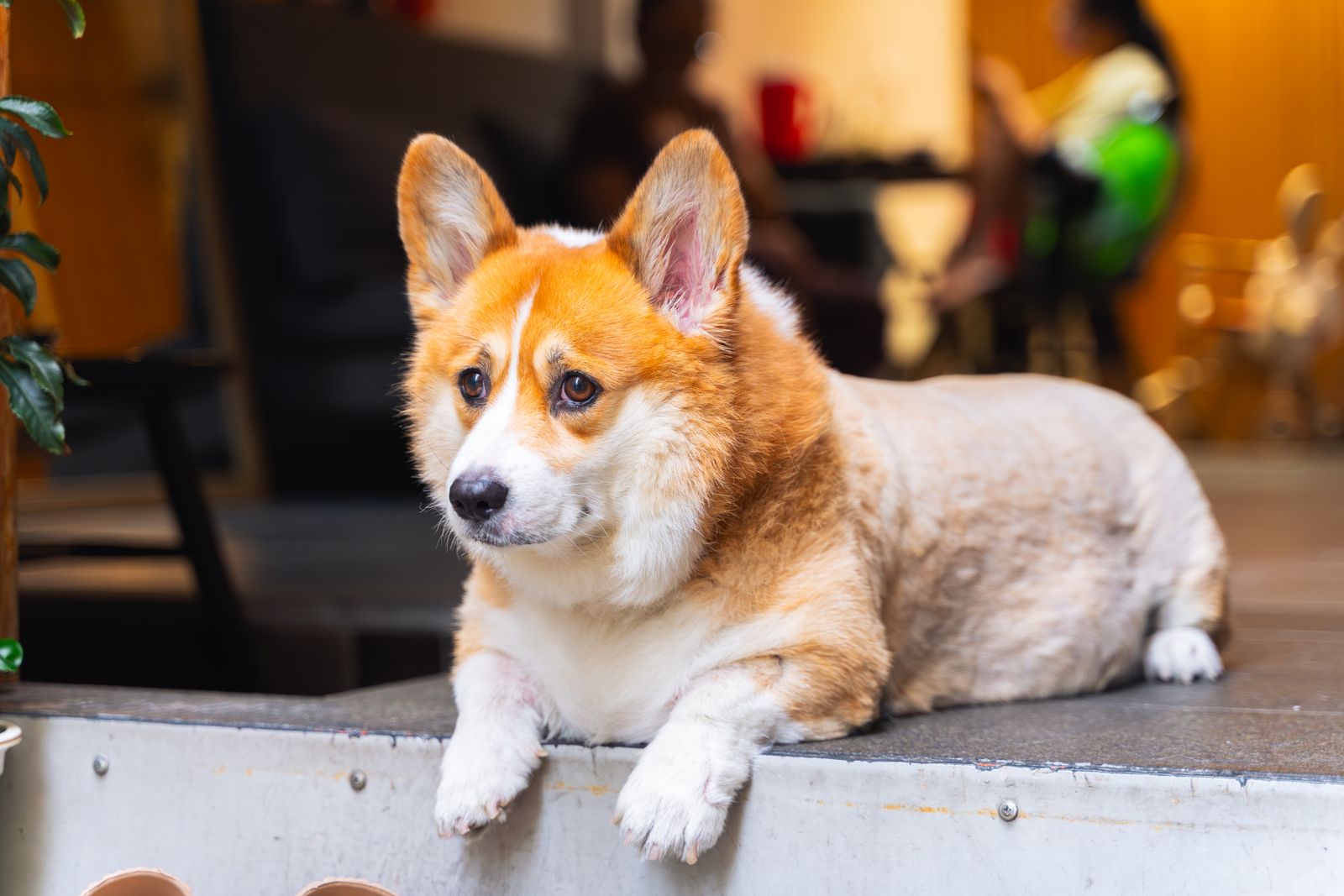
It is just after five, already pitch dark outside, and the rain is falling so steadily it seems to have signed up for the whole month. The evening walk was short and wet. Your dog is not curled up contentedly in his bed. He is sitting in the hallway, looking at you as if you forgot something. You did: the rest of the day.
etween November and February that look comes almost every evening. Yet there are more places with a roof than you would guess in the gloom. This guide covers indoor activities with dogs outside your home in Germany: indoor dog halls, classes under a roof, shops and cafes that let your dog in, and winter events. It also covers the safety questions that come up when lots of dogs share a small space.
| Place | What you do there | Good for | Watch out for |
|---|---|---|---|
| Dog hall, private hire | Training or play without other dogs | Shy or reactive dogs, training with equipment | Book ahead, read the hall rules |
| Dog hall, open session | Play with other dogs under supervision | Sociable, healthy dogs | Vaccinations, group size, stress signals |
| Class in a hall | Agility, hoopers, rally obedience, tricks | Dogs who like to learn | Load suited to age and joints |
| Cafe or shop | Come along calmly, practise everyday life | Relaxed dogs | House rules, sign at the door, short leash |
| Fair or competition | Watch, meet people, shop | Experienced, robust dogs | Noise, crowds, vaccination record |
There is plenty to do at home too, from snuffle mats to trick training. We have a separate guide on how to keep your dog busy in bad weather. Here we stick to places outside that have a roof.
If you search for an indoor dog park near you in Germany, you usually end up with one of three models. They sound similar but feel completely different to your dog.
Private hire. You get the hall or a sectioned ring for a set time, typically 50 or 60 minutes, and you are alone with your dog. Some halls provide equipment such as jumps, hoops and tunnels. For shy dogs, dogs who react strongly to other dogs, or simply for quiet training, this is the most relaxed option. Some halls, however, rent explicitly for training only and not as a run-around area. That is usually stated on the website or in the hall rules.
Open session. Several owners and dogs share the space and the dogs can play together. This is the closest thing to off-leash time at the dog park, only dry and lit. For sociable dogs it can be a party. For everyone else it is more like an open-plan office with a ball pit.
Classes and groups. Dog schools and dog sport clubs use halls for classes and group training. More on that in a moment.
On cost: prices vary by region, time of day and model, and evenings and weekends are sometimes more expensive. For an open session, one hall listed about 30 euros per owner and dog. That is a small sample, not a market survey; ask on site for the current price.
The floor is worth a close look. The halls we looked at advertised artificial turf, sometimes with rubber cushioning underneath, or joint-friendly mats. On smooth tiles or polished concrete, by contrast, dogs struggle to grip when they turn; more on that in the section on slipping below.
Most dog sports work just as well under a roof as outside, some even better, because no mud widens the turns.
Which sport suits which dog and how hard it is on the body is sorted in our overview of dog sports. For winter there is one simple rule: a class at a fixed time is the best cure for the sofa. You go because you signed up, not because you happen to feel like it.
The classic for a grey afternoon is the cafe. Whether your dog may come into the seating area is up to the owner; the kitchen and storerooms stay off limits for dogs. How to spot dog friendly cafes and how your dog settles under the table is covered in our guide to dog friendly cafes in Germany.
For furniture stores and DIY stores there is no uniform rule, often not even within one chain. One publicly documented example is IKEA Germany: since 15 June 2026 dogs have been allowed in all of its stores and planning studios in Germany. Your dog must be on a leash or carried in a bag, basket or backpack. The restaurant serving line, the bistro, the Swedish food shop and Småland are closed to dogs, and if a planning studio is inside a shopping centre, the centre owner decides. DIY stores and garden centres each set their own rules. A call to the store you plan to visit is the most reliable way to find out.
Supermarkets are trickier. EU food hygiene law bans pets from rooms where food is prepared, handled or stored. Where food is on open display, that line is reached quickly. Look for the sign at the entrance and ask if in doubt.
In museums, cinemas and theatres, dogs generally stay outside. If a venue makes an exception and offers an event with dogs, it says so clearly on its website. Without that invitation, better not to try.
Assistance dogs are the exception to almost everything. Under section 12e of the German Disability Equality Act, people with disabilities may generally enter facilities open to the public with their assistance dog. An operator may only refuse if access would be a disproportionate or unreasonable burden.
By the way, a shopping trip is more tiring for many dogs than it looks. Slippery floors, trolleys, strangers' hands, announcements. To start with, a short visit at a quiet time is plenty.
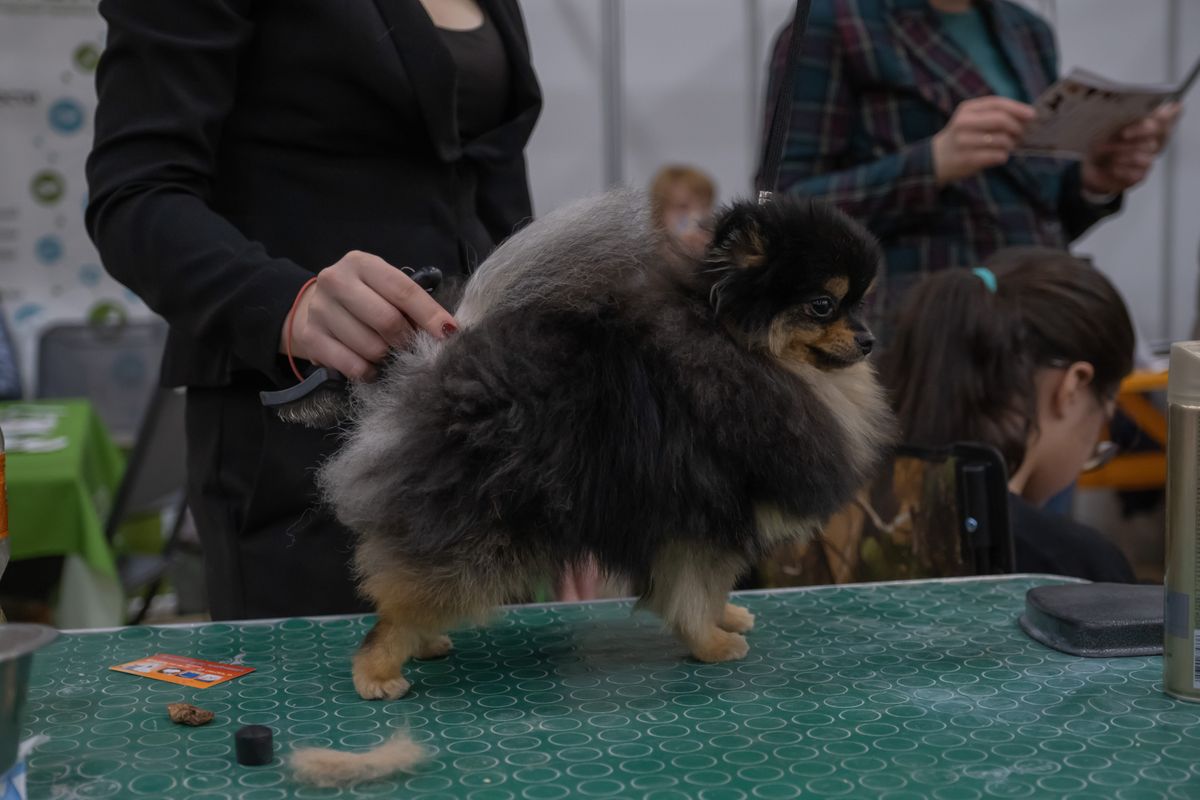
In winter, club life moves indoors too. Dog sport clubs hold competitions in halls, dog schools run workshops, and there are fairs about dogs and hunting. You are most likely to find dog events near you on the websites of local dog schools and clubs and in your city's events calendar.
One example with clear rules: visitors may bring their dogs to the Jagd & Hund fair in Dortmund, from 2 to 7 February 2027. They need a valid rabies vaccination record, and the vaccination must have been given at least 21 days before the fair. Dogs can only enter through one specific entrance, where the papers are checked. Other organisers have other rules; read them on their website beforehand.
A packed exhibition hall is not an outing for most dogs, it is work. Loud, crowded, full of smells and feet. For a young or nervous dog, a small workshop with six teams is the better choice.
Kennel cough spreads quickly where dogs are close together. The pathogens pass on through droplets from coughing and sneezing, through direct nose contact and through shared bowls and toys. Stress and poor ventilation, temperature and humidity make dogs more susceptible and the illness more severe. A crowded, poorly ventilated hall brings several of these together.
What that means for you:
Puppies need their own plan. According to WSAVA, the last vaccination of the puppy series is given at 16 weeks or older. The American Veterinary Society of Animal Behavior (AVSAB) still recommends puppy classes from about 7 to 8 weeks, because the most important time for socialisation falls within the first three months of life. The conditions: at least one vaccination seven days before the first session, the first deworming, a healthy puppy and ideally a floor that is easy to clean. Avoid places with many unfamiliar dogs of unknown vaccination status, open play sessions included, until the vaccination series is complete.
Slippery flooring is the underrated indoor risk. On tiles, laminate or polished concrete, dogs slide when they brake and turn, and that happens all the time during play.
Older dogs and dogs with arthritis need grip under their paws. The senior care guidelines of the American Animal Hospital Association (AAHA) recommend ramps, rugs and floors with good traction for them. In a hall that means artificial turf or mats rather than a smooth hall floor, calm scent work rather than chase games, and short sessions.
For puppies and young dogs that are still growing: no jumps at full height, no leaping off equipment, no wild sprints with sudden stops. When your dog may start jumping depends on size and breed. Check with your vet.
And for all dogs: before fast exercises, let your dog walk and trot loosely for a few minutes. If your dog lifts a paw, limps or slows down noticeably, the session is over for today.
A hall full of dogs is paradise for some dogs and a nightmare with artificial turf for others. Both are normal, and you can see which type yours is in his body long before he growls.
Typical signs of fear and stress are yawning, repeated lip licking, turning the head or gaze away, slowly moving away, a tucked tail, freezing and crouching with the head lowered. A wagging tail on its own does not mean your dog is relaxed. What the individual signals mean is explained in our guide to calming signals in dogs.
If you see several of them together, or your dog keeps trying to disappear behind you or under a bench, take him out. A break at the edge or in the car is not a failure. If your dog is constantly chased or pressured by another dog in a group and cannot get away, end the situation, calmly but immediately.
Every hall has its own rules, but most are similar. On the websites we read, and in the American Veterinary Medical Association's (AVMA) recommendations for dog parks, these points come up again and again:
| Rule | Why |
|---|---|
| Only healthy, vaccinated and dewormed dogs | Protection against infection in the group |
| No females in heat | Otherwise the group gets restless |
| Remove poop and urine immediately | Hygiene; some halls charge a cleaning fee for violations |
| Proof of dog liability insurance | Some halls require it for every dog |
| Leash outside the training area | The entrance and car park are not off-leash areas |
| Never leave your dog unsupervised | Conflicts arise quickly |
| Small and large dogs separated | Protects small dogs during play |
| No food and no own toys in the group | Can trigger fights over resources |
| Clean, dry shoes | Keeps the floor clean and grippy |
Read the hall rules before your first visit. Some halls charge flat fees when something goes wrong, and some do not allow children during open sessions.
Not every evening needs a programme away from home. Ten minutes of scent work in the hallway can leave a dog more content than an hour in a noisy hall. Ideas for that are collected in our guide on how to keep your dog busy in bad weather. And for the walk before and after, winter means: lights on, reflectors attached. Even more ideas for indoors and outdoors are gathered in our big overview of things to do with your dog (in German).
Winter is long enough that it deserves a few good evenings. An hour in the hall, a class at a fixed time, a cafe where your dog falls asleep under the table: it all counts, even when everything outside is grey. Start small, watch your dog and keep what does him good.
If you are looking for something bigger for next weekend, browse the experiences in the Souldog app. And for tonight, a place with a roof and a dog who is tired afterwards may be all you need.
 Souldog