From nose work to agility to canicross: an honest overview of the most important dog sports, which dog each one suits, what age to start, and what to watch for when it comes to joints, age, and health.
You know the dog who's still bouncing off the walls after an hour-long walk? That dog rarely needs more walking; what he needs is a job for his brain. That's exactly where dog sports come in: they give body and mind something to do, strengthen your bond, and turn a restless dog into a content one. The only question is which sport suits the two of you, because there's a world of difference between agility and nose work, and not every dog belongs over a hurdle.
his overview sorts the most important dog sports by what actually matters: how much they demand from body and mind, which type of dog they suit, what age makes sense to start, and which health questions you should clarify beforehand. By the end, you'll have a good idea of where to begin.
Dog sports differ mainly in how much strain they put on the joints and whether they demand more from the body or the mind. A young, jump-happy dog needs something different than a senior with arthritis or a reactive dog who first needs to build confidence. This table gives you the rough direction.
| Sport | Strain | Good fit for |
|---|---|---|
| Nose Work / Scent Work | Low | Truly any dog, any age |
| Mantrailing | Low physically, high mentally | Also seniors, insecure and reactive dogs |
| Trick training | Low | Any age, any size, indoors too |
| Treibball | Low, jump-free | Herding dogs, seniors, dogs returning to activity |
| Dummy training | Medium | Retrieve-loving, well-controllable dogs |
| Obedience / Rally Obedience | Low to medium | People who enjoy precision work and bonding |
| Dog dancing (Canine Freestyle) | Medium | Agile dogs, when trained on both sides |
| Canicross and other pulling sports | High | Enduring, healthy, run-loving dogs |
| Agility | High, jumps | Fit, fully grown, agile dogs |
| Flyball | High, jumps and speed | Ball-obsessed, healthy athletes |
Before we go through the individual sports, it's worth looking at the one question that decides everything else.
The best dog sport isn't the most spectacular one; it's the one that fits your specific dog. Five factors help you find it.
His energy level sets the first direction. A dog who could run for hours is better suited to canicross than to calm longeing, and a laid-back type the other way around. His natural disposition gives you the second clue: a herding dog often loves driving things, a retriever loves fetching, a nose-driven dog loves searching. You don't have to force anything, but working with a dog's nature is a lot more rewarding than working against it.
Age and health set the limits. A young dog who hasn't finished growing doesn't belong over high hurdles yet, and a dog with joint problems needs low-jump alternatives, more on that below. And finally, your own goal matters: do you mainly want to tire your dog out, deepen your bond, or help an insecure dog build confidence? If there are pre-existing conditions or any doubt, a vet check comes first, before you start.
If you're just starting out, have a young or old dog, or are working with an insecure dog, the mind and nose focused sports are the ideal place to begin. They barely strain the joints and can be done almost anywhere.
Nose work is the easiest entry point of all. Your dog searches for hidden treats or specific scents, and any dog can do it, regardless of size, age, or condition. Searching is mental work, and many trainers report that dogs seem calmer and more content afterward. That's only partly backed by evidence: a small study of twenty dogs found a more positive baseline mood after two weeks of daily nose work. That sniffing tires a dog out more than a regular walk, on the other hand, is a practical observation from trainers, not a proven research finding. The point stands: nose work visibly agrees with most dogs.
Mantrailing takes it a step further. Your dog follows an individual person's scent trail, often over long distances and long stretches of time. Physically, the strain stays low; mentally, it's hard work. That's exactly why it suits almost any dog, including seniors and insecure or reactive dogs, who build confidence in the process. It's one of the few sports where a dog shines almost entirely through his nose.
Trick training adds polish to your teamwork and can start right at the kitchen table. Everything from paw shakes to a small choreographed routine is possible, for any age and any size, with minimal injury risk. Treibball, finally, has the dog steer large gym balls into a goal, with no jumping involved at all. Originally developed for herding dogs, it's now open to any breed and is so easy on the joints that seniors and dogs recovering from an injury can join in too. If you prefer something calmer, longeing (circle work) is a distance exercise done in a circle that mainly trains bonding and attention, with moderate physical strain.
For healthy, fully grown, movement-loving dogs, there are the high-intensity sports. They're enormous fun, but they demand a fit body, a warm-up before you start, and an honest eye on injury risk.
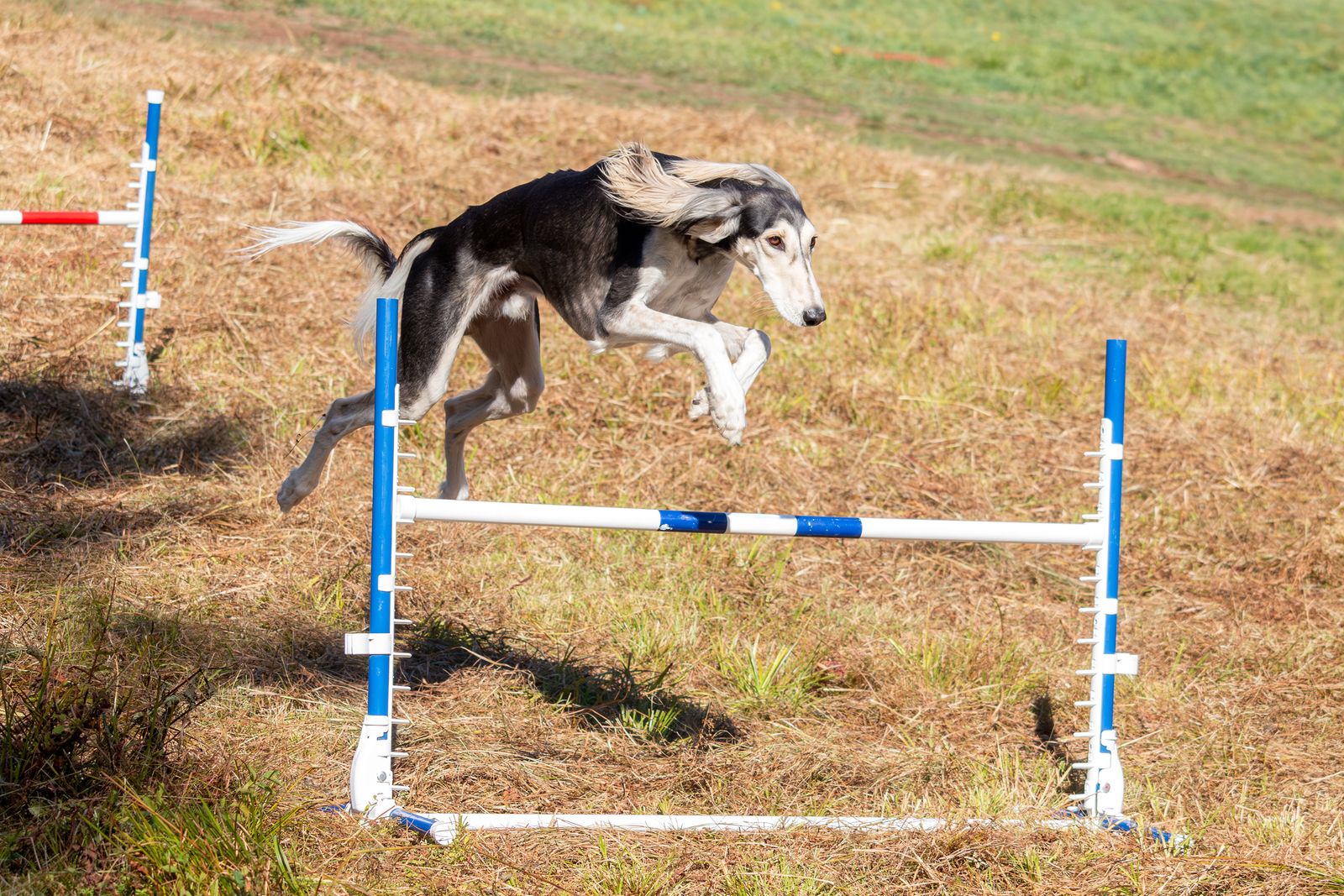
Agility is the classic: a course of jumps, tunnels, a seesaw, and weave poles that dog and handler master as a team. It challenges body and mind and gets a lot of dogs genuinely excited. Timing matters: full jump training belongs only after the growth plates have closed; official governing bodies don't measure jump heights until a dog is eighteen months old. A Finnish study of agility dogs found that the main risk factors were starting training too early, training very frequently, and prior injuries. The often-repeated claim that higher jumps alone mean more injuries, incidentally, wasn't confirmed in that study. For brachycephalic dogs, agility only works in a heavily adapted form, because the speed and jumps overwhelm their breathing.
Flyball is even faster-paced: in a relay race, the dog jumps over four hurdles, triggers a box, snatches a ball, and races back. This is a sport for ball-obsessed, thoroughly healthy athletes with good joints and a strong heart. Honestly, the injury rate here isn't small: studies report that around a third of flyball dogs experience an injury at some point in their career, most often to the paws, back, and shoulder. If you do flyball, take technique, warm-up, and health seriously.
Canicross and other pulling sports cover canicross, bikejoring, dog scootering, and sled sports, where the dog pulls through a proper pulling harness while you run, cycle, or ride. This is an endurance sport for run-loving, healthy dogs, only after they've finished growing and only with a proper pulling harness, never attached to the collar. For brachycephalic dogs, it's unsuitable because of the breathing strain and heat sensitivity. Dummy training sits in between: the dog retrieves a food bag or a dummy, it's easy to control and suits many breeds, especially retrieve-loving ones. Watch the braking strain during fast stops and turns, especially in dogs with a predisposition to joint issues.
Some sports are less about burning energy and more about teamwork. They're ideal if you want to deepen your communication, and depending on the level, they're pleasantly easy on the joints.
Obedience and Rally Obedience train obedience and precise signals as a team. At beginner levels, it's jump-free and easy on the joints, suitable even for puppies, seniors, and injury-prone dogs; only the higher levels include jumps. Dog dancing combines obedience with music and movement into a small choreographed routine. It builds agility and bonding, but should be deliberately trained on both sides: always practicing just one side risks muscular imbalances. For many human-dog teams, these sports are the path to really getting in sync with each other.
As different as these sports are, a few safety rules apply to all of them. Follow them, and you'll keep your dog healthy and fit for a long time.
Age first: jumps, high strain, and intensive training belong only to a fully grown dog. Growth plates close at different times depending on size, at around six to ten months in small breeds, around twelve months in medium breeds, and not until fifteen to twenty-four months in large and giant breeds. Only an X-ray reliably shows whether the growth plates have closed. Until then, mind and nose focused sports are the better choice.
Brachycephalic dogs need special consideration. Because of their narrowed airways, they overheat faster: a large analysis found roughly a fourteen-fold higher heatstroke risk in English Bulldogs, about a six-fold higher risk in French Bulldogs, and a three-fold higher risk in Pugs, compared with Labradors. Intensive exercise in warm weather is dangerous for them.
For every dog, the same rules apply: warm up for a few minutes before exertion, then let him cool down gradually afterward instead of stopping abruptly. Train in a varied way rather than one-sidedly, allow for recovery breaks, and get a vet check before starting a new, intensive sport, especially if there are pre-existing conditions. That way, sport stays what it's meant to be: healthy.
There's no single right dog sport, there's only the right one for your dog. If you look at his energy level, natural disposition, age, and health, you'll almost always find something that brings him joy and helps him become more balanced. Start small, be patient, and let your dog show you what suits him. Sometimes the shy male dog suddenly turns into an enthusiastic trail hound, and the wild young dog learns to work with focus for the first time through Treibball.
If you're looking for the right setting, the big overview of things to do with your dog has even more ideas for indoors and out. Find dog training schools and sports clubs near you with Souldog, right on the map.
 Souldog