House rules, hygiene law, assistance dogs and manners under the table: how to find dog friendly cafes in Germany and enjoy a coffee with your dog.
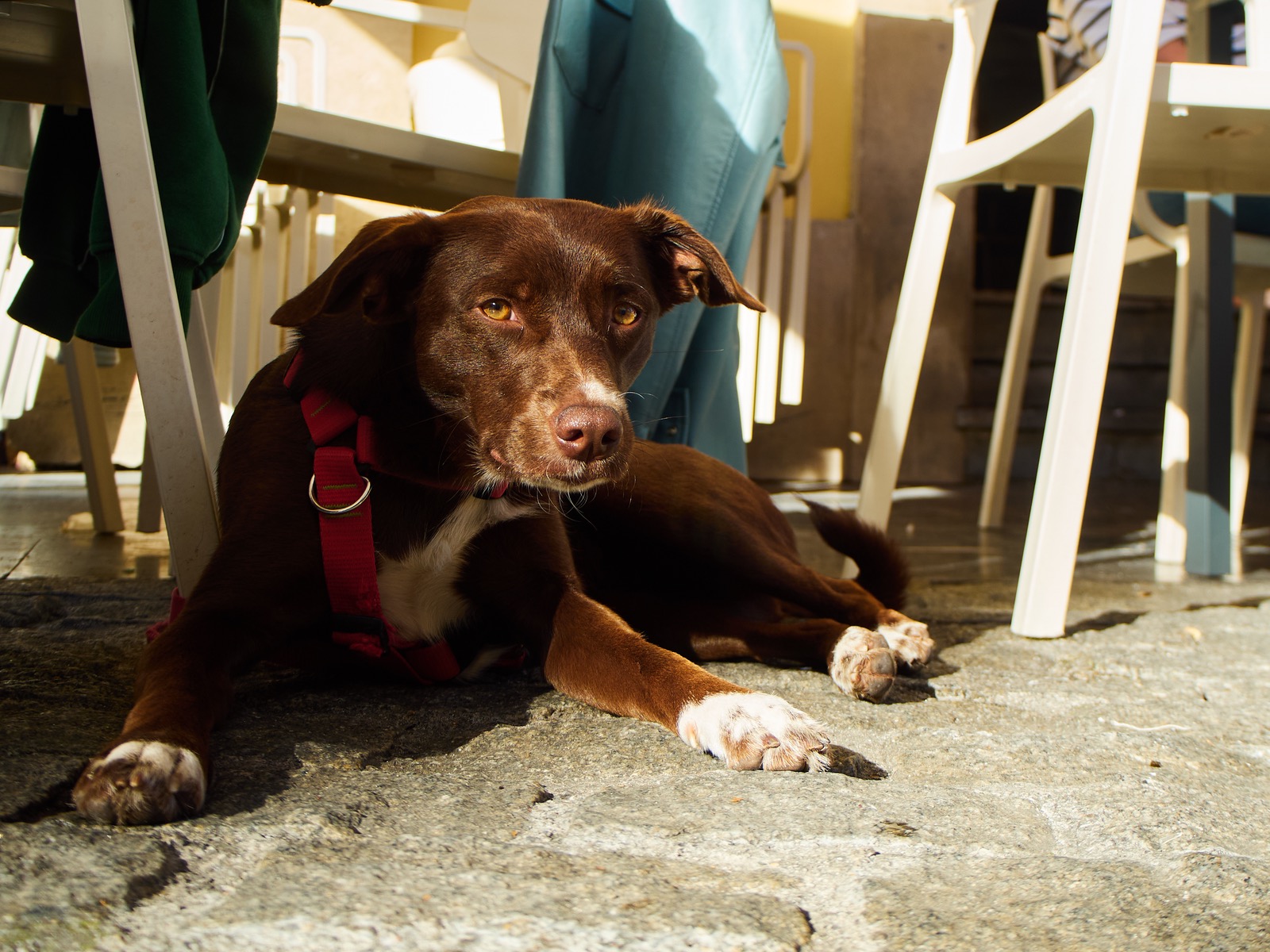
ou found the perfect table, the cappuccino has just arrived, and your dog decides that the cake at the next table is his life's work. Welcome to the cafe with a dog. It can be the best part of a walk, as long as a few things are clear beforehand.
Whether a dog may come into a cafe in Germany is usually up to the owner, who holds the house rules. There is no general legal ban for the dining area; dogs are off limits where food is prepared or stored. Assistance dogs have a statutory right of access. The safest approach is to ask quickly or look for signs like a water bowl or a sticker.
A dog is allowed in a cafe if the owner allows it. The owner holds the house rules, and a no-dogs sign counts. German law knows no general ban on dogs in the dining area, and where there is no sign you can generally assume nothing speaks against it. Asking takes five seconds and saves you a retreat with a coffee view.
Food law changes less than many people think. The EU food hygiene regulation (EC) No 852/2004 requires that pets have no access to rooms where food is prepared, handled or stored. That means kitchen, bakery and storeroom. The dining area where guests sit is not covered across the board. How strict an authority is about open food such as a buffet, salad bar or bakery counter can differ, though. That is why bakeries with seating and cafes with an open counter are more often dog free than a small place with tables and cups.
Then there are the rules of your city. Leash rules and other regulations of the state or municipality can also apply around the cafe; for your city, the matching city guide further down usually says more.
People with disabilities may, as a rule, enter facilities open to the public with their assistance dog. Section 12e of the German Disability Equality Act (BGG) regulates this; it was introduced with the Participation Strengthening Act in 2021. Operators may not refuse entry because of the dog, unless it would be a disproportionate or unreasonable burden. This also applies to cafes.
The term is defined more narrowly than it sounds. An assistance dog is a specially trained dog that is, for example, certified as a human-assistance-dog team or recognized as a medical aid, and it must be marked and covered by liability insurance. A dog that simply likes to come along or offers comfort generally does not fall under it. Kitchen and storage remain hygiene areas, even for assistance dogs.
You spot a dog friendly cafe by a water bowl by the door, a sticker in the window, a mention on its own website, or other guests with dogs. None of these is a guarantee, but together they give a good picture.
A map or app quickly gets you to a shortlist; what counts in the end is what the staff tell you on site.
A dog friendly cafe is an ordinary cafe that tolerates or welcomes dogs. A dog cafe is built around dogs, with offerings for them and sometimes a play area. They sound alike, but day to day they differ.
| Feature | Dog friendly cafe | Dog cafe |
|---|---|---|
| Target group | All guests, dogs are allowed | People with dogs, often a dog menu |
| Dog behavior | Calm at the table, on a leash | Depending on the concept, more contact with other dogs |
| Suitability | For calm dogs and short breaks | For sociable dogs; worth checking whether your dog enjoys it |
| Rules | As in any venue | Own house rules, often with booking |
A dog cafe sounds like paradise but can be far too much for shy or reactive dogs. Watch your dog and choose what suits him, not what looks good in the photo.
With a dog in a cafe, a simple frame helps: a quiet spot, a short leash, a blanket, water and something to chew. That gives your dog a job and the other guests their cake.
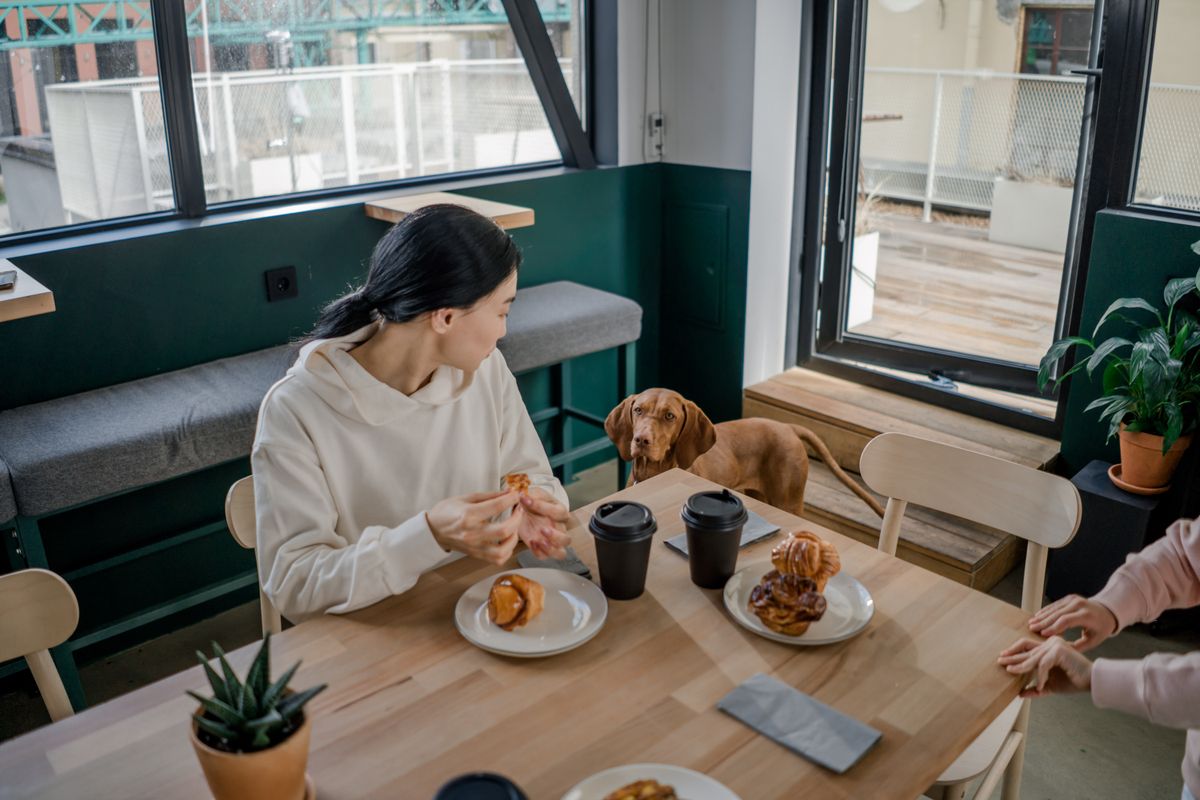
And please the obvious: clear up outside, and if your dog does have an accident inside, tell the staff right away.
Your dog needs three things for the cafe: a spot he knows, the ability to settle and enough exercise beforehand. You can practice this in small steps.
A dog who pulls hard on the leash or reacts strongly to other dogs needs training and distance before a cafe becomes a good place. The guides to dogs pulling on the leash and leash reactivity help with that.
A pup cup or dog biscuit can be a small bonus as long as you know the ingredients. The problems hide in the details.
If your dog has eaten xylitol or chocolate, call your vet or a pet poison hotline right away. Do not wait for symptoms.
| What you check | Why it matters |
|---|---|
| Dogs explicitly allowed? | Owner's house rules; a sticker, website or short call gives clarity. |
| Inside or terrace only? | Some cafes allow dogs outside only. |
| Water bowl available or allowed? | Important especially in summer, otherwise bring a bowl. |
| Quiet spot possible? | Edge seats are kinder to dog, guests and staff. |
| Open counter or buffet? | Dogs are more often excluded there. |
| How busy is it? | At peak times the chance of calm is lower. |
| Do you have blanket, water, chew? | That keeps your dog sensibly busy. |
| Walk done already? | A relaxed dog lies calmer. |
Where exactly you can stop for a coffee with your dog is covered in the city guides, which check operator information and add leash and public transport rules. An overview:
More ideas for days out together are in the big overview things to do with your dog (German). And if you are searching for dog friendly cafes in Germany, the directory of dog friendly places is a good place to start.
Your dog does not have to know everything to be a good cafe companion. He needs a spot, water and the feeling that you have the overview. The rest is a sunny Sunday, a piece of cake for you and a blanket at your feet.
When you plan your next cafe stop, the Discover map in the Souldog app can show you a first selection. One short call beforehand, and the coffee belongs to both of you.
 Souldog