




Map tricks, apps with filters and a closer look on the ground: how the same old loop turns back into a walk your dog looks forward to.
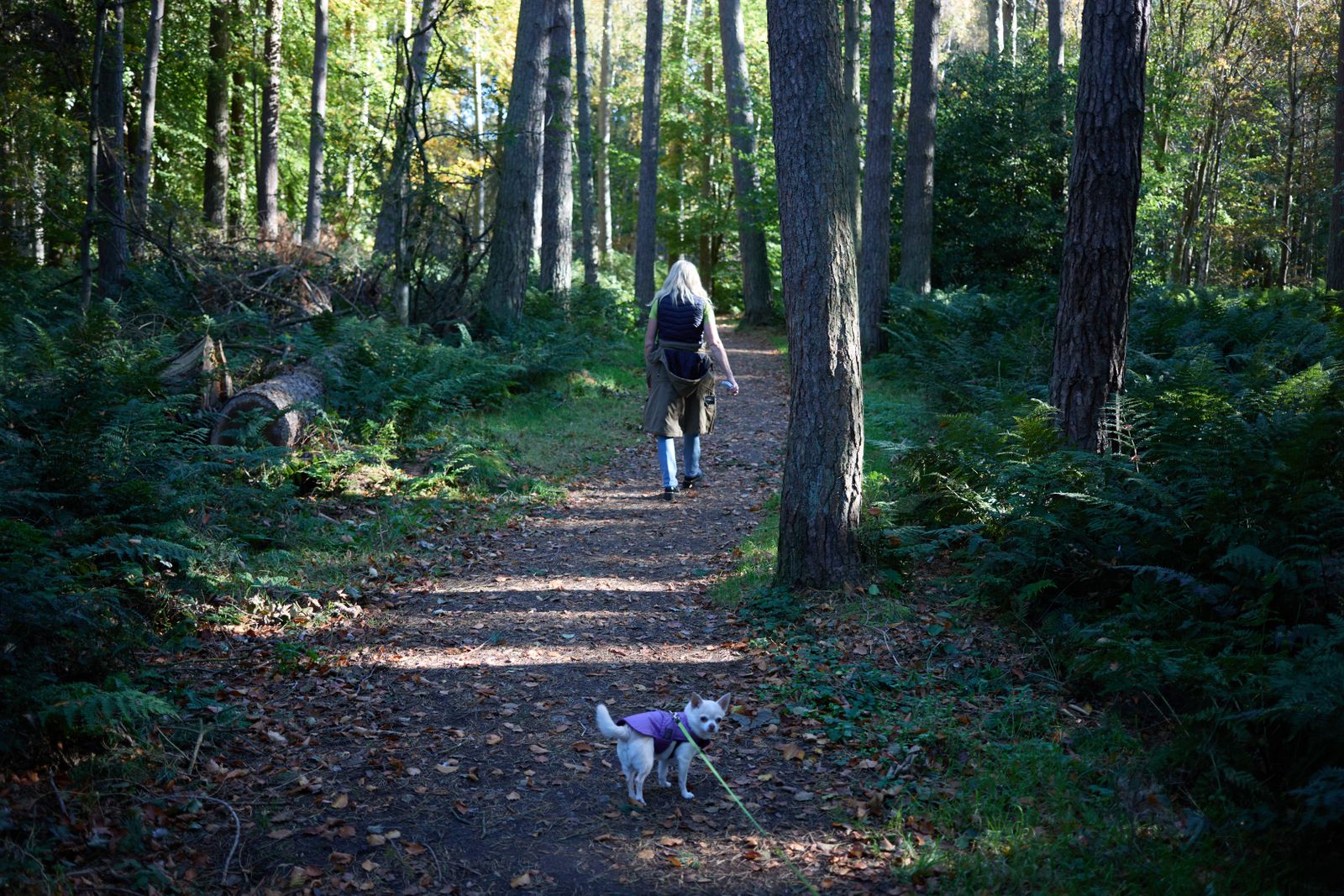
unday, half past eight. You're standing at the front door, leash in hand, and your dog is already heading for the corner where the two of you have turned left every morning for three years. He knows every lamppost. You know every pothole. One of you is bored, and it's probably you.
To find a new dog walk, read the map on your phone differently (satellite view for forest edges, streams and farm tracks), use hiking apps with a dog-friendly filter and ask the dog people in your neighborhood about their favorite routes. Whether a route suits your dog is something the first test walk on the leash will tell you.
Good routes exist almost everywhere. They just rarely lie on the path you take anyway. A few tricks will help you find them, and a careful look will show you whether they suit your dog.

The best way to find a new dog walk near you is to combine three sources: a map in satellite view, a hiking or dog app, and tips from other dog owners. No single source is complete. Together they often show you paths you have walked past for years without noticing.
Start with the view from above. In Google Maps or another map app, switch to satellite and look at the area within about a kilometer of your home. Suddenly things appear that are just gray on the street map: a small wood behind the business park, a ditch with a path beside it, a farm track linking two neighborhoods. Light lines between fields are often farm roads. A stream lined with trees promises shade.
As far as we know, Google Maps has no dog filter for paths in Germany. For specific places, search terms like "park", "forest", "dog park" or "Hundewiese" help. OpenStreetMap is often more detailed for field and forest paths, and some paths there even carry a tag saying whether dogs are allowed, banned or allowed only on a leash. Don't rely on it, because most paths have no such tag.
| Search method | What it helps with | The catch |
|---|---|---|
| Map app in satellite view | Forests, farm tracks, riverbanks and green corridors around you at a glance | No dog filter, no information on leash rules or protected areas |
| OpenStreetMap | Detailed path networks, some with dog information | Dog information is patchy |
| Outdooractive | Filter for dog-friendly routes, elevation profile, description | Many routes are longer than an everyday walk |
| AllTrails | Filter for dog-friendly trails, reviews from others | How the rating is decided isn't documented; it says nothing about leashes |
| komoot | Shows path types and surfaces of the planned route, useful for sensitive paws | We did not find a dedicated dog filter there |
| Dog apps with a places map | Parks, forests and dog parks as separate categories near you | An entry doesn't replace the rules on site |
| Dog owners in your area | Know the quiet times, the shortcuts and the corner where the deer are | You have to talk to them first |
In Souldog, the Discover map shows dog-friendly places near you, and you can narrow the selection by category, for example to parks and forests or dog parks. The place search is free, and in your browser you can browse the directory of dog-friendly places before you go.
One last trick: plan the new route as a loop rather than out and back. The same path in the opposite direction is a little new for your dog's nose, but not for you.
You can walk your dog almost anywhere near you that has paths: in forests, along streams, rivers and lakes, on farm tracks and in parks. What's allowed is decided by the state, the municipality and the landowner; in parks and green spaces a leash is often required, and in protected areas you often have to stay on the paths.
Every type of path has its own character, and every one has a catch.
Forest paths are the first choice in summer. The ground is soft, the trees give shade, and your dog's nose has the most to read there. At the same time the forest is home to wildlife, which makes it the trickiest setting for dogs with a strong prey drive.
Riverside and lakeside paths offer water for drinking and cooling off. Not every body of water is suitable (see blue-green algae below), and dogs aren't allowed at many bathing spots.
Farm tracks have one big advantage: you can see far ahead. Encounters announce themselves early, and reactive dogs have room to step aside. In late summer, though, grass awns stand along the edges, and in spring ground-nesting birds such as the skylark breed in some fields.
Parks are handy for a quick walk. They are busier, though, and many green spaces require a leash.
A special case is the dog forest. In Schleswig-Holstein, where dogs must otherwise be leashed in forests, the state forestry service designates its own dog forests where dogs may run free. Berlin has off-leash areas in its forests, such as the Grunewald; there your dog may only run free if it stays within calling distance and comes back when called. The website of your state forestry service or your city will tell you whether there's something similar near you. If you're looking for a fenced area to play in, our guide on finding a dog park near you is the better place to start.
For some big cities we have already collected parks and forests to visit with a dog, for example in Hamburg, Munich and Leipzig.
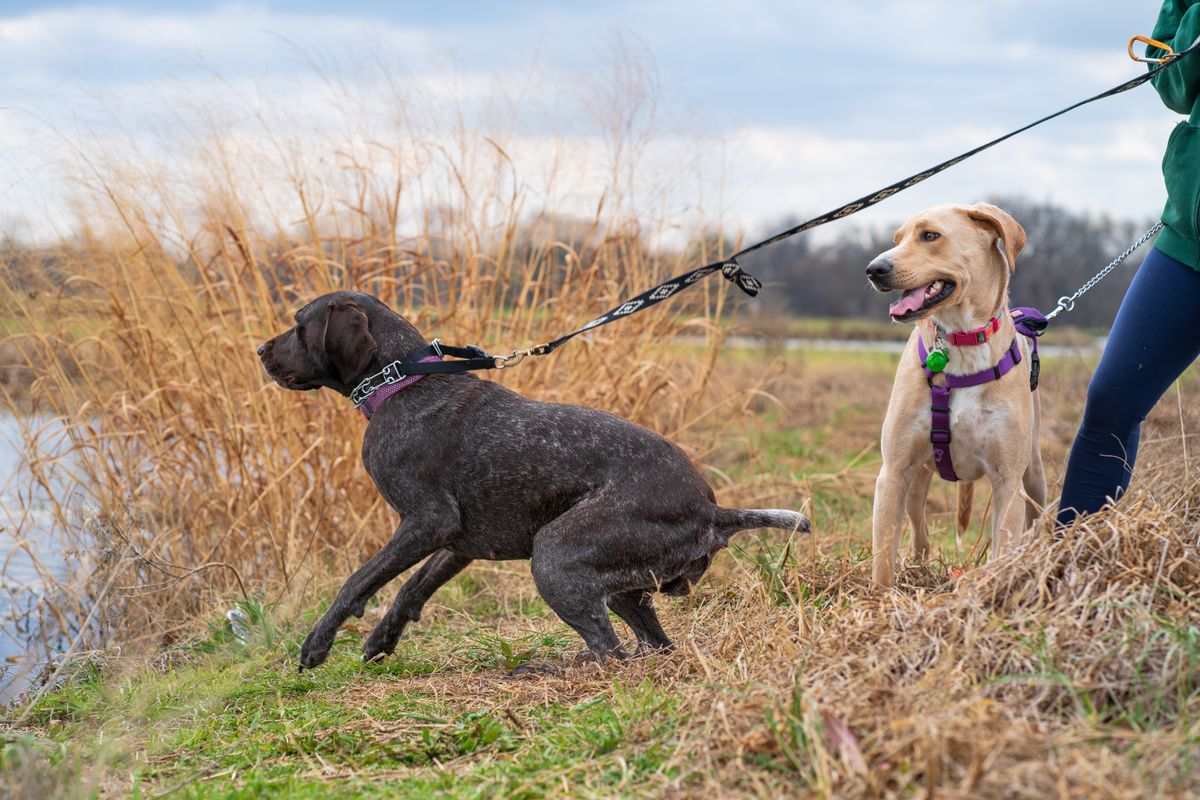
A good dog walk fits your dog's age, fitness and personality: the length doesn't overwhelm him, the surface is easy on the paws, there's shade and, in summer, water, and the number of encounters is comfortable for him. Wildlife, grazing animals and nearby roads make a route more demanding.
There is no fixed length. The German Dog Welfare Ordinance requires "sufficient exercise outdoors" and says exercise must be adapted to breed, age and health. It names no number of minutes. The rest is observation: does your dog come home happily tired, or does he drag himself through the last hundred meters?
| Feature | Why it matters | Especially important for |
|---|---|---|
| Length and shortcuts | You can cut the walk short without retracing the whole route | Puppies, seniors, dogs recovering from illness |
| Surface | Soft forest ground is easy on joints, hot asphalt can burn paws | All dogs in summer, older dogs |
| Shade | Heatstroke often happens during exercise, not only in cars | Flat-faced breeds, heavy and older dogs |
| Water | Drinking and cooling off along the way | All dogs on warm days |
| Encounter density | Wide paths and good visibility make encounters calmer | Anxious and reactive dogs |
| Wildlife and grazing animals | A chase can end badly for both the animal and your dog | Dogs with a strong prey drive |
| Roads and cycle paths | One moment of fright is enough for an accident | Young dogs, dogs with an unreliable recall |
| Cleanliness | Litter and food scraps attract dogs | Dogs that eat everything |
For asphalt there is a simple rule of thumb: put the back of your hand on the ground for seven seconds. If it's too hot for you, it's too hot for your dog's paws.
Flat-faced dogs such as pugs or French bulldogs get heatstroke more often than dogs with longer muzzles, because panting cools them less well. In summer their walk belongs in the shade and in the early morning hours.
And for encounters: walk the new route once at the time you plan to use it later. At seven in the morning the riverside path is a different place than on a Saturday afternoon.
In Germany each federal state decides whether your dog must be on a leash, and municipal bylaws and protected area ordinances add their own rules. In Brandenburg, Mecklenburg-Western Pomerania, Schleswig-Holstein and Thuringia dogs must be leashed in forests all year. In Lower Saxony, Bremen and Saxony-Anhalt the leash is required during the breeding season.
Under the Federal Forest Act you may enter forests for recreation, and the states regulate the details. What your dog may do there is therefore set out in the states' forest, hunting and dog laws, and they differ considerably. The breeding season, the months when wild animals give birth to and raise their young, plays a role of its own in some states.
| Federal state | Leash in forests or open countryside | When |
|---|---|---|
| Brandenburg | Required in forests | All year |
| Mecklenburg-Western Pomerania | Required in forests | All year |
| Schleswig-Holstein | Required in forests, dogs only on forest paths | All year |
| Thuringia | Required in forests for dogs not used for hunting | All year |
| Berlin | Required in forests outside designated off-leash areas | All year |
| Lower Saxony | Required in forests and open countryside | April 1 to July 15 |
| Bremen | Required outside built-up urban areas | March 15 to July 15 |
| Saxony-Anhalt | Required in open countryside | March 1 to July 15 |
| North Rhine-Westphalia | Required off the forest paths; on the paths no statewide requirement, recommended during the breeding season | Off the paths all year |
| Bavaria, Baden-Württemberg, Hesse, Saxony | No statewide requirement found; municipalities, authorities and protected areas can order a leash | Varies locally |
For Hamburg and Rhineland-Palatinate we could not reliably confirm a statewide forest rule. According to Saarland's environment ministry there is no leash requirement in forests there, but it recommends the leash from March to July. Everywhere, signs on site, the municipality or the forestry office have the final say, and laws change.
In nature reserves, the ordinance for each reserve sets the rules. Often that means staying on the paths and keeping your dog leashed, frequently all year. In national parks, dedicated laws or ordinances govern dogs, and they are usually much more restricted there. Where a protected area begins, there is usually a sign by the path.
Then there is the wildlife. Under the Federal Hunting Act, game protection includes protecting wild animals from poaching dogs; what hunters may do in such a case is regulated very differently by the state hunting laws. For you, the takeaway is simple: if you can't reliably call your dog back, keep him on the leash in the forest.
On a new route you don't know the hazards yet. So pay close attention to poisoned bait and food scraps, check your dog for ticks, keep the leash or long line short enough if your dog likes to chase, watch for wildlife at dawn and dusk, and don't let your dog drink from greenish, murky water.
None of this means you have to stay home. But the first walk on an unfamiliar path is better done on the leash.
In autumn and winter it gets dark early, and the lovely forest path suddenly looks very different at five in the afternoon. A light-up collar for your dog and reflectors or a lamp for you keep you both visible.
You can find other dog people to walk with through your neighborhood, your dog school, local dog walking groups and dog apps that help you meet dogs nearby. Anyone who has walked the area for years knows the nicest routes, and most of them are happy to share.
The best routes aren't in any app. They're in the heads of the people you meet at the end of your street every morning. A simple "Which way do you usually go?" is often enough, and the next day you walk together. Walking together has another advantage: for dogs that get along, a familiar companion is often more relaxed than a crowded dog park.
In Souldog you can plan a group dog walk: dog owners in your area get an invitation, can say they are coming and sort out the details in a group chat. You can also get to know other dogs and their people nearby. Whether that turns into a regular walking buddy is up to you. The app is available for iPhone on the App Store and on Google Play.
For dogs who find encounters hard, walking alone is perfectly fine. A quiet walk where your dog can sniff at leisure often tires him out more than an hour of rough play. More on that in our article on the sniffing walk. And if your dog walk ever turns into a day trip, our guide to hiking with your dog will help.
Sometimes the nicest route is two streets away and you've just never gone there. Pick a path for next weekend that neither of you knows yet, and let your dog set the pace. He'll notice the difference, at the latest at the first new lamppost.
 Souldog