Where to look for off-leash areas, what makes a good one, and how to keep the visit relaxed for your dog.
aturday morning, your dog is already jumping at the car door, and you are standing there with your phone: where can he actually run free? Apparently there is a meadow across the street. Apparently.
You find a dog park in three steps: search a map app for terms like "Hundewiese", "Hundefreilauffläche" and "Hundeauslauf", check your city or town website for designated areas, and look at the fence, gate and signs on site. Outside designated areas, a leash is often required. Federal states and municipalities regulate this differently.
With a bit of method, the meadow is quickly found. Whether it suits your dog only shows on site, and the checklists below help with that.
You find a dog park near you by combining several sources: the official page of your city, a map app and the experience of other dog owners. No single source is complete.
| Search route | What it does well | The catch |
|---|---|---|
| City or town website, Ordnungsamt | Tells you which areas are officially designated and which rules apply | Pages are maintained unevenly; some cities only offer a PDF list |
| Google Maps, OpenStreetMap | Quick keyword search, many photos and reviews | Results are named inconsistently; whether an area is fenced is not always stated |
| Dog maps such as Souldog, DogMap or Dog's Places | Show dog parks as their own category and often tips from other owners | Partly maintained by users; details can be outdated |
| Dog owners in your neighborhood | Know the meadow, the busy hours and the quiet corners | You have to meet them first |
An example for map searching: type "Hundewiese", "Hundefreilauffläche" and "Hundeauslauf" into Google Maps or OpenStreetMap one after another. One city calls its areas "Hundeauslaufgebiet" and another "Freilaufwiese". Anyone who uses only one term tends to miss half the neighborhood.
In Souldog, Hundewiese is its own category on the map, currently with more than 1,000 dog parks in Germany. The place search in the app works without a Plus subscription, and in the browser you can search the directory of dog-friendly places. Whether an area is fenced is not stated for every entry; the best way to check is on site. To get to know your city better, our city guides help, for example for Berlin, Munich and Cologne.
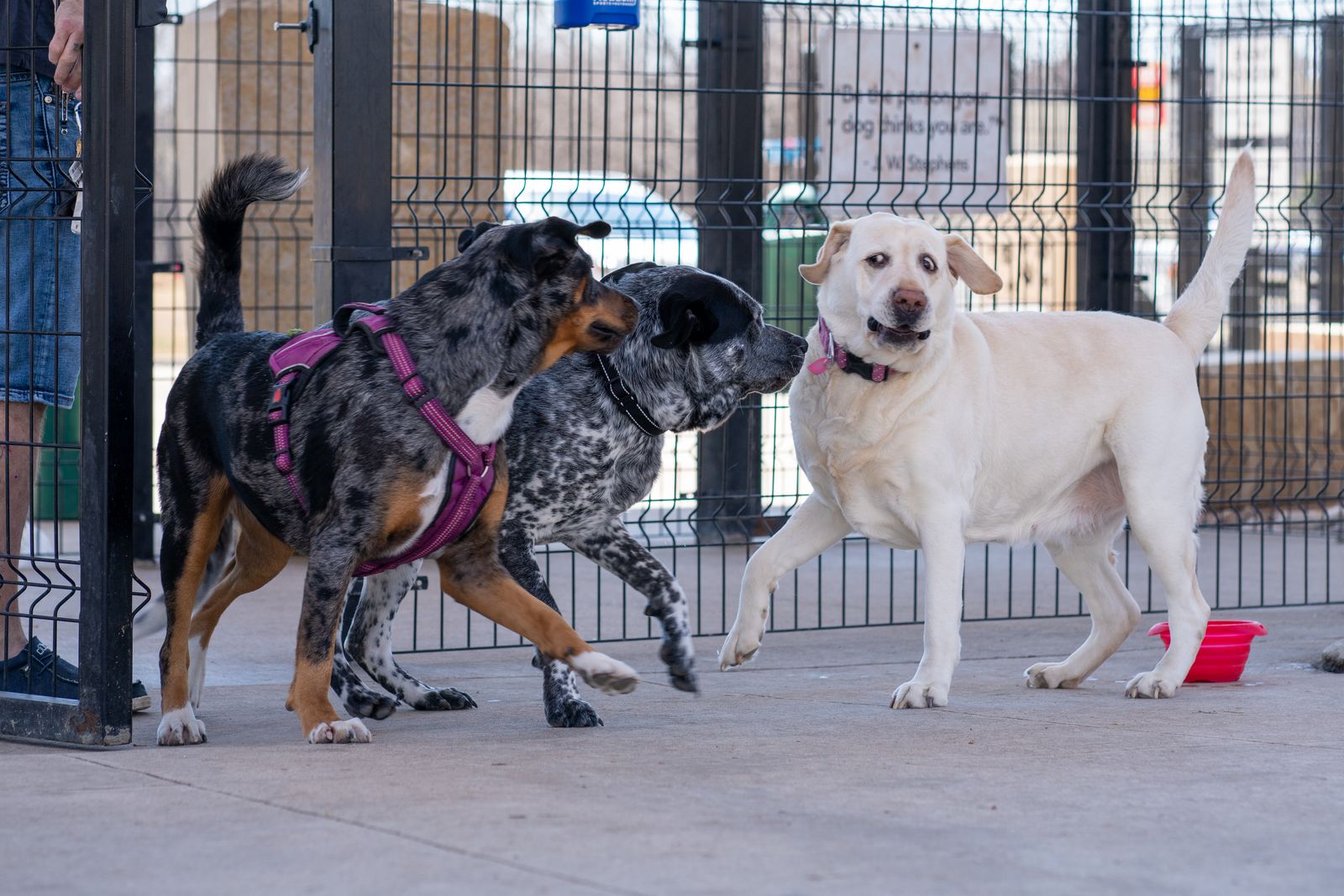
A good fenced dog park has a gap-free fence, a double gate or airlock, clear paths, water, shade and a readable set of rules. There is no fixed number for fence height; what matters is that your dog can neither jump over nor squeeze under it.
With fenced areas ("eingezäunte" or "umzäunte Hundewiese"), a closer look pays off, because quality varies a lot.
| Feature | Why it matters | What to check |
|---|---|---|
| Fence | Prevents escapes, also for jumpers and small dogs | No gaps at the ground, no holes, tall enough for your dog |
| Double gate or airlock | Your dog cannot slip past you onto the street when you enter | Two gates in a row that cannot be open at the same time |
| Ground | Protects paws and joints | Grass or sand without glass; a bare area can get very hot in midsummer |
| Water | Dogs overheat while running faster than you think | Fresh water; shared bowls can spread germs, so your own bowl is the safe choice |
| Shade | Breaks out of the sun | Trees or a shelter |
| Waste bags and bins | Cleanliness, also for the relationship with neighbors | Dispenser available, or bring your own bags |
| Signage | Shows rules, opening times and a contact person | Read the rules at the entrance |
A tip for the first visit: go once without your dog, or stay outside the fence for a while. How many dogs are there? Are there separate areas for small and large dogs? How do the owners treat each other? Three minutes of watching often says more than any map review.
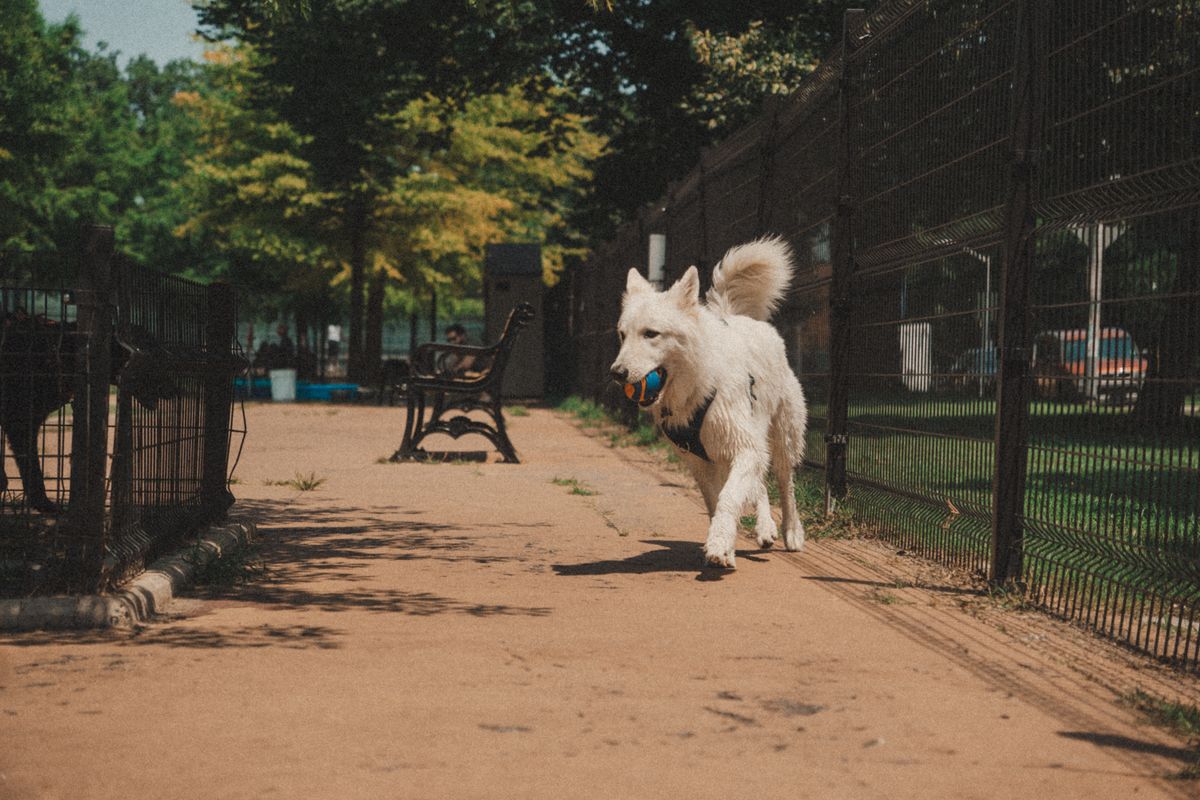
Whether your dog may run free depends on the federal state, the municipality and the specific area; where no off-leash area is designated, a leash is required in many cities and green spaces. Leash law in Germany is a matter for the federal states, and cities can add their own ordinances.
Two examples show how different this looks. In Berlin, the dog law generally requires a leash, with exceptions for designated Hundeauslaufgebiete and Hundefreilaufflächen. In North Rhine-Westphalia, the state dog law requires leashes, among other places, in pedestrian zones and in enclosed public parks and green spaces, with exceptions for specially designated off-leash areas. Both can change, and cities set details themselves.
Three things matter:
For your specific area, the responsible Ordnungsamt, your city website or the sign at the entrance gives the answer. We deliberately do not name fines here, because they differ from state to state and municipality to municipality.
In a dog park, you arrive calmly, keep your dog in sight, pick up waste right away and leave as soon as a dog shows stress. Almost every set of park rules and every guide boils down to that.
Stop briefly at the airlock and unleash your dog only once the gate is closed behind you. A leash in the crowd at the entrance makes some dogs nervous, and a quick look at the group helps you decide whether this is a good moment. If your dog is tense at the fence, let him arrive first instead of sending him straight into the crowd.
Play has loose bodies, pauses, changing roles (one chases, then the other) and invitations such as the play bow. If your dog only ever flees, only ever chases or hides, it is no longer play. How to read body language is covered in our article on dog body language.
Leave when your dog stiffens, growls, shows that he wants out, or several dogs crowd him. If your dog crowds others, a walk elsewhere is the better choice. If a fight breaks out: do not reach between fighting dogs with bare hands, because people are often bitten that way. Call your dog away or get help from other owners. For more on safety on leash, read the article on dog encounters on leash.
Leave toys and food at home. A ball or a treat quickly becomes a point of conflict in a full park, even among dogs that usually share. Keep your phone in your pocket, because anyone looking at a screen misses it when something builds up in the group. And you pick up dog waste right away, even if there is no bag dispenser.
Females in heat stay out of most areas, and many park rules say so explicitly. They bring unrest into the group, for males and for other females. The same goes for dogs with diarrhea, a cough or parasites. More on this in the article on heat in female dogs.
Even in a dog park, it pays to watch the ground. How to deal with poisoned bait is explained in our article on poisoned bait for dogs.
A dog park is less suited to anxious or reactive dogs, puppies without a completed basic vaccination series, very small dogs next to boisterous large ones, and females in heat. Dog parks are meeting places with unknown dogs, and that overwhelms some animals.
That does not mean your dog may never visit a park. It means: watch whether he truly has fun, and if in doubt, look for a quieter opportunity.
Alternatives to a dog park are walks in quieter corners, meetups with regular dog friends, sniffing walks, dog schools and areas you can book by the hour. And not every dog needs company to be happy.
A planned meetup with one or two dogs your dog knows is often more relaxed than the park. A sniffing walk can tire a dog out as well. Some providers rent fenced areas by the hour; a short search shows whether that exists near you. You will find more ideas in our overview of activities with your dog.
A good dog park is one where your dog goes home tired and happy and you are not tense. If you like, open Souldog (for iPhone on the App Store and on Google Play) and see which meadow is around your corner. The rest is sniffing.
 Souldog