Few words strike as much fear into dog people as this one. Here is what actually matters in an emergency: clear first steps, real time windows for each poison, and protection that works in everyday life.
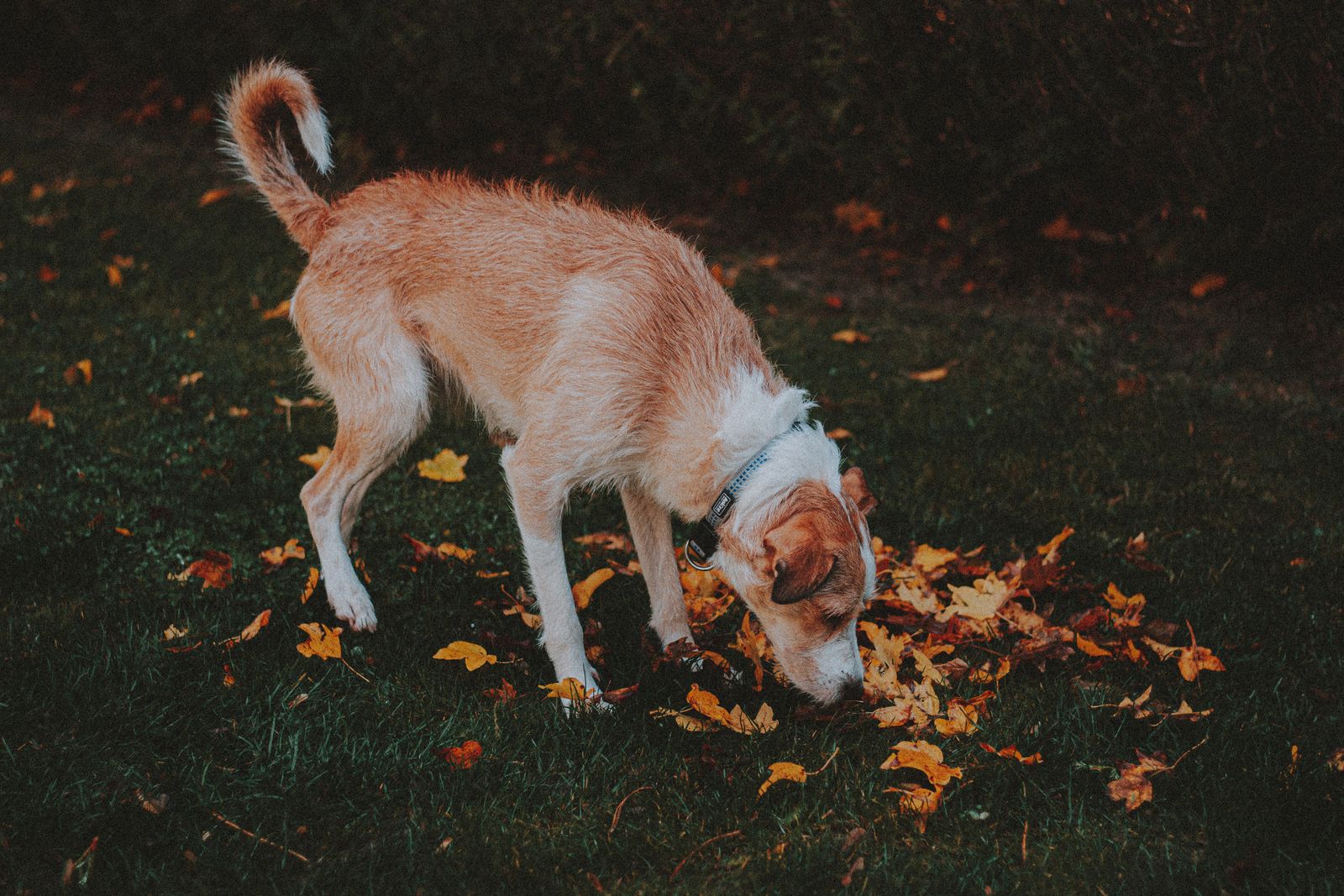
It's the one moment every dog person knows. Your dog buries his nose in the bushes along the trail, and before you can even say "leave it," he swallows. Most of the time it was a piece of stale bread, a tissue, something gross but harmless. And still, the same thought shoots through your head every time: what if this time it was a poisoned bait?
hat fear is uncomfortable, but it isn't unfounded, which is exactly why it pays to be prepared. In an emergency, two things decide the outcome: how fast you act and whether you do the right things. You can learn both right now, calmly, before it ever counts.
That's the core of it. Everything else in this article explains why this order matters, which poisons actually show up in baits, and how to keep the everyday risk small.
A poisoned bait is food that has been deliberately tampered with: a piece of sausage, a meatball, a treat with poison or sharp objects hidden inside. They turn up wherever dogs go, along trails, in parks, on dog fields, sometimes even thrown over the fence into your own garden.
The sad list of usual suspects looks like this:
| Content | What it is | Why it's so dangerous |
|---|---|---|
| Rat poison | Anticoagulant from the pest control shelf | Works invisibly: the first signs of bleeding often show up only after days |
| Slug pellets | Metaldehyde from the garden store | Attacks the nervous system, causing seizures and high fever |
| Insecticides | Carbamates and organophosphates | Drooling, diarrhea, muscle twitching, up to respiratory failure |
| Chocolate | Theobromine, which dogs struggle to break down | Highly concentrated in dark chocolate |
| Xylitol | Birch sugar found in gum and baked goods | Causes a massive drop in blood sugar, later liver damage |
| Razor blades, nails, fish hooks | Mechanical baits | Cut and pierce the mouth, esophagus, and stomach |
Not every one of these cases is a malicious bait. Rat poison also sits legally in bait boxes, slug pellets get scattered across gardens, chocolate falls off the table. For your dog, the result is the same, so we cover both here: deliberately planted bait and the dangerous stuff that's simply lying around. You can look up what individual substances do in detail anytime in our poison list for dogs, with over 250 entries from fava beans to onions.
The uncomfortable answer first: often, you can't. A well made bait looks like a piece of bologna, and that's exactly what makes it so vicious. Still, there are warning signs that should make you pause.
Be suspicious of food lying somewhere it doesn't belong: a single meatball in the middle of the dog field, slices of sausage in the bushes, ground meat next to the playground. Unusual colors are suspicious too. Rat poison products are often dyed blue, turquoise, or pink, and those granules or pastes sometimes show through the food. And anything with a glint or a hard texture is suspicious, because metal has no business being in a treat.
If you find something like this: leash your dog, don't touch it, take a photo. What comes next is covered in the section on reporting it further down.
There is no single symptom of poisoning, only patterns that look different depending on the poison. These signs should always alarm you, especially in combination:
The reverse is important, and it's often underestimated: no symptoms doesn't mean you're in the clear. The time windows below show why. If your dog is trembling and you're not sure what's behind it, our article Dog Shaking and Trembling can help you sort it out; for vomiting, the article Dog Vomiting has the color and emergency matrix.
This table holds some of the most important knowledge in this article, because wildly contradictory information about it circulates online:
| Poison | First signs typically appear after | Typical signs |
|---|---|---|
| Slug pellets (metaldehyde) | 30 minutes to 6 hours | Restlessness, heavy drooling, trembling, seizures, high fever |
| Insecticides (carbamates, organophosphates) | often within 30 minutes | Drooling, vomiting, diarrhea, constricted pupils, muscle twitching |
| Xylitol | 30 minutes to 2 hours, sometimes delayed depending on the product | Weakness, stumbling, collapse, seizures |
| Chocolate | 6 to 12 hours | Restlessness, vomiting, panting, racing heart, trembling |
| Rat poison (anticoagulant) | 3 to 7 days | First lethargy, then pale gums, bleeding, difficulty breathing |
| Rat poison (cholecalciferol) | 1 to 3 days | Vomiting, excessive drinking and urinating, lethargy |
The reason for the rat poison delay is insidious: anticoagulants don't block the blood itself, they block the resupply of clotting factors. The existing reserves last another day or two, the dog seems completely normal, and only once they run out do internal bleeds begin. That's exactly why any suspicion of rat poison belongs in the clinic right away, even for the fittest dog: there, clotting can be measured and countered specifically with vitamin K1, long before it turns critical.
With poisoning, well meant help often does more damage than simply waiting it out on the way to the clinic. That's why this distinction matters.
What you can and should do yourself: get your dog away from the spot, call the clinic, save any leftovers and vomit, note the times, and drive over promptly. That's not a small role, it's the decisive one.
What only the vet decides: whether to induce vomiting, whether to use activated charcoal, whether a stomach pump is needed. Inducing vomiting only makes sense within a narrow window after eating, and with some poisons it's explicitly dangerous: with anything caustic, with sharp objects, and with any dog that is already trembling, seizing, or disoriented, because he could inhale the vomit.
No salt water, no milk, no oil, no activated charcoal tablets on your own. Salt water can trigger a life threatening salt poisoning with brain swelling. Milk doesn't neutralize poison and makes symptoms worse in many dogs. Oil and butter raise the risk of vomit reaching the lungs. And activated charcoal belongs in a vet's hands, because the dose and timing have to be right, and it can become dangerous for a disoriented dog.
Instructions for self dosing activated charcoal tablets, complete with gram amounts, circulate online. Skip those. Calling the clinic costs you two minutes and spares you a decision you don't have the information to make in a moment of stress.
Now for the part hardly any guide states this clearly: in Germany, there is no dedicated animal poison hotline. The poison control centers whose numbers circulate online are there for humans. They aren't staffed with veterinary expertise, and questions about dogs can't be prioritized or reliably answered there with the right expertise.
The right first number is therefore always your vet clinic, or outside office hours, the emergency vet service or the nearest animal hospital. Save both numbers in your phone right now, along with the clinic's address. In an emergency, you don't want to be stuck googling.
In Switzerland, Tox Info Suisse at 145 offers a round the clock initial assessment, including for animals; detailed phone consultations about pets come with a fee, and for treatment, they also refer you to veterinary medicine. In Austria, the same principle applies as in Germany: the fastest competent route runs through the vet clinic and the animal hospital.
A little expectation management takes the edge off an emergency. Here's roughly what happens at the clinic: first comes a circulation check and questions about what, when, and how much; your sample and your notes are worth their weight in gold here. If the meal was recent, usually within the first one to two hours, the vet can induce controlled vomiting, as long as nothing rules it out. After that, activated charcoal at the correct dose binds part of the remaining poison in the gut.
Depending on what's suspected, blood tests follow, a clotting test in the case of rat poison, plus fluids and monitoring. For anticoagulants, vitamin K1 is a real antidote, given over several weeks. For many other poisons, no antidote exists, and the clinic treats the symptoms instead, keeping your dog stable through the critical phase. That works better too, the earlier you got there.
Say your dog didn't get to it, but you found a prepared bait. Now you can do something for every dog in your area.
A brief note on the legal situation in Germany: anyone who injures or kills a dog with a poisoned bait is committing a criminal offense under the Animal Welfare Act (Tierschutzgesetz); Section 17 provides for up to three years in prison or a fine. Beyond that, under common legal interpretation, property damage may also apply, since animals are legally treated like property for these purposes. One gap remains: simply laying out bait, without an animal being harmed, often stays unpunished under current interpretation, and that's exactly what ongoing calls for reform target. For you, none of that changes the plan: document it, report it, warn others.
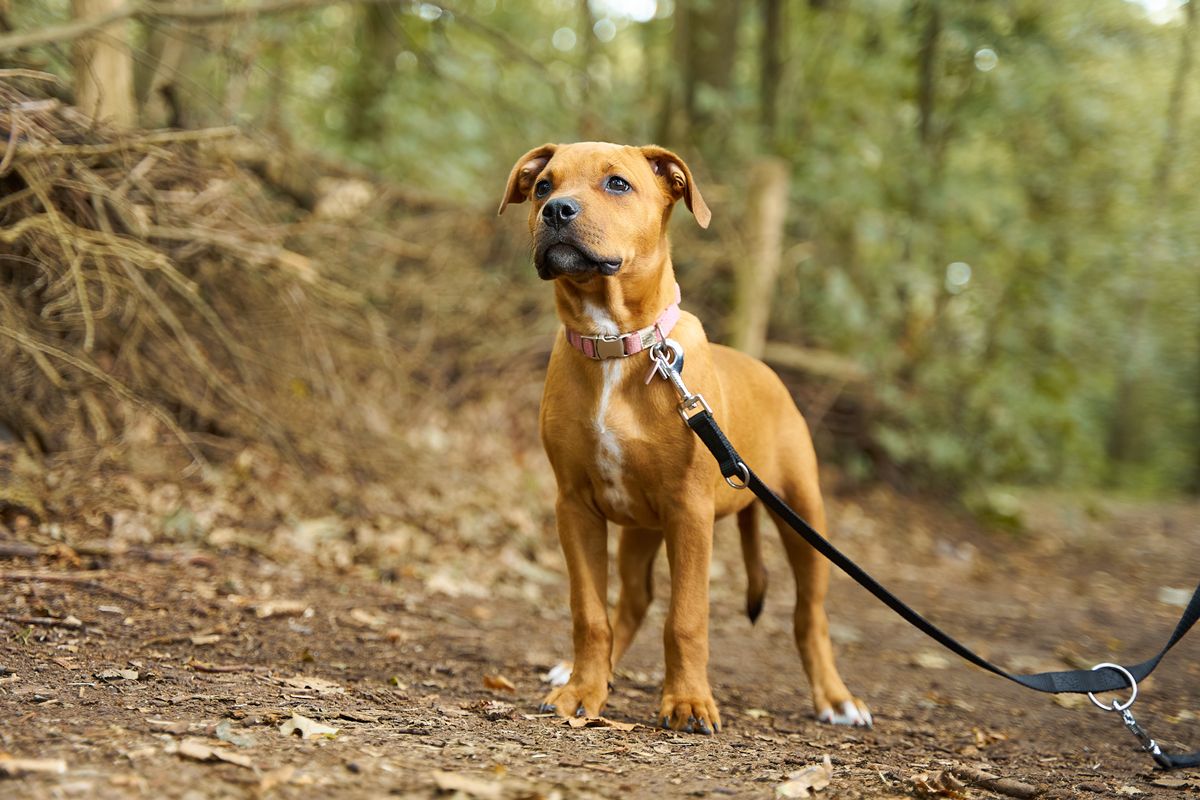
There's no such thing as one hundred percent protection, but you can lower the risk significantly without turning every walk into a surveillance mission.
The most effective lever is paying attention in the right places. Bush edges, green strips, the first few meters at a park entrance: that's where bait turns up most often, so that's where your eyes should go before your dog's nose gets there. If there are recent reports in your area, keep your dog on the leash and swap the route if needed, until the all clear is given.
The second pillar is a simple ground rule you can train independent of poisoned bait: nothing gets eaten off the ground, ever, not even the harmless slice of liverwurst bread. A rule with no exceptions is easier for dogs to learn than one with fine print.
That leaves information. In the Souldog app, you can see poisoned bait warnings from your area right on the Discover map and report your own finds, so others are warned before their walk takes them past that spot.
Anti poison bait training is now a standard part of many dog training schools' course offerings, and the basic idea is sound: the dog learns to ignore or flag food on the ground instead of swallowing it, and to reliably respond to an interrupt cue.
What a trustworthy guide also has to say: there are no scientifically studied success rates for this, and no training makes a dog fully bait proof. A single unsupervised moment is enough, and even well trained dogs sometimes take the bait when the temptation is strong enough. Modern trainers therefore rely less on pure prohibition and more on alternatives that pay off for the dog: flagging instead of picking up, turning away in exchange for a reward, a strong interrupt cue as an emergency brake.
As one building block, this training is valuable, especially for vacuum cleaner dogs that inhale pretty much anything. As your only life insurance, it doesn't hold up, and anyone who promises you otherwise is selling you a safety that doesn't exist.
For some dogs, the most reliable solution is a mechanical one: a well fitted muzzle or a fine mesh snout guard. To many people, that sounds like punishment at first, but it's the opposite, calm precaution that turns an anxious walk back into a relaxed one.
For this to work, two things need to be right. First, the model: sturdy basket muzzles made of wire or plastic with a fine mesh are suitable, ones that let your dog pant and drink without restriction; for determined scavengers, add a feeding guard across the bottom of the basket. Tight nylon loops that hold the mouth shut are not an option, because they prevent panting and, with it, temperature regulation. Second, getting your dog used to it: in small steps, with treats inside the basket, seconds first, then minutes, at home first, then outside. A dog that associates the muzzle with liverwurst wears it without any drama.
Poisoned bait is a real danger, but it's no reason to spend every walk in fear. With the knowledge from this article, you're ahead of any emergency: you know the first steps, you know why a dog who seems fine still belongs in the clinic after a rat poison suspicion, and you have a plan for a find along the trail.
The rest, you handle together: you with a watchful eye on the edge of the bushes, your dog with his nose in the wind instead of on the ground. Save the emergency number in your phone today, and check the map in the Souldog app before you head out. Then that moment in the bushes goes back to being what it usually is: a dog sniffing out the world. For more foundational knowledge for every situation, check out our big overview of dog health.
 Souldog