For two weeks every fall, your home looks like someone shook out a second dog inside it. That's completely normal. Here's what actually controls shedding season, what genuinely helps, and how to tell when it's no longer just shedding.
You put on the black pants that have been freshly washed in the closet since yesterday, and one glance down tells you everything. There's a second, thinner version of your dog lying on the couch. In the hallway, a tumbleweed of fur drifts along in the draft like it's crossing a desert. You vacuum, turn around, and the floor is already covered again.
elcome to fall shedding season. It's exhausting, it's completely normal, and it's controlled by something surprising: not the temperature, but the light.
The mechanism behind it is elegant. Through his eyes, your dog's body measures how long the days are, and the pineal gland translates that into melatonin. As the days get shorter, melatonin levels rise, and the body switches over to a winter coat: dense undercoat, more insulation. In spring, the same program runs in reverse.
That's exactly what explains the thing so many owners complain about: why does my dog seem to shed all year round? Because our homes blur the seasons. Artificial light until midnight and a cozy 21°C (70°F) indoors in winter send mixed signals, the seasonal program never gets a clear starting signal, and instead of two strong waves, it just trickles out a little bit all year long.
Coat type also determines how dramatic those weeks get. Double-coated breeds like Huskies, German Shepherds, Australian Shepherds, or Golden Retrievers have a dense undercoat beneath their topcoat that gets shed in bulk during shedding season; an astonishing amount comes out in just a few weeks. Dogs with continuously growing coats, like Poodles, Maltese, or Bolognese, barely shed visibly at all, but need regular haircuts instead. To find out which small breeds shed the least, check out our post on small dogs that barely shed.
The honest answer first: you can't speed up shedding season. You can only manage it well, and in practice, that makes a massive difference, especially for your home.
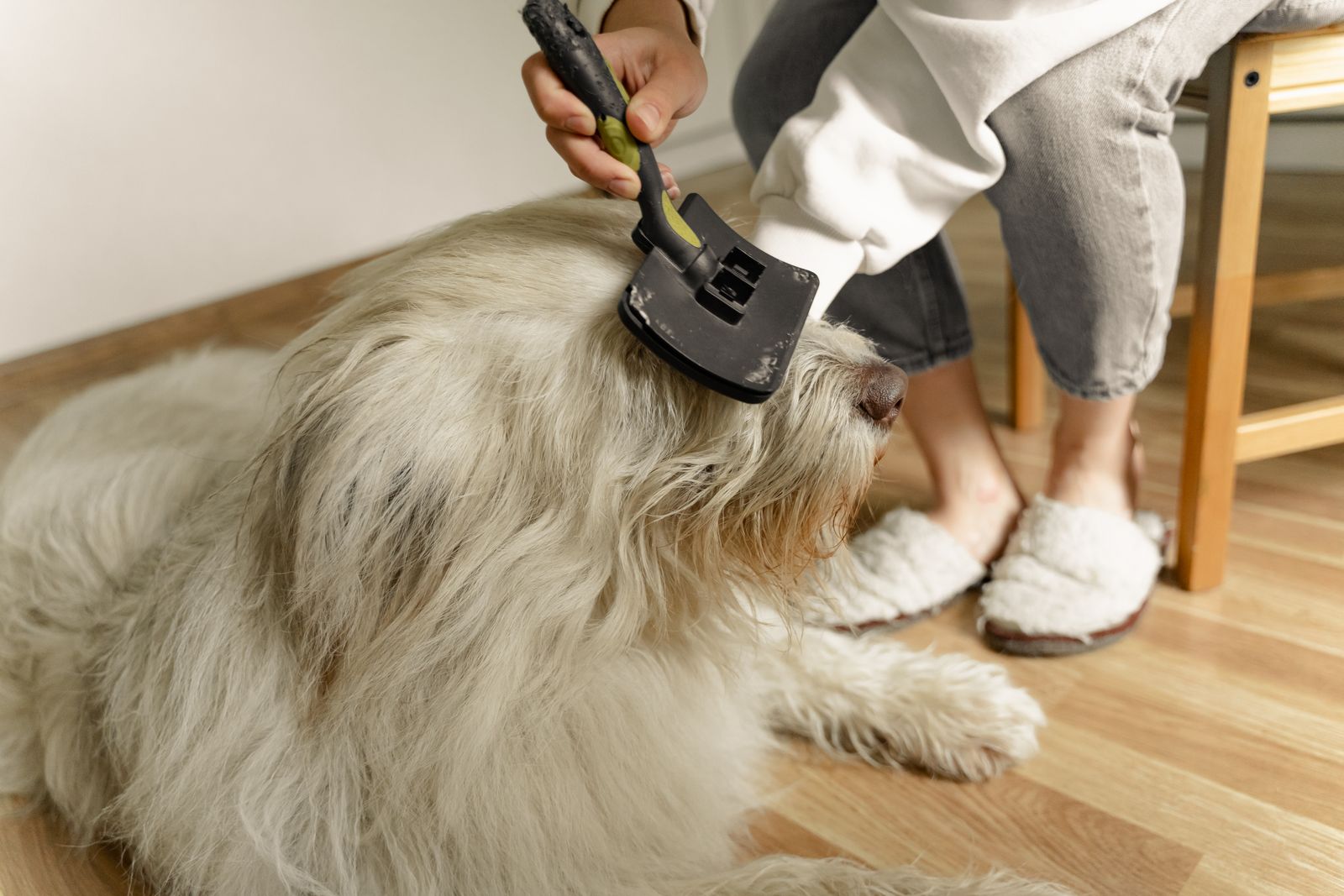
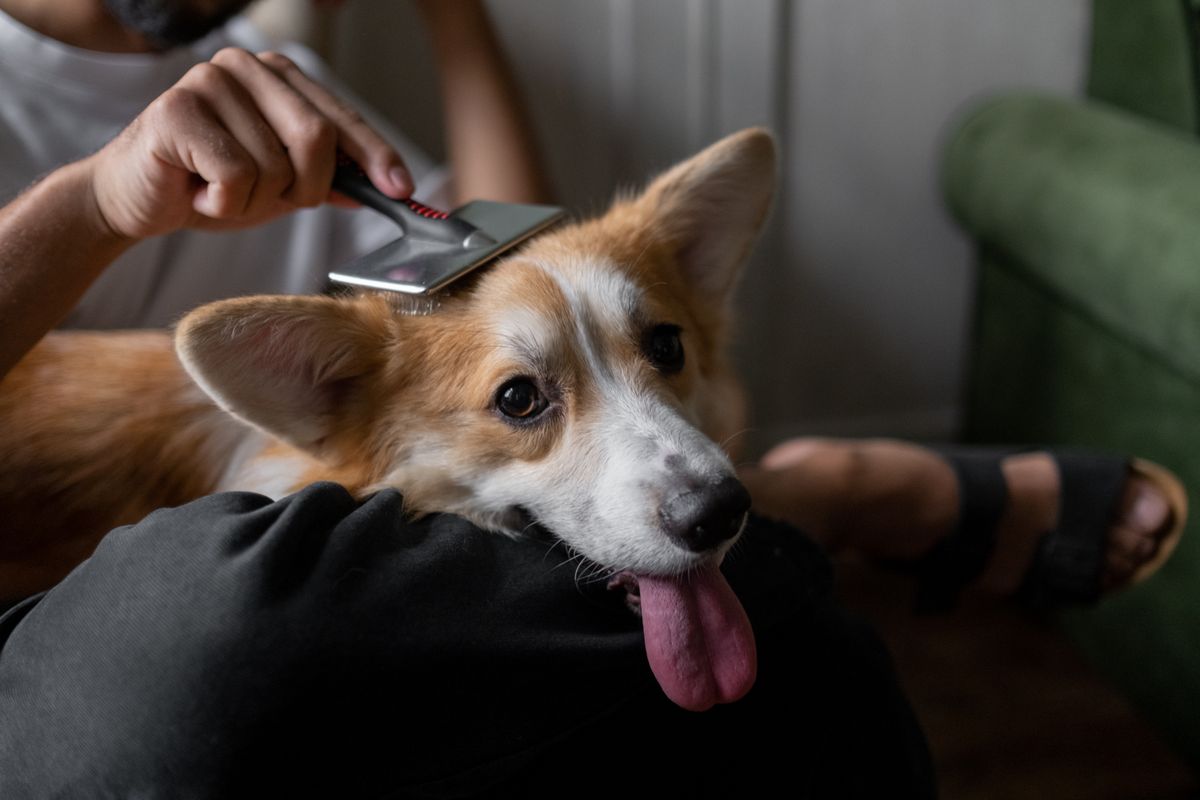
Brushing is the single most effective tool you have. Daily during the heaviest weeks, then back down to two or three times a week after that. Having the right tool matters: dense undercoats need an undercoat rake or a shedding comb that pulls loose hair out from deep down; a surface-level slicker brush won't do much for a Husky. For short-haired dogs, a rubber curry brush is often all it takes. Don't drag the sessions out; short and frequent works better, and do it outside whenever you can. What lands on the lawn doesn't have to come out of the carpet.
When it comes to food, precision pays off. Omega-3 fatty acids have the strongest evidence behind them: studies show improved coat quality and less itching after several weeks. Biotin and zinc, on the other hand, get marketed as shedding-season miracle cures, even though they mostly help when there's an actual deficiency, and that's rare in a well-fed dog. A complete, balanced diet and plenty of water will do more than any supplement.
Bathing doesn't speed anything up. It can help loosen dead hair, provided you brush thoroughly before and after, but bathing too often just strips the skin's natural oils. And shaving is not a shortcut during shedding season: for double-coated breeds, it destroys the insulating layer and can damage the coat permanently. We explain exactly why in our post on shaving your dog in summer; the complete grooming routine, with technique and tools, is in our guide to at-home dog grooming.
This is the part that matters, because it's exactly what most guides skip. Shedding season means: hair loss is even all over, the skin underneath looks normal, and your dog is his usual energetic self. The moment any one of those three things isn't true, we're talking about something else.
| Observation | Likely normal | Likely worth a vet visit |
|---|---|---|
| Distribution | more hair evenly all over | bald patches, symmetrical on both flanks |
| Skin underneath | normal, unremarkable color | red, flaky, darkened, pustules |
| Itching | none or barely any | scratching, licking, biting at himself |
| Pattern | diffuse thinning | round, sharply defined bald spots |
| Overall condition | normal, energetic | listless, weight gain, increased thirst, low energy |
Symmetrical hair loss on the trunk without itching is often hormonal. Hypothyroidism usually comes with weight gain, sluggishness, and sensitivity to cold; Cushing's disease, which tends to affect older dogs, shows up as increased thirst, more frequent urination, and a pot-bellied look. Round, sharply defined bald spots point more toward ringworm or mites, while itching with red skin suggests parasites or an allergy. And in young Spitz-type breeds, there's a condition called Alopecia X, where the coat thins out symmetrically without the dog acting sick at all.
You can't tell these apart at home, and you don't need to. Just remember the rule of thumb: even, heavy shedding with healthy skin is shedding season; bald patches, unhealthy skin, or a change in your dog's overall condition need a vet's opinion. For more on what else can be behind sudden changes, see our post when your dog suddenly seems different.
Take a photo of the bald spot. Skin changes slowly, and in everyday life it's easy to lose track of whether a spot is actually getting bigger. A dated phone photo, taken from the same angle once a week, is often more useful for your vet than any description you can give.
A few small tricks save you a surprising amount of frustration during these weeks. Running a damp rubber glove over the couch picks up hair better than any lint roller. A rubber broom pulls out what the vacuum leaves behind in carpets. Throw blankets on your dog's favorite spots are faster to wash than upholstery is to clean. And the simplest rule of all: brush outside whenever possible, right before you come back in.
By the way, these weeks aren't exactly fun for your dog either. The old undercoat sits packed tightly beneath the topcoat, which can itch and trap heat, so some dogs get restless or roll around more than usual. A thorough combing session isn't just a beauty routine, it's genuine relief.
Six weeks later, it's suddenly over. The vacuum fills up slower, the black pants stay black, and under your hand is a dense, glossy winter coat, built exactly for trudging through November mud with you. It helps to remember during the exhausting weeks: this isn't a malfunction. It's your dog's built-in heating system upgrading itself.
In the Souldog app, you can log when your dog's shedding season starts and what actually helped. Next year, you'll know what's coming before the first tumbleweed of fur even shows up in the hallway.
 Souldog