Small, colorful, unshakably friendly: the Bolonka Zwetna has grown from a Russian lapdog into the secret favorite breed of many families. Here's the honest overview, including the truth about recognition, health, and the question everyone asks: is he really suitable for allergy sufferers?
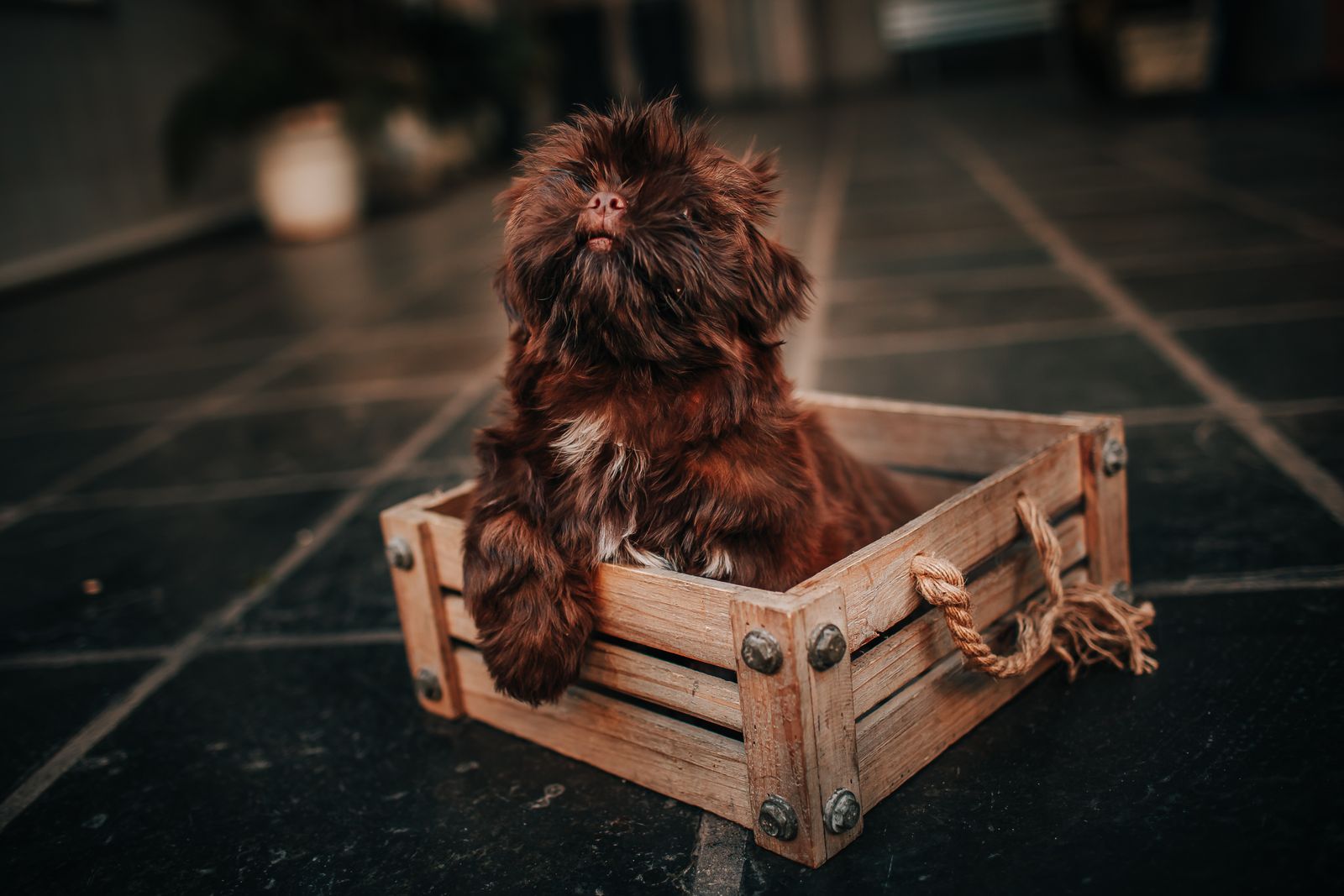
He's sitting on a park bench next to his person, a small, colorful bundle of fluff with dark button eyes, calmly watching the world go by. No barking, no pulling, just quiet attentiveness. "What kind of dog is that?" you ask, and the answer comes with a smile: "A Bolonka Zwetna." By now, you want to know more.
he Bolonka Zwetna is one of those dogs that few people know until they meet one, and then never forget. Small, good-natured, and surprisingly easygoing in temperament. But as with any breed, a closer look is worth it, especially because several misunderstandings circulate around this dog, from his recognition status to the allergy question. This guide sets the record straight. To see how he compares to other small curly-coated dogs, check out our overview of small curly-haired dog breeds.
The word "Zwetnaya" means "colored" in Russian, and that's exactly the breed's trademark: it comes in many colors, from brown to black and gray to parti-colored variants. This sets it apart from the purely white Bolonka Franzuska. Despite his lapdog size, the Bolonka isn't just a couch dweller. He's a bright, alert little companion who likes to be part of the action.
The story of the Bolonka Zwetna begins in the 1950s in what was then the Soviet Union, in Moscow and Leningrad. Small companion dogs such as the Bolognese, Shih Tzu, and Lhasa Apso, supplemented with local small dogs, gave rise to a sturdy, colorful lapdog. A first standard was written down in the 1960s. In Germany, the breed became known starting in the mid-1980s, first in East Germany.
The most recent development is notable: on January 1, 2026, the American Kennel Club, the AKC, fully recognized the breed under the name "Russian Tsvetnaya Bolonka" and placed it in the Toy Group. For a breed long considered an exotic niche, that's a remarkable step, and a sign that its popularity is growing beyond Russia and Germany.
This point causes the most confusion, which is why it comes early. Many sales listings simply write "recognized breed" without saying by whom. Here's the precise picture: the FCI, under which most purebred dogs worldwide are registered, does not recognize the Bolonka Zwetna internationally as its own breed. In Germany, however, the VDH added him as a national breed in 2011. Since then, the studbook has been kept by a VDH member club for small dogs.
For everyday life as a family dog, the paper status doesn't change his temperament one bit. For buying, though, it matters. A puppy with papers from a VDH club comes with documented ancestry and breeding oversight, which includes health checks on the parent dogs. There are also reputable breed clubs outside the VDH, but also less reputable ones. So the decisive question isn't "are there papers," but "which organization stands behind them and which checks does it require." More on that below, in the buying section.
The Bolonka Zwetna is a small dog, but not a fragile little thing. German club guidelines cite a shoulder height of up to about 26 cm and a weight of around 3 to 4 kg. The original Russian standard differentiates a bit more by sex, with males toward the upper end and females toward the lower end of the range, altogether about 18 to 27 cm and 2 to 5 kg.
More important than the exact number is the build behind it: the Bolonka is compact and, for his size, fairly sturdy, not as delicate as some other toy breeds. Still, you should steer clear of an artificially shrunk "teacup" variant. Such extreme breeding is not a standard and regularly comes with health problems.
If there's one trait mentioned again and again, it's his even temper. The Bolonka is deeply attached to his people and happily follows them around the home, but tends less toward frantic barking than some comparable breeds. He's usually open toward strangers and other dogs, which makes him a pleasant everyday companion. His eagerness to learn and desire to please make training manageable for beginners.
Don't underestimate him as merely a lapdog, though. Even a small dog needs physical and mental engagement. One to two hours of exercise a day, split between walks, small scent games, and a bit of training, keep him content and balanced. He's sensitive to the mood of the household: in a hectic, loud environment he feels less at ease than in a calm one.
We keep this section deliberately sober, because many guides create a false sense of precision here. You'll read disease lists with percentages that simply don't exist for this breed. The honest picture is this: because the Bolonka Zwetna is a young breed, small in numbers, and not comprehensively tracked internationally, no large epidemiological studies exist on his typical conditions. If someone promises you documented Bolonka statistics, they most likely derived them from general small-dog data.
What can responsibly be carried over are exactly these general risks of small breeds. Medial patellar luxation, where the kneecap slips out of its groove, is common overall in small dogs and partly hereditary. Dental problems such as tartar and gum inflammation occur more often with a small jaw and call for consistent dental care. Eye conditions are occasionally mentioned, though no reliable frequency can be established for them. The practical takeaway is the same everywhere: buy from a breeder who has the parent dogs' knees and eyes examined, and take your dog for regular checkups. The stated life expectancy of around 12 to 16 years is an experience-based estimate from breeders and owners, not a study figure.
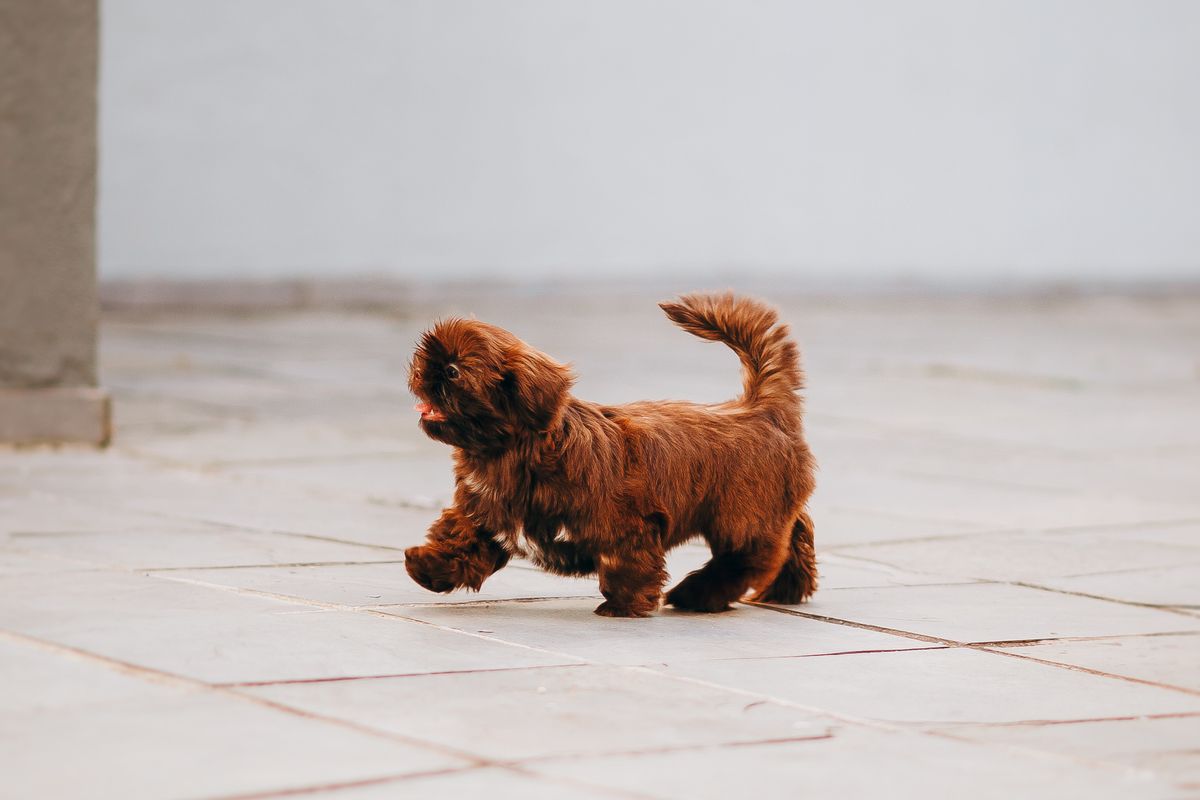
The Bolonka's coat is his calling card and, at the same time, his grooming challenge. It grows long and dense, is soft and lightly wavy to curly, and carries an undercoat. Because it barely sheds in seasonal bursts, you'll find fewer dog hairs on the sofa than with a double-coated dog. The price for that: loose hairs stay caught in the coat and mat if you don't brush regularly. Daily brushing isn't optional for this breed, it's mandatory, along with regular visits to a dog groomer. To see what such a grooming routine looks like in practice, read our post on grooming for Poodles, Maltipoos, and similar breeds.
On the allergy question, because it comes up so often and gets answered wrong so often: "sheds little" gets equated with "suitable for allergy sufferers," and that's a fallacy. The main dog allergen, technically called Can f 1, sits mainly in saliva and skin flakes. A widely cited study found no lower allergen levels in households with supposedly hypoallergenic breeds, in some cases even higher ones. No dog is scientifically proven to be hypoallergenic. Less shedding fur can somewhat reduce how the allergen spreads through a home, but it guarantees nothing. If you're prone to dog allergies, the only reliable test is personal, repeated contact with the specific dog, ideally paired with an allergy workup. We go deeper on why this applies to all small-coated dogs in our overview of small dogs that shed little.
A Bolonka Zwetna from a reputable breeder isn't cheap, and for good reason. Puppy prices run roughly between 1,000 and 2,500 euros, depending on bloodline and region. Exactly where within that range depends on the breeder, the parent dogs' health checks, and demand. Because the breed is relatively rare in Germany, good breeders can also have waiting lists.
Many people underestimate the ongoing costs. Besides food, which runs roughly 300 to 500 euros a year depending on size, grooming is a fixed expense. If you don't clip the coat yourself, professional grooming every six to eight weeks quickly adds up to 400 to 700 euros a year. On top of that come checkups, vaccinations, insurance, and the usual reserves for illness. A strikingly cheap offer isn't a lucky find, it's usually a warning sign.
With a sought-after niche breed like this, disreputable backyard breeders operate alongside the good ones. A few warning signs can help you tell them apart.
| Warning Sign | Why It Should Make You Suspicious |
|---|---|
| Suspiciously low price | Good breeding with health tests is expensive. Rock-bottom prices cut corners exactly there |
| No visit with the mother | A breeder who won't show you the whelping box and the mother has something to hide |
| Handover in a parking lot | Reputable breeders have you come to them, not meet halfway |
| No health clearances for the parents | Without knee and eye exams, the most important safeguard is missing |
| A "Bolonka mix" sold as purebred | Without recognized papers, ancestry can't be verified |
The Bolonka mix deserves its own note, because it's often offered as a purebred Bolonka. Without papers from a recognized club, ancestry simply can't be verified. That doesn't make a mixed-breed dog a lesser dog, but you should know what you're buying and not pay purebred prices for a mix. Actively ask the breeder about the parent dogs' health checks and have them shown to you.
The Bolonka Zwetna is a strong candidate if you're looking for a small, friendly, even-tempered companion who likes being near you and fits well into a calm household. Thanks to his good nature, he's well suited for beginners, and for families with older, considerate children too. With very young children, caution applies as it does with all small dogs, because he's delicate and easily injured.
He's less of a fit if you have little time for grooming or are looking for a dog who can spend a lot of time alone. The Bolonka is an affectionate type who needs closeness to his people. And if you're considering him because of an allergy, don't rely on the label, rely on real contact. To learn how to teach a people-oriented dog to be alone step by step, read our post on leaving your dog alone.
The Bolonka Zwetna belongs to that rare group of dogs who, without any fuss, deliver exactly what many people are looking for: a friendly, easygoing companion in a manageable size. You just need to choose him with your eyes open, from a breeder who takes health seriously, and with realistic expectations about grooming and allergies. If you're still comparing your options, he's listed alongside every other small companion breed in our dog breed directory, a handy place to browse before you decide.
Once he's moved in with you, Souldog helps you keep track of everything: in the app, you create his profile, log weight, grooming appointments, and health observations, and always have his key data on hand. The rest, the calm company on the park bench, he brings entirely on his own.
 Souldog