In autumn it is everywhere: at the market, on the doorstep, in the fridge aisle. Here is which pumpkin can go in the bowl, whether raw or cooked is better, how much is enough, and how to bake pumpkin dog biscuits.
The farmers market is a sea of pumpkins, your basket is getting heavy, and next to you someone with four paws is sniffing with great interest. Pumpkin is one of those vegetables where dog people quickly agree: surely that's fine. At its core, it is. What usually stays open is the rest. Which pumpkin exactly, raw or cooked, how much, and what is the deal with diarrhea?
e go through it step by step here, without miracle stories. At the end there is a recipe for pumpkin dog biscuits that you can have on the tray in half an hour.
Plain pumpkin flesh is not toxic to dogs. It is best served cooked, peeled and without seeds, salt, sugar or spices. Ornamental pumpkins and bitter-tasting pumpkins stay out, and so does a carved pumpkin that has sat outside for days.
A little goes a long way, and everything beyond the complete main food stays at around ten percent of daily calories. For diarrhea, pumpkin is a possible fiber add-on, not a medicine. We found no studies that test pumpkin itself in dogs.
Pumpkin is mostly water and provides fiber. Raw, it has about 26 kilocalories per 100 grams according to the USDA. That is little, which is why it suits dogs who need to watch their weight. The veterinary and poison-control sources we read for this article all consider plain pumpkin flesh suitable.
It is still not a cure-all. Pumpkin complements the food; it does not replace a meal or any nutrients. And as with every new food: start small and watch how the tummy reacts.
Anything sold as an edible pumpkin at the supermarket or market is on the right track. The American Kennel Club lists butternut squash and pumpkin as suitable. For Hokkaido and muscat pumpkin there is no statement of their own in the veterinary sources, but they are edible pumpkins as well, and they are the most common ones in Germany.
| Pumpkin | Verdict | Note |
|---|---|---|
| Hokkaido | yes | edible pumpkin; feed peeled and cooked |
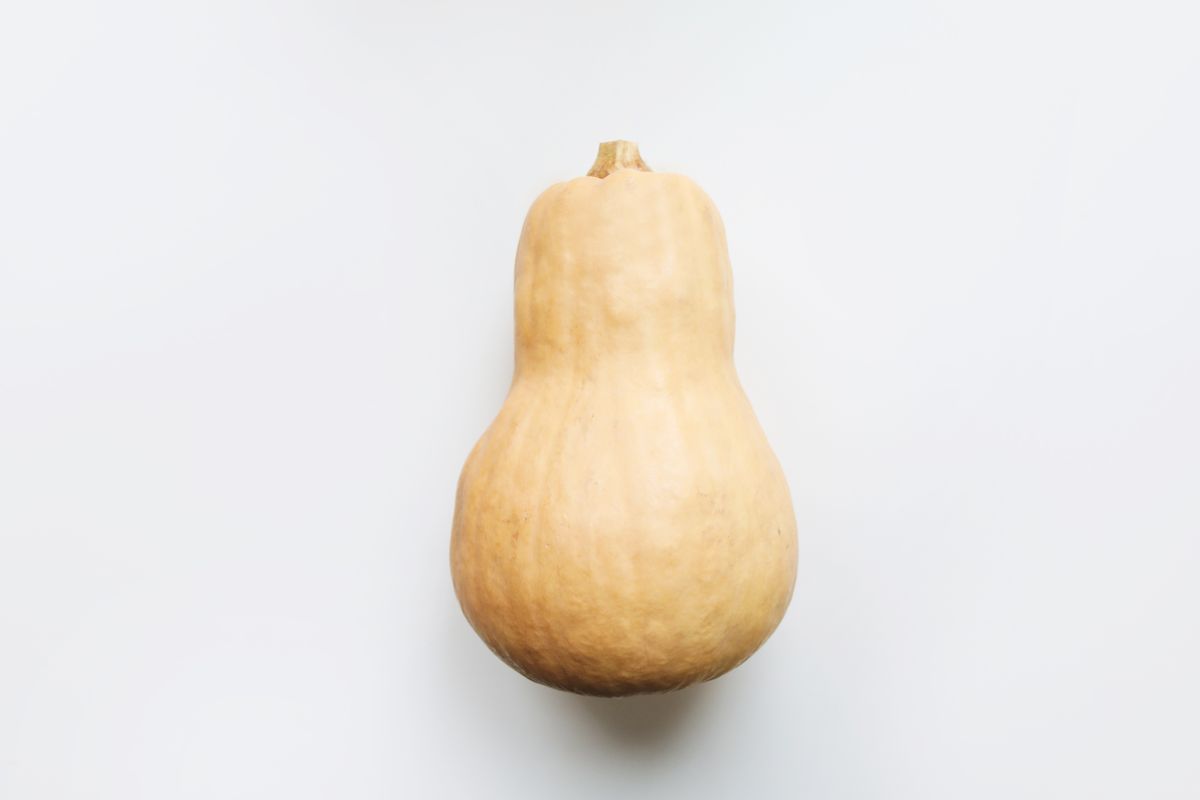
| Butternut | yes | edible pumpkin, mild and soft flesh |
| Muscat pumpkin | yes | edible pumpkin; not related to nutmeg |
| Ornamental pumpkin | no | not bred for eating, may contain bitter compounds |
| Bitter-tasting pumpkin | no | discard right away, including garden pumpkins and zucchini |
The name muscat pumpkin is misleading: it is not related to nutmeg. Nutmeg itself is a problem, more on that below.
Your dog does not get ornamental pumpkins, bitter-tasting pumpkins, or a carved pumpkin that has sat outside for a while. If vomiting, diarrhea, heavy drooling or trembling follows after eating, call your vet or a poison helpline right away.
Ornamental pumpkins are bred for looks, not for the plate. They can contain cucurbitacins, very bitter plant compounds. An honest assessment: poisonings from bitter gourds are documented in humans, for example in a review of French poison control centers. For dogs we found no reliable case numbers. Because the risk may still be real and ornamental pumpkins offer no benefit, they stay out.
The bitter test is simple: touch a small piece of raw flesh to the tip of your tongue, do not swallow. If it tastes bitter, the whole pumpkin goes in the trash, even if it comes from your own garden. The same goes for zucchini and cucumbers that turned out bitter. Store-bought edible pumpkins are almost always mild, so the test matters more for homegrown or gifted ones.
What about the Halloween pumpkin? A carved pumpkin that spent a few days on the front step does not belong in the dog bowl. It molds quickly, and mold can produce toxins that cause tremors and seizures. Add candle residue and spices if you decorated it. If you think of your dog while carving, take the fresh flesh and cook it the same day. The rest stays out of reach.
Raw pumpkin is hard and fibrous. Some dogs like it, others ignore it, and some get a rumbling belly. If you want to offer it raw, dice it small or grate it fine and keep the amount small. Cooked, it turns soft, tastes sweeter and mixes easily into the food.
Here is how to prepare it:
Skin and seeds. The veterinary sources advise removing skin, stem and seeds before feeding, because they are tough and in the worst case can cause an intestinal blockage. That applies above all to hard skins and large pieces. On a Hokkaido the skin is edible for us humans; for dogs we found no statement, so we peel to be safe.
Pumpkin seeds are not a must. Small amounts, unsalted and roasted, are tolerated by some dogs, but a proven benefit is missing. And they are not a dewormer: there is no reliable evidence for that. If you suspect worms, a stool sample at the vet clinic is the way to find out.
Plenty of numbers circulate online, such as one teaspoon per ten kilos or a cup per dog. For healthy dogs we found no number in a top-tier source, so we do not invent a table. Two things are documented.
First, the American Kennel Club names one to four tablespoons of pumpkin per meal for dogs with diarrhea or constipation, with the advice to start with smaller amounts. That is the range for a specific situation, not an everyday value, and for very small dogs it is a lot. Second, the familiar treat rule applies: anything that is not part of the complete main food should make up at most about ten percent of daily calories.
What that means in practice depends on your dog. For a toy poodle weighing 2.35 kilos with a daily need of around 213 kilocalories (example calculation), ten percent is about 21 kilocalories. That is not a bowl of pumpkin but a few bites plus maybe one dog biscuit. How to work out your dog's daily need is covered in our guide on how much food your dog needs.
Too much pumpkin is also a reason for loose stool by itself: the fiber can cause gas and diarrhea. Whoever starts with a lot risks soft stool.
You will find the sentence "pumpkin stops diarrhea" everywhere. The American Kennel Club itself words it more carefully: it may help with mild diarrhea and is no substitute for veterinary care. The logic behind it: fiber binds water in the gut and can firm up stool. For fiber in general there are small studies in dogs with chronic large-bowel diarrhea in which stool improved in many. Pumpkin was not the tested substance there.
The Merck Veterinary Manual adds a caution: fiber alone usually does not resolve large-bowel diarrhea. The honest state of knowledge is therefore: plausible, but not proven, and not a therapy.
What you should really watch for with diarrhea is covered in our guide Dog diarrhea: what helps (German). Here is the short version of the warning signs, no ifs or buts:
Blood in the stool, repeated vomiting, weakness, fever, a bloated or painful belly and lasting diarrhea belong at the vet. In puppies, diarrhea always counts as a possible emergency. The veterinary sources name no fixed time limit; if you are unsure, call. For us, observation never becomes a diagnosis: what is behind the diarrhea is for the clinic to find out.
Two cans that look alike often sit side by side on the shelf. One contains 100 percent pumpkin, the other is a baking mix for pumpkin pie. Only the first is for the dog. The pie mix brings sugar, spices and often dairy, and sugar-free versions can contain xylitol.
Xylitol is life-threatening for dogs. Even a small amount can cause a sharp drop in blood sugar and later liver damage. The Merck Veterinary Manual therefore advises reading the ingredient list on every sugar-free product. If you wonder what else is on the red list, see our poison list for dogs (German) and the overview of what dogs can eat (German).
Spices. Pumpkin is often paired with cinnamon, nutmeg and the like, for humans. Nutmeg is toxic to dogs in larger amounts. Cinnamon in small amounts causes at most mild stomach upset, but it is unnecessary. For the bowl, the rule is: plain, no spice.
This basic recipe gets by with a few ingredients. It contains no sugar and no salt, no nutmeg or cinnamon and no xylitol. Makes about 40 small biscuits.
Ingredients: 150 g pumpkin puree from cooked flesh, or canned puree with 100 percent pumpkin, 1 egg, 200 g whole grain flour (for example spelt or wheat) plus a little more for rolling out, 1 to 2 tablespoons of water if needed.
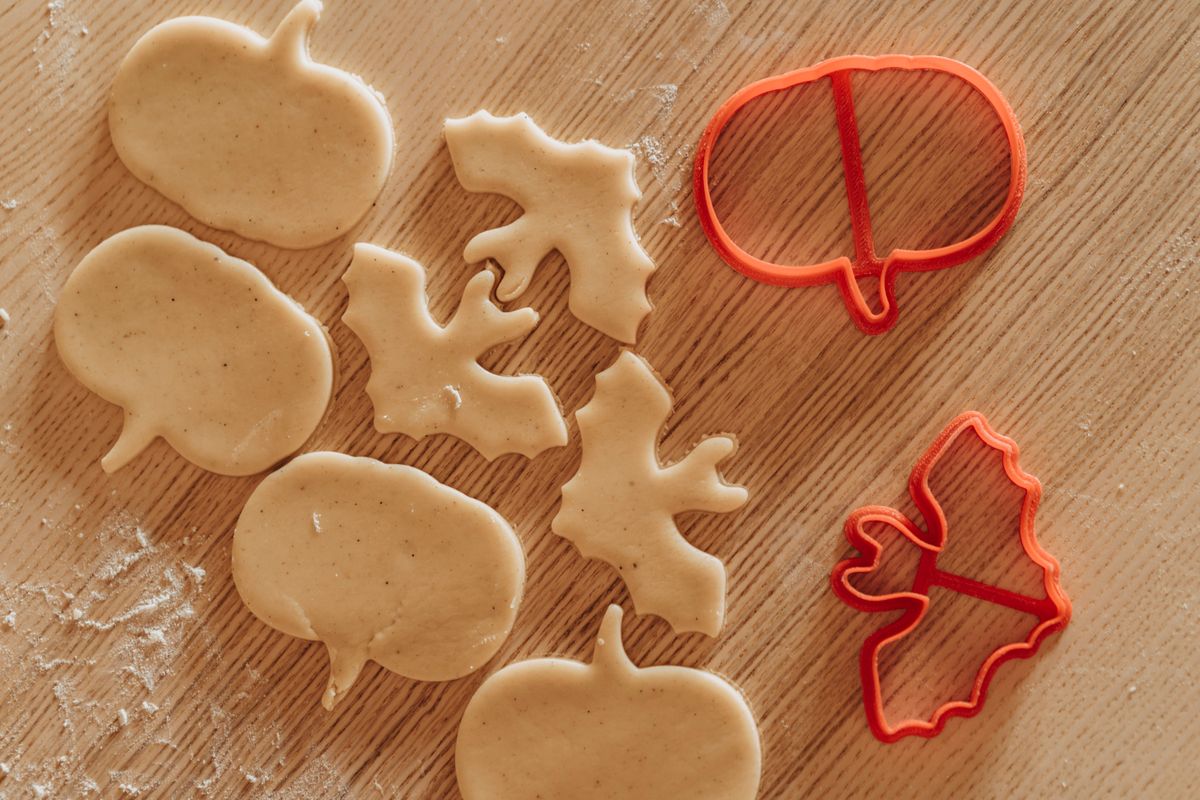
Calories and amount. By our rough calculation (a guideline, not a lab value), a small biscuit of about ten grams of dough has around 20 kilocalories. For the toy poodle from above, one biscuit a day is already the treat limit. Bigger dogs may have more, but do the math: biscuits are treats, not a meal.
Storage. Well dried, the biscuits keep in a tin in a cool place for a few days, and much longer in the freezer. Because there is no preservative, discard anything soft or musty. A dog with a wheat or grain intolerance gets them only after talking to your vet. For summer, pumpkin also fits into our dog ice cream recipe (German).
Dogs with diabetes, pancreas problems or an illness where the diet is carefully managed get new ingredients only after talking to the vet clinic. Pumpkin is low in calories, but even a small change in the plan can matter there. The same goes for dogs with a sensitive stomach: rather a few bites, then watch.
Pumpkin is a friendly vegetable: cheap, mild and everywhere in autumn. Served cooked, plain and in small amounts, it is a nice change. It does not need to be more than an extra, and that is exactly what makes it so uncomplicated.
In the Souldog app you can note what your dog tolerates well and how much treat room is left in the daily plan. That way the pumpkin biscuit stays a small pleasure, and the calorie math still works out.
 Souldog