🦮 Large · United States (Alaska)
A powerful North American sled dog with a strong pack drive that needs plenty of exercise, a securely fenced property, and clear leadership.
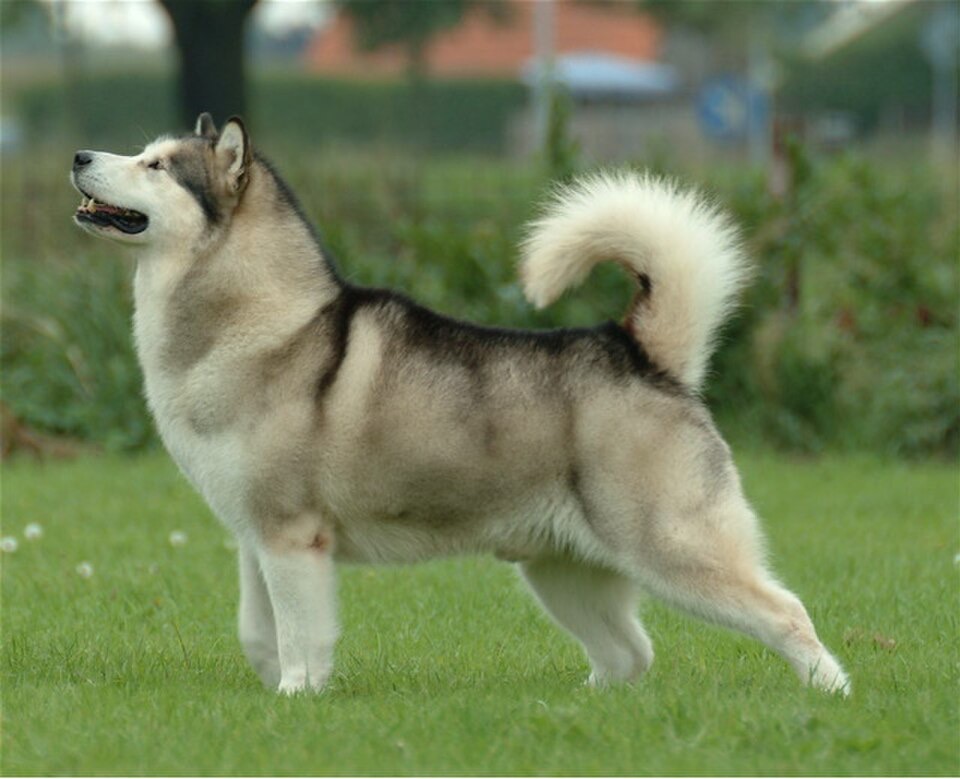
The Alaskan Malamute is friendly, sociable, and not very territorial toward people, but can be dominant toward other dogs. It was bred as a sled dog for heavy loads and shows correspondingly high stamina.
Exercise needs are very high; the breed needs intense daily activity such as sled-pulling sports, extensive running, or hiking. Without adequate activity it tends toward destructive behavior and escape attempts.
The dense double coat sheds heavily seasonally and must be brushed daily during coat change; weekly care is otherwise sufficient. The breed is adapted to cold climates and sensitive to heat.
Rather unsuitable for beginners, since the combination of high exercise needs, stubbornness, and a tendency to roam requires experienced leadership. The breed is also prone to weight gain, making portion control important.
Breed-typical conditions include hip dysplasia, gastric torsion due to the deep chest, a hereditary dwarfism form (chondrodysplasia), and hypothyroidism. Breeding animals should be tested for hip status and the dwarfism gene variant.
← Back to the full dog-breed overview (281 breeds)
This information is for general guidance and does not replace veterinary or breeder advice. Temperament and health vary individually within every breed.
 Souldog