Road salt is more than just a bit of cold for dog paws. Here is how it irritates the skin, when licking it off turns dangerous, and why antifreeze is in a completely different league.
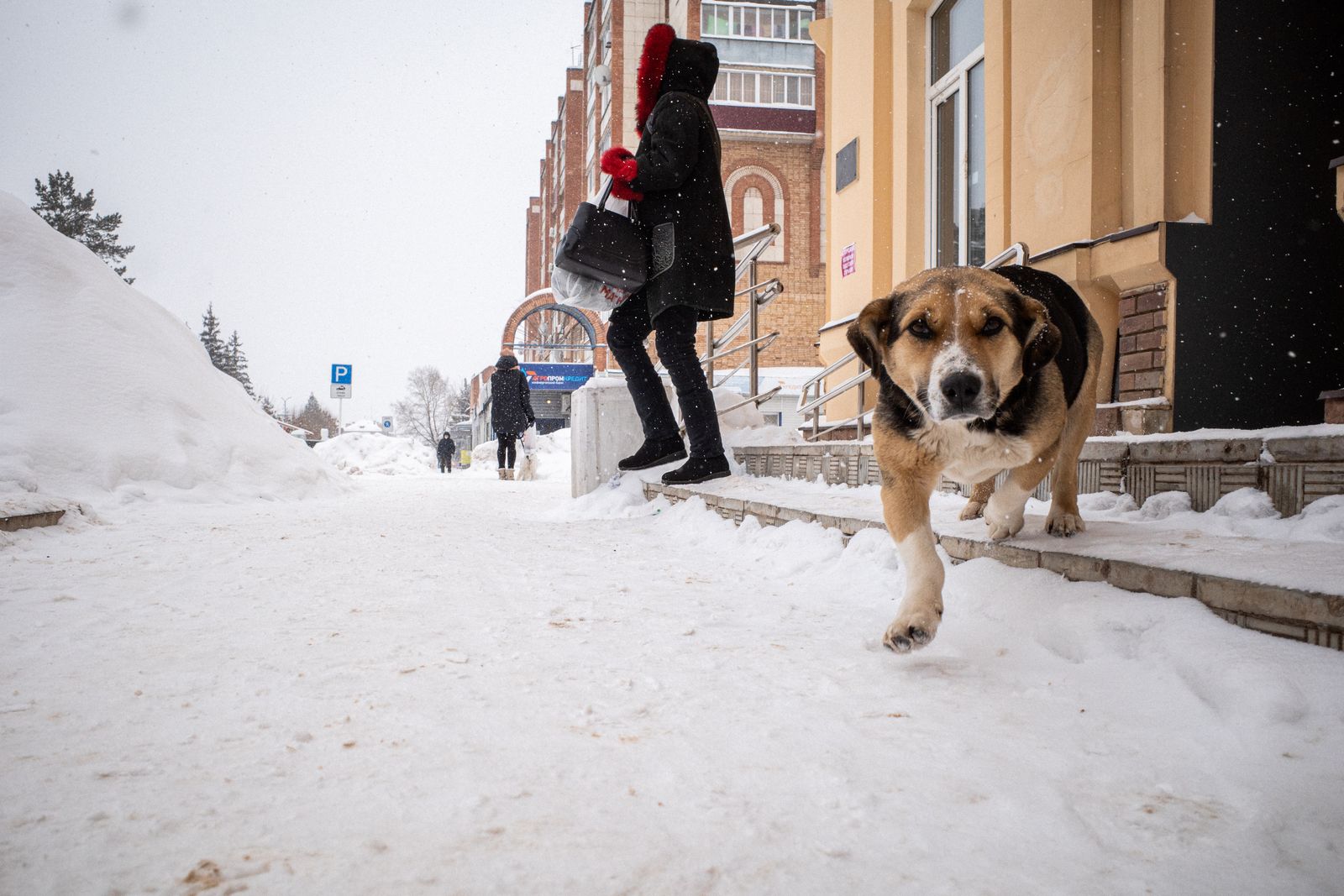
he sidewalk glitters because it was just salted, and your dog trudges through the first snow of the year looking thrilled about it. What you might not notice: gritty salt residue sits among the snow crystals and works its way into his paw pads with every step. After the walk he sits down and licks one paw thoroughly. To a lot of dog owners that looks cute at first. It is not quite that simple.
Road salt belongs to the group of winter hazards that get underestimated precisely because they feel so ordinary. Nothing like a spilled jug of antifreeze, but not entirely harmless either. Let's start with the skin, move on to licking, and end with the substance that leaves no room for error. (If summer worries you more, think hot asphalt and foxtail grass awns, our summer paw protection guide covers that ground.)
The usual culprit is sodium chloride or a related de-icing salt, which pulls moisture out of the skin. With prolonged or repeated contact, that irritates the sensitive skin between the pads, dries it out, and can lead to cracks. Add sharp grit to the mix and it gets mechanically unpleasant on top of that. And because dogs lick their paws afterward, some of that salt ends up in the stomach too.
Two things matter here: what the salt does to the skin, and what happens once part of it is swallowed.
| Topic | What it comes down to |
|---|---|
| Skin irritation | Dry, cracked, sore pads from salt and grit |
| Licking it off | Mostly mild stomach upset, rarely something more serious |
| Antifreeze | A separate, far more dangerous topic, sweet tasting and highly toxic |
| Protection | Balm cares for the skin, boots block direct contact |
| After the walk | Rinse paws, clear ice from between the toes |
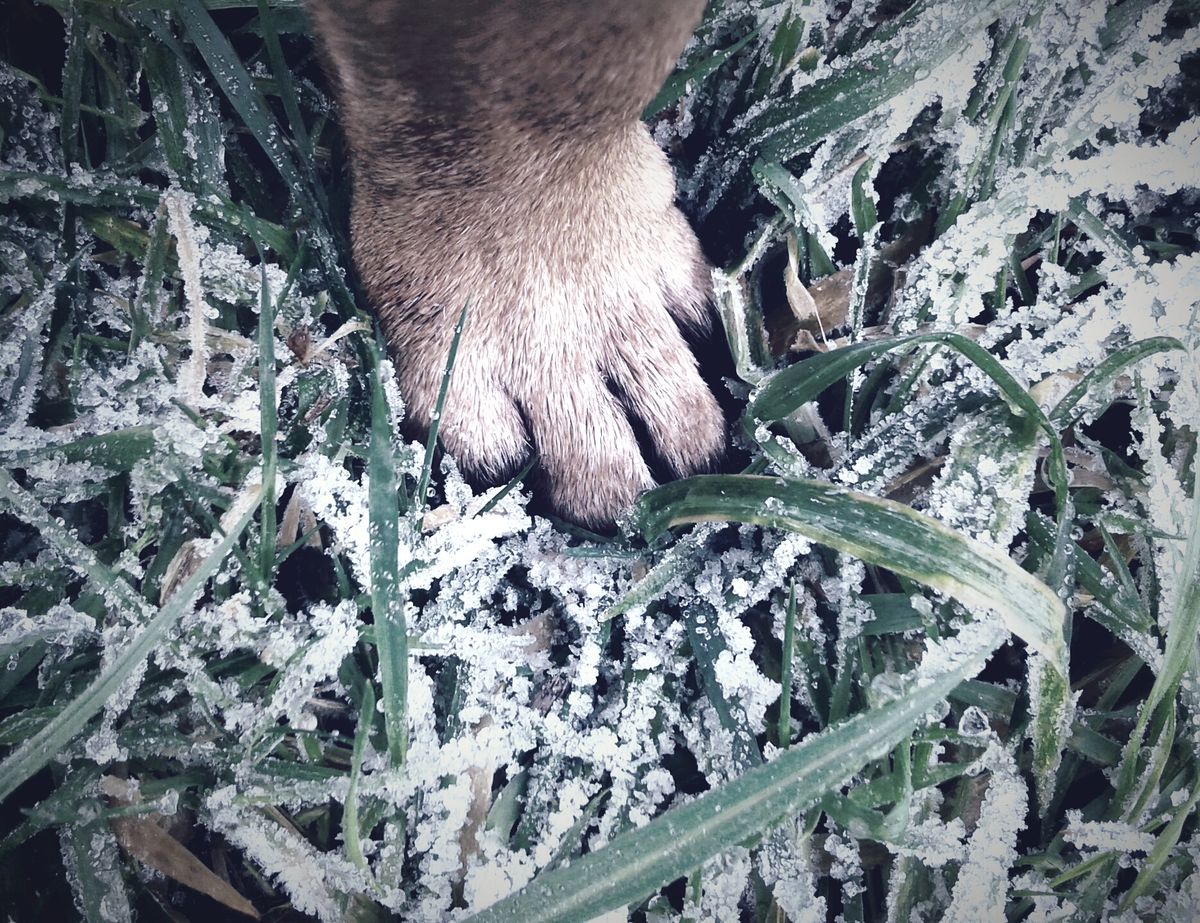
Salt pulls water out of tissue, that is basic chemistry, whether it sits on asphalt or on a paw. Dog pads can take more than people give them credit for, but their thick outer layer is not armor. The longer and more often a dog walks across salted ground, the more that layer dries out. The result: small cracks that sting, and pads that feel rough and brittle instead of soft.
A dog with irritated paws usually shows it clearly, even though the signs are easy to mistake for clumsiness or a bad mood.
None of this is an emergency. It is a sign that the paws need some care, and that tomorrow's walk might do better on a dirt trail instead of the main road.
Licking a bit of salt off the paws after a walk is just part of being a dog, and a small amount ends up in the stomach in the process. For a healthy adult dog with access to fresh water, that is generally not a problem as long as it stays at these small amounts. The body regulates its salt balance well as long as enough water is coming in.
It looks different when a dog eats a larger amount of road salt directly, say straight off a freshly salted sidewalk or from an open bag left in the front yard. The clinical term for that is salt toxicosis, or sodium chloride toxicosis, and according to the Merck Veterinary Manual the acute toxic dose in dogs is roughly 4 grams of salt per kilogram of body weight, with early clinical signs possible from around 2 to 3 grams per kilogram. That is well beyond what a dog picks up from normal paw licking, but for a small dog helping himself at an open salt source, that amount adds up faster than you would think.
Typical signs of a genuinely larger salt intake:
If your dog has clearly eaten a larger amount of road salt, or shows more than mild, brief vomiting, call your vet's office and describe the amount if you can estimate it. With muscle tremors, seizures, or marked weakness, go straight to the practice or emergency clinic without delay.
This is where any comparison with road salt stops. Antifreeze for windshields and radiators usually contains ethylene glycol, a substance that can be lethal in very small amounts. According to the Merck Veterinary Manual, the minimum lethal dose of undiluted ethylene glycol in dogs is around 4.4 to 6.6 milliliters per kilogram of body weight. For comparison, that is a tiny fraction of what a small puddle on a garage floor or driveway already contains.
The dangerous part is the taste. Ethylene glycol tastes sweet, so dogs readily lap it up when it has spilled or drips from a leaking radiator. VCA Animal Hospitals describe its margin of safety as extremely narrow: even a tiny amount can lead to severe poisoning.
The symptoms unfold in stages. In the first hours after ingestion a dog often looks drunk, stumbling, dazed, possibly vomiting. That resemblance is exactly what makes it dangerous, because it is easy to mistake for something else. After roughly one to three days, the second, severe stage sets in with acute kidney failure, which is fatal if untreated. According to VCA, delayed treatment makes the outlook considerably worse, and once clinical signs have appeared the prognosis is already considered poor.
If your dog may have licked or swallowed antifreeze, drive to the vet's office or emergency clinic immediately, no matter how small the amount looks. Do not wait to see if symptoms show up. During cold weather, also check your garage and driveway for leaks and puddles, and store containers where a dog cannot reach them. You will find a full rundown of this and other dangerous substances in our poison list for dogs.
Both products have their place, but they do not do the same job, and that is exactly where a lot of guides oversell one or the other.
Paw balm or wax conditions the skin, keeps it supple, and helps prevent the drying that road salt causes. The American Kennel Club describes balm explicitly as preventive care against dry, cracked pads, not as a shield against de-icers themselves. A thin layer applied before the walk can help keep the skin more supple, but it will not stop salt from reaching the paw in the first place.
Dog boots actually do more here. They create a real barrier between the paw and the ground, so that salt, grit, and ice never touch the skin at all, while also stopping the dog from picking up residue when he licks his paws afterward. The AKC calls them effective specifically against snow, ice, and de-icing products. The catch: not every dog accepts boots right away, they need a gradual introduction in short sessions, and poorly fitted ones slip, chafe, or get shaken off after a few steps. Fit and patience matter more here than the material.
If your dog only does short walks on ordinary sidewalks, balm plus consistent rinsing will usually get you through winter just fine. If you regularly cross heavily salted areas, or your dog has sensitive skin, well fitted boots add real value on top of that. And wherever it is an option, the simplest protection of all is the detour through grass, a dirt trail, or a side street that gets salted less.
The single most effective habit all winter is unglamorous: rinse the paws with lukewarm, never hot, water after every walk, then pat them dry. That removes salt and grit before the dog's own tongue gets to it, and it takes barely longer at the door than taking off your coat.
It is worth taking a second look between the toes while you are at it. Snow and slush like to clump into small ice balls there, pulling at the fur and pressing into the pads. To the dog that feels like walking with pebbles in his shoes, only worse, because the ice tugs at the skin. Keeping the fur between the toes trimmed a bit shorter noticeably reduces this, simply because less snow has anything to cling to in the first place.
If the pads are already cracked or dry, a rich, dog safe paw cream after washing helps. Make sure it really is a product made for dogs and not hand cream from your own bathroom cabinet, since human products can contain ingredients a dog should not be licking off. For mildly rough, reddened pads, consistent creaming over a few days is usually enough. If the cracks are deep, bleeding, or your dog is limping noticeably, that belongs at the vet's office rather than in home care.
| Condition of the paws | What helps |
|---|---|
| Slightly rough, dry | Balm after washing, choose the route more carefully |
| Visibly cracked but not bleeding | Keep up the care, avoid salted areas, watch closely |
| Bleeding cracks, marked limping | Vet's office |
| Ate a larger amount of salt, vomiting or diarrhea | Call the vet's office, describe the amount |
| Muscle tremors, seizures, weakness | Emergency, go straight to the practice or clinic |
| Possibly ingested antifreeze | Emergency, go straight to the practice or clinic, do not wait |
Road salt is not going away in most cities anytime soon, it is simply too useful against black ice. What matters is the short routine afterward: rinse the paws, glance between the toes, cream them if needed. It costs a few minutes at the door and can save your dog days of limping on sore pads.
In Souldog, you can log small observations like this, say when a paw stays irritated longer than expected, directly in your dog's health section, so you know exactly since when something was off at your next vet visit. And if you are ever unsure whether something in your home or garden could be dangerous for dogs, check the app, it has a searchable poison list built in for exactly these moments. You can also find an overview of prevention, nutrition, and paw or winter health topics in our complete dog health guide.
You can find Souldog on the App Store and on Google Play.
 Souldog