One retch, and your pulse spikes: harmless or serious? Here we calmly sort out why dogs vomit, what the color tells you, and when it's time to see a vet right away.

It's just before six, still dark out, and you're woken by that unmistakable sound: the rhythmic gulping that every dog person recognizes instantly, even half asleep. By the time you reach the living room, it's already happened, and your dog looks up at you like he's about to apologize. Vomiting is one of those things that catches up with nearly every dog sooner or later, and in the moment, it always feels a little more dramatic than it turns out to be.
ere's the good news up front: the vast majority of cases are harmless and resolve on their own. Still, it's worth taking a closer look, because the exact same picture can mean an upset stomach one time and a real emergency the next. That's what we'll help you sort out here: how to tell the two apart, what the color tells you, what helps at home, and when you shouldn't wait.
Short on time? Here's what matters most. A single episode of vomiting in a dog who's otherwise bright, alert, and eating and drinking normally is usually nothing to worry about, and it often clears up within a day without any lasting effects. It becomes serious when your dog vomits repeatedly, there's blood involved, he seems listless, or he retches without bringing anything up.
| Situation | What it means |
|---|---|
| Vomited once, dog is bright, drinking, eating | Usually harmless, watch calmly |
| Several times in a short span or longer than 24 hours | Get it checked by a vet soon |
| Blood, unproductive retching, bloated belly, lethargy, severe pain | Emergency, go to the clinic immediately |
| Puppy, very small, senior, or sick dog | React sooner, don't wait |
You can read the rest of this guide calmly if your dog is currently stable. If he's showing any of the warning signs further down, reading can wait, he belongs in professional hands.
Before we get into causes, it's worth making a distinction that even experienced dog owners miss in the heat of the moment: is your dog actually vomiting, or just bringing something up? The two look similar but come from different places in the body, and for your vet, that difference matters a lot.
With true vomiting, the dog actively empties his stomach. You can see and hear the effort: the abdomen contracts, the chest heaves, and there's often a clear buildup beforehand, drooling, restlessness, lip smacking. What comes up is usually partly digested and mixed with fluid or bile.
Regurgitation, as it's called, is something different. Here the contents come up passively and almost effortlessly, with no straining, often shortly after eating or drinking. The material looks undigested, sometimes tube-shaped and coated in mucus, because it never actually reached the stomach; it got stuck in the esophagus instead.
| Feature | Vomiting | Regurgitation |
|---|---|---|
| Process | Active, with abdominal straining and retching | Passive, comes up effortlessly |
| Warning signs | Yes: drooling, restlessness, lip smacking | Usually none |
| Appearance | Partly digested, mixed with fluid or bile | Often undigested, tube-shaped, coated in mucus |
| Timing | Any time | Often shortly after eating or drinking |
| Origin | Stomach, upper small intestine | Esophagus or throat |
Why does this matter? Regurgitation points to the esophagus, vomiting points to the stomach and intestines, and the workup differs accordingly. You don't need to be able to tell them apart with certainty yourself. A short phone video of the next episode often helps your vet more than any description, because the distinction can be tricky to make even in the exam room without seeing it happen.
A dog's stomach is surprisingly easy to upset, and vomiting is its most direct response. Most of the time, something everyday is behind it. At the top of the list is what professionals politely call dietary indiscretion, and what the rest of us call he got into something he shouldn't have. Something snatched off the ground, a raid on the trash, food that wasn't his.
Beyond that, there's a handful of common, mostly harmless triggers:
One special case deserves its own mention, because it scares so many people unnecessarily: bilious vomiting early in the morning. When the stomach is completely empty, a bit of bile can flow back and irritate the lining, and the dog brings up a small amount of yellow liquid, then is immediately back to normal and hungry again. This is called Bilious Vomiting Syndrome, and the best fix for it isn't a medication, it's the feeding schedule.
From my own living room: I have two poodles, and one of them had exactly this morning routine, a little splash of bile at dawn, every other day. The fix was refreshingly unremarkable. A small snack late in the evening, so his stomach wasn't empty overnight, and the problem was solved. The total amount of food stayed the same, just redistributed.
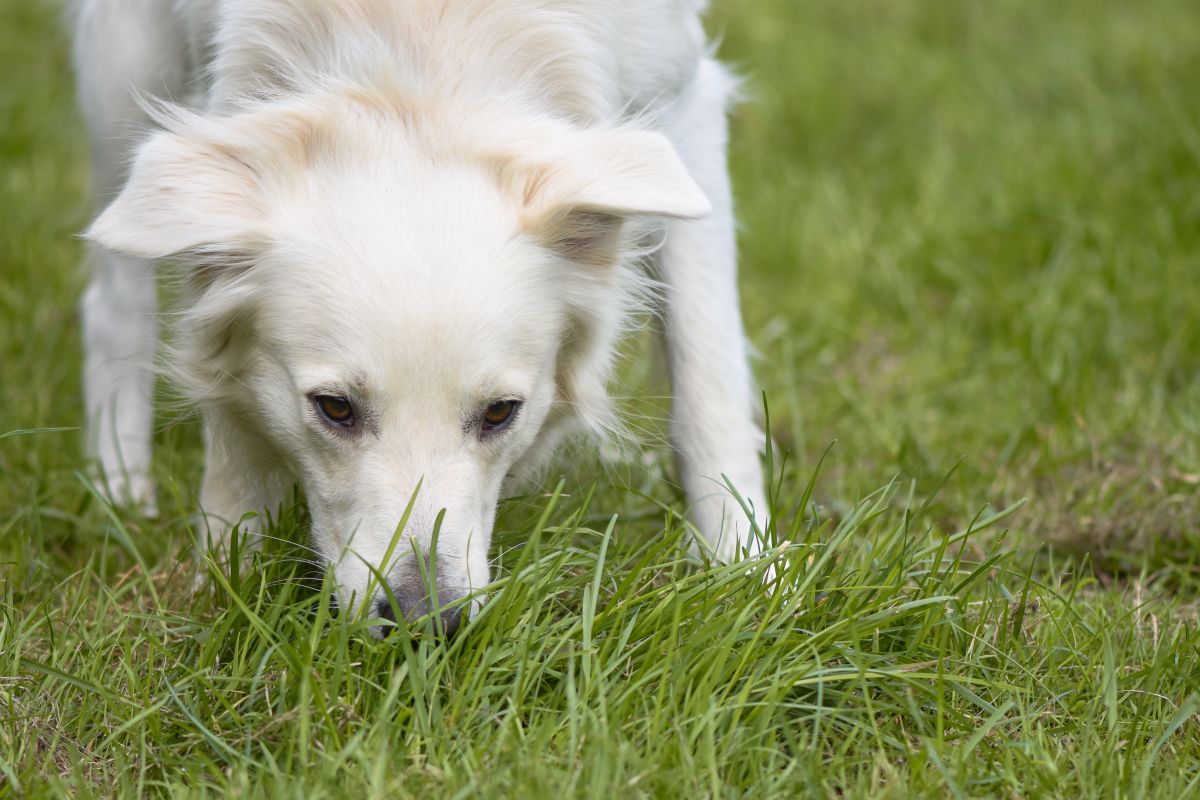
And the classic myth: does my dog eat grass to make himself vomit? The assumption behind it rarely holds up. Studies on grass eating show that the vast majority of dogs don't vomit afterward, and most didn't seem sick beforehand either. Eating grass is largely normal dog behavior, not a reliable sign of illness. It's only worth a closer look if it suddenly increases a lot and vomiting starts coming along with it.
That covers the harmless side. But there are also serious causes that can hide behind vomiting: a swallowed foreign object causing a blockage, poisoning, bloat, pancreatitis, parvovirus in young unvaccinated dogs, plus kidney, liver, or uterine disease. That's why, before doing anything else, it's worth looking at the whole dog, not just the puddle on the floor.
The first instinct in the morning is to look down: what does it look like? The color and texture really do offer clues, even though they never replace an actual diagnosis. This overview will help you make sense of it.
| Appearance | What's often behind it | Urgency |
|---|---|---|
| Yellow or green (bile) | Empty stomach, morning bilious vomiting | Usually harmless as a single event, get it checked if it happens daily |
| White foam | Stomach acid, saliva, empty or irritated stomach | Usually harmless; an emergency when paired with unproductive retching and a bloated belly |
| Undigested food shortly after eating | Ate too fast, or regurgitation | Watch it, get checked if it happens again |
| Fresh, red blood | Bleeding in the upper digestive tract | Always see a vet immediately |
| Coffee-ground-like, brown and grainy | Digested blood from the stomach | Always see a vet immediately |
| Brown and smelling like feces | Possible intestinal blockage | Emergency, go to the clinic immediately |
Two points from this table deserve extra emphasis, because they're often misunderstood. White foam sounds dramatic, but on its own it's usually harmless, a mix of stomach acid, saliva, and air in an empty stomach. What's dangerous isn't the foam itself, but a very specific picture we'll cover next: the dog retches and retches, but nothing comes up.
And blood always needs to be checked out, no matter what form it takes. Fresh red points to bleeding higher up in the digestive tract, while the coffee-ground-like, brown and grainy version is blood that's already been partly digested by stomach acid. Both call for a vet visit, without waiting.
Now for the part with no room for humor. Some presentations mean that every minute spent watching and waiting is a minute too many. When in doubt, the rule always holds: better to call too early than too late.
The most important emergency to know first, because it disguises itself as retching without any vomiting: bloat, also known as gastric dilatation and volvulus (GDV). If a dog repeatedly tries to vomit but brings up nothing, or only a bit of foam, while the belly visibly swells and becomes hard, and he's restless, panting, and drooling, that's highly suspicious. Large, deep-chested breeds such as Great Danes, German Shepherds, Boxers, or Setters are especially at risk. There's no deliberating here, you drive straight to the nearest emergency vet clinic. You can read more about the signs and how to prevent it in our guide to bloat in dogs.
Beyond that, your dog needs professional care right away if any of the following applies:
| Warning sign | What you should do |
|---|---|
| Unproductive retching, bloated hard belly, restlessness | Emergency, go to the animal ER immediately (bloat) |
| Blood in the vomit, fresh or coffee-ground-like | See a vet immediately |
| Lethargy, weakness, pale gums, collapse | See a vet immediately |
| Severe pain, hunched or tense posture | Get checked immediately (possible pancreatitis) |
| Suspected poisoning or a swallowed foreign object | Call right away, don't wait |
| Vomiting plus severe, often bloody diarrhea | Soon, immediately for puppies |
| Longer than 24 hours or more than two to three times a day | Bring him to the vet |
| Fever, shaking, or seizures alongside it | See a vet immediately |
If diarrhea joins the vomiting, your dog is losing fluid through both routes and dehydrates faster. We've covered in detail how to weigh a stomach bug, when watching and waiting is enough, and when it isn't, in our guide to diarrhea in dogs.
One more word on suspected poisoning. If your dog may have gotten into a poison bait, chocolate, grapes, xylitol, medication, or a toxic plant, don't try to induce vomiting yourself. The old home remedy of table salt is dangerous and can cause salt poisoning on its own. Instead, call your vet's office or the emergency clinic right away and tell them what your dog likely ingested, when, and how much; bring the packaging with you. Unlike the US, Germany and Austria don't have a dedicated, nationwide pet poison control hotline, your vet or the emergency vet service is always the first point of contact. In Switzerland, Tox Info Suisse can also be reached at 145 for advice on pet poisoning. You'll find a full rundown of which foods and plants are toxic to dogs in our poison list for dogs.
Before we dive in, the most important condition: this section applies only to the straightforward case, an otherwise bright, adult dog with a single episode of vomiting and none of the warning signs above. If even one of those applies, home first aid is off the table, it's time for the vet.
For the harmless case, the recommendation has shifted noticeably in recent years. It used to be standard advice to let a dog fast for a full day or more. Today, experts take a more critical view of long, complete fasting, because an empty digestive tract doesn't actually help an irritated gut, it tends to slow recovery instead. A short break of roughly 12 to a maximum of 24 hours is fine, but a dog should never go without food for longer than 48 hours. If your dog refuses to eat anything at all for a full day on his own, that alone is reason to call the vet's office.
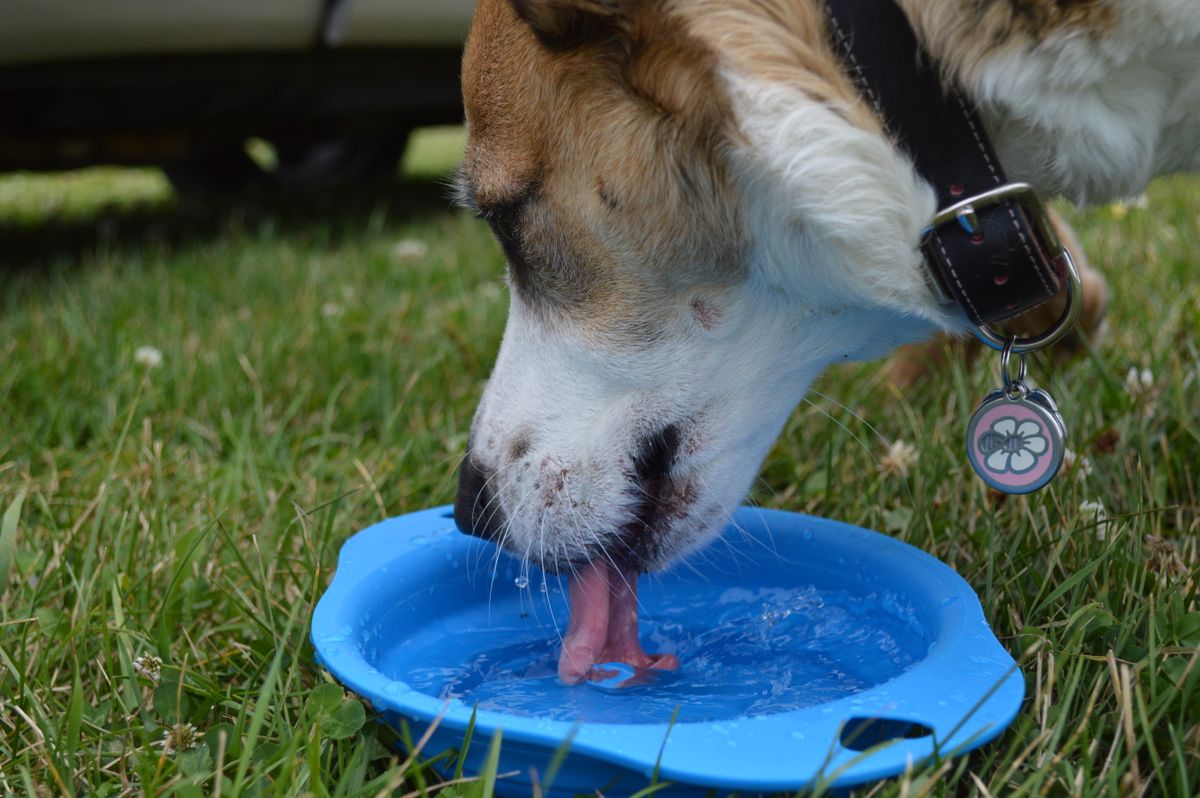
Water is the exception to any pause: it should always be available. What matters is the amount at once, since a big gulp on an empty, irritated stomach can quickly trigger the next round of vomiting. Offer small amounts frequently instead, or give a few ice cubes to lick. If your dog can't even keep water down, don't wait, call the vet.
Once the stomach has settled, mild bland food comes into play, in small portions spread across the day. A tried-and-true option is lean, cooked chicken without skin, bones, or seasoning, paired with well-cooked rice, roughly in a ratio of one part meat to two parts rice. A spoonful of plain pumpkin puree, the pure pumpkin, not sweetened pie filling, can help as an extra. For my own two poodles, that's exactly the go-to fix for any upset stomach, specifically breast or tenderloin, never ground meat, since the lean cuts are lower in fat and therefore easier to digest.
This diet is meant as a transition, not a long-term food, since it doesn't cover all your dog's nutritional needs on its own. Feed it for two to five days, and once things improve, gradually mix the regular food back in over another two to three days. If you'd rather keep things simple, you can also ask your vet about a ready-made gastrointestinal recovery diet that's nutritionally complete from the start.
One thing here isn't negotiable, and it concerns the medicine cabinet:
For motion sickness, by the way, there are effective, prescription medications given before a car ride. These, too, belong in your vet's hands, not something to manage on your own.
The calm wait-and-see approach has one important exception: dogs with fewer reserves to draw on. For these dogs, the threshold for calling the vet is lower, and hours matter more than days.
Puppies top the list. They dehydrate and develop low blood sugar from vomiting much faster than adult dogs, and in young, unvaccinated puppies, parvovirus is a life-threatening cause, often paired with bloody diarrhea. If a puppy vomits more than once or seems listless, don't wait, call that same day.
Very small and toy breeds, especially as puppies, can quickly slide into low blood sugar when they skip food, with shaking, wobbliness, and in extreme cases seizures. Long fasts are not for them. Seniors and dogs with chronic conditions like kidney, heart, or diabetic disease should also be seen sooner, since vomiting in these dogs can both be a symptom of the underlying condition and spiral out of control faster. In diabetic dogs, even a simple fast is risky, because food and insulin need to stay in sync.
Pregnant dogs and brachycephalic breeds like Pugs or Bulldogs also deserve extra attention, the latter because they're more prone to inhaling material while vomiting. In short: the younger, smaller, older, or sicker your dog is, the sooner you should reach for the phone instead of settling in to watch and wait.
You can never prevent vomiting entirely, but you can definitely tip the odds in your favor. Most triggers come down to eating speed, food, and access to garbage, and that's exactly where you can step in.
One last detail that persists as a myth: a raised food bowl does not protect against bloat. The available research actually points in the opposite direction, which is why experts recommend a floor-level bowl for large breeds at risk.
A single mishap on the carpet often looks worse than it is, and in most cases, the stomach settles back down after one or two episodes. What gets you through it isn't expert knowledge, it's an honest read on your dog: if he's bright, he's drinking, and he shows none of the warning signs, you can help him through the upset stomach with calm and bland food. And if a warning sign does show up, you now know that calling the vet is the right answer.
Because making that call is hard when you're half asleep, Souldog has a symptom checker and a vet finder built right into the app, so a few quick questions can help you gauge how urgent things are. Since many stomach stories start at the food bowl, it's also worth checking out what dogs can and can't eat. And if you want to keep the bigger picture in view, our overview of dog health covers all the key pieces, from prevention to emergencies.
You can find Souldog on the App Store and Google Play.
 Souldog