



Dogs allowed is not the same as dogs welcome. Here is how to find the right hotel, what to settle before you book, how to make the first night calm and when your dog may stay alone in the room.
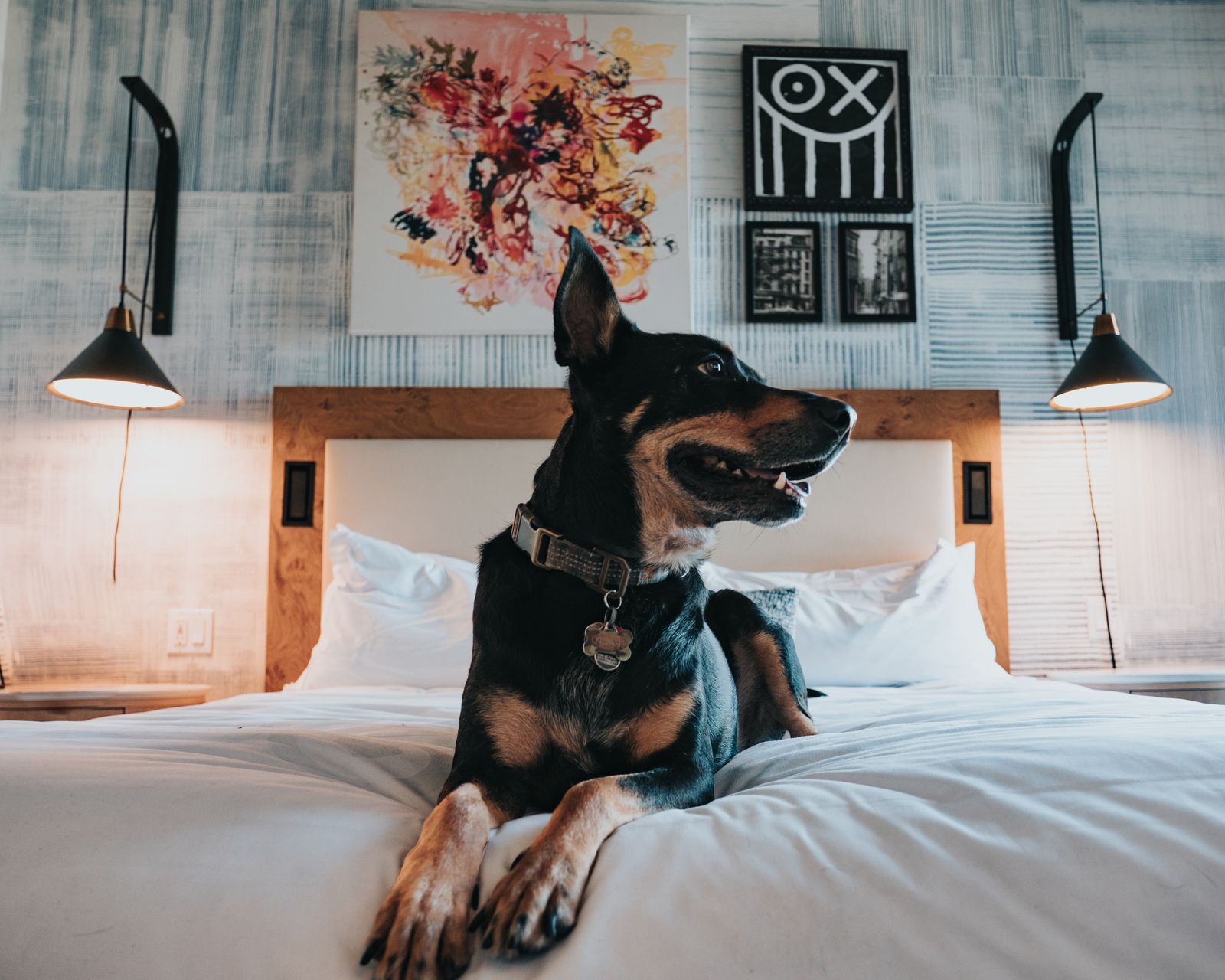
The receptionist slides the key card across the counter, then leans forward a little to see who is sniffing your suitcase so thoroughly. This is the moment you find out whether you booked a good hotel with your dog. Is your dog greeted, maybe even with a treat from the bowl next to the pen? Or does he get the look usually reserved for a wet umbrella about to drip on the carpet?
otels where dogs are allowed are easy to find. Hotels where dog and human genuinely feel at home take a more targeted search. This guide covers how to recognize and find a dog-friendly hotel, which questions to ask before booking, roughly what a dog costs at a hotel, how to get through the first night and when your dog may stay alone in the room. We have already covered the car journey, the travel first aid kit and holiday rentals in detail in our guide to traveling with your dog.
A filter like "pets allowed" is only the start. Read the house rules of every result and ask in writing before you book: the fee, size and number limits, room category, the breakfast room and whether your dog may stay alone for a short time. The dog fee varies a lot from hotel to hotel, and some charge a flat fee per stay instead. More on that below under costs.
On site, a calm first night helps: a walk outside first, then your dog's own blanket in a quiet corner of the room. Only leave your dog alone if the hotel allows it and he is used to it at home. In Germany, assistance dogs have a legal right of access.

Between "dogs allowed" and "dogs welcome" lies an entire vacation. A hotel that merely tolerates dogs charges a fee and hopes nobody notices. A hotel that plans for dogs has thought ahead. The front desk knows the nearest meadow for the last walk of the evening and the nearest vet, a bowl and a blanket are available on request, and there are poop bags by the entrance.
Details like these rarely appear in the headline of a listing. They sit in the small print or on a separate page with dog rules. The more specific those rules are, the better. A hotel that tells you which areas welcome dogs and which do not takes the topic seriously. A hotel that only notes "pets on request" leaves you guessing.
Reviews from other dog owners are another good sign. Search guest reviews for the word "dog". They often say more honestly than any hotel description whether the dog was welcomed in the breakfast room or eyed suspiciously.
The big travel and booking sites offer a filter that shows only properties where pets are allowed in principle. That saves time, but it has a weakness: a filter often knows only yes or no. Whether there is a weight limit, whether only one dog per room is allowed or whether the permission only applies "on request" is spelled out in the property's house rules. Even with large hotel chains, look twice: dog rules can differ from one hotel to the next, even under the same logo.
If your dog is meant to be the guest of honor rather than a plus-one, specialist portals help. One example is hundehotel.info, a German-language portal that lists dog-friendly accommodation in Germany, Austria, South Tyrol and Switzerland, among others, rates dog-specific amenities with its own symbols and publishes an annual ranking of the most dog-friendly properties. Rankings like this are a good starting point for research. Whether a hotel suits your dog is a question they cannot answer. A private dog swimming pond is of little use to a dog who only likes water from his bowl.
Before you book, send the hotel a short message through the booking site or by email. Give your dog's breed, approximate weight and the number of dogs, and ask the questions from the next section. Keep the reply. It is worth its weight in gold at check-in if the person at the desk has heard something different.
| Question for the hotel | Why it matters |
|---|---|
| What does the dog cost, per night or per stay? | The dog fee is often not included in the booking site price and is only charged on site. |
| Are there limits on size, weight or number? | Many hotels allow only one dog per room or set a weight or size limit. |
| Which room category is set aside for dogs? | Often only certain rooms are approved, for example on the ground floor, with a terrace or without carpet. |
| May the dog come into the restaurant and breakfast room? | These rooms are often off limits, as are the spa, wellness area and gym. |
| May the dog stay alone in the room for a short time? | Many hotels prohibit this. It matters if you want to go out for dinner or to the spa. |
| Where is the nearest green space? | The late evening walk and the early morning one should not take place along a main road. |
The breakfast room question sounds minor, but it decides how your mornings go. If your dog is allowed neither at breakfast nor alone in the room, every cup of coffee turns into a logistics exercise with a shift schedule. Some hotels solve this with a separate area for guests with dogs or with breakfast on the terrace, others not at all. Better to know in advance.
Also ask whether your dog may go on the bed or sofa and whether the hotel provides a blanket and bowl. It sounds like luxury, but it is mostly a hygiene question that some hotels regulate in great detail.
The range is wide because every hotel sets its own fee. Budget and mid-range chains tend toward the lower end, while design and resort hotels tend to charge more. Do the honest math when planning: three nights at 20 euros a night adds 60 euros to the room price, and more with two dogs. For a short city break, a flat fee per stay can cost more than a nightly fee; for a longer trip it can be cheaper.
One point hardly anyone thinks about: scratches on the door or a chewed cushion end up on your bill. Not every dog liability policy automatically covers damage to rented spaces such as a hotel room, and when it does, often only up to a certain amount. Checking your policy terms before you leave takes five minutes.
Many hotels waive the dog fee for recognized assistance dogs. If in doubt, ask in advance so there is no discussion at check-out.
Anyone searching for a "dog hotel" therefore lands sometimes at a spa hotel with a fenced dog meadow and sometimes at a business with kennels and a run on the edge of town. Both can be good. They are just completely different trips.
If the term means a kennel where your dog stays alone, one check matters: in Germany, anyone who commercially keeps and cares for other people's dogs needs a license from the responsible veterinary authority under the Animal Welfare Act. A reputable boarding kennel will show you this license without hesitation. How to compare kennels, sitters and family care and how to recognize good care is covered in our guide to dog care while you travel.
This article is about the first meaning: the hotel where the two of you stay together.
A hotel room is a strange place for your dog. It smells of cleaning products and of the guests from the past few weeks, suitcases roll past in the corridor, the elevator hums somewhere and at six in the morning a door slams. Your dog does not know that all of this is normal. He has to find out first.
That is why a small routine pays off. After you arrive, take a walk outside first, before you go up to the room; your dog can relieve himself, sniff the surroundings and burn off energy from the journey. Only then head to the room. Put his own blanket down first in a quiet corner, ideally not right by the door, where every step in the corridor can be heard. Set out water. Then let him sniff around in peace instead of immediately unpacking and rushing back and forth.
Keep his usual feeding and walking times as far as possible. A familiar routine gives him something to hold on to when everything else is new. If your dog barks at noises in the corridor on the first night, stay calm and guide him back to his blanket; some dogs settle better with quiet background noise that masks the corridor sounds. And plan the first evening so you can stay with him. How settling into a new place works in general is described step by step in our guide to traveling with your dog.
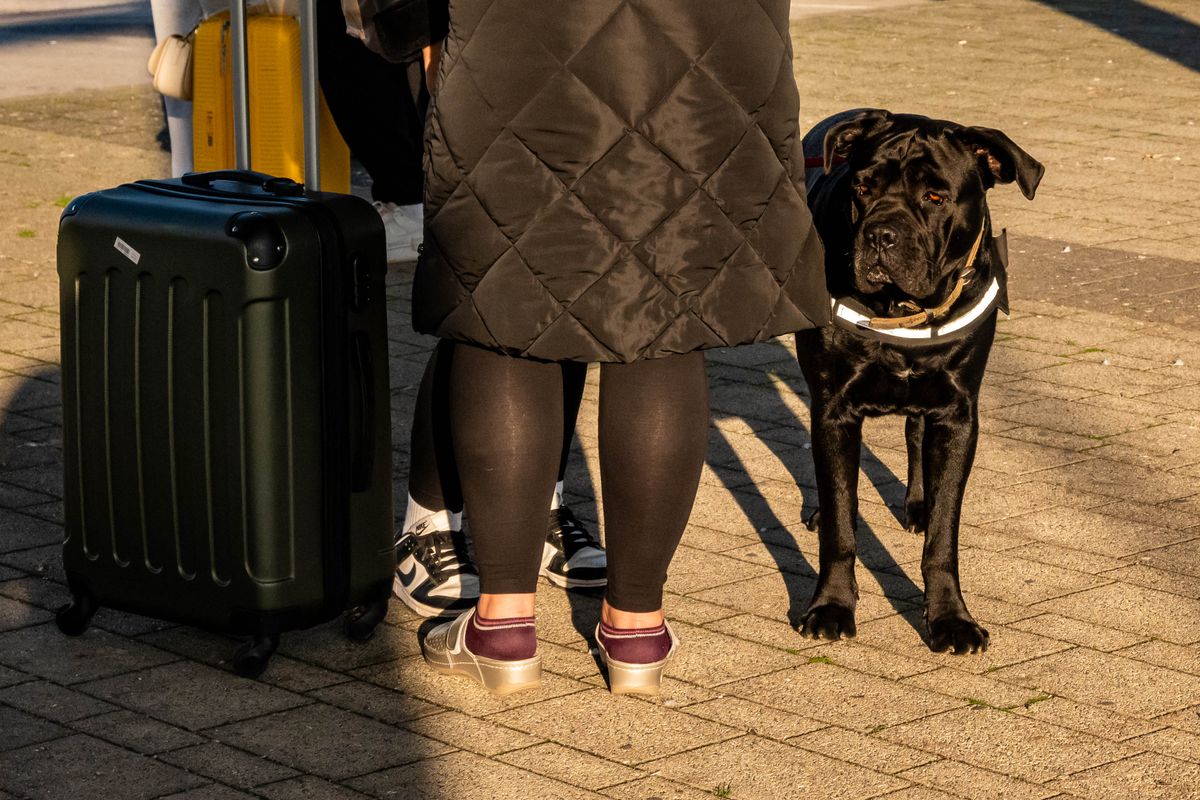
There are good reasons why many hotels forbid leaving dogs alone. A dog left alone in an unfamiliar place is more likely to bark or howl than at home, and the guest next door did not pay to listen. Then there is the staff: if housekeeping opens the door without knowing a dog is inside, it can be unpleasant for both. Some hotels therefore do not clean rooms with an unattended dog at all.
If your dog stays alone in the room for a short time: Close the windows and the balcony door. Put medication, cables, snacks and the contents of the minibar out of reach. Hang a sign on the door saying a dog is inside and give the front desk your phone number. Use a crate only if your dog knows it from home. Stay reachable and nearby. Keep the first time very short.
You know best from home whether your dog is ready for a break like this. If he stays alone calmly there, chances are good he can manage a short time at the hotel after a day or two of settling in. If he gets restless at home, a hotel room is not the place to practice. How to tell whether your dog is truly relaxed or just quiet, and how to build up time alone step by step, is explained in our guide on leaving your dog home alone.
For a dinner your dog cannot join, there is often a simpler solution: a restaurant nearby where he is allowed to lie under the table. More on that below.
A hotel is a shared space, and the impression your dog leaves helps decide whether the hotel keeps accepting dogs in the future. Most rules come down to common sense, though a few are easily forgotten.
In the lobby, corridors and elevator, your dog belongs on a short leash, even if he is the friendliest dog on your street at home. Not every guest likes dogs, and some are afraid of them. If someone in the elevator visibly steps back, simply wait for the next one. After a walk in the rain, dry his paws before going inside, ideally with your own towel rather than the hotel's white ones.
Your dog only goes on the bed or sofa if the hotel allows it, and then on his own blanket. Put the bowl on a mat so water and kibble crumbs do not end up in the carpet. Pick up after your dog on the hotel grounds too, even on the farthest patch of lawn. And in the restaurant your dog lies under the table, not on a chair, and gets nothing from your plate. That is courtesy toward the other guests, and as a bonus it spares you a dog who sits begging next to you at the next meal.
At check-out, a quick look helps: loose hair off the blanket, bowl and toys packed, nothing chewed. Hotels remember that kind of thing.
This right of access does not apply to every dog that does its owner good. It covers specially trained dogs that are certified as a human and assistance dog team or recognized as a medical aid by a funding body, such as guide dogs or hearing dogs. An assistance dog must be marked as such, and liability insurance must be in place for it. The family dog that simply has a calming effect does not qualify.
Regardless of this, EU food hygiene law sets a limit for all dogs: kitchens and food storage rooms remain off limits. For ordinary dogs, the hotel decides on dining areas such as the restaurant or breakfast room under its house rules. Even if your assistance dog has a right of access, it is worth mentioning it when you book. That way the room is prepared and there are no questions at check-in.
The nicest hotel room is of little help if the nearest meadow is twenty minutes away and the hotel restaurant does not let dogs in. A good stay therefore also depends on the surroundings. You need a route for the morning walk, a café where your dog does not have to wait outside and ideally a restaurant where you can eat together in the evening.
That is exactly what the Discover map in the Souldog app is made for. You see dog-friendly cafés, restaurants, parks and dog parks near your accommodation and can narrow the results by category. If you want to know what is around a hotel before you book, open the directory of dog-friendly places in your browser, no download needed. Popular city destinations have their own guides, for example dog-friendly Berlin and dog-friendly Hamburg. A map entry does not replace confirmation from the business itself, though; for a specific place, quickly check the current dog rules.
In the end, a good hotel with your dog is not a lucky find. It is the result of five minutes with the small print, a message to the front desk and an honest view of what your dog enjoys and what he would rather skip. When the blanket lies in the corner on the first evening, the bowl sits on its mat and your dog closes his eyes with a deep sigh, you know the effort was worth it.
If you are heading abroad, our guide to traveling with your dog through Europe covers the paperwork. And if you need a café for coffee after the morning walk, Souldog helps you find dog-friendly places around your accommodation. Safe travels, and sleep well.
 Souldog