No barking, no chewed-up shoes, the neighbors sing his praises: your dog stays "good" while you're out. But good behavior isn't the same as calm. A camera and five signals reveal how your dog really feels once the door closes behind you.
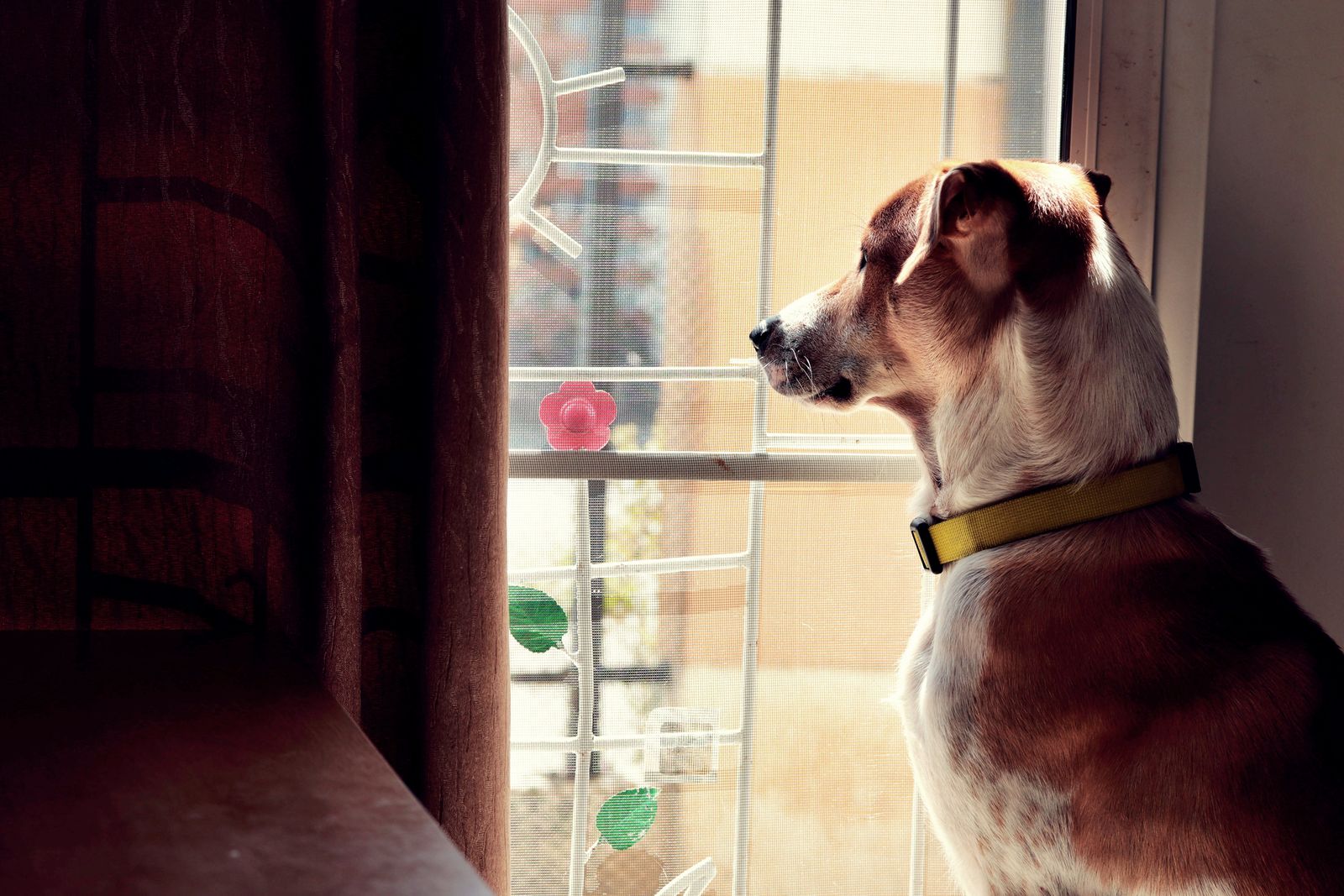
You glance at the camera app during a meeting: your dog is lying on his blanket, perfectly still. Good dog, you think, all is well. Until you rewind and notice something. He's not just lying there. He's staring at the door. Ever since you left, without a break, head on his paws, eyes open, every single minute. No barking, no destruction, nothing to complain about. And yet you can't shake the feeling that nobody here is actually relaxed.
hat feeling is worth taking seriously. Whether a dog handles being alone well isn't decided by what the neighbors hear or what's still intact when you get home. It's decided by what the dog does while nobody's watching. Fortunately, today that's easy to find out.
Separation-related stress is common: depending on the study, roughly one in five dogs currently shows problems with being alone, and about half of affected dogs show no outward signs that owners would notice. Quiet, in other words, doesn't automatically mean calm.
The most reliable method is a camera. Behavioral medicine also calls video recordings the most accurate tool for detecting separation-related stress. Relaxed dogs sleep deeply, often on their side, move loosely, and eat their chew treat. Warning signs are constant panting without heat, drooling, restless pacing, whining, scratching at the door, and untouched food. Important: a dog lying around a lot is normal and not a red flag by itself. What matters are the accompanying signals. Real separation-related stress responds well to gradual training; panic calls for a veterinary behaviorist. Punishment never helps.
When people talk about dogs and being alone, it's almost always about the dramatic cases: the nonstop barking that wears down the neighborhood, the shredded couch, the puddle in the hallway. These dogs get help because their stress is impossible to miss.
The quiet cases slip through. A dog who is afraid, and has also learned that barking and scratching get him nowhere, simply looks calm from the outside. Some dogs practically freeze: they lie down, but on high alert, eyes locked on the door, and never really settle for hours. Others show their stress only in the fact that the lovingly stuffed Kong stays untouched until you get back. From the outside: a good dog. From the inside: a dog who isn't spending the time alone but enduring it.
One more distinction that's invisible from the outside: not all chaos is panic. Some dogs take the apartment apart out of sheer frustration and boredom, simply because they have nothing to do while alone. Both look identical when you come home, but they need different answers.
The difference isn't visible to the naked eye from outside. With a camera, it is.
You don't need any special equipment for this. A cheap indoor camera, an old phone set up for a video call, or a tablet on a shelf is plenty. Behavioral medicine recommends exactly this as a first step: video recordings are considered the most accurate way to determine whether a dog suffers from being alone. The beginning of your absence is especially telling, since stress is highest right after you leave and gradually eases afterward.
Here's what to look for:
| Signal | Relaxed looks like this | Stressed looks like this |
|---|---|---|
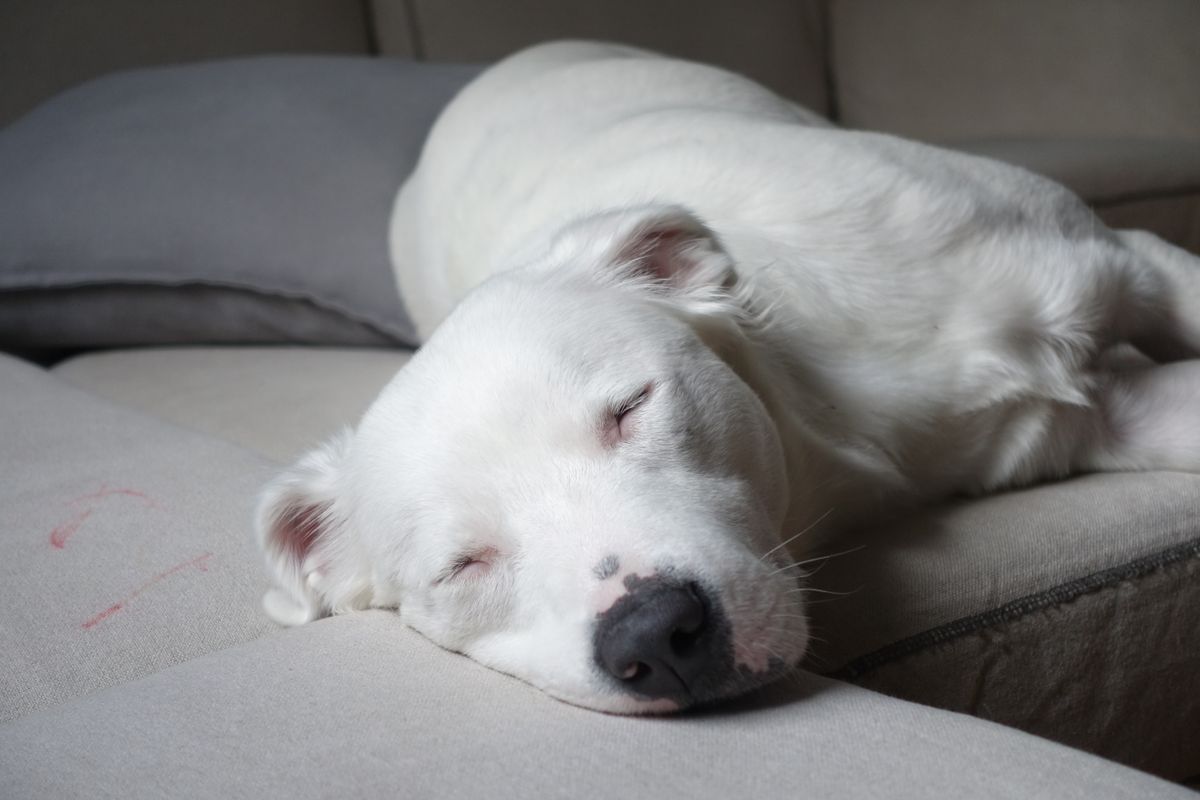
| Sleep | Deep sleep, often on their side, soft body posture | Lying awake on high alert, head up, eyes on the door |
| Movement | Wanders around casually, sometimes picks a new spot | Restless pacing, the same loop again and again, never settles |
| Breathing | Calm, mouth closed | Constant panting without heat or exertion, drooling |
| Food | Eats the chew treat, licks the mat clean | Kong and water stay untouched until you get home |
| Voice and door | Stays quiet, door holds no interest | Whining, howling, barking, scratching, or jumping at the door |
One important point so you don't drive yourself crazy: lying around a lot is completely normal. Adult dogs spend the vast majority of their alone time resting, even the deeply relaxed ones. The fact that your dog lies on the same blanket for three hours doesn't, by itself, say anything. What matters is how he's lying there and what's happening around it: lying on their side with a soft face is a very different picture from constant staring with a tense body and panting. You can read more about what sleep position reveals about your dog's state in our post on sleep and dreaming in dogs.
The good news first: being alone can be learned, in most cases even without professional help. The path is gradual training. You start by leaving for only as long as your dog stays calm, even if that's just half a minute. Then you come back, casually, without a big welcome-home celebration. Over days and weeks you extend the time, always staying below the stress threshold. If the camera shows tension at ten minutes, you practice at five. It feels slow, but it's the only way to actually change how your dog feels: leaving means she's coming back.
A few habits help alongside this. A solid walk before alone time tires your dog out and lowers stress levels. A chew treat or a stuffed lick mat at goodbye gives the moment a positive meaning, and whether it gets finished is your next camera indicator. Goodbyes and hellos stay friendly and low-key; the bigger the drama at the door, the bigger the contrast once you're gone. It also helps to decouple your departure cues: put on your jacket and shoes now and then, pick up your keys, and then just stay. The signals lose their alarm value.
And then there's the thing you should drop immediately if anyone ever advised it: scolding your dog when you come home to find something chewed up. Destruction while alone is panic or boredom, never spite. The famous "guilty look," by the way, has been scientifically debunked: dogs show it as an appeasement response to our anger, entirely independent of whether they actually did anything. Punishing a dog makes both being alone and coming home feel unsettling. The old advice to just let the dog "bark it out" until he gives up is also considered outdated and can deepen the fear. And one more warning from practice: a crate is not a solution for separation-related stress. We explain why it can even be dangerous for real separation anxiety in our post on crate training for dogs.
In Germany, where Souldog is based, animal welfare law requires, in Section 2, contact and care several times a day rather than a fixed hour limit. As a rule of thumb: a healthy adult dog who has learned to be alone can manage four to six hours. A full workday without a break is too long; that calls for midday care, a dog walker, or a sitter.
Puppies are a different story entirely. They can't hold their bladder for long yet; a rough guideline is their age in months plus one, in hours, and even that's only an upper limit for bathroom needs, not for comfort. Being alone is built up in tiny steps with a puppy, never assumed. Seniors and sick dogs often need shorter intervals again too.
There's a point where patience alone isn't enough anymore. If your dog injures himself at the door or window, drools in puddles, howls for hours, or panics the moment you put your shoes on, that's no longer a training issue, it's a panic disorder. At that point, you belong in professional hands: a veterinary behaviorist or a trainer who specializes in separation anxiety.
Medication isn't taboo there either; sometimes it's the key that makes training possible in the first place. There are active ingredients, such as fluoxetine and clomipramine, specifically approved for separation anxiety in dogs, always combined with behavioral therapy, never as a replacement for it. A dog in sheer panic can't learn; a dog whose panic has been relieved, can.
A dog who is genuinely relaxed while home alone isn't a coincidence or a stroke of luck, it's the result of honest observation and patient practice. The camera takes the guesswork out of it: either it reassures you, because your dog really is blissfully snoring on their side. Or it shows you what you two need to work on, well before quiet stress turns into a loud problem.
If you want to keep track of your observations, Souldog can help: log in the app how your dog spends alone time, and track how he grows calmer with training. And if some days you really do need to be away longer, you'll also find loving sitters near you there. So that, eventually, the closing door means exactly what it should for your dog: nothing special.
 Souldog