Whether your vacation together turns out well has less to do with the destination and more with how safe your dog feels on the road and in an unfamiliar place. Here you will read how to make the car ride work, how settling into the vacation rental goes smoothly, and how to prepare for the worst case.
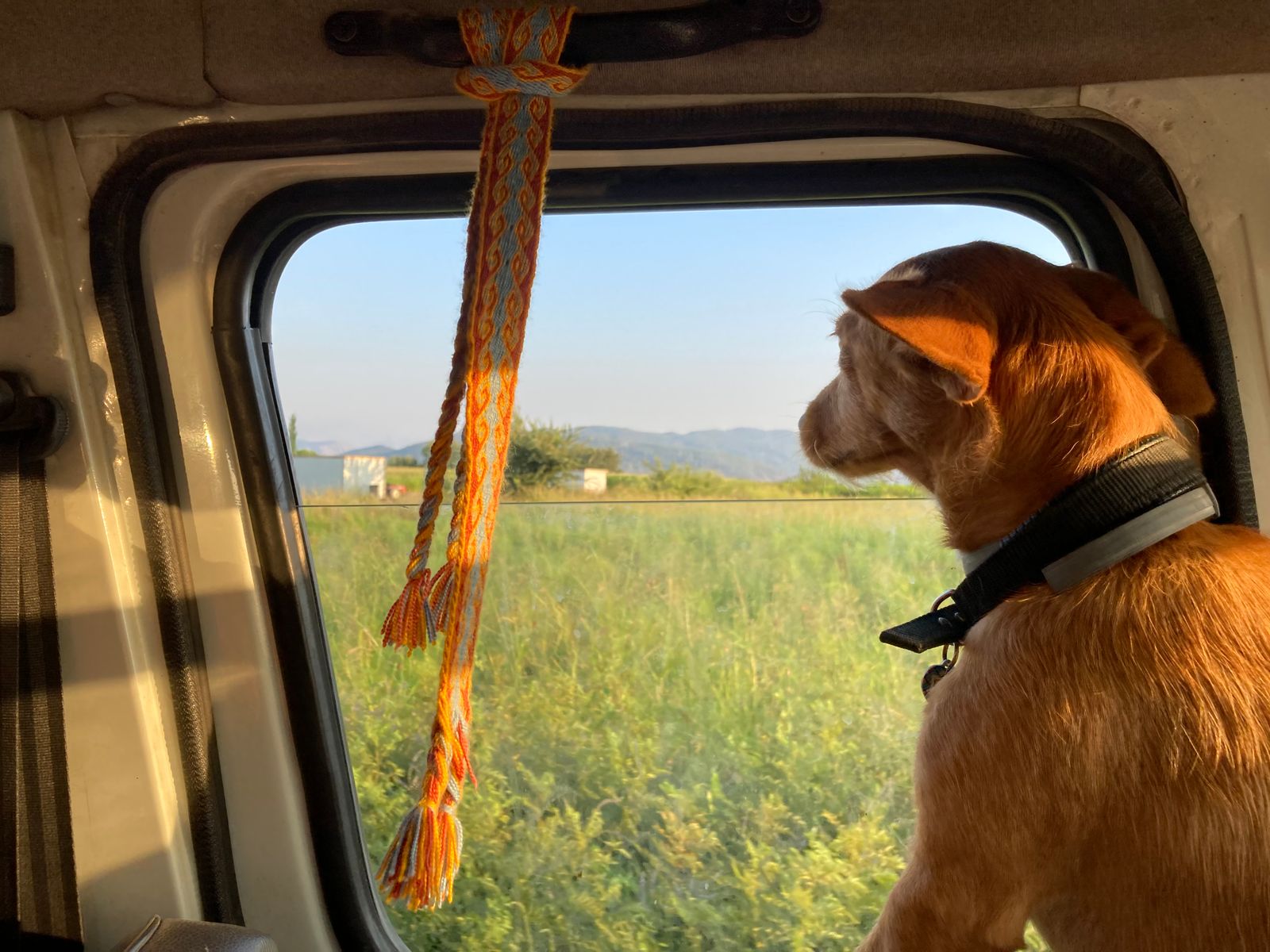
The trunk is full, the blanket is on the back seat, and your dog is already pacing excitedly around the car, because he figured out a while ago that something big is happening. Traveling with your dog is one of the loveliest ideas summer has to offer. At the same time, it's easy to overlook that this exciting trip means one thing above all for your dog: everything is suddenly different. Different smells, different sounds, an unfamiliar bed, no familiar daily routine.
he good news is that almost everything that can go wrong along the way can be solved calmly with a little preparation. How to make the car ride safe, how your dog really settles into the vacation rental, what belongs in the travel first aid kit, and when a sitter back home is honestly the better choice, we will go through all of it in order. Border formalities like the pet passport and rabies vaccination are only touched on briefly here, since we have a dedicated guide for that.
If you're short on time, here's what matters most. Secure your dog in the car with a crate or a safety harness, plan regular breaks, and never leave him alone in a hot car. Bring familiar things, his blanket, his toy, his usual food, so a piece of home comes along.
Give him the first few hours at the destination to arrive, instead of launching straight into the full itinerary, and don't leave him alone in the unfamiliar surroundings at first. Make sure he's properly identifiable with a tag showing your vacation phone number, and look up the nearest emergency vet clinic at your destination ahead of time. And honestly: if your dog gets stressed quickly while traveling, a trusted sitter back home can be the greater gift than bringing him along.
Before we get to packing lists, the most honest question of all is worth asking: will your dog actually enjoy this vacation? A calm dog who avoids crowds won't have much fun on a packed city stroll at 86 degrees. Short nosed breeds like Pugs or French Bulldogs are noticeably more at risk in heat and exertion, studies show a markedly higher risk of heat related emergencies for them. And a beach day sounds dreamy, but it comes with hot sand, salt water, and blazing sun.
That doesn't mean traveling with a dog is inherently stressful, quite the opposite. It just means the type of vacation should suit the dog, not the other way around. If your dog already struggles on short car rides, has health limitations, or the accommodation simply isn't dog friendly, loving care at home is often the fairer gift. Our overview on outings with your dog shows how to find a good solution, and the sitter search in the Souldog app connects you with people who will care for your dog in his familiar surroundings.
Most people buckle themselves in without a second thought and let the dog ride loose on the back seat. But an unsecured dog becomes a projectile during a hard brake, dangerous for himself and for everyone in the car. Legally, a dog counts as cargo that must be secured so it can't shift during sharp braking; without proper restraint you risk a fine, and a point on your license if it creates a hazard. ADAC considers a sturdy crate combined with a divider grille the safest option, a simple leash clipped to a seatbelt without a tested harness can fail in a crash.
Never leave him alone in a parked car. Even at a mild 68 degrees outside, the interior turns dangerously hot within minutes, and a cracked window changes almost nothing. To understand why it happens so fast and what helps in an emergency, read the guide on a dog in a hot car.
One more word about car sickness. Many dogs, especially young ones, get queasy in the car at first because their inner ear hasn't fully matured yet; this often resolves by their first birthday. Short, positive practice drives, a light stomach before the ride, and calm driving go a long way. If the nausea persists, there are effective anti nausea medications your veterinarian can prescribe.
A change of location means stress for a dog, and that's not a training issue, it's biology. Studies on transport and moving into a new environment show that stress hormone levels rise noticeably and only normalize again after a few days. That's exactly why it helps to keep the arrival calm instead of packing the first afternoon with sightseeing.
The most effective thing is surprisingly simple: bring a piece of home along. His own blanket, his familiar bed, a well known toy, all of it carries his reassuring scent and turns the strange room into a safe place more quickly. Set up this retreat spot first, ideally in a quiet corner, and let your dog sniff through the rental at his own pace. Cornell explicitly advises not leaving a dog alone during the first 24 hours in a new place. And if he marks briefly by the door frame or the sofa leg, that's normal behavior in a place full of unfamiliar smells, not a reason to scold him.
You may already recognize this calm first phase from another context. It's the same idea as settling in a newly adopted dog, which we cover in more depth in settling in a shelter dog: let him arrive first, then show him the world step by step.

Staying alone in an unfamiliar place is harder for many dogs than being alone at home. The surroundings are unknown, the sounds are new, and the familiar sense of safety is missing. If a stressed dog barks or howls, it doesn't just bother the neighbors, many vacation rentals explicitly forbid leaving dogs alone, and in a worst case scenario you risk trouble or a damages claim.
Plan the vacation so your dog rarely has to be alone, and if he does, only briefly, and test the first time alone in small steps once he has settled in. For outings where the dog can't come along, it's worth asking about local care in advance. If you know your dog well, you usually have a good sense of what's reasonable to ask of him.
An unsettled dog in an unfamiliar place is more prone to running off, especially in the first few days. That's why a quick safety check on site is worth doing: is the yard truly escape proof, are the balcony doors and windows reliably closed, could he simply bolt when the apartment door opens? During the settling in phase, the leash is the safer friend, when in doubt, over letting him run free.
Identification means more than just the chip. The chip matters, but it needs a scanner; a legible tag with your current vacation phone number helps any finder immediately. Worth knowing: there is no nationwide chip or registration requirement in Germany, individual states handle that differently; for trips abroad, though, the chip is mandatory regardless. Also make sure your registration with a pet registry like TASSO is current.
Act immediately, stay calm. Report your dog as missing to TASSO right away, that's possible around the clock. Stay as close as possible to where he disappeared, notify local shelters, the lost and found office, and the police, put up flyers, and use local search groups online. The faster the report goes out, the better the chances.
Two things spare you most of the worry while traveling: familiar food and a small travel first aid kit. Don't switch your dog's food at the destination, since an abrupt change in food or water is one of the most common causes of diarrhea while traveling. Bring enough of his usual food along; if a switch is unavoidable, do it slowly over about a week.
Your travel first aid kit should include tick tweezers, bandage material, saline solution for rinsing, a fever thermometer, your dog's regular medications, and the vaccination record. Keep in mind that tick prevalence varies by region, even within Germany. To learn how to properly handle a tick bite, read our guide on removing a tick from your dog. If the trip takes you to the Mediterranean, diseases like leishmaniasis come into play, and you should take preventive steps. And in peak summer, heat, blue green algae in lakes, and hot pavement remain a concern on vacation too.
Look up the nearest emergency vet clinic ahead of time. Before you leave, write down the nearest veterinary practice and an emergency clinic at your destination, along with the address and phone number. In an emergency, you don't want to be searching for it. The Souldog app helps you quickly find a nearby practice while traveling.
A vacation with your dog doesn't come together at the perfect destination, it comes together in the small things in between: the safe ride, the calm arrival, the familiar blanket in the unfamiliar room, and the certainty of being prepared for the worst case. Now you know how to protect your dog in the car, how he really settles into the vacation rental, what belongs in the travel first aid kit, and how to tell when care back home might be the better option.
If you're headed across the border, you'll find the right preparation in our guide on traveling with your dog through Europe. And if you'd like, Souldog helps you discover experiences and dog friendly places while traveling, quickly find a veterinary practice if needed, and, if necessary, arrange good care for your beloved dog. So that your time together becomes exactly what it should be: your best of the year.
 Souldog