Where your dog is genuinely welcome in Duisburg: from a dog-friendly café at the inner harbour to the wide Sechs-Seen-Platte lakes and the iconic Landschaftspark Duisburg-Nord, all the way to the Rhine meadows. With the North Rhine-Westphalia rules on leashing, public transport and swimming that most lists leave out.
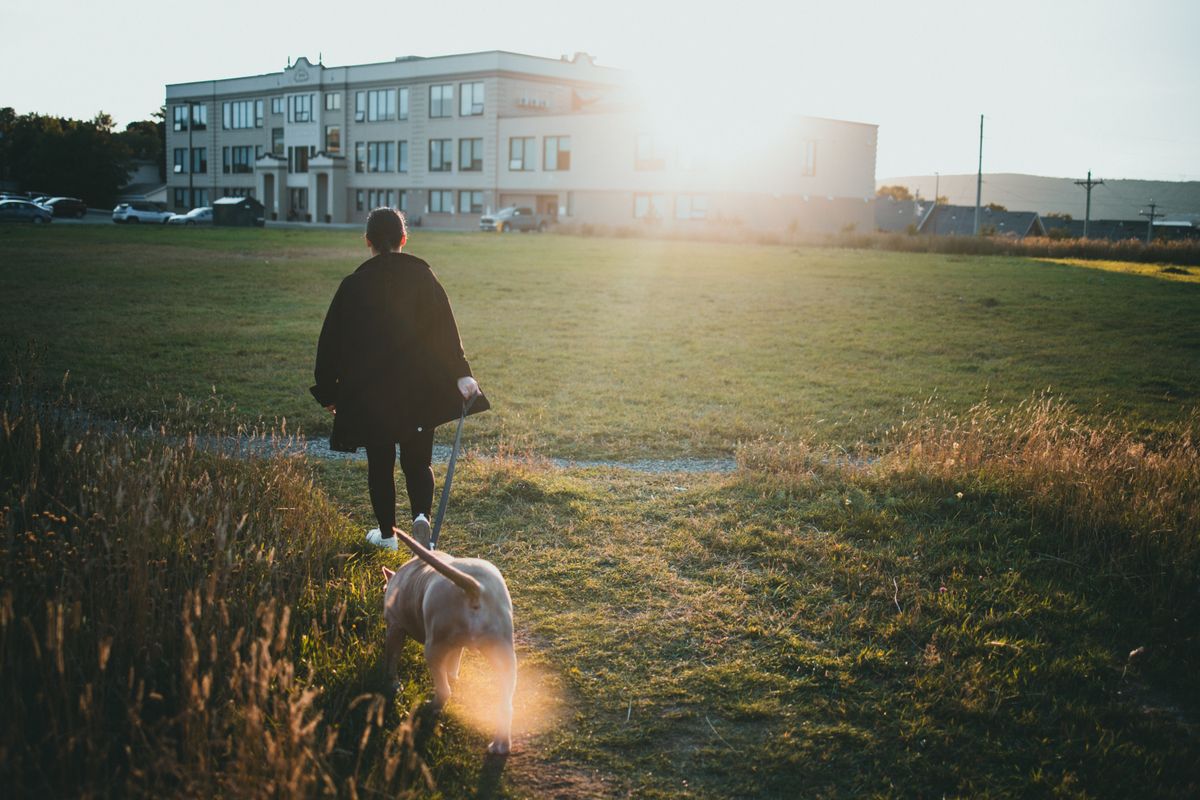
Duisburg is greener and wetter than the Ruhr-region stereotype suggests: the world-famous Landschaftspark Duisburg-Nord, the Sechs-Seen-Platte with its six swimming lakes, and miles of Rhine meadows all sit right inside the city. Unlike Berlin, Duisburg has no blanket, city-wide leash law – but the North Rhine-Westphalia dog law applies everywhere, and it has one quirk worth knowing: for "large dogs" from 40 cm shoulder height or 20 kg, the leash requirement effectively covers the whole built-up city. Know that rule, and know where real off-leash space actually is, and Duisburg has plenty of room for a relaxed life with a dog. This guide walks you through the finest spots by category and the rules you should know.
ne sentence up front, and it runs through the whole article: house rules in cafés and restaurants change, and what was true last year may be different today. When in doubt, call ahead or check the website before you go. If you'd rather just head out, the Discover map in the Souldog app shows dog-friendly places in Duisburg at a glance. More in the Rhineland? Our guides to dog-friendly Düsseldorf and dog-friendly Cologne have you covered; for ideas beyond the city, see the overview of dog-friendly day trips in Germany.
Duisburg has fewer dedicated dog venues than some bigger cities, but the Hunde Café in Ruhrort (Weinhagenstraße 28) is a spot built entirely around dog owners. Beyond that, the general rule for Duisburg's cafés and restaurants applies: terraces and outdoor seating are dog-friendly in many places, though each venue decides for itself – especially around the inner harbour (Innenhafen) and the old town, several cafés have dog-friendly terraces, often overlooking the old warehouse buildings or the harbour basins.
Ruhrort itself is worth a longer café stroll with your dog: the former fishing village with its historic core sits right on the Rhine, and many venues there are used to long riverside walks and correspondingly relaxed when a dog settles under the table.
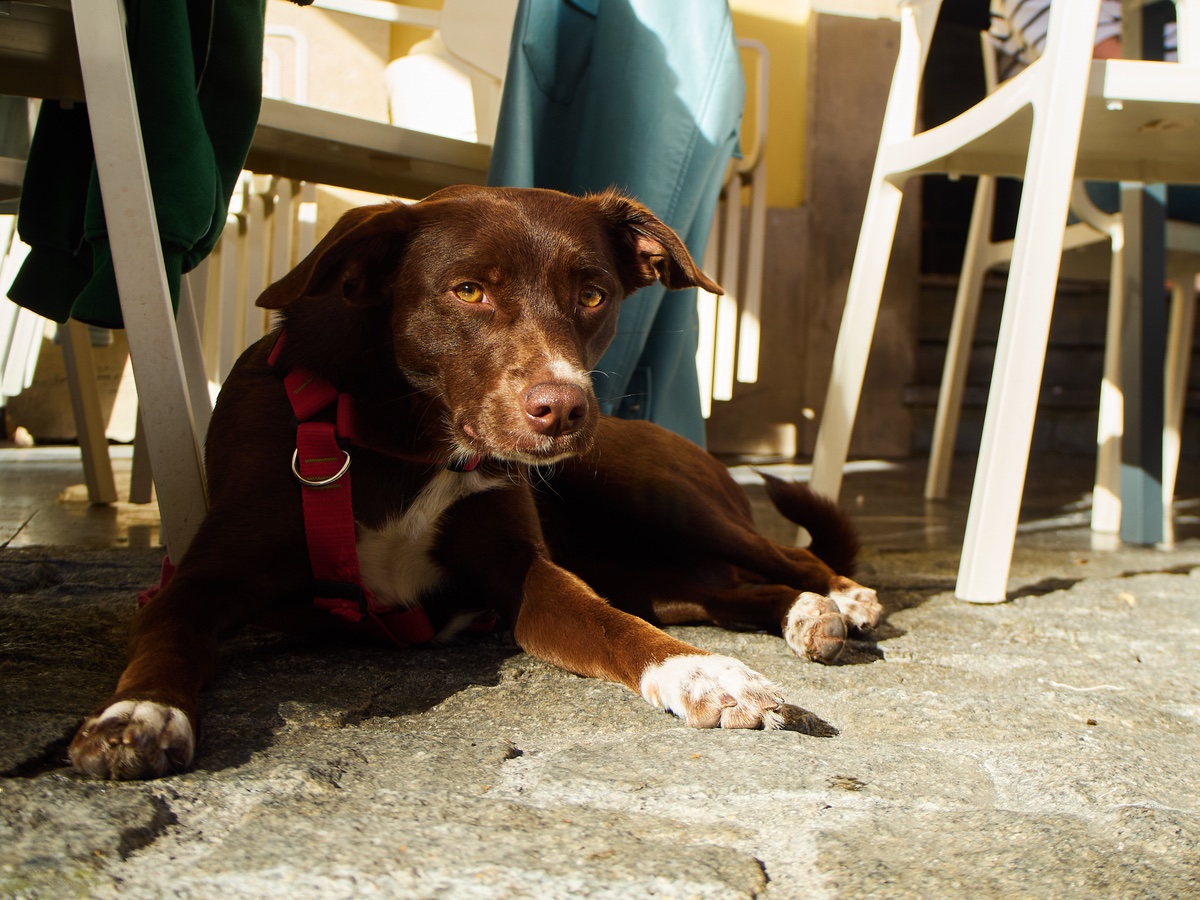
Because opening hours and house rules change, it's worth a quick call or a look at the current website before you head to a smaller café – it saves the disappointment of a closed door. On warm days, the shaded terrace is more comfortable for most dogs than a crowded indoor room anyway.
Duisburg's restaurant scene is relaxed too. At L'Osteria by the inner harbour (Schifferstraße 190), dogs are listed as welcome at the tables – pizza and pasta with a harbour view, though it's still worth a quick check beforehand. Down by the Rhine in Ruhrort sits the Biergarten Mühlenweide, recommended in dog guides for its spacious, waterside setting: plenty of room for your dog to settle down somewhere comfortable while you watch the ships go by.
A good rule of thumb, as in any city: smaller, owner-run venues tend to be more relaxed about dogs than large establishments at peak times. A spot on the terrace is usually the more comfortable choice for everyone.
The city's best-known green destination is the Landschaftspark Duisburg-Nord in the Meiderich district: a former Thyssen steelworks turned into one of Europe's most unusual parks, with blast furnaces, a gasometer and sprawling green space. The park is open around the clock and free to enter, and dogs are welcome on a leash; they just have to stay outside the event halls and away from events.
For real off-leash space, Duisburg's forests are the better choice: in wooded areas like the Baerler Busch in the north or on the Kaiserberg, the city allows dogs to go without a leash under their owner's control, as long as they don't disturb wildlife and stay on the paths. On top of that, several fenced dog meadows are spread across the districts, in Kaßlerfeld, at the Rheinwiesen Neuenkamp and at the Töppersee among others – there, your dog can run free regardless of size.
Another nice walk with plenty of space is the Biegerpark in Huckingen, with a larger off-leash meadow and a beer garden next door. For a trip to the river, the Rheinwiesen (Rhine meadows) between Ruhrort and Walsum, as well as in Homberg and Rheinhausen, are good options – wide, open stretches with views of the ships passing Duisburg on the Rhine. The central RheinPark in Schwelgern is currently closed for construction work ahead of the International Garden Exhibition – check the current status before you head out there with your dog.
The Sechs-Seen-Platte in Wedau, with six lakes spread across a large connected forest and water area, is the city's most popular local recreation spot. Dogs can swim at several quiet coves, including at the Masurensee, where a designated dog swimming spot is also mentioned. Off-limits, on the other hand, are the paid public pool at the Wolfssee and the Haubachsee, which is closed off as a wildlife refuge.
Many dog guides advise against swimming in the Rhine itself: as a heavily used federal waterway, the river has strong currents and dangerous suction from passing ships – something that can turn dangerous quickly even for strong swimmers. If you do go in, stick to shallow, calm stretches of bank well away from the shipping channel. For everything else to watch for when swimming with a dog, from blue-green algae to swimmer's tail, see the guide to swimming with your dog at lakes and the sea.
This is the part most city-with-dog lists leave out.
Leash rules under the NRW dog law. Duisburg itself has no blanket, city-wide leash law like Berlin – the city says it relies on consideration and personal responsibility instead. Even so, a leash requirement applies in many places under the North Rhine-Westphalia dog law (LHundG NRW): in pedestrian zones and main shopping areas, in fenced parks, gardens and green spaces (except designated off-leash areas), at festivals and events, and in public buildings, schools and kindergartens. One quirk applies to "large dogs" – those with a shoulder height from 40 cm or a weight from 20 kg: within built-up areas, they generally must be leashed on all public streets, paths and squares. For most large dogs, that effectively means a leash requirement across the whole city, except in the forests and designated off-leash areas. Violations are administrative offences and can be fined.
Public transport (DVG/VRR). Across the whole VRR network, including DVG in Duisburg, a leashed dog usually rides free, with no extra ticket needed. It still has to be leashed at all times, at the stop and on board, and if it could pose a risk to other passengers, a muzzle is required too. One exception: the on-demand myBus service doesn't take dogs, except guide dogs for blind passengers.
Heat. A summer classic, equally important everywhere: never leave your dog in a parked car, not even "just briefly." The interior becomes life-threateningly hot within minutes. More on this in the guide to the dog in a hot car.
Heading somewhere other than Duisburg with your dog? Take a look at our guides to dog-friendly Essen, dog-friendly Düsseldorf and dog-friendly Dortmund, too. And if you want to find dog-friendly cafés, restaurants and day trips across Germany, our comparison of apps for dog-friendly outings has you covered.
Duisburg has more green space and water than the Ruhr-region stereotype suggests – you just have to know where. If you know the rules for large dogs, make use of the forests and dog meadows, and check quickly before a café or restaurant visit, you'll find a relaxed city for life with a dog.
And if you'd rather not think long about where to go today: the Discover map in the Souldog app shows dog-friendly places in Duisburg at a glance, from the dog café to the off-leash spot in the forest to the quiet swimming cove at the Sechs-Seen-Platte – the living alternative to any fixed list.
 Souldog