Not a window cracked open, not a shady parking spot makes a parked car safe in summer. Here's how fast it turns dangerously hot, how to rescue a dog in an emergency, and what German law says about it.
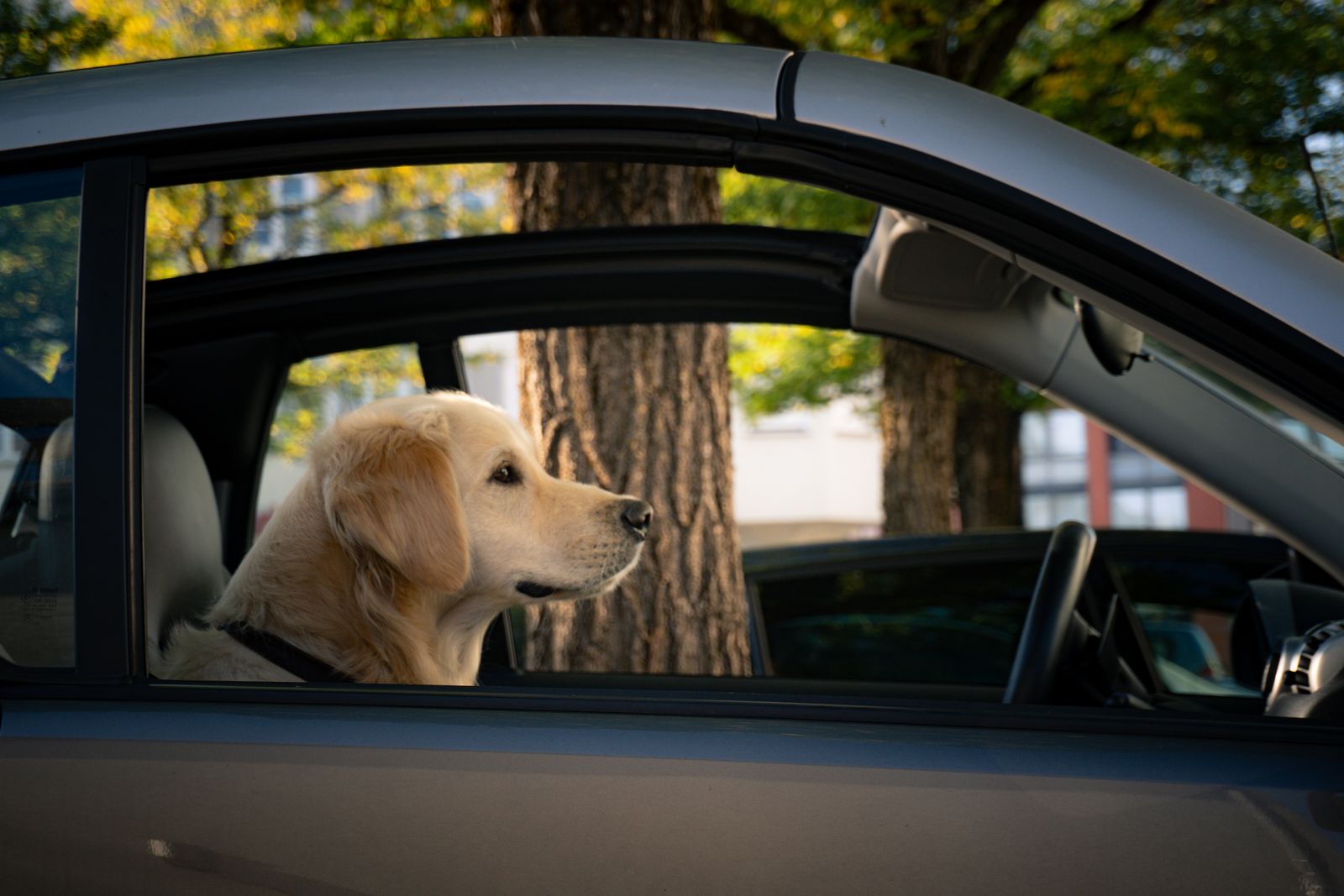
Just a quick trip to the supermarket, five minutes, the car is parked in the shade, and the window is cracked open. That's how almost every one of these cases starts, and almost always with a clear conscience. The problem is that physics and a dog's body don't care about our sense of time. While we're standing in line at the checkout, the parked car turns into an oven, and the dog inside it has no way to escape the heat.
he good news is that almost every one of these emergencies can be prevented once you know how fast it really happens. We'll walk through how quickly a car heats up, how to tell a dog is in distress, what to do immediately in an emergency, and what you're allowed to do if the dog is sitting behind a stranger's car window.
If you're short on time, here's what matters most. A parked car heats up by about 22 degrees Celsius within an hour on average, and roughly 80 percent of that rise happens in just the first half hour. Cracking a window open makes almost no difference, and shade doesn't stay put, it moves with the sun.
There is no safe outside temperature. Even at a mild 20 degrees Celsius outside, the interior can climb past 45 degrees within an hour, and a dog regulates its body heat almost entirely through panting, which simply isn't enough inside an overheated car. The only reliable rule is this: never leave the dog alone in the car from spring through fall, not even for a moment. And if you see a stranger's dog in distress, the order is: find the owner, call 110, document everything, and only break the window as a last resort.
The numbers behind this are unambiguous, and they surprise almost everyone. In one widely cited study, the interior temperature rose by about 22 degrees Celsius per hour on average, regardless of the starting temperature, with most of that increase happening in the first 30 minutes. Even at a pleasant 22 degrees outside, the interior climbed to about 47 degrees within an hour.
Germany's ADAC automobile association found similarly clear numbers in its own measurements: at 20 degrees outside, a closed car heats up to about 46 degrees within an hour; at 30 degrees outside, the critical range above 45 degrees is reached in as little as half an hour. In one test series in direct sun, the interior was above 50 degrees after 30 minutes, close to 60 degrees after 90 minutes, and surfaces like the steering wheel or seatbelt buckle got as hot as 80 degrees.
The most stubborn myth is that a cracked window or a shady spot makes the whole thing safe. Neither is true.
| Common Belief | What's Actually True |
|---|---|
| A cracked window is enough | No, the effect on heating rate and final temperature is negligible |
| Parking in the shade is safe | No, shade moves and the interior heats up anyway |
| Five minutes won't hurt | No, the temperature rises by about 11 degrees in just 10 minutes |
| Pre-cooling the car helps for a while | No, that only delays the rise by about five minutes |
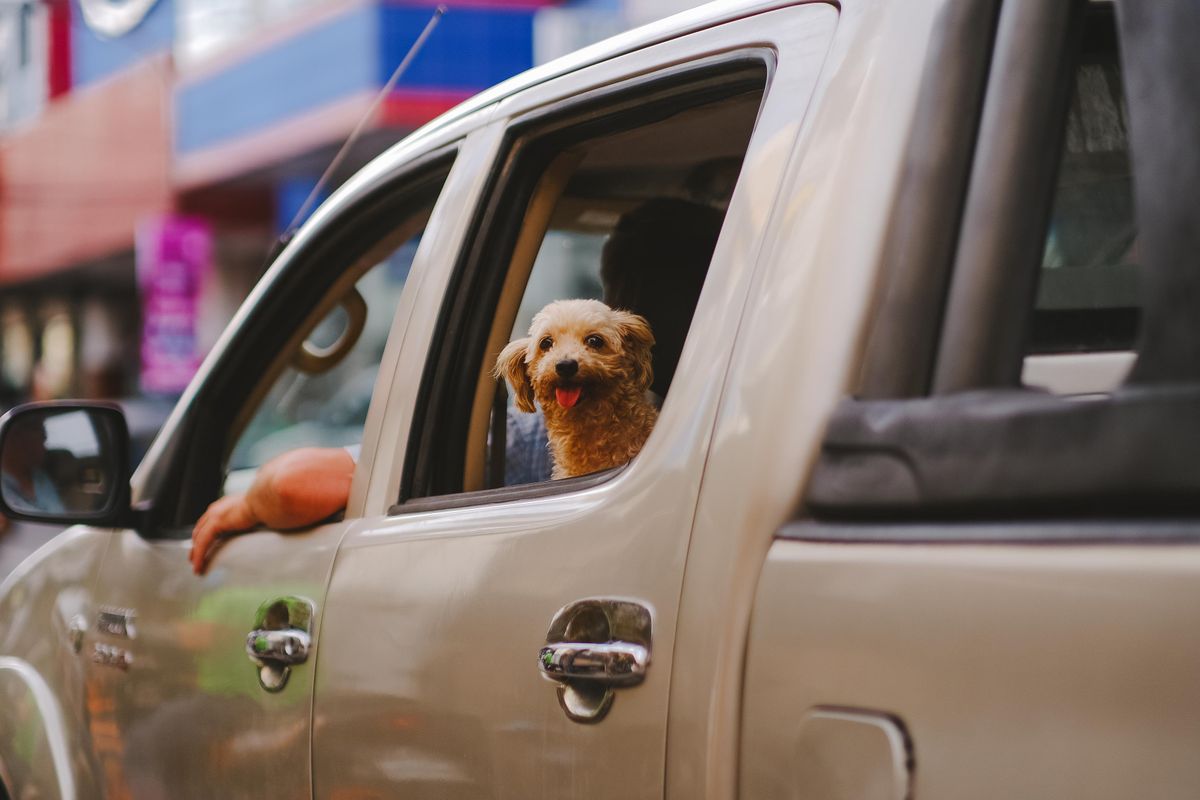
Dogs can't sweat the way we do. They regulate their body temperature almost entirely through panting, which cools them through evaporation from the nose, tongue, and airways. In an overheated car, that system hits its limit fast: the surrounding air is already too hot to provide any cooling, and the muscle effort of panting actually generates extra heat. What should be a cooling mechanism turns into a cycle that heats the dog up even more.
Once body temperature climbs above about 41 degrees Celsius and neurological signs appear, it's called heatstroke. From around 42 degrees, multi-organ failure and death become a real risk. In an overheated car, this whole progression can happen within minutes, because the dog simply has no way to escape the heat. Brachycephalic (short-nosed) breeds like Pugs, French Bulldogs, and English Bulldogs are hit especially fast, along with overweight dogs, very large or very young or old dogs, and dogs with heart or respiratory conditions.
One point worth adding, not to make this less serious, just more honest: in a large study of over 900,000 dogs, most heat emergencies didn't happen in cars at all, but from exertion in the heat, such as a midday walk. Cars accounted for only about 5 percent of cases. That doesn't change the fact that car incidents are among the easiest to prevent entirely, and they're often especially dramatic. You can read in detail about how to recognize and prevent heat emergencies in general in our guide to heatstroke in dogs.
Heat stress gives warning if you know what to look for. Early signs include heavy, relentless panting, faster breathing, excessive drooling, restlessness, or unusual weakness. The dog seems frantic and can't settle down.
As overheating progresses, the picture changes dramatically. You'll see dark red or noticeably pale gums, a dry and sticky mouth, stumbling and loss of coordination, vomiting or diarrhea that may be bloody, growing disorientation, and in severe cases seizures leading up to collapse. At this point, if not before, every minute counts.
The most important rule for heat injuries has changed in recent years, and many people still know the old version. It used to be that you should never cool with cold water. Current veterinary guidelines recommend the opposite: cool actively and early, right where you find the dog, before transport even begins. The principle is cool before transport.
Cooling does not replace the vet. Even if your dog seems to recover, internal damage may not show up for hours. Any suspected heatstroke needs veterinary treatment the same day. For unconscious or brachycephalic dogs, don't pour water over the head and nose.
This is the situation where many people feel unsure, and where getting the order wrong can get expensive. First, the reassuring part: if there really was acute danger to life, breaking the window is generally covered under the legal principle of necessity, and you don't have to pay for the damage. The catch is that if it's disputed, you have to prove the danger was genuinely acute. That's why getting the order right matters.
Acting too quickly carries a legal risk. If the situation turns out to have been objectively less dramatic than it seemed, or if you broke the window without first involving the owner and police, the legal justification can fall away. Photos, witnesses, and following the right order are your best protection.
Leaving a dog in a hot car is not a minor offense under German law. The Animal Welfare Act (Tierschutzgesetz) requires that animals be housed in a way appropriate to their behavior and spared avoidable suffering, and the Dog Ordinance (Tierschutz-Hundeverordnung) specifically names vehicles as a place where temperatures can rise to dangerous levels quickly.
Depending on the severity and duration, the consequences range from a regulatory fine of up to 25,000 euros to a criminal charge with a prison sentence, if a dog was deliberately exposed to heat for a long time. This isn't just theoretical: a ruling by the Munich Local Court (Amtsgericht München) shows exactly that. An owner had left her dog for about 30 minutes at 25 degrees Celsius in full sun, window cracked only slightly, no water; the court ruled this a negligent violation of the Animal Welfare Act. According to the ruling, even half an hour without water in the sun can amount to significant suffering.
If you didn't witness a situation in real time but want to report a repeated violation, the local veterinary office (Veterinäramt) is the right place to go, and you can do so anonymously.
The entire discussion about broken windows and legal statutes becomes unnecessary if the dog is never left alone in the car in the first place. On warm days, the simplest rule of all applies: take them inside with you, or leave them at home. Plan errands and trips so the dog never has to wait in the car, and when you're out and about, stop in the shade, make sure there's water and airflow, and never leave anyone behind alone.
It's also worth keeping the other summer hazards in mind during the hot season, from scorching pavement under the paws to swimming in lakes. Our comprehensive guide on how to protect your dog in summer covers every way to keep your dog safe from the heat. You'll find sensible alternatives for hot afternoons in our article on how to keep your dog busy in the heat, and everything about hot ground surfaces in our guide to paw protection for dogs in summer.
A dog in a hot car is one of those emergencies where two things come together: it unfolds frighteningly fast, and it's almost always entirely preventable. Now you know how quickly the interior heats up, how to recognize heat stress, that cooling comes before transport, and what order to follow when a stranger's dog is in distress. Above all, you know that the best rescue is the one that's never needed.
If you'd like, Souldog can help you quickly find the nearest vet practice in an emergency and keep the small summer routines from slipping your mind. So that your day out together stays a good day, not a story that could have ended differently.
 Souldog