Where your dog is genuinely welcome in Bochum: from dog-friendly cafés and restaurants to the city's 14 official dog meadows and the dog beach at the Kemnader See. With the North Rhine-Westphalia rules on leashing, BOGESTRA transport and swimming in the Ruhr that most lists leave out.
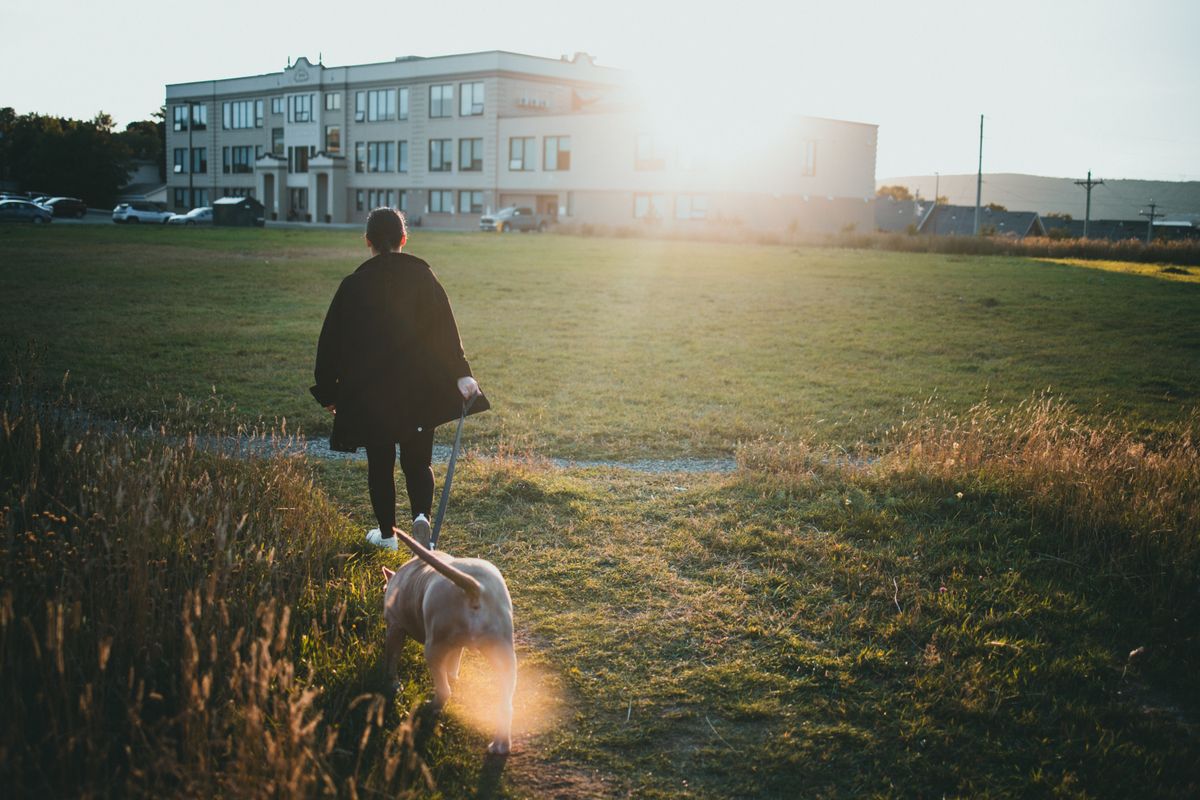
Bochum doesn't have one single landmark for dog owners – it has a whole network: 14 official dog meadows spread across the city, the Ruhr valley right on its doorstep, and its own dog beach at the Kemnader See. Unlike Berlin, North Rhine-Westphalia has no blanket, city-wide leash law – the rule is more location-based: leash on in pedestrian zones, parks and buses, off-leash allowed on forest paths and in the designated dog meadows. Once you know that distinction, the Ruhr region turns out to have plenty of room for a relaxed life with a dog.
ne sentence up front, and it runs through the whole guide: house rules at cafés and restaurants change, and what was true last year may be different today. When in doubt, call ahead or check the current website before you go. If you'd rather just head out, the Discover map in the Souldog app shows dog-friendly places in Bochum at a glance. More in the Rhineland? Our guide to dog-friendly Cologne has you covered; for ideas beyond the city, see the overview of dog-friendly day trips in Germany.
In Bochum's city centre, Café Zlatanz Menami on Huestraße is a reliable pick: its own website states explicitly that dogs are welcome "indoors as well as on the terrace," alongside hearty breakfasts and hand-crafted coffee. If you're out at the Ruhr Park shopping centre, Café Zuckersüss is also, according to Bochum Tourismus, open to "four-legged companions."
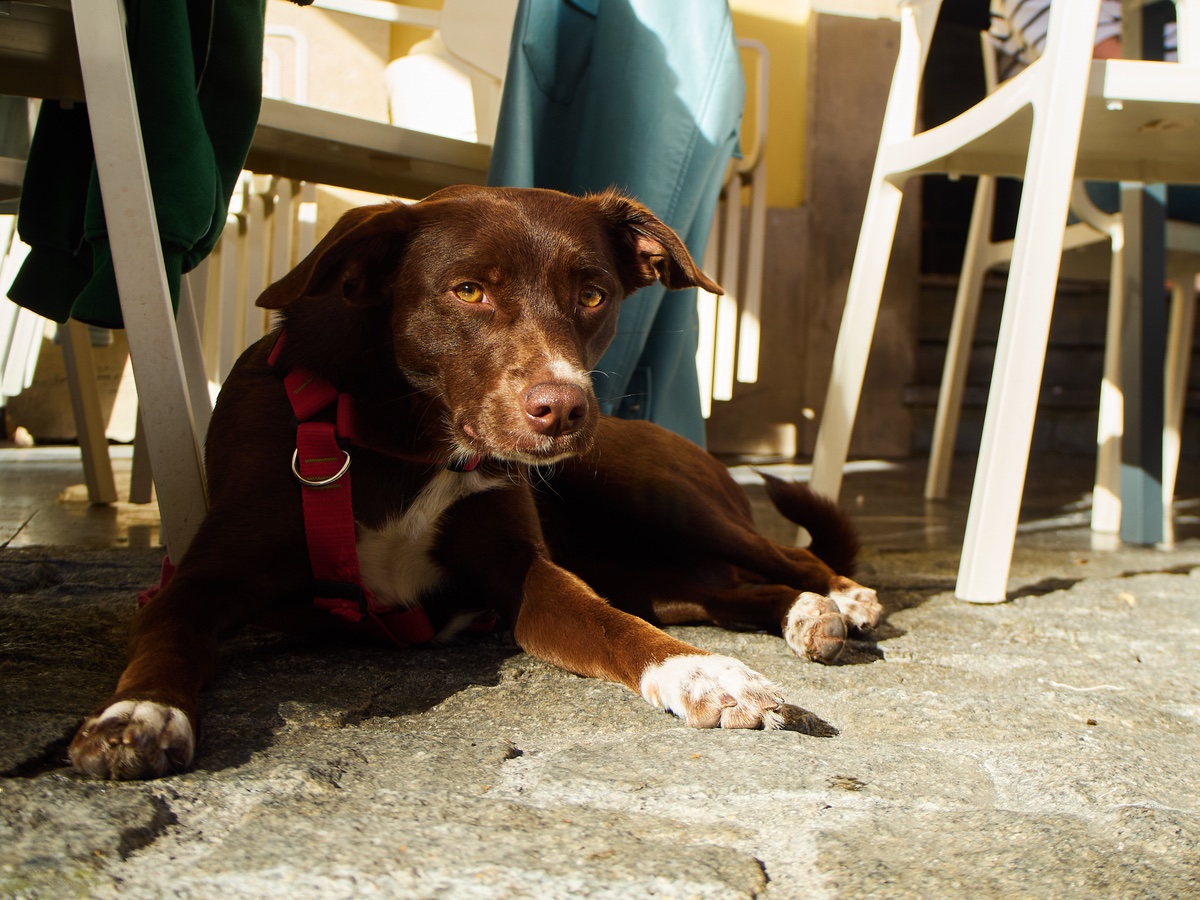
For most other cafés in the city, the usual rule of thumb applies: no sign banning dogs on the door doesn't automatically mean "welcome with a dog." A quick look at the website or a question to the staff saves the disappointment of being turned away – especially with smaller, owner-run places, it's usually worth it.
The Strätlingshof, housed in a listed half-timbered building on Altenbochumer Straße, goes further than most: the restaurant runs its own dog menu with dishes like ox tail, lamb ear or a seafood mix, plus a beer garden for warm evenings. If you're looking for something to eat after a concert or a night out in the Bermuda3eck – Bochum's nightlife district with more than 60 bars and restaurants right in the city centre – it pays to look closely: house rules there vary widely, from "of course, welcome" to "better stay outside."
A good rule of thumb: smaller, quieter venues away from peak times are usually more relaxed for you and your dog than a packed Bermuda3eck on a Saturday night. If you can sit outside, it does your dog a favour on busy evenings too – a terrace table is calmer than the middle of a crowded indoor bar.
Because North Rhine-Westphalia's parks and green spaces generally require a leash, Bochum's 14 official dog meadows (Hundewiesen) are the real heart of off-leash play. They're spread across the whole city – from small, fenced areas like the Schmechtingwiese in Hofstede (around 1,300 square metres) to the large, unfenced area at the Ümminger See in Bochum-Ost, at 15,000 square metres the city's biggest dog meadow.
For a walk away from the designated off-leash areas, the Weitmarer Holz in the south of Bochum is a good choice: an 80-hectare forest with fallow deer and wild boar enclosures and a roughly four-kilometre circular trail, reachable for free via the car park at Blankensteiner Straße 47. On forest paths, North Rhine-Westphalia requires no leash anyway – it's just worth being more careful within sight of the enclosures.
Near the Ruhr-Universität lies the Lottental, a mix of meadow and light woodland with a small stream; part of it is a protected nature reserve, where the leash law applies again. Right next to it is the Bochum Botanical Garden, which stretches down the south-facing slope toward the Lottental; dogs are welcome on a short leash in its open areas.
For a classic city stroll, the Stadtpark Bochum near the Schauspielhaus theatre is the oldest landscaped garden in the Ruhr region, with mature trees in an English style – as a green space, a leash is required throughout, but it's still a lovely walk even on the lead.
The Kemnader See, in the triangle between Bochum-Stiepel, Witten and Hattingen, is the first address for swimming with a dog. On a peninsula between the Ruhr, the Lohmanngraben and the lake there's a designated off-leash and swimming area where your dog can run, play and swim without a lead. Outside that area, the leash law applies again around the lake.
The Ümminger See, by contrast, is one of the city's larger dog meadows but is not approved for swimming – bathing there is explicitly prohibited. In the Ruhr river itself, the city advises caution: officially there's only one bathing spot, in Dahlhausen, and the DLRG (German lifesaving association) regularly warns of currents and eddies in the river that can be invisible and can overwhelm even strong swimmers – which goes double for dogs. Check the current situation before you go in, and for everything else to watch for at other waters, from blue-green algae to currents and salt water, see the guide to swimming with your dog at lakes and the sea.
This is the part most city-with-dog lists leave out – and in Bochum it's worth a closer look, because the rules are more location-specific than in many other cities.
Leash law under the North Rhine-Westphalia dog law. Unlike Berlin, which has a blanket leash law across the entire city, Bochum's rule is location-based: a leash is required in pedestrian zones, main shopping areas and similarly busy streets and squares, in parks and green spaces, at festivals and events with crowds, in public buildings, schools and kindergartens, in nature reserves, and on buses, trains and in U-Bahn facilities.
Large dogs additionally need a leash on public streets, paths and squares with continuous building development. Your dog can go off-leash on forest paths, in landscape protection areas within sight and calling distance, and in the designated dog meadows.
For dogs on the "dangerous breeds" list, the rule is stricter: always leashed (maximum 1.5 metres) and muzzled outside your own property. According to the City of Bochum, violations of the leash or muzzle requirement can cost between 45 and 600 euros, and leaving dog waste uncollected can cost 55 euros.
BOGESTRA and the bodo tariff area. Public transport around Bochum follows a simple rule: if you have a valid ticket yourself, your dog travels free – no separate ticket needed. In return, it must stay on a leash and on the floor during the ride, and it can't take up its own seat. If your dog could pose a risk to other passengers, it needs a muzzle; dogs with heightened aggression generally aren't allowed to travel at all.
Heat. A summer classic, equally important everywhere: never leave your dog in a parked car, not even "just briefly." The interior becomes life-threateningly hot within minutes. More on this in the guide to the dog in a hot car.
Heading somewhere other than Bochum with your dog? Take a look at our guides to dog-friendly Dortmund, dog-friendly Essen and dog-friendly Wuppertal, too. And if you want to find dog-friendly cafés, restaurants and day trips across Germany, our comparison of apps for dog-friendly outings has you covered.
Bochum offers dogs more room than you might expect at first glance – you just have to know where. If you know the city's 14 dog meadows, make use of the dog beach at the Kemnader See, and check quickly before a café or restaurant visit, you'll experience one of the most relaxed cities in the Ruhr region for life with a dog. And because the rules here are more location-specific than in some other big cities, it pays off in Bochum especially to know them ahead of time rather than guess on the go. For more ideas on things to do with your dog, see the overview article.
And if you'd rather not think long about where to go today: the Discover map in the Souldog app shows dog-friendly places in Bochum at a glance, from the dog meadow to the café with a water bowl and the beautiful day-trip spot – the living alternative to any fixed list.
 Souldog