🐕 Medium · Canada (Nova Scotia)
The smallest retriever breed, known for its distinctive tolling display used to lure waterfowl, and needing plenty of activity and water access.
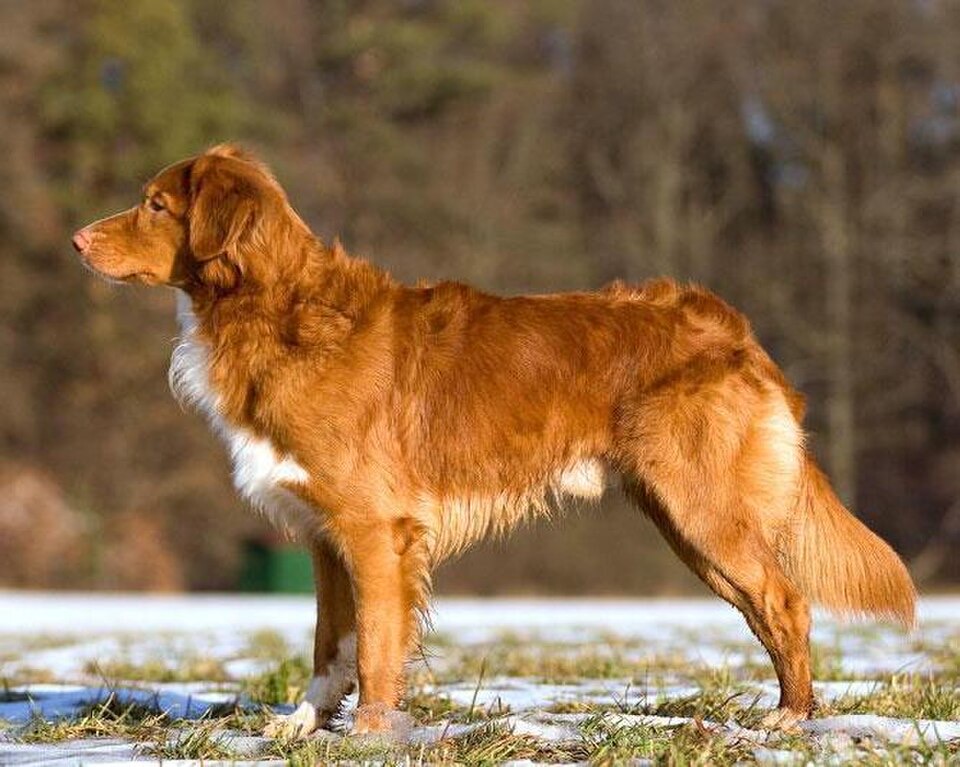
The Toller is alert, playful and eager to work, often reserved with strangers at first. It bonds closely with its family and shows a pronounced prey drive during its signature tolling play.
The breed needs a great deal of exercise, ideally with swimming opportunities, plus retrieving or dummy work for mental stimulation. Without enough activity, Tollers tend toward displacement behavior and nervousness.
The water-repellent, medium-length coat should be brushed regularly, especially after swimming. Ears should be checked after bathing, as trapped water can promote infections.
Because of its high exercise and enrichment needs, better suited to active, experienced owners with access to water. Its sensitive temperament calls for gentle rather than harsh training methods.
Breed-typical conditions include autoimmune diseases such as steroid-responsive meningitis-arteritis (SRMA), hypothyroidism, hip dysplasia and progressive retinal atrophy (PRA). Breed clubs recommend corresponding health testing before breeding.
← Back to the full dog-breed overview (281 breeds)
This information is for general guidance and does not replace veterinary or breeder advice. Temperament and health vary individually within every breed.
 Souldog