🦮 Large · Ireland
A friendly, lively pointing dog with very high exercise needs and slow mental maturity, requiring patience and plenty of outdoor time.
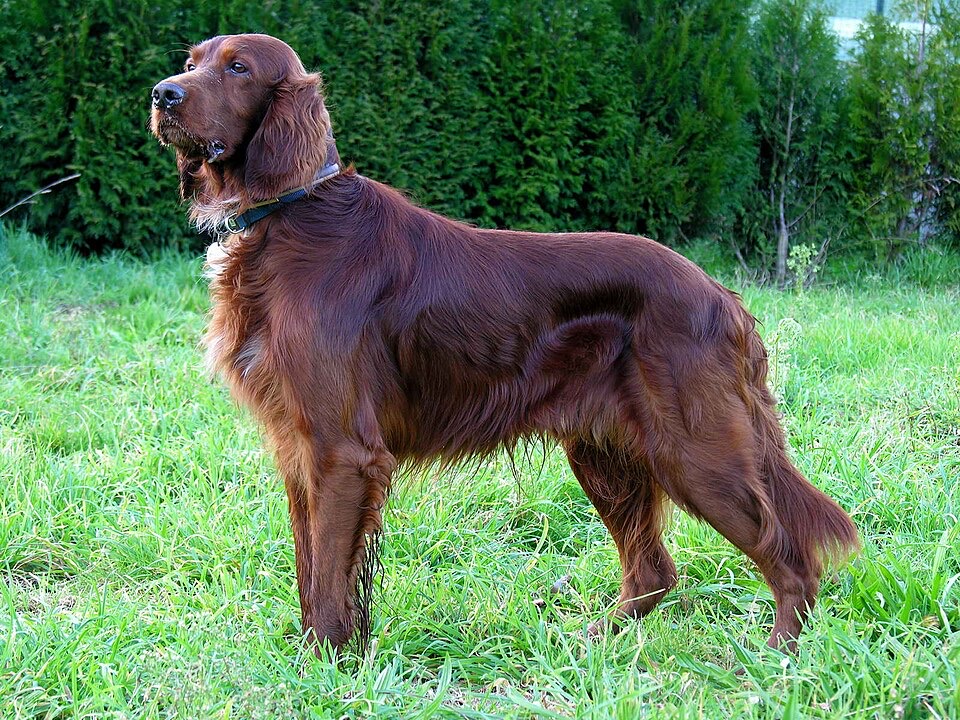
The Irish Setter is friendly, playful, and rarely aggressive, but also known to mature slowly and remain impulsive well into adulthood. He seeks close contact with people and is usually unproblematic with other dogs. His hunting instinct remains clearly noticeable even as a family dog.
Exercise needs are very high; extensive daily running and opportunities for free exercise are necessary to prevent restlessness. As a former pointing dog, he also benefits from scent work and dummy training.
The silky, medium-length coat with feathering on the ears, chest, legs, and tail needs brushing several times a week to prevent matting. Occasional trimming of the feathering makes grooming easier.
The combination of a high drive to move and late mental maturity makes the Irish Setter more demanding than he appears. Owners with plenty of time for exercise and patience in training fare better than pure beginners.
The deep chest predisposes the breed to gastric torsion, an acute emergency requiring immediate veterinary treatment. Hip dysplasia, progressive retinal atrophy (PRA), and hypothyroidism also occur in the breed.
← Back to the full dog-breed overview (281 breeds)
This information is for general guidance and does not replace veterinary or breeder advice. Temperament and health vary individually within every breed.
 Souldog