🦮 Large · United States (developed from the Japanese Akita)
A massive, independent spitz-type breed with a pronounced territorial and protective instinct, often intolerant of same-sex dogs and therefore requiring consistent, confident handling.
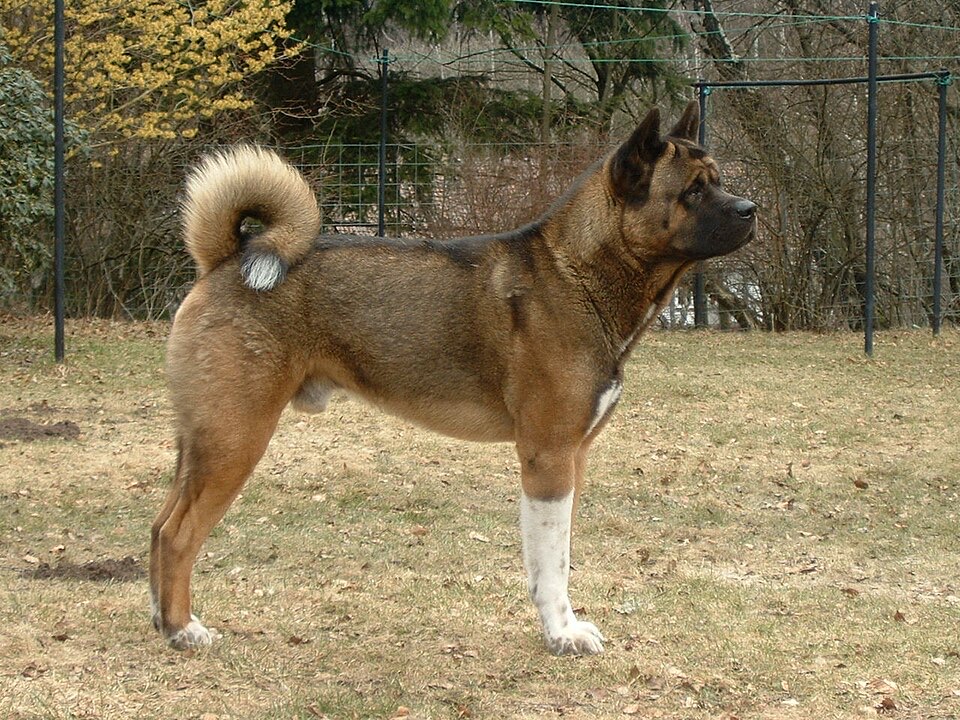
Dignified, calm, and deeply devoted to its own family, yet aloof with strangers and not especially playful with unfamiliar dogs. It makes decisions independently and accepts only limited subordination.
Moderate exercise needs met with long daily walks rather than endurance sport; early, consistent socialization matters more than sheer exertion. Off-leash contact with unfamiliar dogs should be approached with caution.
The dense double coat sheds heavily during seasonal blowouts and needs daily brushing at those times. Otherwise, coat care is minimal.
Not suited to first-time owners, since strong-willed independence, territorial behavior, and potential aggression toward other dogs demand experienced, calm, and consistent handling.
Hip dysplasia, hypothyroidism, and the autoimmune skin disease sebaceous adenitis occur more frequently in the breed, which is also prone to gastric torsion (bloat).
← Back to the full dog-breed overview (281 breeds)
This information is for general guidance and does not replace veterinary or breeder advice. Temperament and health vary individually within every breed.
 Souldog