



House rules, hygiene law, assistance dogs, reservations and a long evening under the table: how to find dog friendly restaurants in Germany and enjoy dinner with your dog.
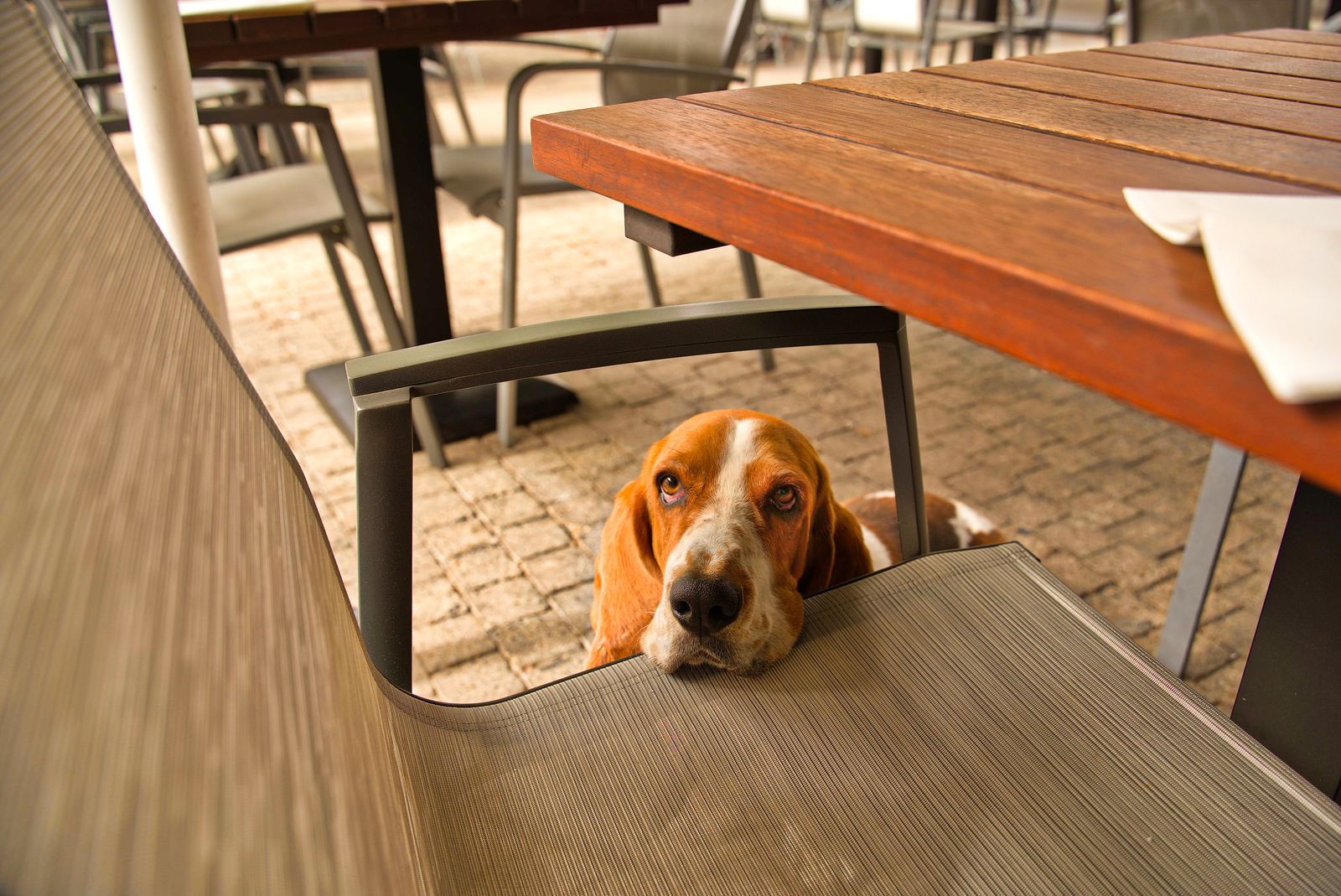
he table is reserved for half past seven, the smell of garlic drifts all the way out to the street, and under the table lies your dog with the face of a dog who has never heard of Parmesan. That is what dinner at a restaurant with your dog can look like. It rarely happens by itself, though. A little groundwork helps.
Whether your dog may come into a restaurant in Germany is up to the owner, who decides under their house rules. No law bans dogs from the dining room. EU hygiene law keeps them out of the kitchen and storage rooms. Assistance dogs have a legal right of access. The safest move is to ask when you reserve.
| Question | Short answer |
|---|---|
| Can the owner ban dogs? | Yes, under their house rules. Also only indoors, or only on the terrace. |
| Is there a legal ban on dogs in the dining room? | No. The ban covers rooms where food is prepared, handled or stored. |
| Can my dog come to the buffet? | No. Where food is out in the open, the restaurant may exclude dogs altogether. |
| No sign on the door? | Then, according to the German Bar Association, you can usually assume dogs are allowed. Asking is still better. |
| Can an assistance dog come in? | Yes, in principle. Section 12e BGG covers restaurants too. |
House rules give the owner a lot of room. They can allow dogs on the terrace only, ask for a leash or politely ask a dog that keeps barking to leave. A no dogs sign at the entrance applies. If there is none, the German Bar Association says dog owners can generally assume that dogs are welcome. That is no guarantee, because the owner can decide differently in an individual case.
The hygiene rules come from EU Regulation (EC) No 852/2004. It requires food businesses to keep pets out of rooms where food is prepared, handled or stored. In special cases the competent authority can allow exceptions. The duty, by the way, lies with the business, not with you as a guest. And it does not automatically cover the dining room where people eat.
Food that is out in the open is a different matter. At a salad bar or a buffet, dogs can be excluded for hygiene reasons even if they are allowed in the rest of the restaurant. For you that means: your dog stays at the table and has no business at the counter or the buffet.
In a restaurant, food is prepared and stored in the kitchen and storage rooms, which guests do not enter. In a supermarket, the shop floor itself is where the food sits, some of it unpackaged, like fruit, vegetables or bread. That is why food shops usually do not let pets in. Assistance dogs are the exception.
People with disabilities may enter places that are open to the public together with their assistance dog. Section 12e of the German Disability Equality Act (BGG) sets this out. The Federal Ministry of Labour and Social Affairs names the restaurant and hospitality sector explicitly as an example. A restaurant may not refuse entry because of the dog unless access would be a disproportionate or unreasonable burden. According to the explanatory notes to the law, hygiene is regularly not enough for that in food shops and restaurants, and the burden of proof lies with the operator.
The official assistance dog logo on the dog or the ID card of the human and assistance dog team is enough as proof. If you are still refused entry, you can apply to the BGG conciliation body (Schlichtungsstelle BGG). A dog that simply likes to come along or calms you down is, as a rule, not an assistance dog in the legal sense. For that dog, the house rules apply like for any other dog.
Leash rules and muzzle rules are set by the German federal states in their dog laws or ordinances, often with extra rules from the local council. They mainly apply to public space, which includes your walk to the restaurant. Dogs classed as dangerous in your state can face stricter requirements. Inside the restaurant, the owner's house rules come on top.
Depending on the place, different things are worth checking:
| Type of place | What to look out for |
|---|---|
| Beer garden and terrace | Plenty of space and fresh air, but passing traffic and other dogs. A table at the edge is worth a lot. House rules apply outside too. |
| Traditional inn, tavern, Gaststätte | Ask whether dogs may come into the dining room or only into the outdoor area. |
| Pizzeria, bistro, tightly packed tables | Little space under the table. A table by the wall or in a corner protects your dog from feet and chairs. |
| Fine dining with several courses | A long evening in a quiet setting. Check in advance, and only go with a dog who can lie calmly for a long time. |
| Buffet, brunch, hotel breakfast | Food out in the open: the business may exclude dogs. If dogs are allowed, yours stays at the table. |
| Snack bar and fast food | Rules differ from place to place. Ask at the counter before you sit down. |
People searching for a dog restaurant usually mean a restaurant where dogs are explicitly welcome. Some places go further and have their own dog menu. What from that menu belongs in the bowl is covered further down.
Many restaurants say on their website or social media page whether dogs are welcome and where. Reviews help if they are recent: owners change, and the rules change with them. On site, a bowl, a sticker or other guests with dogs often tell you more than any menu.
In a city you do not know, maps are more practical. In the directory of dog friendly places you can search for your city in the browser, no app needed. For cafés and restaurants directly, try for example Berlin, Hamburg, Munich and Cologne.
Souldog adds something here: the team asked restaurants and cafés directly whether dogs are welcome. If a place has confirmed it, you see that on the Discover map in the Souldog app, and searching for places is free. Even a confirmation can go out of date. A quick call before you go is still the safest way.
Wondering which app for dog friendly restaurants suits you? Google Maps knows almost every restaurant but has no dog filter. Community maps like DogMap rely on entries from other dog owners. You can find an honest comparison in the guide to apps for dog friendly places.
On the phone, a few questions are enough:
A confirmation by email helps if different staff are on duty in the evening. If the staff still ask you to move or to leave the dog outside, follow the request and sort out the rest calmly with the manager. Arguing at the table makes the evening better for nobody, least of all your dog.
The basics for the spot under the table, such as a blanket, a short leash and no dogs on chairs or benches, are in our guide to dog friendly cafés in Germany. A restaurant adds a few things.
First, time. Between aperitif and dessert a whole evening can pass, and a dog who lies nicely during a cappuccino may get fidgety after the starter. A long walk with plenty of sniffing beforehand helps more than any treat. Pack a long lasting chew for the wait between courses.
Then the staff. In a restaurant, waiters carry hot plates and full trays, often quickly and with their eyes ahead. A dog lying in the walkway is dangerous for both sides. Place the blanket so that your dog lies fully under the table or against the wall, and keep the leash short.
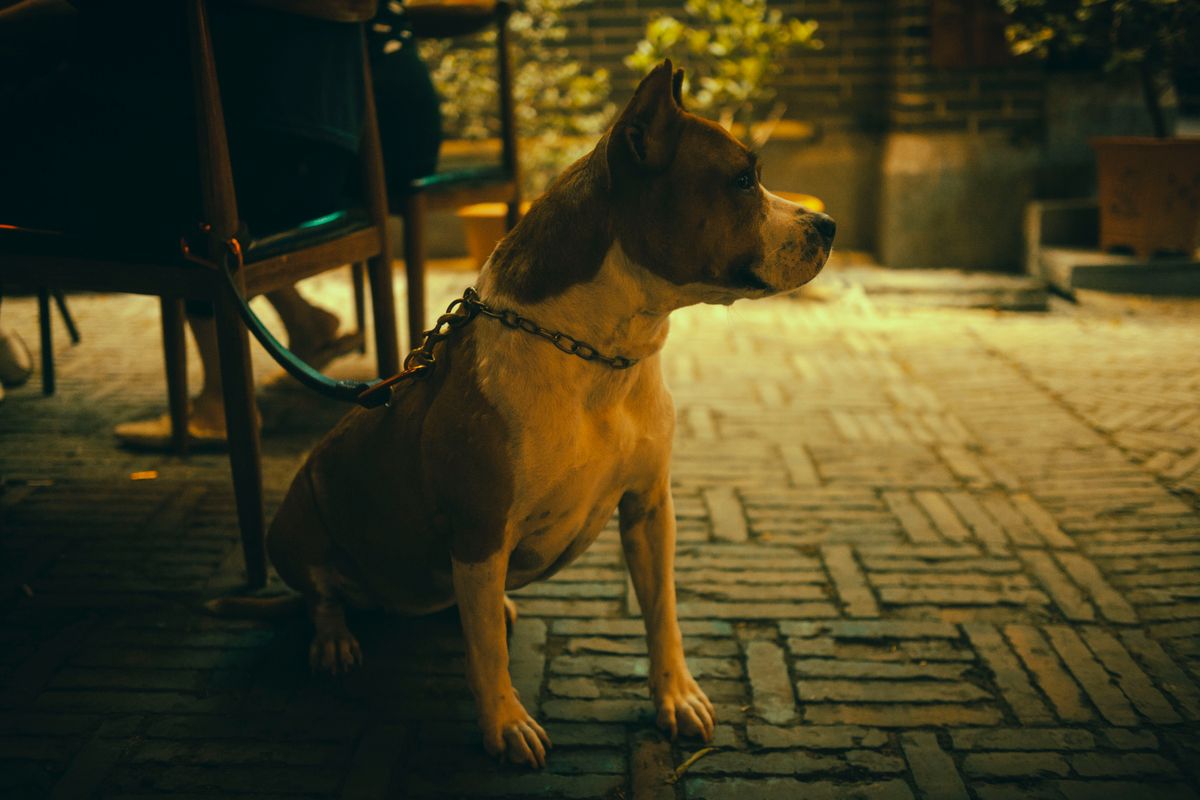
And finally, the smells. Roast meat at nose height on the next table is a hard test. Do not feed from the table, not even once, or your dog learns that begging pays off. Reward calm lying with a treat of its own instead.
If you notice things tipping over, do not wait for dessert. If your dog keeps barking, pants without heat, whines or keeps getting up, that is often stress. Ask for the bill and end the evening on a friendly note. Next time, one course less may be enough.
These ingredients do not belong in your dog's bowl, not even in small amounts from your plate:
If your dog has eaten any of these, call your vet practice or an emergency vet straight away. Do not wait for symptoms. What else dogs can and cannot eat is covered in detail in our guide What dogs can eat (German).
With two people the buffet is easy: one fetches, one stays with the dog. On your own it gets trickier. Your dog should be able to stay reliably on its blanket before you leave it at the table, and the buffet should be within sight. Do not tie the leash to a light chair. If your dog gets startled and pulls away, the chair comes along.
Hotels handle this very differently. Some allow dogs in the room but not in the restaurant or breakfast room, others have separate tables for guests with dogs. If your hotel confirmation says nothing about it, ask at reception before you stand in front of the buffet with your dog in the morning.
| What to check | Why it matters |
|---|---|
| Dogs allowed, indoors or only outside? | The owner's house rules decide; the website or a phone call clears it up. |
| Dog mentioned when you reserved? | Then a suitable table is planned in. |
| Buffet or food out in the open? | There the business may exclude dogs. |
| Table at the edge possible? | Protects your dog and the staff carrying hot plates. |
| Blanket, water, bowl and chew packed? | That way your dog gets through three courses. |
| Long walk beforehand? | A tired, relaxed dog lies more calmly. |
Your dog does not need to be a food critic to be a good restaurant companion. It needs a spot at the edge, its blanket, water and a human who asked beforehand. The evening takes care of the rest: the clatter of plates, the light over the terrace and a dog who at some point simply falls asleep.
If you are looking for a place for your next evening out, start with your city in the directory of dog friendly places. One phone call, a reserved table in the corner, and the evening belongs to both of you.
 Souldog