Sooner or later you have to run to the store, go to work, or just take a shower. Being alone isn't natural for a puppy, it's a skill. And like any skill, it can be learned in small portions.
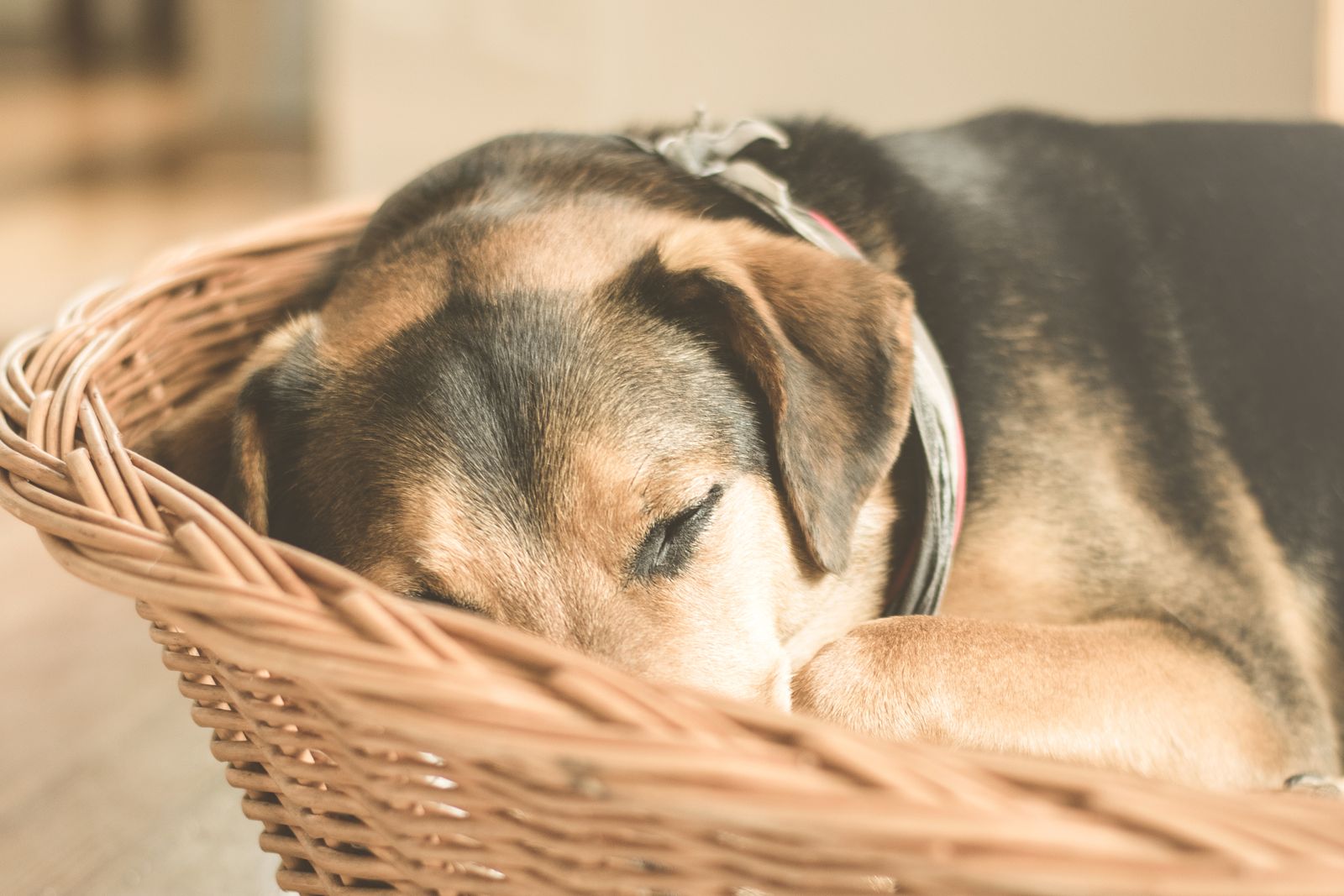
You're standing in your own apartment in front of the closed bathroom door, holding your breath. It's quiet on the other side. For three seconds. Then the whining starts, high and desperate, and you open the door before you've even decided whether that's the right call.
hat's how it starts for almost everyone. A puppy comes from a life where he was never alone: first littermates, then you. Being alone isn't a state he already knows, it's a skill he still has to learn. The good news is that it can be practiced exactly like one, in portions so small they feel almost ridiculous.
These numbers come from animal welfare organizations' experience and everyday practice, not from lab-tested limits. The well-known rule of thumb, "one hour per month of age," belongs in the same category: a practical memory aid for bladder control, not a law of nature. It's still useful because it points in the right direction: a twelve-week-old puppy won't hold it just because you'd like him to.
Legally, German animal welfare regulations don't set an upper limit on how long a dog can be left alone. What they do require is enough contact with a caregiver several times a day for every dog, and at least four hours of contact per day for puppies up to twenty weeks old. That's not a green light to just park him for the rest of the time; it's the floor, the minimum amount of attention a puppy needs.
The principle is called systematic desensitization, and it sounds simpler than it feels: you only ever practice being alone for as long as your puppy stays relaxed. The moment he shows panic, you moved too fast. What's growing here isn't courage, it's trust, the certainty that you always come back.
Two things make these exercises easier. First, timing: a puppy who's just played, done his business, and is pleasantly tired will stay alone far more easily than one who's full of energy. Second, a good spot. Many puppies settle better in a clearly defined, cozy area that's theirs alone, whether that's a sectioned-off part of the kitchen or an open crate that's been built up as a positive place. What matters is that this spot never becomes a punishment. For how to do crate training properly, and when it's not the right fit, see our post on crate training for dogs.
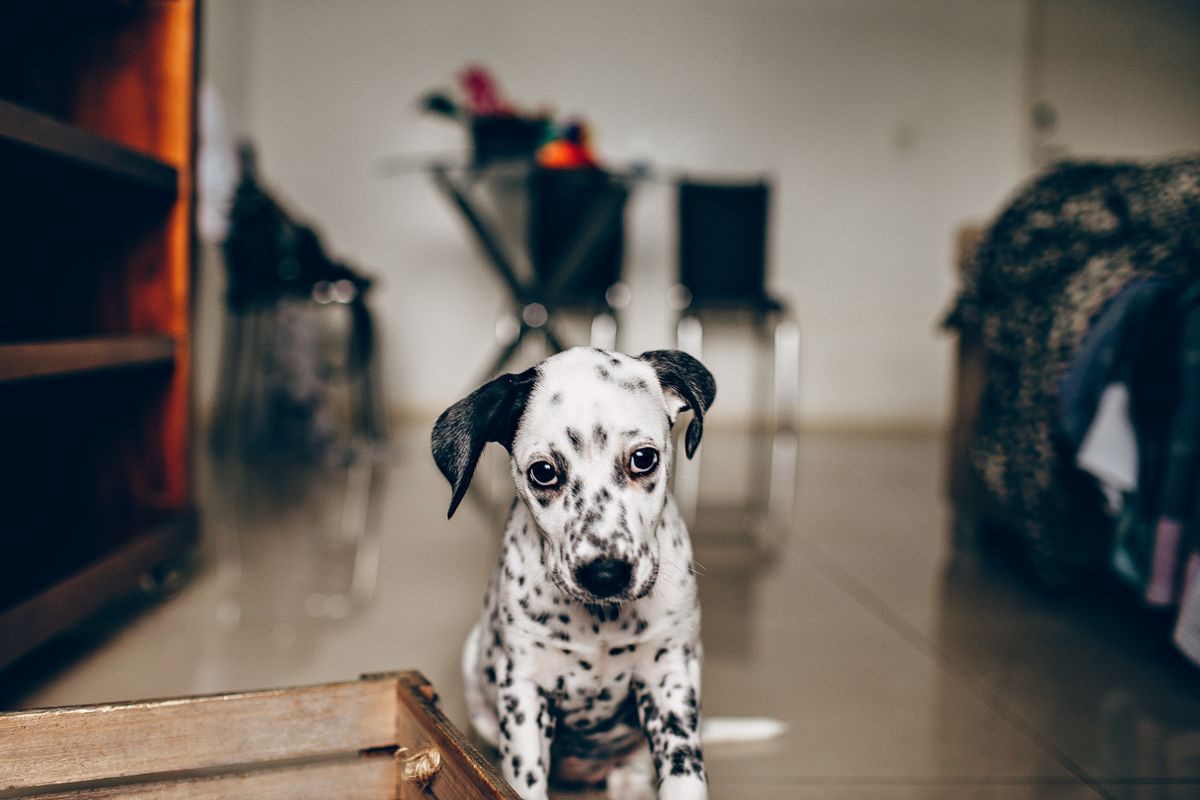
The most costly mistake is the one that sounds most reasonable: letting him cry it out. A puppy who screams until he gives up from exhaustion hasn't learned that being alone is harmless. He's learned that calling out doesn't work. That's called flooding, and it strengthens fear instead of reducing it.
Punishing him after you return has a similar effect. The large British puppy study Generation Pup compared owner behavior with later separation-related behavior, and the numbers are stark: puppies whose owners repeatedly responded to misbehavior with aversive methods showed a many-times-higher risk of separation-related behavior at six months old. Frequent house-training accidents in the first few weeks were also linked to significantly higher risk, and, interestingly, so were overly enthusiastic greetings on return. What protected against it included, among other things, enough nighttime sleep before sixteen weeks and having his own enclosed sleeping spot.
Which brings us to a point a lot of people underestimate: sleep. Puppies need an enormous amount of it, and an overtired puppy isn't a tired one, he's a fidgety, nippy, restless one who also can't manage being alone. Keeping him entertained all day makes being alone harder, not easier.
What's actually fine, even though it sometimes gets billed as a mistake, is quiet background noise like a radio or TV. It can soften everyday sounds from outside and helps some dogs relax. It just doesn't replace training.
Set up a camera before you actually leave for the first time. A puppy who sits by the door and then drifts off to sleep with a sigh is a completely different story from one who paces back and forth panting for half an hour. Without footage, you're just guessing; with it, you know how fast you're allowed to increase the time.
Almost every puppy complains at first, and that's not a warning sign on its own. The difference is in what happens next. Normal protest fades within a few minutes, and the puppy curls up and falls asleep. Separation anxiety doesn't stop: the whining continues through the entire absence, often along with destruction at doors and windows, house-soiling despite being house-trained, heavy panting, drooling, or trembling, and food goes untouched.
If you see this pattern, stop increasing the time and go back a step. If the signs persist, your dog hurts himself, or he howls for hours, get professional support from your vet's office or a behavior specialist. That's not a failure, it's the fastest way out. For a deeper look at what separation anxiety feels like and what's behind it, read our post on separation anxiety in dogs; to learn how to tell whether your dog is truly relaxed when alone, see the camera check for adult dogs.
At some point it happens without you even noticing. You come home, and he's not lying behind the door, he's lifting his sleepy head off the sofa like you're interrupting something important. That's the moment when the work of the past few weeks is done.
Until then, think smaller than you think you should. Every calm minute alone is a small building block, and your puppy is keeping count. In the Souldog app, you can track your training progress and, if things get tight on time, find care nearby, so a long workday doesn't turn into a setback.
 Souldog