A chin in your hand, a brief touch, then a break: small beginnings for voluntary participation in grooming and examinations.
he vet reaches for the stethoscope. Your dog looks towards the door. You look at the treat tub and hope that a little more cheese will sort things out today. Sometimes it helps. A familiar routine offers something else: a better idea of what happens next.
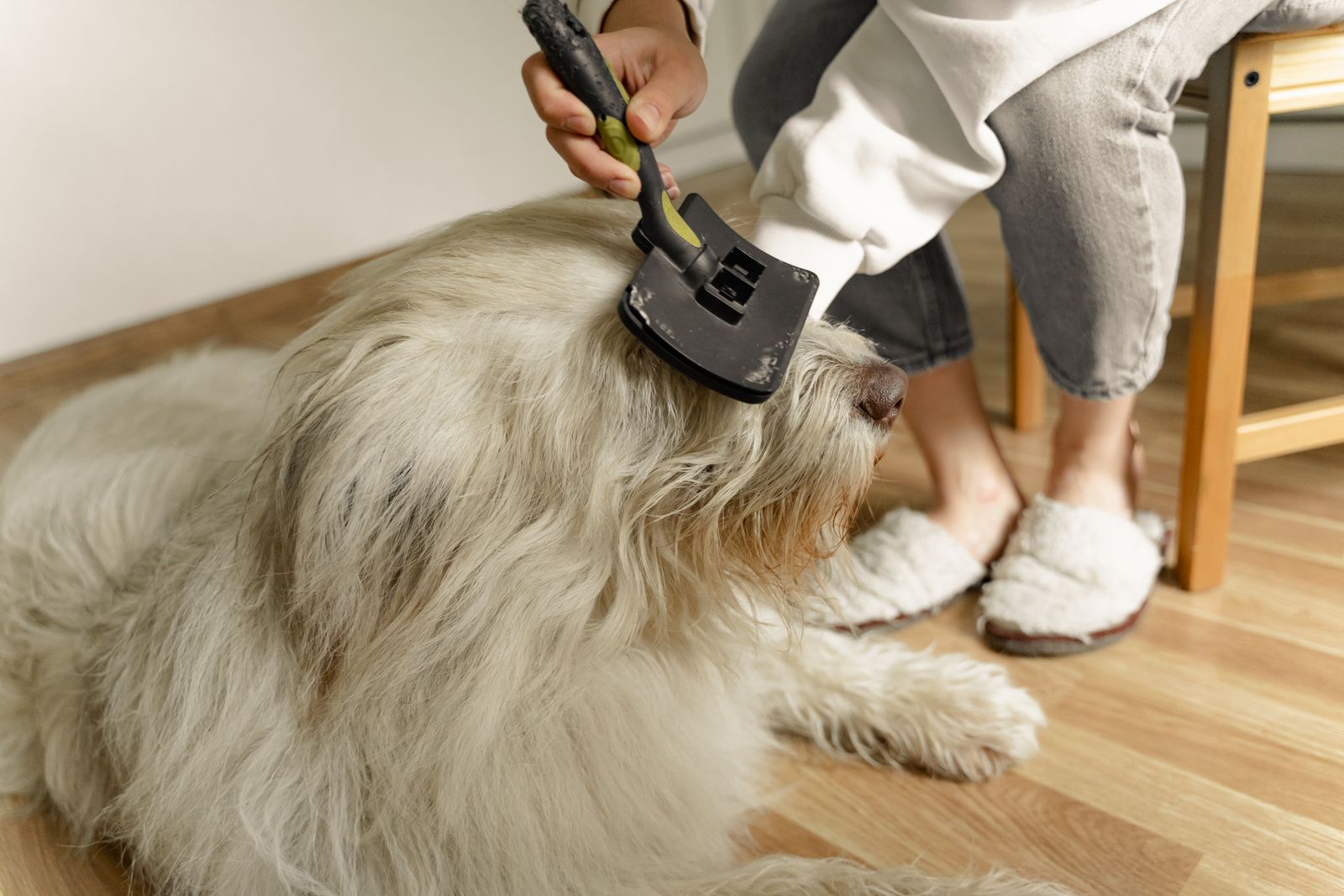
Cooperative care prepares your dog for handling, grooming and examinations in small steps. Your dog learns to participate voluntarily and can ask for a break during training. In German, this is often called Medical Training. The IAABC Foundation explains why a reliable stop signal matters.
If your dog is unwell or injured, do not wait for training to work. Call your vet so the team can plan the care and handling needed. Training prepares for future appointments; it must never delay urgent treatment.
“Relaxed at the vet” is an understandable wish, but a rather large homework assignment. Write down the particular moment that causes trouble: entering the clinic, a hand approaching an ear or standing on the scales.
For this article, our example is a brief shoulder touch. We would only start there if your dog already finds that comfortable. There is no fixed weekly schedule to complete. If your dog is sensitive in that area, ask your vet about a more suitable starting point.
If previously welcome handling suddenly becomes difficult, have possible pain assessed. For established fear or defensive behaviour, Dogs Trust also recommends speaking to your vet first. Repeatedly touching the area to see whether the problem has gone away is not a diagnosis.
Place a non-slip mat in a quiet room. Your dog should be able to approach and move away without your body or furniture blocking the route. The AAHA guidance on handling anxious patients includes non-slip surfaces as a practical way to provide secure footing.
Keep small, suitable rewards within reach. Your first task might simply be stepping onto the mat voluntarily. Reward it, then let your dog leave. If that is all you practise today, that is enough. The brush can stay in the drawer.
Work out where your hands will go and how you will reach the reward before involving your dog. Rehearse the movement once on your own. Dogs Trust suggests practising your own positioning first, so handling and feeding do not turn into an awkward scramble. Standing on a mat alone does not mean a dog is comfortable with every touch.
A chin rest is an offered support, not a grip around the muzzle. Hold your open palm comfortably below head height. Reward approaching it, then brief voluntary chin contact. Do not follow a retreating head. Once contact comes easily, add a tiny pause before rewarding. Introduce a cue such as “chin” only once the movement is familiar. The AKC chin-rest guide describes teaching through small approximations.
Leave your other hand out of the exercise initially. Your dog needs to understand the position before you add another task. Searching your hand for food is not yet the same as resting a chin calmly. Make the next attempt easier or end the session.
For later handling, set yourself a clear rule: chin down means a planned touch can begin. Chin up means the touch stops immediately. This follows the IAABC stop-signal principle. Offering the position is not blanket permission for whatever you decide to try next.
Choose just one movement for your first combination. In our shoulder example, your free hand might only lift a little at your side. Then the attempt ends, your dog receives a reward and you take a break. You do not have to reach the shoulder today.
Afterwards, write one sentence that will let you recreate the exercise tomorrow:
| Vague note | A more useful note |
|---|---|
| “Handling went well” | “Right hand stayed beside my knee; dog offered the chin rest again.” |
| “Ears did not work” | “Dog lifted their head when I raised my hand; no touch happened.” |
| “Make it harder tomorrow” | “Same place, same hand movement; start without contact again.” |
The aim of that note is modest: you will not need to remember exactly what “brief” meant. Another person in the household can also see where you have got to.
Once the hand movement is easy, a later session might include a brief, gentle shoulder touch. Remove your hand and reward. Avoid increasing the duration while also moving to a more sensitive area such as a paw. Dogs Trust recommends gradual handling practice and stepping back when discomfort appears.
Actual grooming at home remains a separate task. “Shoulder touch is comfortable” does not automatically mean “a full brushing session is comfortable”.
Watch the whole dog. Turning away, tense muscles, trembling and freezing can indicate distress. Lip licking and yawning need context; neither proves stress on its own. AAHA lists these among possible signs of anxiety or distress. Being still is not enough to judge how a dog feels.
Stop early. If your dog growls or snaps, end the exercise and seek individual support. Do not test how much more they will tolerate or punish the warning. AVSAB recommends reward-based training methods. Even an excellent treat cannot make an overly difficult task appropriate.
Give the team a short, specific description beforehand: “Shoulder touches work at home. Paw handling does not yet. We stop when the chin lifts.” Mention any previous snapping, known triggers and prescribed medicines. The examination room should not be the first place the team hears about these.
Use these questions for your call:
Familiarisation visits are among AAHA's suggestions for preparing for veterinary appointments. Arrange them with the practice first. Your starting point may be outside the entrance; a practice visit does not need to reach the examination table.
For severe fear, prescribed medication or sedation may form part of veterinary care. The AAHA Trends article on cooperative care describes training and medical support working together. A necessary procedure is not an exam your dog has to pass. The team decides how treatment can happen safely. Nobody should promise an immediate stop during a procedure that cannot safely be interrupted at that moment.
Perhaps today your hand simply stays beside your knee. Your dog watches, offers their chin again, and you finish. That gives you a much clearer starting point than “they just have to put up with it”.
 Souldog