Your dog knows the sound of your keys better than any command. Here's what happens inside him when the door clicks shut, when missing you turns into real fear, and how you both can find more calm. Even through life's bigger goodbyes.
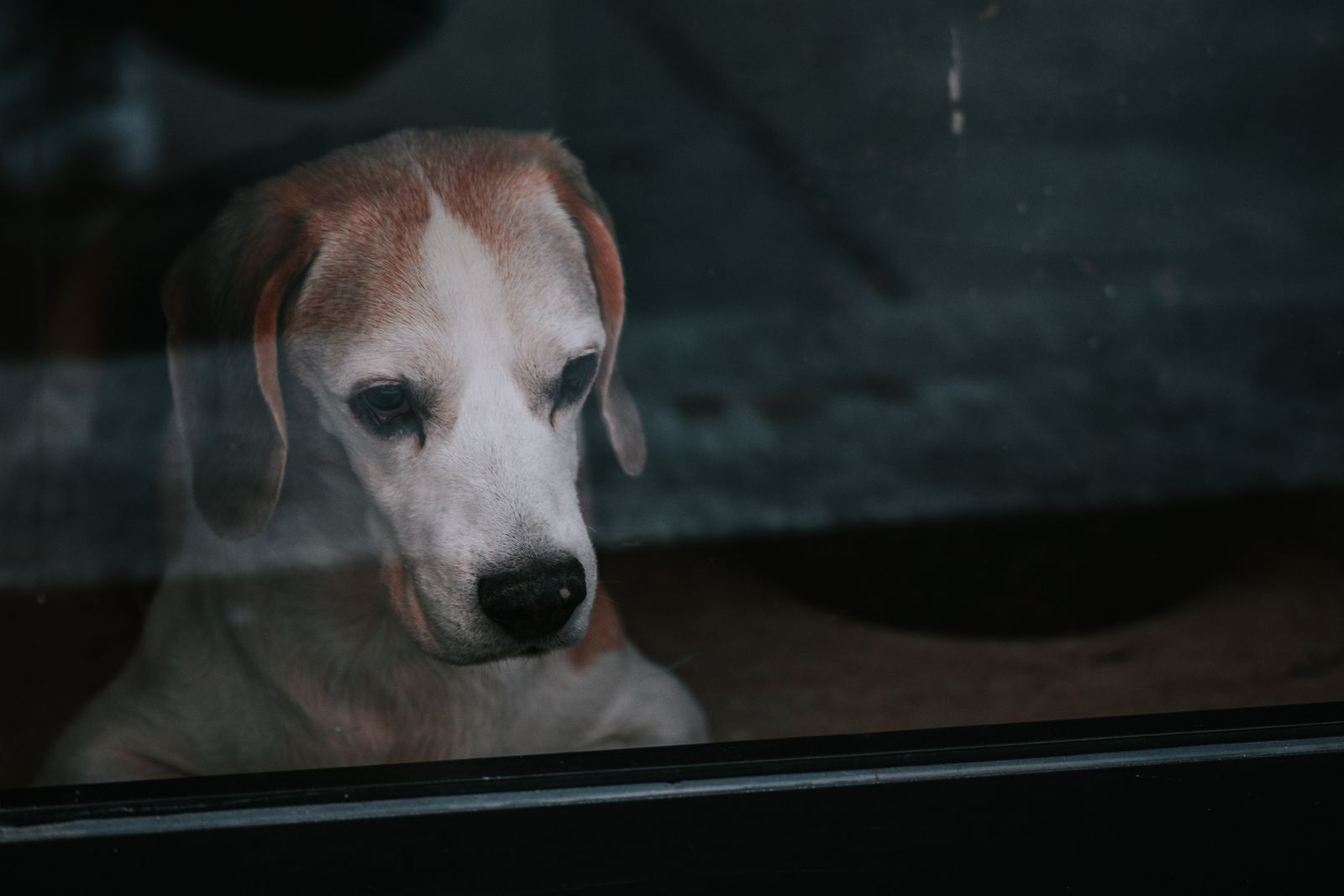
Your dog hears the keys before you even pick them up. You've barely thought about your jacket, and he's already standing in the hallway. Head tilted, eyes flicking between you and the door. You say "I'll be right back," the way you always do, and then the door clicks shut. On your side: the stairwell, your day, maybe a small twinge in your stomach. On his side: an apartment that's suddenly missing the most important thing in it.
hat happens next is better understood than most people realize. And it's gentler than the clinical term "separation anxiety" suggests. In this article, we'll look inside your dog first: does he really miss you? Does he notice how long you've been gone? Then we'll cover how to recognize real separation anxiety, what actually helps, and how dogs experience the bigger separations life sometimes brings: a vacation, a family breaking apart, a new home, a goodbye that's final.
The order in that sentence matters: fear first, behavior second. A dog with separation anxiety doesn't tear apart the couch because he's badly trained, but because his alarm system is maxed out. Experts compare the state to a panic attack. That also explains why the damage almost always shows up in the same spots: at the door, at the window, wherever you disappeared from.
The numbers here deserve a second look. Rigorous studies that screen for the full clinical picture put the affected rate at roughly 5 to 20 percent of dogs. Ask owners about individual signs of stress when left alone, though, and nearly half report something. Both are true. It just means the severe form is the exception, while a bit of discomfort with being alone is fairly normal. Most dogs live somewhere between those two poles.
Let's start with the loveliest finding. A research team led by neuroscientist Gregory Berns trained dogs to lie still, wide awake and voluntarily, inside an MRI scanner. Then they let the dogs sniff five different scents: their own scent, an unfamiliar dog, their own dog housemate, an unfamiliar person, and their own person. The reward center lit up brightest for the scent of their own person. Brighter than for the familiar dog. Brighter than for anything else. Somewhere inside your dog, there's a spot where you're the best smell in the world.
That fits with what behavioral researchers already showed back in the late 1990s, when they adapted a classic test from toddler research for dogs: with their person in the room, dogs explore and play noticeably more boldly than when alone or with a stranger. You're his secure base. The pattern resembles the bond between child and parent; not identical, but strikingly close in its core features.
And does he notice how long you've been gone? A Swedish study filmed dogs after 30 minutes, two hours, and four hours alone. After the longer separations, the greeting was measurably more intense: more tail wagging, more lip licking, more physical contact. Whether your dog is consciously counting the hours, or whether longing and tension simply build up over time, science can't say. The often cited idea that dogs read time through a fading scent, a kind of scent clock, is still an untested hypothesis. What's certain is the outcome, and you already know it: you get a different welcome after a weekend trip than after a walk to the mailbox.
The reunion itself is chemistry you can practically feel. When you greet your dog with petting and your voice, his oxytocin, the bonding hormone, rises while his stress hormone cortisol drops. Stay distant, and much less happens. A second, well known study found the same hormonal loop during long, soft eye contact between human and dog, in both of them at the same time. For more on strengthening your bond day to day, read our post How to Show Your Dog Love.
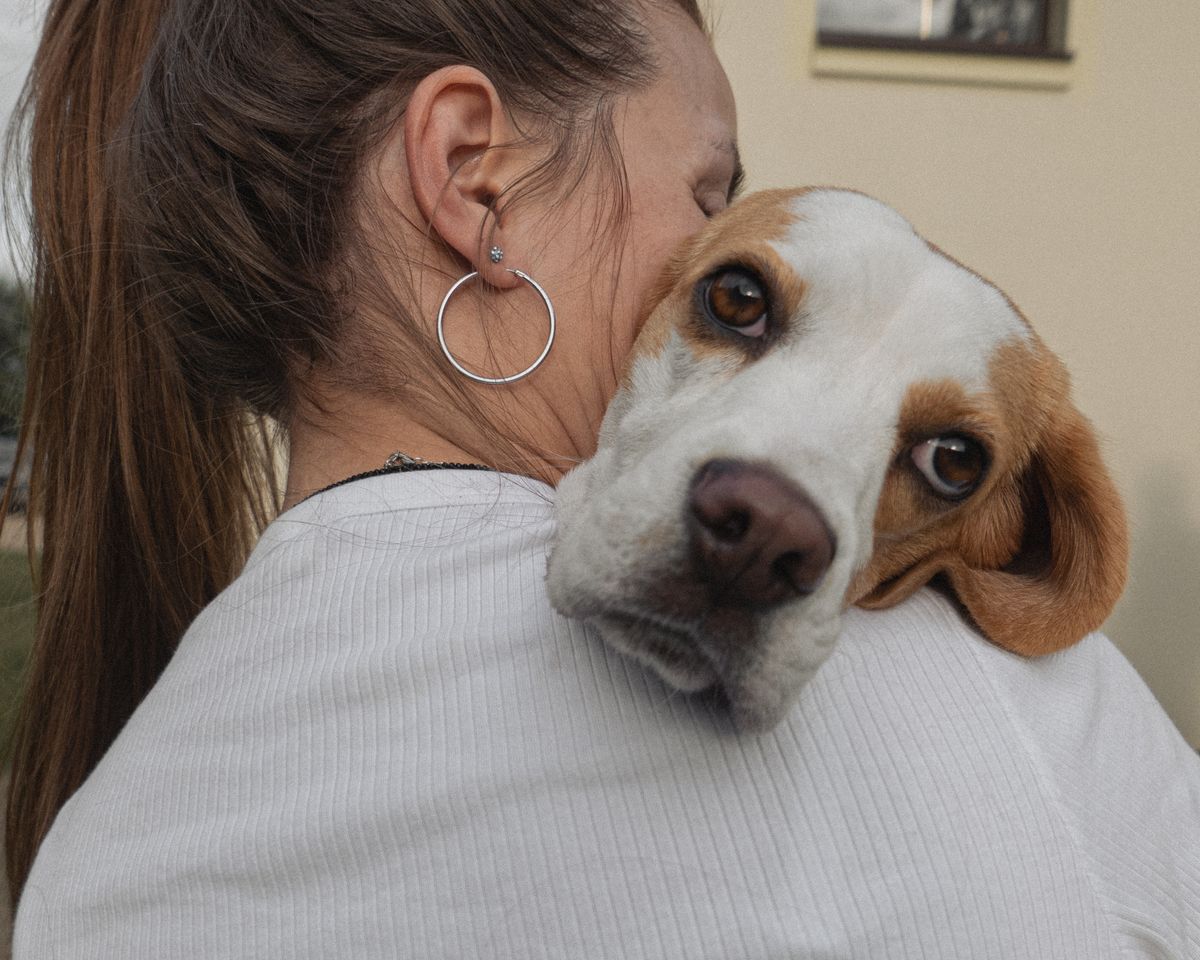
Missing you is normal. Fear is something else. The line falls where your dog can no longer process the separation and slips into panic instead. Typical signs, well documented by veterinary clinics and the literature:
That last point is stated plainly on purpose. Some dogs scratch at the door until their paws bleed. Anyone who's seen that once stops debating whether separation anxiety counts as "real" suffering.
The distinction matters just as much, because not every chewed up pillow means fear. A bored, under-exercised dog might also rearrange the apartment, but on video he looks relaxed and curious rather than panicked. That's why a camera is the single most useful diagnostic tool: it shows you what actually happens after the door locks. For a full guide to setting up a camera check and the five signals that count, see our post Leaving Your Dog Alone: Quiet Isn't the Same as Relaxed.
| Question | More Likely Separation Anxiety | More Likely Boredom |
|---|---|---|
| When does it start? | Within the first few minutes after you leave | Sometime in the middle |
| Where's the damage? | Door, window, your belongings | Scattered around the apartment |
| How does the dog look on video? | Panting, pacing, constant stress | Curious, playful, relaxed |
| Does he eat the Kong? | Often not | Right away and with gusto |
| Are there signs before you leave? | Yes: restlessness around keys and jacket | Rarely |
The sounds tell a story too: separation barking sounds different from alert barking or play barking. Our in-depth guide to barking and what it means covers the different types; the quieter signs of stress are covered in our guide to dog body language.
If you're wondering right now what you did wrong: probably nothing. Separation anxiety rarely comes from a single mistake. It's usually a chain of circumstances, and some of them are entirely outside your control.
Near the top of the list are ruptures in a dog's life history. Dogs from shelters, or those who've changed owners more than once, carry a higher risk; a dog who's already lost everything once tends to watch more closely over what he has now. Also well documented: losing one of their people or a familiar animal from the household.
The underrated classic cause, though, is far more mundane: a sudden change in routine. When millions of people went back to the office after working from home, a British study found that roughly one in ten previously relaxed dogs developed new separation symptoms. From a dog's point of view, that makes complete sense. For months you were simply there, and then, with no explanation, you weren't. Nobody asked him first.
Your dog isn't destroying things out of revenge. Behavioral medicine is clear on this: destruction while alone is a stress response, not protest and not spite. The concept of revenge requires intentions dogs simply don't form that way. What looks like payback is actually desperation with teeth.
The good news first: separation anxiety is treatable, and the path is well mapped out. It's called systematic desensitization, which in plain terms means practicing being alone in doses so small that the fear never even kicks in, then slowly increasing those doses. Five building blocks carry the training:
You'll find the full training protocol, with camera check and timeline, in our post Leaving Your Dog Alone; what belongs here instead is what you should never do.
Never punish your dog for something that happened while he was alone, not even after the fact. Separation anxiety is panic, not disobedience, and punishment demonstrably makes it worse; in a large British study of puppies, punished dogs had a many times higher risk of developing separation problems. The old advice to just let him "cry it out" is outdated too, and can deepen the fear. And the often suggested second dog usually doesn't solve the problem: your dog's fear is about you, not about being alone in general.
When it comes to aids, honesty helps. Calming music, pheromone diffusers, or anti anxiety wraps can support mild cases, but the scientific evidence for them is thin to contradictory. None of them replace training. For moderate to severe cases, there are approved medications like clomipramine or fluoxetine; they're prescription only, work only alongside behavioral training, and that decision belongs with your veterinarian.
Some cases belong in professional hands. If your dog injures himself while alone, howls or barks for hours on end, or shows no improvement despite weeks of training, reach out to your vet or a certified behavior specialist. That's not failure, it's the fastest way back to calm.
Up to this point, we've been talking about the small, everyday separation. But life sometimes asks bigger questions, and nearly every dog person runs into one of them eventually.
Yes, your dog notices you're gone, even with the most loving care. Here's the comforting part: what actually carries him through isn't you alone, it's the feeling of safety, and that can be handed off. A familiar caregiver he's met several times beforehand, his own bed, his usual feeding times and walking routes: all of it tells him the world is still okay. A worn piece of your clothing can help too, since your scent demonstrably activates his reward center; it's not a miracle fix, though. If you don't yet have someone you'd trust with your dog with a clear conscience, the Souldog app connects you with loving sitters near you, so you can get to know each other calmly before the trip.
There's surprisingly little research on this and a great deal of practical experience, and it agrees on one thing: your dog doesn't understand the argument, but he feels the change with full force. A person who was part of his life is suddenly around less, or not at all. On top of that, his home, his rhythm, and the household mood might all shift too. What helps him is unglamorous: one main home instead of constant back and forth, stable routines, calm and friendly handoffs if both people stay part of his life. And the permission to search for and miss the person who's gone, without anyone taking it personally. He's not choosing sides. He's just missing someone.
It's the question nobody likes to ask: what does a dog feel when he loses his home? Research from shelters gives an answer that's both clear and hopeful. In the first few days after arrival, stress hormones peak, that's measurable and real. But they come back down. With attention, routine, and time, the levels settle back out; after an adoption, they typically return to normal over weeks to months. The well known 3-3-3 rule, which says a dog needs three days to decompress, three weeks to settle in, and three months to build trust, isn't a study, it's a rule of thumb from shelter practice; some dogs need considerably longer, and that's normal too.
And then there's the insight that stays with you from this whole field of research: dogs can love again. A dog who bonds with someone new doesn't forget his old life, but he doesn't betray it either. He does the thing dogs are simply better at than we are: he accepts the affection that's in front of him now. For more on helping a dog with a past settle in, read our post on helping rescue dogs settle in.
Do dogs grieve? The honest answer: they behave in ways that make it hard to call it anything else. In a large Italian study, nearly nine out of ten owners whose second dog had died reported changes in the surviving dog: more clinginess, less play, less activity, some ate less, some searched for their companion. The researchers themselves stay cautious about whether this counts as grief in the human sense. But that something is missing, and that the dog shows it, is beyond question.
You may know the story of Hachikō, the Akita in Tokyo who waited at the station every day for almost ten years for his deceased owner. It's historically documented. Whether he knew what he was waiting for, we don't know; science would lean toward habit and hope rather than understanding. For a dog who's lost a person or a companion, you can mainly be three things: reliable in your routines, generous with calm closeness, patient with the changed behavior. If he barely eats for several days or seems apathetic, have a vet take a look. Everything else needs what grief always needs: time.
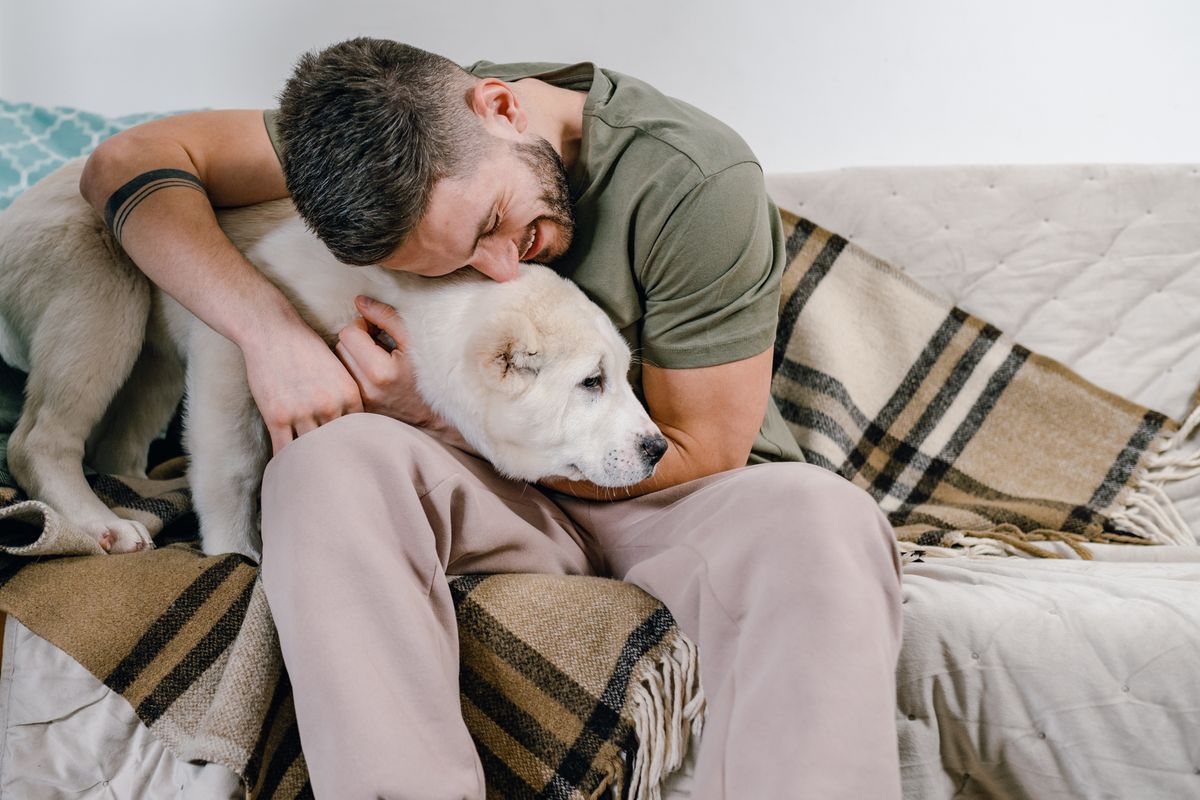
This question sits behind a lot of separation worries, so it deserves its own section. It's well documented that dogs have something like episodic memory, meaning they can recall events even when they had no reason to know they'd need to remember them. The sheer power of scent memory is well documented too; your scent registers in your dog's brain as a reward, not just information. There's solid evidence for recognition after months apart. For recognition after many years, what we mostly have are stories: soldiers coming home after a long deployment, dogs who, years into a new home, meet their earlier person again and greet them with total joy. Controlled studies on this are missing. But anyone who's ever watched one of those videos suspects that forgetting looks different.
In the end, separation anxiety is the flip side of something we wanted from dogs in the first place: that they'd love us, reliably and unconditionally. Your dog can't know that doors open again, that vacations end, that you're stuck in traffic and not on another continent. He can only do one thing: believe you. Every calm goodbye and every unremarkable return makes a deposit, and with training, that grows into the quiet certainty that being alone is just a pause.
If you want to keep track of it all, Souldog can help: log how your dog experiences alone time in the app, track your training progress, and find care for longer absences that feels right for both of you. Because the best part of any separation stays the same for your dog: the moment your keys jingle in the door again.
 Souldog