🐾 Small · China
A charming, easygoing companion dog with a great sense of humour — though as a brachycephalic breed, he carries significant health burdens.
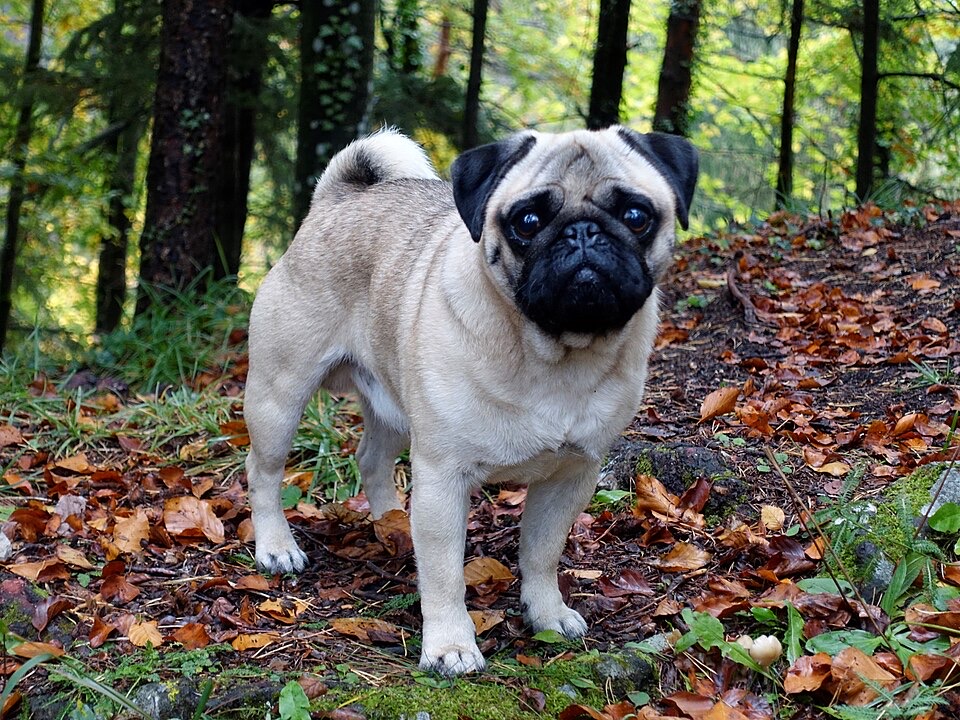
The Pug is sociable, even-tempered, and full of character — a dedicated family and companion dog that thrives on closeness to his people. He has little urge to run, but is affectionate, good-natured, and generally fond of children.
Exercise needs are low; several short walks a day are enough. Because of his short muzzle, the Pug overheats quickly — exertion and heat should be strictly avoided in warm weather. Excess weight makes breathing problems noticeably worse.
The short coat is easy to care for but sheds surprisingly heavily. Cleaning the facial folds and nose wrinkle regularly, and checking the prominent eyes, are essential.
Temperamentally ideal for beginners, but in practice only with caveats: anyone wanting a Pug should engage with the health risks of the breed's short-headed conformation and specifically seek out dogs with a longer muzzle and more open airways (the so-called 'retro pug').
As a brachycephalic breed, the Pug is strongly affected by BOAS (brachycephalic obstructive airway syndrome), heat sensitivity, eye injuries and prolapse, and skin fold infections. Extreme flat-faced breeding lines should be avoided.
← Back to the full dog-breed overview (281 breeds)
This information is for general guidance and does not replace veterinary or breeder advice. Temperament and health vary individually within every breed.
 Souldog