🐕🦺 X-Large · Germany
A calm, water-loving giant breed with a black-and-white coat and an even temperament that needs plenty of space and controlled puppy growth.
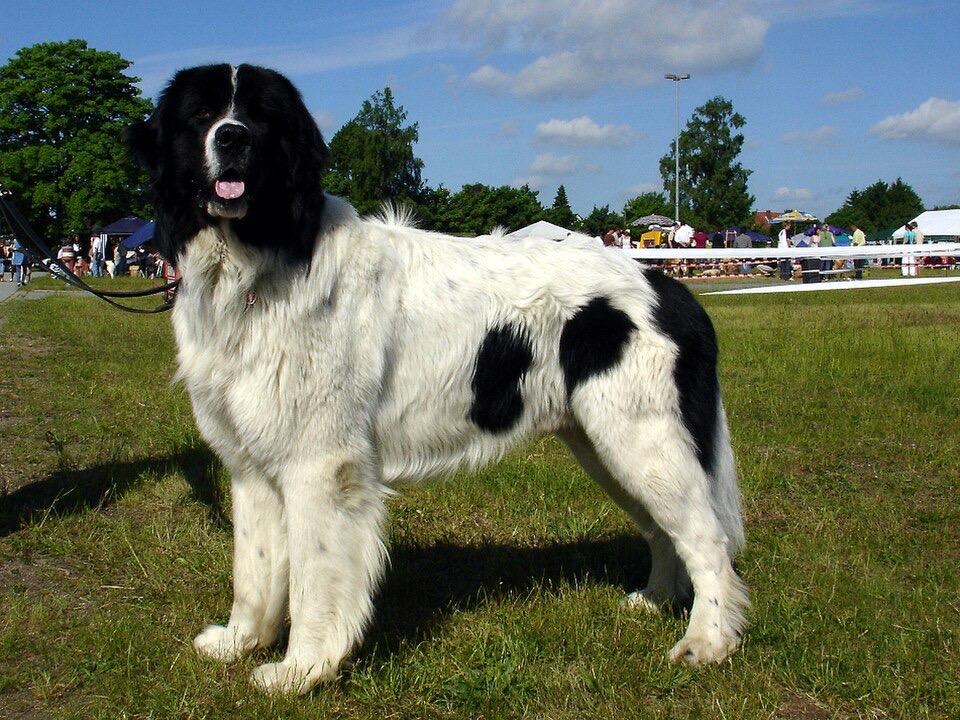
The Landseer is calm, gentle, and especially patient with children, making it a balanced family dog despite its size. Historically used as a water rescue dog, it enjoys swimming and has great stamina in water.
Exercise needs are moderate; daily walks and, where possible, swimming suit its nature best. Excessive strain on the joints during growth should be avoided.
The dense, water-repellent coat must be brushed regularly, several times a week, to prevent matting, especially during coat change. Drooling is more pronounced in this breed than in many others.
Rather unsuitable for beginners, since the sheer size, space requirements, and the need for controlled puppy growth call for experience with giant breeds. Food and veterinary costs are correspondingly higher as well.
As a giant breed, slow, controlled puppy growth is important to prevent skeletal disorders; hip and elbow dysplasia and gastric torsion due to the deep chest are also breed-typical. Subaortic stenosis, a heart condition, also occurs more frequently; a cardiac examination is recommended.
← Back to the full dog-breed overview (281 breeds)
This information is for general guidance and does not replace veterinary or breeder advice. Temperament and health vary individually within every breed.
 Souldog