🐕🦺 X-Large · Belgium
The Bloodhound is an imposing, deeply wrinkled scenthound with the keenest nose of any dog breed and long, loosely hanging ears.
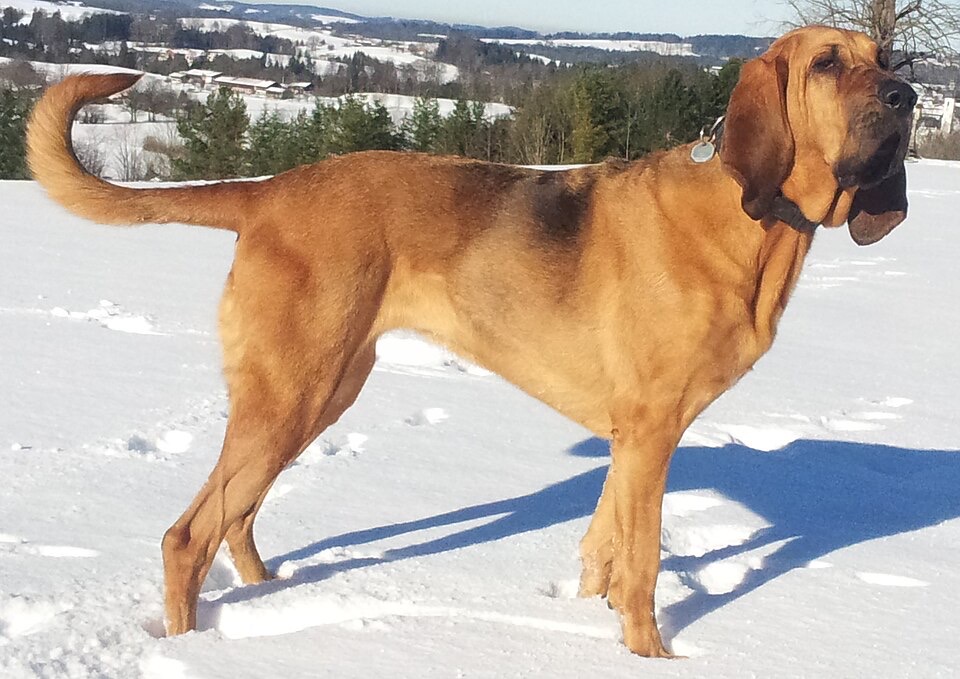
Bloodhounds are gentle, good-natured, and deeply attached to their family, yet independent and stubborn once on a scent trail. Their extraordinary sense of smell makes them the finest trackers of all breeds, though it quickly becomes a distraction on walks. They tend to greet strangers in a friendly rather than watchful manner.
Despite their calm indoor temperament, Bloodhounds need long daily walks and, ideally, tracking work to put their nose to good use. Because of their fixation on scent trails, a securely fenced area is important for off-lead exercise. Excessive strain on the joints during growth should be avoided.
The short coat is low-maintenance, but the deep facial skin folds and long ears need regular cleaning to prevent infections. Drooling is part of the breed and should be factored into ownership. Nails and ears need weekly checking.
Size, stubbornness, and a pronounced fixation on scent trails make the Bloodhound a demanding breed that needs experienced owners with patience and consistent training. Leash manners are often a particular challenge because of its nose-driven focus.
As a large, deep-chested breed, the Bloodhound is strongly affected by bloat (gastric torsion), which makes several small meals and rest after eating important. Ear infections, ectropion, and hip dysplasia are also common.
← Back to the full dog-breed overview (281 breeds)
This information is for general guidance and does not replace veterinary or breeder advice. Temperament and health vary individually within every breed.
 Souldog