🐕🦺 X-Large · Switzerland
The largest of the Swiss mountain dog breeds, powerful and eager to work, benefiting as a giant breed from slow, controlled puppy growth and needing ample space plus experienced owners.
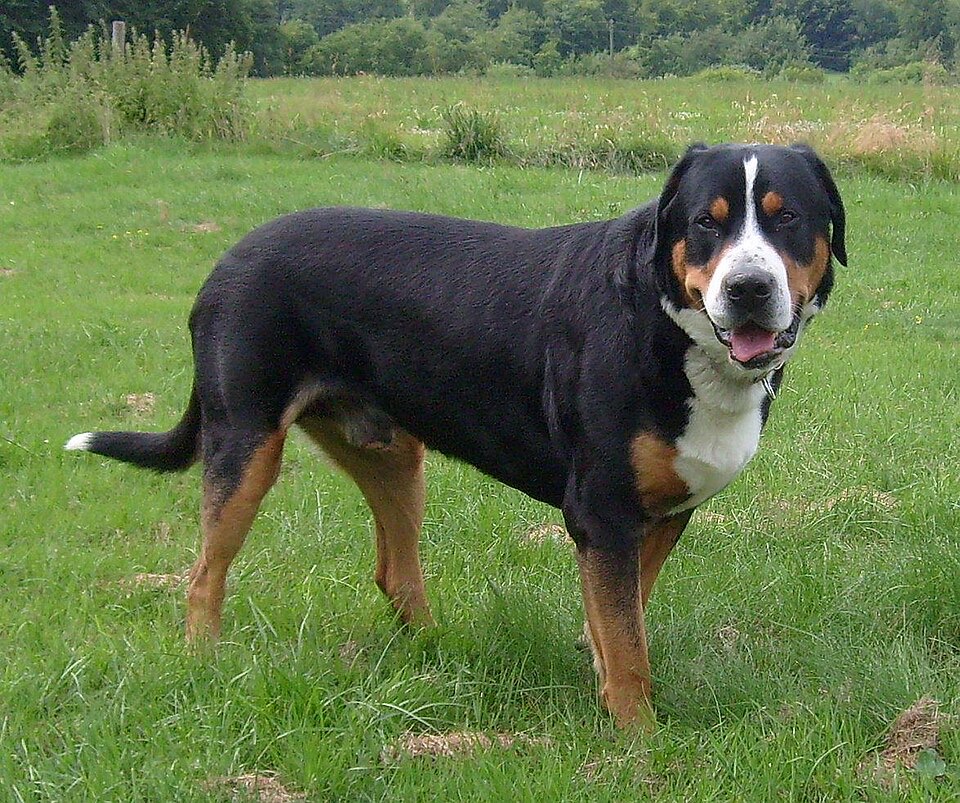
The Greater Swiss Mountain Dog is good-natured, self-assured, and deeply devoted to its family, while calm and rarely aggressive. It has a strong protective instinct without being overly watchful.
This breed needs regular but joint-friendly exercise plus carting work, the task it was originally bred for. Intense exertion should wait until growth is complete.
The short, dense coat is comparatively low-maintenance and needs regular brushing, especially during shedding. Given its size, adequate space and suitable resting areas are important.
The Greater Swiss Mountain Dog is not particularly suited to first-time owners, since it requires experience with giant breeds, sufficient space, and controlled growth management. With appropriate preparation, it makes a reliable family dog.
Breed-typical conditions include hip and elbow dysplasia as well as an elevated risk of osteosarcoma, as in many giant breeds. Due to its deep chest, there is also a risk of gastric torsion, making slow, controlled puppy growth important.
← Back to the full dog-breed overview (281 breeds)
This information is for general guidance and does not replace veterinary or breeder advice. Temperament and health vary individually within every breed.
 Souldog