Needle teeth in your fingers, scratched-up forearms, and a quiet voice in your head asking whether this is even normal. It is. Here's why puppies bite and what genuinely helps, no force required.
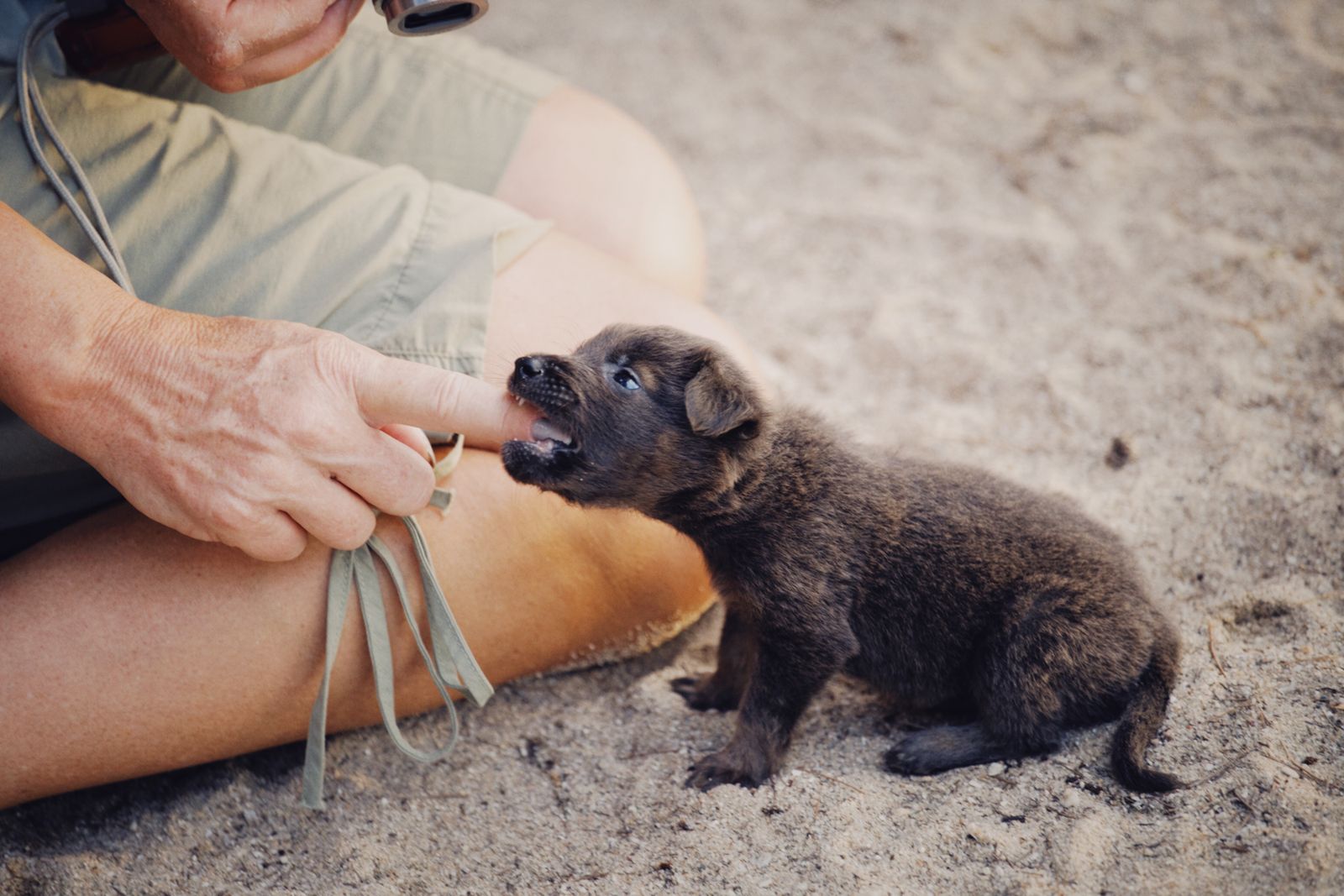
You reach out to pet your puppy and, within seconds, eight needle teeth are clamped around your thumb. Your forearms look like you wrestled a rosebush, and a small, nagging thought surfaces: is something wrong with my dog? The short answer, before we get into it: no. A puppy that bites hands is not a tiny aggressor, it's just a completely normal puppy.
hat doesn't make the little fangs any less annoying, but it does take the worry off the table. Biting is a developmental step, not a character flaw, and there are clear, gentle ways to teach your puppy how to control its mouth. Let's look at why puppies bite in the first place and what actually works.
That's the core of it in two sentences. The rest, the why behind it and the finer points, we'll work through now, because when you understand what's happening inside your puppy, you react more calmly and more effectively.
Puppies explore the world with their mouths, much the way small children put everything in their hands. The mouth is their primary tool for understanding, playing, and communicating. Biting in the first few months is therefore simply normal behavior, it is not a sign of aggression.
There are usually several reasons happening at once. There's teething: between roughly week twelve and month six, in some breeds up to the seventh, the adult teeth come in, the gums itch and ache, and chewing brings relief. There's play, where puppies test their strength against littermates and people alike. And then there's an often overlooked trigger: being overtired.
That sounds counterintuitive, but it's the key to many biting episodes. An overtired puppy doesn't look sleepy, it looks wound up, frantic, and out of control, almost like a toddler right before a meltdown. Self-regulation simply isn't there yet. So if your puppy reliably turns into a small shark every evening, that's often a sign of being overtired or overstimulated, not a lack of training. Check that first. Young puppies need a remarkable 18 to 20 hours of rest a day, and even at a few months old still far more than adult dogs.
Before we get to the practical steps, there's a concept worth understanding because it frames everything else: bite inhibition. This is the ability to control the force of a bite. Puppies normally learn this from their littermates. Bite too hard, and the other puppy yelps and the game is over. That's how the puppy figures out that too much pressure ends the fun.
This is where the real goal lives, and it matters more than it might first seem. You don't want to forbid your puppy from using its mouth entirely overnight, you want to first teach it to be gentle. A dog that has learned fine control over its bite will, even later in life when startled or in pain, react with minimal damage. This lesson lands best in the first months of life. So: bite force control comes first, then you gradually reduce the frequency too.
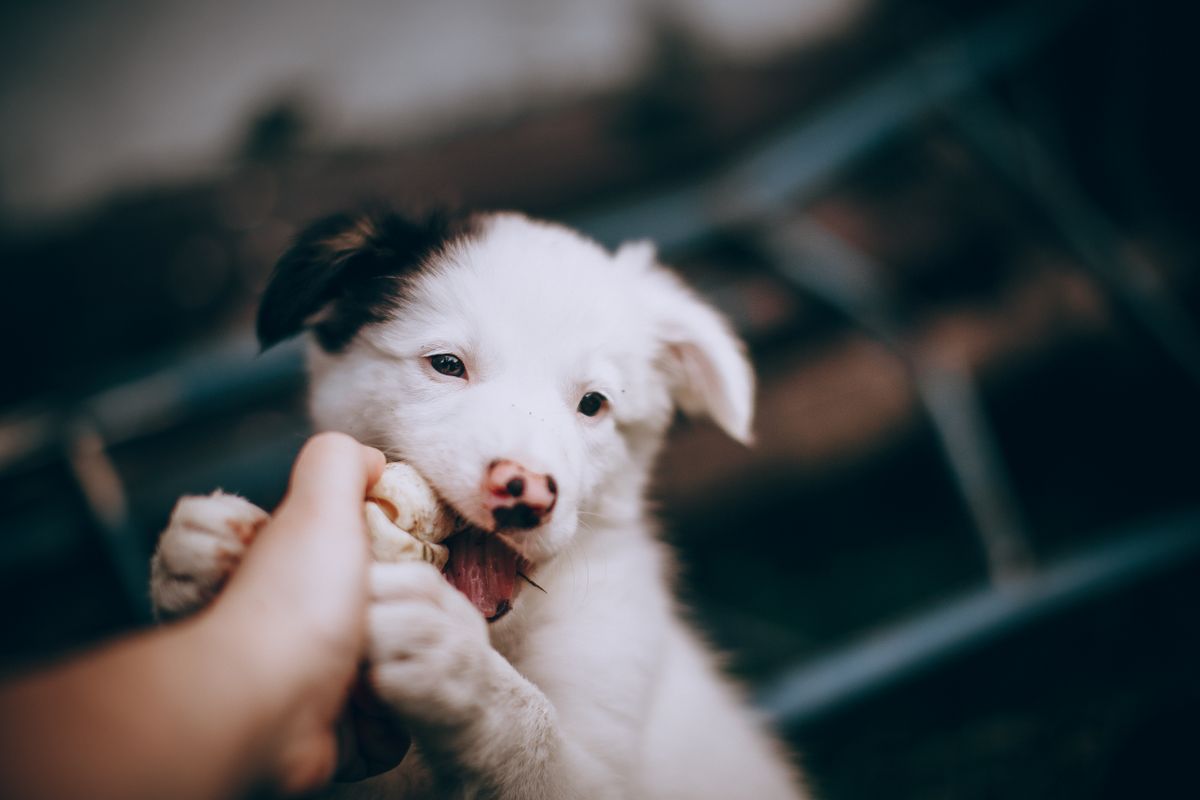
The good news: every effective method here is kind, requires no hard tactics, and works reliably with patience. The goal is to remove the reward from biting and offer better alternatives.
One honest word about a popular piece of advice: many people suggest yelping loudly when bitten, the way a littermate would. For some calm puppies, this works. For some others, the opposite happens, the high-pitched sound excites them further and they double down. More reliable is quietly withdrawing attention and briefly pausing the game, rather than banking on the yelp.
No punishment, no muzzle grabbing, no alpha roll. Holding the muzzle shut, scruffing, or pinning the puppy on its back is demonstrably harmful. These methods increase fear and aggression, damage trust, and can teach your dog to fear hands. They are neither effective nor necessary.
Knowing the wrong methods is just as important as knowing the right ones, because some circulate stubbornly and cause real harm. The entire family of dominance and punishment techniques belongs here: holding the muzzle shut, scruffing by the neck, pinning to the ground, hitting near the face, or yelling. Veterinary behaviorist organizations agree: aversive methods increase fear and aggression rather than reducing them, and they damage the bond between you and your dog.
One more specific point about growling. Some puppies growl during intense play, and some growl when things get to be too much. Never punish a growl. It is an honest warning signal, and suppressing it removes the dog's early warning system. A dog that has learned growling gets punished will bite without warning when it truly matters.
In the vast majority of cases, puppy biting is harmless. During normal play biting, the body is loose, the face relaxed, and the puppy takes breaks. There are, however, signs that call for a closer look and, when in doubt, professional guidance.
If one or more of these applies, that's not cause for panic, but it is a good reason to bring in a certified trainer or veterinary behaviorist. This is especially true when children live in the household. Children and puppies should only ever be together under supervision, and biting directed at children is something you take seriously early rather than write off as a phase.
Here is the roadmap for most puppies:
| Age | What's Normal |
|---|---|
| 8 to 12 weeks | Peak phase: needle teeth, everything gets explored with the mouth, bite inhibition is only just being learned |
| Around 16 weeks | Teething begins, gums itch, chewing noticeably increases |
| 5 to 6 months | Teething is done, the wild snapping at hands fades significantly |
The question every puppy owner has. The honest answer: with consistent training, you'll often see clear progress within two to four weeks. The real relief usually arrives with the end of teething, around months five or six. Chewing itself remains a natural dog need, that's what chew toys are for, but the wild biting-at-hands fades noticeably.
If your dog is still biting just as hard at six months and showing no sign of learning, that's the moment to seek professional advice. Until then: stay the course, stay calm, and above all, make sure there's enough sleep in the schedule.
Puppy biting feels endless in the moment, but it's a phase with an expiration date. If you redirect calmly, make sure there's enough sleep, keep your hands out of the game, and skip the punishment entirely, your puppy will learn step by step how to use its mouth gently. Patience beats any heavy-handed trick here.
Souldog is with you through this first intense stretch, from training steps and rest schedules to the small milestones that show you things are moving in the right direction. If you want to go deeper on how dogs actually communicate, read our overview of what dogs express through their behavior. And to understand why sleep matters so much especially for puppies, check out the piece on sleep and dreaming in dogs.
 Souldog