Growling isn't cheekiness, it's a fair warning. Why you should never punish it, how to tell play growling from the real thing, and what actually helps with food, pain, and kids.
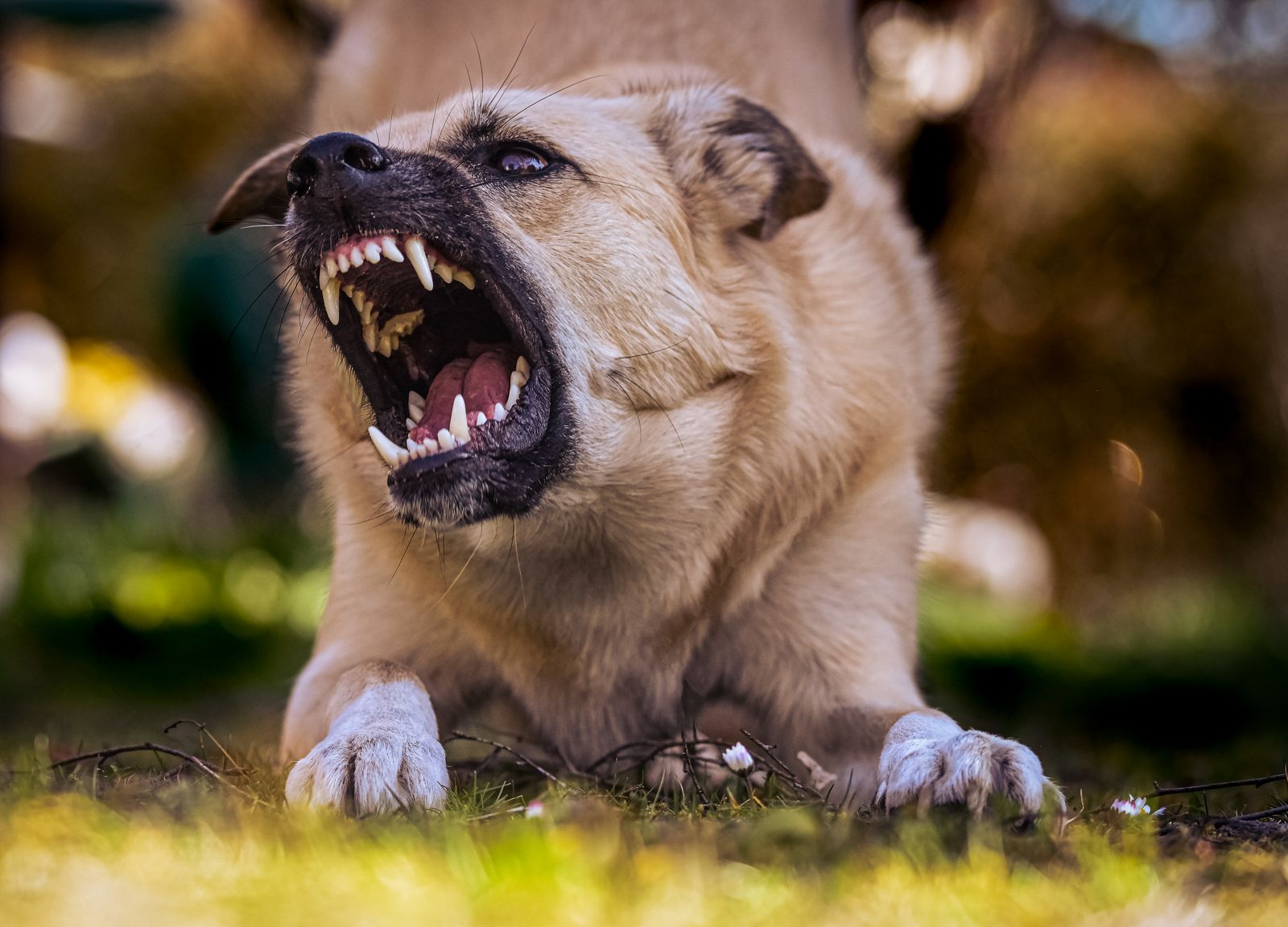
You lean over your dog to adjust his collar, and suddenly a deep rumble rises from his chest. For a moment, you freeze. Is he about to bite? Does he not love you anymore? Should you shut this down right now? Almost every dog owner knows this jolt of fear, and almost everyone's first instinct is the wrong one. Growling feels like defiance, but it's actually the opposite: an honest, controlled message.
n this guide, we'll look at what your dog is really telling you with a growl, the different types of growling, and how to respond to each one correctly. We'll start by explaining why the common reaction of "training this out of him" can actually be dangerous. To learn how your dog communicates in other ways, through his tail, ears, and eyes, check out our guide to dog body language.
A dog has no word for "stop," so he uses his body and his voice instead. Growling sits fairly high on the ladder of warning signals: quieter signs like freezing, turning the head away, or a tense mouth usually come first, but they're often missed. Growling is the moment your dog gets more direct, because the subtler signals didn't get through.
The underlying mindset matters here: a growling dog isn't a bad dog. He's a dog being honest with you. And that honesty is valuable, because it gives you the chance to respond before anything happens.
Not all growls are the same. They might sound similar, but the reason behind the growl determines how you should respond. This table sorts the most common types. After that, we'll go through the most important ones individually.
| Growl Type | How to Recognize It | The Right Response |
|---|---|---|
| Fear and insecurity growling | crouched body, weight shifted back, ears pinned, avoids contact | Create distance, remove the trigger, offer reassurance |
| Resource guarding growl | hunched over food, a toy, or a resting spot, stiff, fixated | Don't take it away, give space, work with trading |
| Pain growling | during touch, being picked up, certain movements, often new | Don't train it, see the vet first |
| Play growling | loose body, play bow, roles switching, during roughhousing | Don't intervene, it's normal |
| Frustration growling | can't reach the goal, on leash, behind a window | Build distance and frustration tolerance |
If you're having trouble telling them apart, the same question that works for any body language applies here: what is the whole dog doing, and in what situation? Context almost always reveals the type.
This is the most important section in this entire article, so let's not waste time: never punish your dog's growl. Not by yelling, not by jerking the leash, not with a sharp "no."
The reason is a simple but serious chain of events. Growling is the last loud warning before a bite. If you punish that warning, the reason for your dog's tension doesn't disappear. Only the warning disappears. Your dog learns: "Growling gets me in trouble." Next time, he skips that step and goes straight to the next one. A dog who honestly warns you first turns into a dog who seems to snap "without warning." In reality, you trained the warning out of him.
On top of that, confrontational methods make things measurably worse. In a survey of 140 dogs at a veterinary behavior clinic, exactly these kinds of "training tricks" triggered an aggressive response in a significant share of the dogs. Growling back at the dog led to an aggressive response in about 40 percent of cases, forcing him onto his back, the infamous alpha roll, in about 30 percent, and staring him down produced a similarly high rate. Meeting a growl with harshness risks exactly the escalation you're trying to prevent.
A dog who's allowed to growl is safer than one who's had it trained out of him. Instead of punishing the warning signal, take it seriously, create distance from the trigger, and work on the actual root cause.
And one more myth needs to go: growling has nothing to do with "dominance" that needs to be broken. Veterinary behavioral medicine abandoned that rank-order thinking a long time ago. The vast majority of growling situations come from fear, discomfort, pain, or the desire to hold onto something valuable, not from a bid for power over you.
Now for some reassurance, because not every growl is serious. During wild roughhousing, a game of tug with a rope, or wrestling with a dog friend, many dogs growl freely, and that's completely normal. Play growling is part of the language of play, not a warning sign.
Interestingly, play growling is even acoustically different from serious growling. Researchers have recorded and analyzed dog growls and found that the sound is objectively different depending on the situation: a growl a dog uses to guard a bone sounds different from a play growl. In listening tests, people were surprisingly reliable at telling which growl came from which context. In real life, though, you don't need a trained ear, because the body language around the growl is always the most reliable clue.
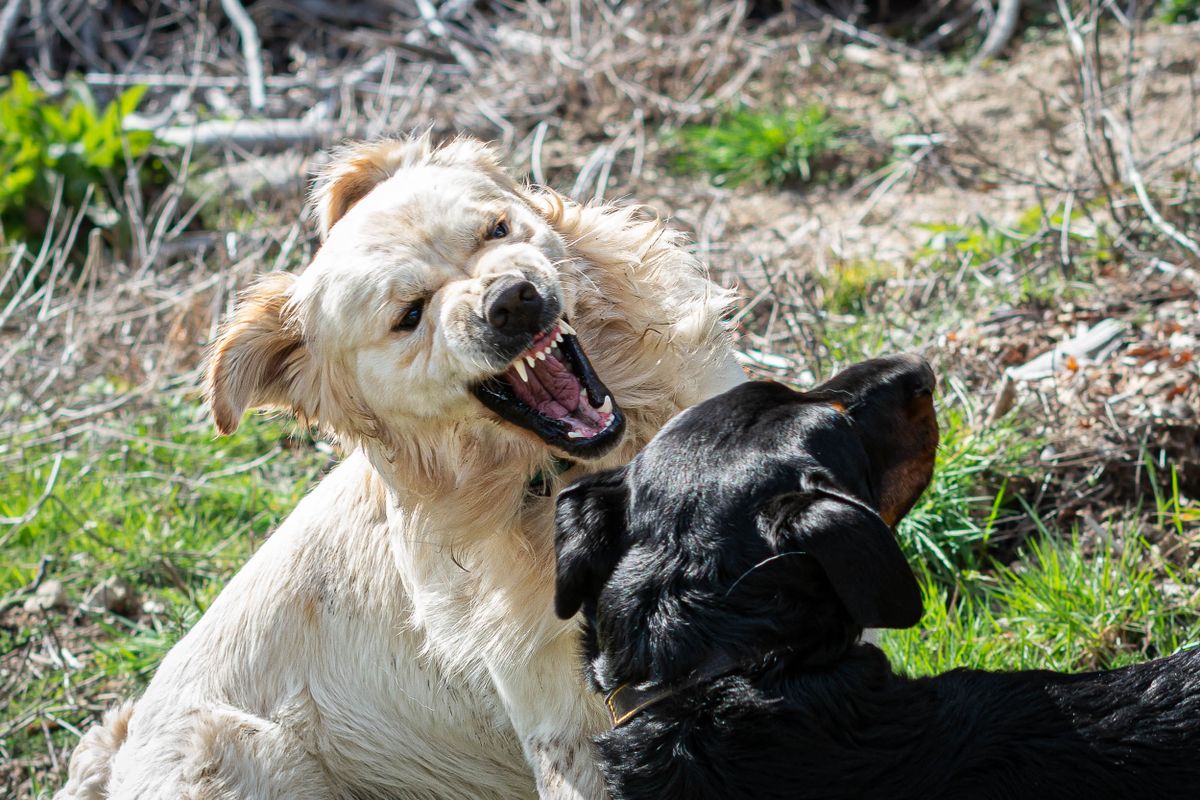
Watch the whole picture. Play growling comes with a loose, relaxed body, often with a play bow, where the front legs lie flat on the ground and the rear end sticks up in the air. The movements are exaggerated and bouncy, and the roles keep switching, first one dog chases, then the other. Serious growling, on the other hand, comes with a stiff body, a fixed stare, raised lips, and a tense posture. When in doubt, a short separation test helps: pull the dogs apart for a few seconds. If they shake off and immediately want to keep playing, everything was fine. If one of them looks visibly relieved, it wasn't a fair game anymore.
Many dogs growl when someone approaches their bowl, their chew, or their favorite spot. This is called resource guarding, and it's more common than you'd think: roughly half of all dogs show at least a mild form of it. It's not a character flaw behind it, but a deeply rooted worry about losing something valuable.
The biggest mistake here is a well-meaning piece of advice that unfortunately keeps circulating: repeatedly taking the food away from your dog so he "learns to allow it." The opposite happens. The dog experiences people approaching as actually stealing his food, and becomes even more watchful. This is exactly how resource guarding develops or gets worse.
The better approach flips the meaning around. Your dog should learn that when a person approaches the bowl, things get better, not worse. You do this by tossing in something extra tasty as you walk by, instead of taking anything out. "They're taking something from me" turns into "they're bringing something." Beyond that, simple management applies: leave your dog alone while he eats, give him an undisturbed spot, and don't let kids or visitors have the chance to crowd him while he's eating.
When a dog suddenly growls who never used to, it's worth considering something other than training first: pain. A dog who growls when picked up, when touched in a certain spot, or during a certain movement, despite otherwise being patient, is often saying: "That hurts, please don't touch me there."
How often pain is behind behavior changes shows up clearly in behavioral medicine. At specialized clinics that see referrals for difficult cases, a significant share of the dogs presented show signs of pain depending on location, in some evaluations well over half. That doesn't mean every growling dog is in pain. But it does mean pain gets overlooked far too often, because people think "training" first.
Typical silent sources of pain include joint arthritis, back or neck problems, a painful ear infection, tooth pain, or an injury that isn't immediately visible. Especially in older dogs who suddenly growl when petted on the back or when getting up, pain should be the first thing you think of.
New or suddenly changed growling needs to be checked out by a vet before you start training. If pain is behind it, no amount of training will help, only treating the underlying cause will. The vet visit belongs at the beginning, not at the end of a failed training attempt.
Few situations are more frightening than your own dog growling at your own child. The first instinct, scolding the dog for it, is understandable but dangerous, because it strips away the very warning that protects the child. Here's the uncomfortable truth up front: most bite injuries in children don't come from strange dogs, but from the family's own dog or one they know well, and warning signs were almost always missed.
An observational study of families with young children shows where things typically go wrong: not while petting or hugging, but when a resting or sleeping dog gets disturbed. This is exactly where the most important rules come from.
A dog who growls at a child isn't a "bad" dog. He's an overwhelmed dog asking for space. Giving him that space is the best protection for everyone involved.
Whatever type of growling you're dealing with, the basic process stays the same, only the details change. Here's the short version:
First, understand the trigger. Exactly when does your dog growl, at what, and what does his body look like while doing it? Without that answer, you're working in the dark. Then create short-term safety through management: distance from the trigger, fewer opportunities for it to happen, an undisturbed bowl. That doesn't solve anything yet, but it prevents further incidents and takes the pressure off. If pain is a suspected factor, the vet check always comes before training. Only then does the actual training follow: a gradual, positively linked approach to the trigger, so your dog learns he doesn't have to defend himself.
For resource guarding, fear-based aggression, or any growling that worries you, don't work on it alone, work with a certified behavior professional or a veterinary behaviorist. That's not a sign of failure, it's the fastest and safest path. In the Souldog app, you can log when and in what situation your dog growls, which helps both you and the professional recognize the pattern behind it.
In the end, growling isn't an alarm bell telling you something's wrong with your dog. It's a sign that he's speaking honestly with you. When you understand this language and listen to him instead of silencing him, exactly what matters most grows: trust. And a dog who knows his quiet requests get heard rarely needs to raise his voice.
 Souldog