A costume a Labrador shrugs off can become a real problem for a pug, and what makes a Husky sweat is exactly what keeps a Chihuahua warm. Here is which breed traits actually matter.
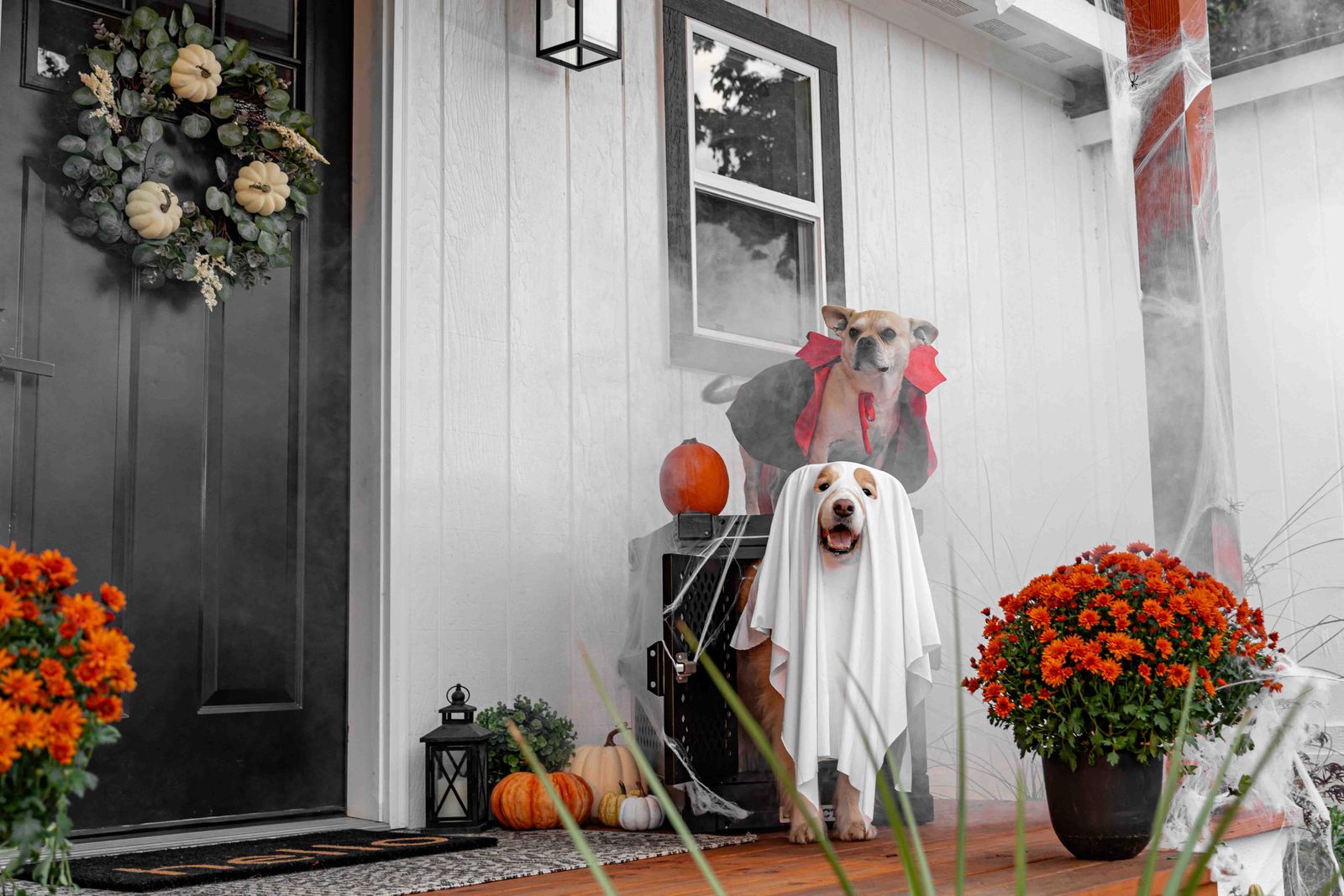
our pug and the neighbor's Husky both end up in front of the costume rack, at least in theory, since both are supposed to look good on Halloween. For the Husky, that is easy: a bandana does the job, this coat does not need more. For the pug, the math looks different. Even without any costume at all, his short snout already gives him less breathing reserve than most other dogs, and that is exactly why the cute pumpkin costume with the tight elastic around the neck can turn into a real problem for him.
Most costume guides sort by theme: pumpkin, ghost, superhero. Almost none sort by what actually matters, namely how your dog is built. That is what we catch up on here. If you want the 5 most popular costumes, our article Dog Costumes 2026 has you covered, and if you want to match your own costume, Couple Costumes With Your Dog has five ideas using just one detail on the dog. This piece is the step before that: before you pick a theme at all, it pays to look at the breed first.
A costume is basically always the same thing: fabric sitting somewhere on the body, sometimes tight, sometimes loose, sometimes with a hood or elastic band. What turns that into a problem or not is not decided by the theme, but by the anatomy underneath. A dog with a short snout reacts to tightness around the neck differently than a dog with a long nose. A dog with dense undercoat reacts to extra fabric layers differently than a dog with thin fur. A very long back on short legs reacts to an ill-fitting costume differently than a dog with longer legs.
The American Veterinary Medical Association sums up the basic rule for any costume, regardless of breed, in four criteria: sight, hearing, breathing, and movement must not be restricted. That sounds like one rule for everyone. In practice, that same rule means very different things for different breeds, and that is exactly what the next sections cover.
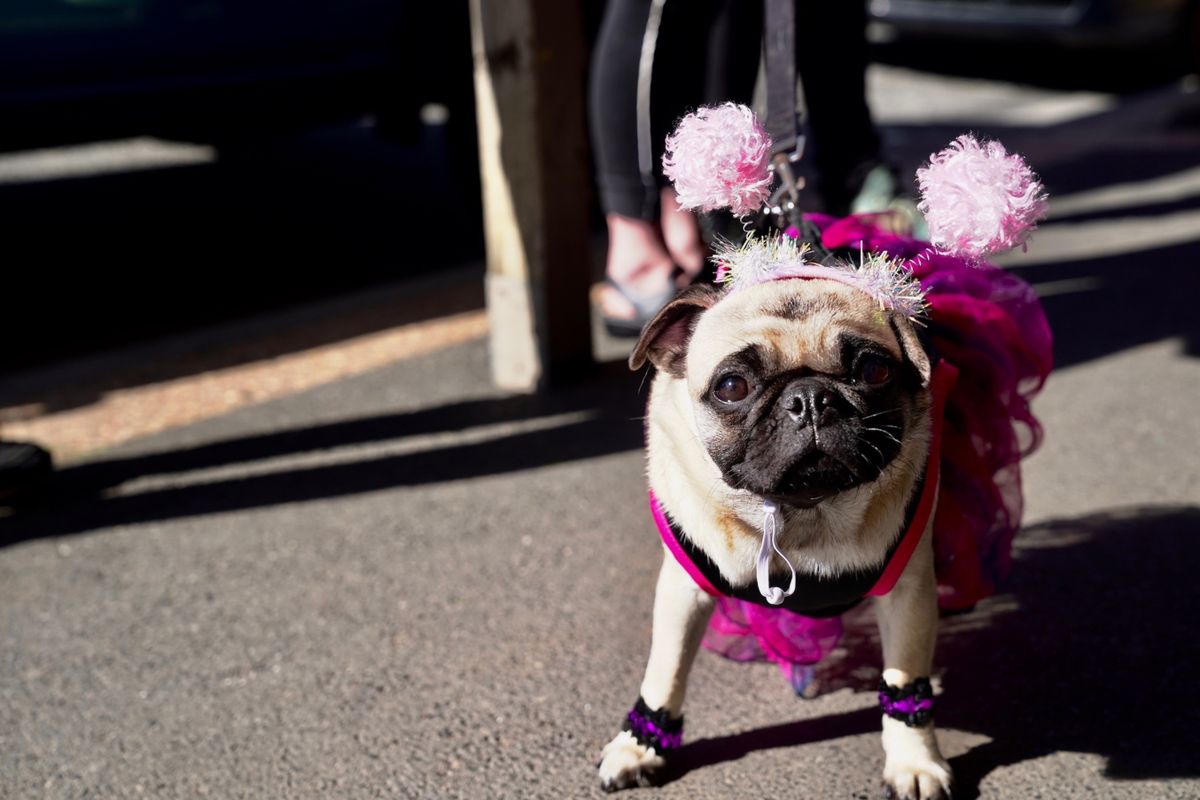
Brachycephalic breeds, meaning dogs with a shortened snout, live with a mismatch between skull shape and the soft tissue inside the nose and throat. This is called brachycephalic obstructive airway syndrome, or BOAS, and it is not a fringe issue, it is documented internationally in more than ten breeds. The most clearly affected are Bulldogs, Pugs, Boxers, Shih Tzus, Boston Terriers, and Pekingese. Typical signs include labored, noisy breathing, faster exhaustion, and above all a pronounced heat sensitivity, even in dogs that look fit on the outside.
This is exactly where a costume turns risky, and the AVMA names it explicitly: tight collars or overly restrictive full-body suits can worsen the breed's existing predisposition to breathing difficulty. An elastic band that a Labrador barely notices sits, on a pug, right where there is already little room to spare. Then there is the material. Many cheap costumes are made from dense, barely breathable fabric that traps heat, and that hits a group that already struggles more than others to dissipate it.
The practical takeaway: for this breed group, the collar area stays completely free. A small accessory like a bow tie on the harness or a loosely tied bandana works, a costume with a hood, tight collar, or full-body fabric usually does not. And if you are wondering whether Chow Chows, Pomeranians, or Cavalier King Charles Spaniels belong in this warning group too: they do show up in BOAS studies, but count as mild to moderate brachycephalic, not as the focus group like the breeds named above. Still, the same caution applies to them: when in doubt, less fabric around the neck, not more.
We already covered this principle in detail in our article on dog coats, and it applies to costumes just the same: double-coated breeds carry two layers, a coarser topcoat and underneath it a dense, soft undercoat that traps air, and that trapped air layer is the actual heat protection. Breeds like Huskies, Alaskan Malamutes, Samoyeds, Bernese Mountain Dogs, Greater Swiss Mountain Dogs, Newfoundlands, or Chow Chows were bred for exactly this principle over generations, and often feel more comfortable below freezing than in summer heat.
A costume on top does not improve that equation. It compresses the insulating air layer that is supposed to keep the dog warm, while at the same time adding an extra layer of fabric over a coat that already traps heat on its own. At an indoor gathering, where it is warm anyway, or on a walk with a lot of movement, this can get uncomfortable for a double-coated dog faster than you would think. Signs of this include heavy panting, restlessness, and attempts to get out of the costume.
That does not mean these dogs have to go without on Halloween. A loosely tied bandana, as described in our couple costume article, works just as well for this group as for any other dog, it simply does not add another layer of insulation. A full-body costume, on the other hand, no matter how cute it looks, is rarely a good idea for a Husky or Bernese Mountain Dog.
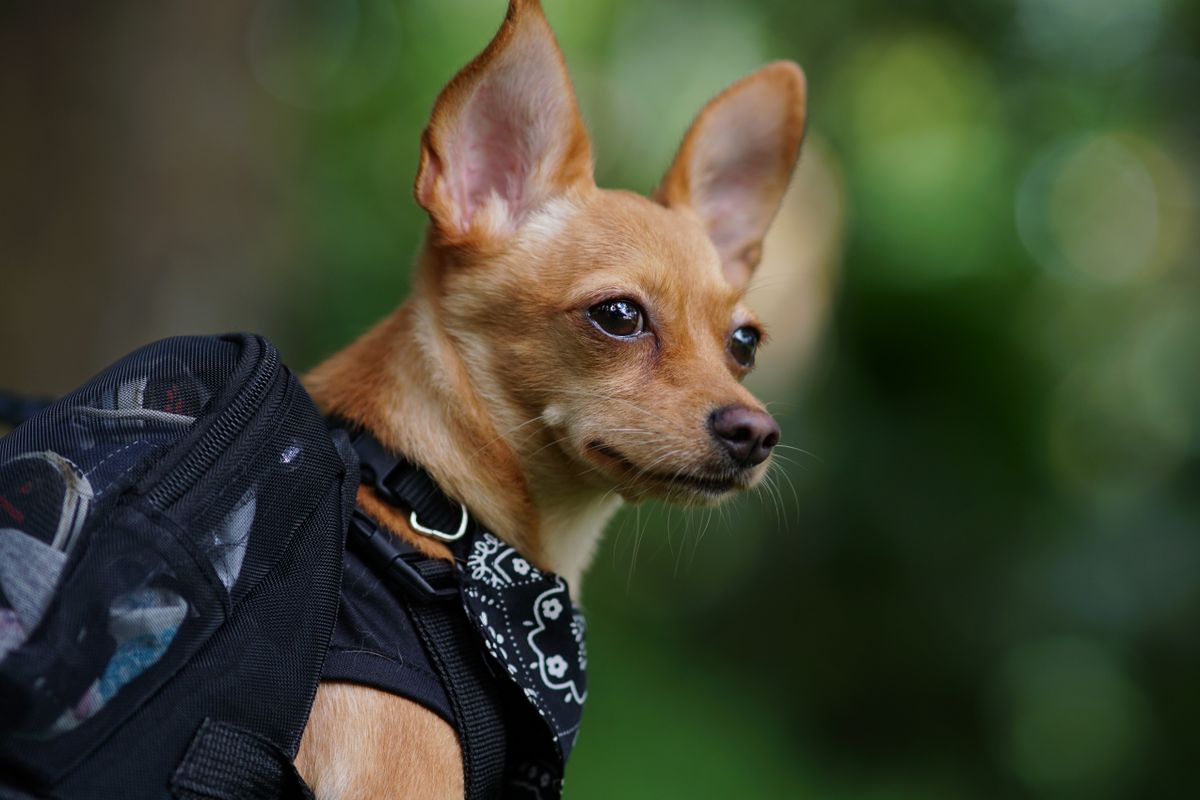
At the other end of the coat-type scale are dogs with a single coat, meaning just one hair layer without an insulating undercoat beneath it. Sighthounds like Greyhounds or Whippets belong here, as do Dobermans, Miniature Pinschers, and most small breeds like Chihuahuas. These dogs lose body heat noticeably faster, because they lack exactly the protective layer that Huskies and their relatives bring along.
For this group, a costume can have a genuine practical benefit beyond the photo. A loosely fitted vest or poncho, common for the most popular costume themes anyway, adds real warmth for these dogs on top of the visual effect. The same rules on sight, hearing, breathing, and movement still apply without exception, small breeds are not automatically safer in costumes just because they benefit from the warmth. Especially with very small dogs like Chihuahuas, an overly tight collar-costume hybrid can be just as uncomfortable as it would be for a large dog, only at a smaller scale.
Dachshunds, Corgis, and Basset Hounds share a body shape that raises practical rather than health questions when it comes to costumes. Their long back on short legs means many off-the-shelf costumes, cut to standard size charts, either hang loose around the belly or come up short on the back. A costume piece that is too long drags on the ground, gets caught between the legs while walking, or simply becomes a tripping hazard, especially on stairs or uneven terrain.
For this group, it pays to check the fit carefully before buying, ideally with a measuring tape rather than by weight alone, since these breeds' proportions deviate noticeably from the usual size chart. A short cape or a bandana usually sidesteps the problem elegantly, since neither depends on the exact back length.
For Great Danes, Saint Bernards, Leonbergers, Irish Wolfhounds, or Newfoundlands, the reality is blunt: most commercial costumes top out at size L or XL, and that is rarely enough for these breeds. Anyone still set on a real costume ends up almost inevitably with a custom order or a homemade solution, which raises both effort and cost considerably.
The more practical route is usually the better one: a generously cut bandana or a cape attached to the harness rather than the neck works at any body size and adjusts easily. That is plenty for a good photo, and your giant breed does not have to squeeze into a costume that was never going to fit properly anyway.
Shar-Peis and the classic Bulldog carry pronounced skin folds that already need regular care in everyday life so that moisture does not build up in them and cause irritation. A tight costume piece resting directly on those folds can make that worse, especially if the dog sweats underneath it or the material itself barely lets air through.
For this group, everything that already applies to costumes in general counts double: short wearing times, breathable material, and a check of the skin folds after the photo session for any trapped moisture. A costume worn all afternoon suits these breeds less than one put on for just a few minutes in front of the camera.
Most dogs in Germany are not purebred entries from a studbook but mixed breeds, and that is exactly the group no costume guide gives a clear answer for. The good news: you do not need a pedigree to make the right call, you just need to look at your own dog's physical traits.
Look at the snout. If it is short and rather flat, like a pug mix, the same precautions apply as with the brachycephalic breeds above, regardless of which second breed is in the mix. Look at the coat. If your mixed breed has a dense, woolly undercoat that comes out in tufts when you brush against the grain, they lean toward the double-coated group. If the coat feels thin and close to the body everywhere, without a noticeable second layer, the single-coat logic applies. And look at the proportions: a mixed breed with a noticeably long back and short legs faces the same fit challenges as a Dachshund, regardless of the name on a pedigree they do not have anyway.
This trait-over-breed logic lets you place any dog, even the most colorful shelter mix. If you are unsure how to judge your own dog, our breed database can help you figure out which recognized breed your mix physically resembles most.
Late October evenings are usually already quite chilly, which raises the thought that a costume can only ever be a plus for any dog, at least against the cold. For the single-coat group, that is actually true, a costume on a cold evening is doubly useful there. For short-snouted and double-coated breeds, the outdoor temperature does not change the basic rule at all. A pug does not automatically get cold on a cool October evening, and even if he did, the breathing risk from a tight costume outweighs the warmth a bandana would not provide anyway. For a Husky, the cold outside at most means the overheating risk kicks in a bit later than it would in an overheated living room, it does not disappear once he starts romping around with the kids.
The table below does not replace an individual assessment of your own dog, but it gives you a first orientation by breed group.
| Breed | Group | Costume recommendation |
|---|---|---|
| Pug | Brachycephalic | Accessory only, no full costume |
| French Bulldog | Brachycephalic | Accessory only, no full costume |
| English Bulldog | Brachycephalic | Accessory only, no full costume |
| Boxer | Brachycephalic | Accessory only, nothing at the neck |
| Shih Tzu | Brachycephalic | Accessory only, nothing at the neck |
| Boston Terrier | Brachycephalic | Accessory only, no full costume |
| Pekingese | Brachycephalic | Accessory only, no full costume |
| Husky | Double-coated | Bandana instead of full costume |
| Alaskan Malamute | Double-coated | Bandana instead of full costume |
| Bernese Mountain Dog | Double-coated | Bandana instead of full costume |
| Samoyed | Double-coated | Bandana instead of full costume |
| Newfoundland | Double-coated/Giant | Cape on harness instead of full costume |
| Chow Chow | Double-coated | Bandana instead of full costume |
| Chihuahua | Single-coat/small | Vest or poncho possible |
| Miniature Pinscher | Single-coat/small | Vest or poncho possible |
| Greyhound/Whippet | Single-coat | Vest possible, check fit |
| Dachshund | Long-backed/short-legged | Short cut or bandana |
| Corgi | Long-backed/short-legged | Short cut or bandana |
| Basset Hound | Long-backed/short-legged | Short cut or bandana |
| Great Dane | Giant | Cape on harness, custom size needed |
| Saint Bernard | Giant | Cape on harness, custom size needed |
| Shar-Pei | Skin folds | Short wearing time, breathable material |
Regardless of which group your dog falls into, the four AVMA criteria always apply: sight, hearing, breathing, and movement must not be restricted by any costume piece. Small, easily chewable attachments like buttons or sequins should be removed beforehand, since they pose a choking hazard if swallowed. Every costume needs a short adjustment period where your dog wears it calmly for the first time before the actual occasion, and it is worn only under supervision, never left on unattended for the whole evening.
The ASPCA additionally recommends a simple tolerance test: put the costume on and watch whether your dog visibly tolerates it. A tucked tail, flattened ears, frequent lip licking or yawning, visible whites of the eyes, and suddenly stopping mid-walk are warning signs worth taking seriously. If your dog shows any of these, take the costume back off. No photo is worth your dog's discomfort, and honestly, a relaxed dog with a simple bandana usually looks more charming in the picture anyway than one with a strained look under an elaborate outfit.
Whichever breed group applies to your dog, the best rule of thumb stays the same: watch your dog, not the costume. A pug with a single accessory strutting calmly through the living room makes a better photo than a dog gasping for air under an elaborate full costume. And a Husky with a bandana looks just as festive on Halloween as one in a heavy full-body suit, just without breaking a sweat.
In the Souldog app, you can find more details on body type and breed-specific traits in the breed section, in case you are unsure which of the groups above your own dog fits best. And for anything related to activities with your dog, Halloween aside, our complete activities guide is worth a look.
You can find Souldog on the App Store and on Google Play.
 Souldog