🦮 Large · USA
A powerful, independent water retriever with a strong character, needing plenty of engagement and experienced, consistent leadership.
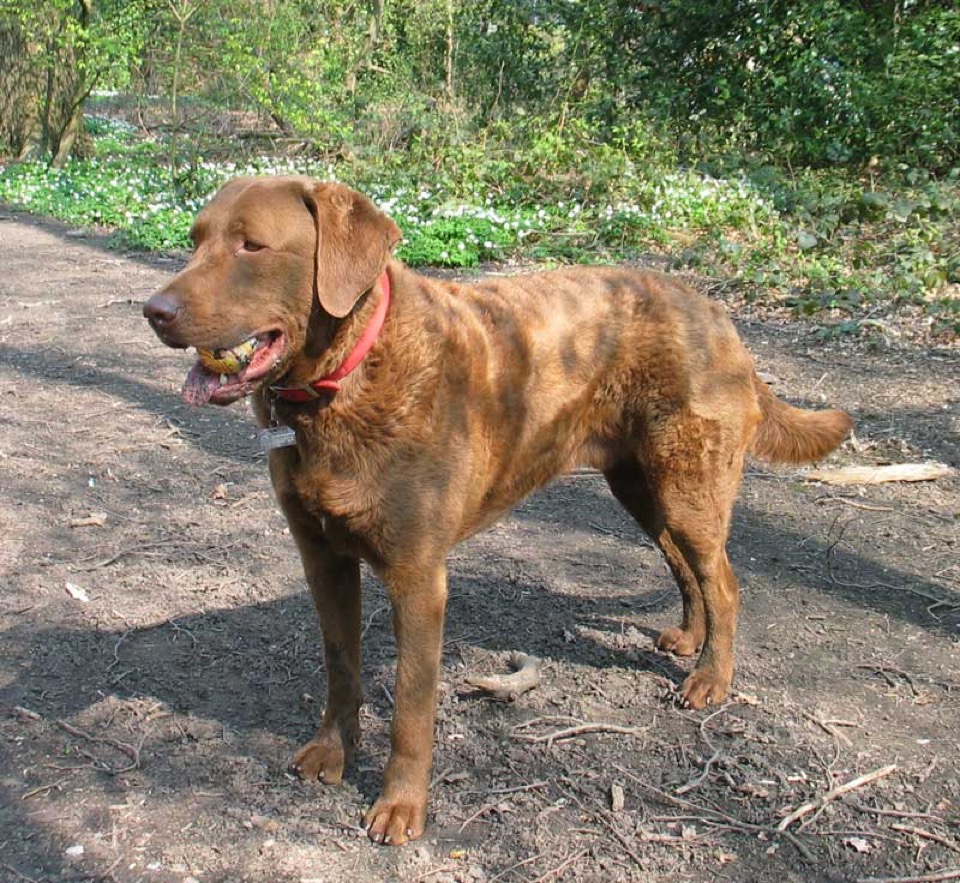
The Chesapeake Bay Retriever is considered more independent, strong-willed, and territorial than other retriever breeds, with a pronounced protective instinct toward family and property. He is very loyal to his handler but more reserved toward strangers than, say, a Labrador. His strong character calls for consistent leadership.
Originally bred to retrieve waterfowl under harsh conditions, the breed needs a great deal of exercise, ideally with swimming opportunities and retrieving work. Without sufficient outlets, dominant behavior can intensify.
The dense, oily coat is water-repellent and sheds cold well, but needs regular brushing, especially during seasonal shedding. Bathing should be infrequent to avoid stripping the protective oils.
Because of the pronounced independence and protective instinct, the breed is better recommended for experienced dog owners. Consistent socialization from puppyhood is important for relaxed everyday life.
Reported conditions include hip and elbow dysplasia as well as progressive retinal atrophy (PRA). The deep chest also carries some risk of gastric torsion, so several small meals are advisable.
← Back to the full dog-breed overview (281 breeds)
This information is for general guidance and does not replace veterinary or breeder advice. Temperament and health vary individually within every breed.
 Souldog