Accidents despite toilet training? Build a routine around your puppy, handle setbacks and puppy pads calmly, and learn when a vet needs to step in.
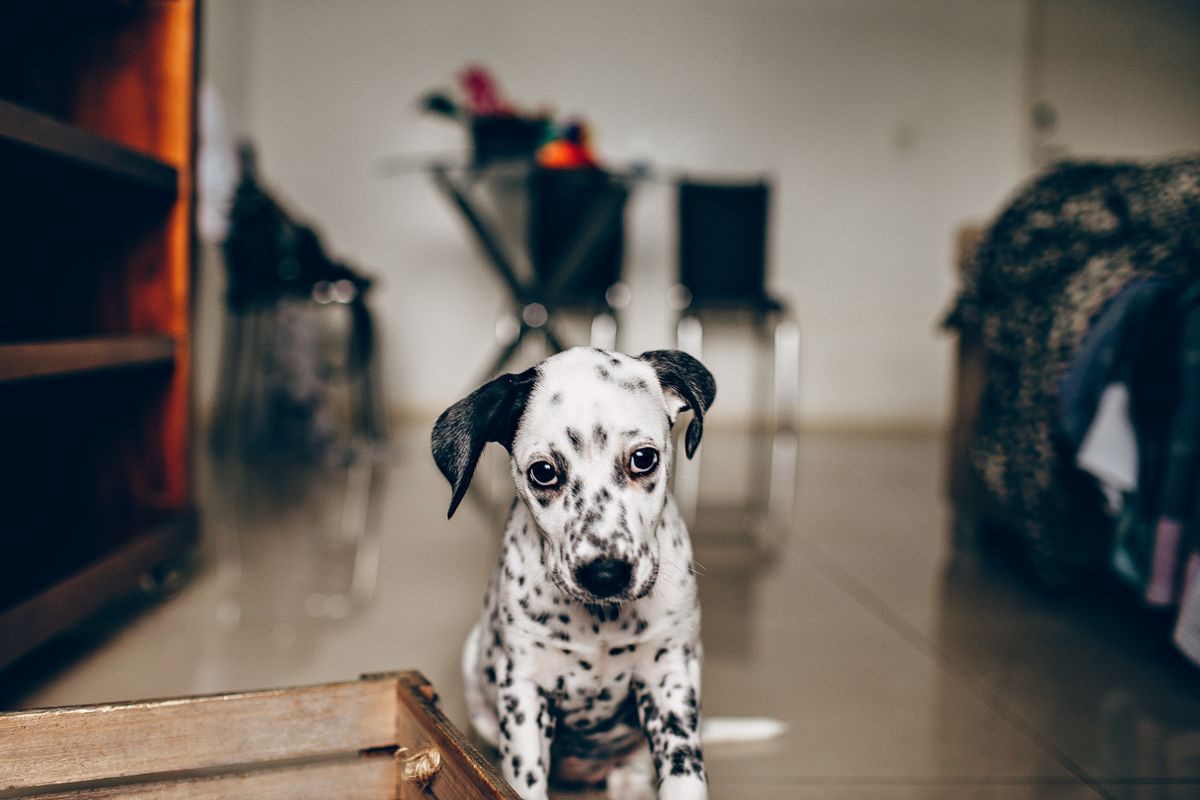
ou've just taken your shoes off when your puppy wanders into the living room and leaves another puddle. You were outside a moment ago. Yesterday seemed so promising. Today, the kitchen roll is getting more use than any of the puppy supplies you carefully picked out.
If your puppy keeps having accidents, make the routine easier: frequent opportunities to toilet, an accessible spot and a reward immediately after going there. After a break in training, your puppy may need closer support again. Don't punish accidents. Sudden changes or signs of discomfort need veterinary attention.
If your puppy repeatedly strains but cannot pass urine, contact a vet or emergency veterinary service immediately. Don't wait for the next training attempt. The PDSA treats an inability to urinate as an emergency.
“Not toilet trained” can mean several things: your puppy succeeds with your help, succeeds only in one place, or was reliably dry and has now started leaking urine. Note the actual change before switching training methods.
This article was prompted by a Reddit post about a young Toy Poodle. Following a break during an illness, his owner was restarting training with an indoor toilet tray. He had previously used it inside a small enclosure, while whining and trying to escape. Without the fence, he walked away. The account cannot establish the cause, or show that more confinement would help.
Consider changes in your own home. Has someone else taken over toilet trips? Is the usual spot harder to reach? Has your puppy been ill or started medication? Routine changes, stress and medical issues can all matter; Dogs Trust recommends investigating new toileting problems.
Connect toilet trips to things that happen throughout the day. Pay particular attention after sleep, food or drinking, play and excitement, and offer the appropriate spot. This follows the Dogs Trust approach to toilet training.
Your routine might look like this:
| Transition in the day | What to arrange |
|---|---|
| Your puppy wakes in the morning or after a nap. | Have shoes, leash and rewards ready; visit the toilet spot before making coffee. |
| A meal or play session finishes. | Make room for a toilet opportunity before moving to your next task. |
| Visitors have arrived and greetings are winding down. | One person takes responsibility for accompanying the puppy to the usual spot. |
| You need to take a call or shower. | Decide who will watch the puppy and take them out if needed. |
| You're going to bed. | Offer the toilet spot again and prepare for an overnight trip. |
Offer opportunities between these events too. Don't wait for an unmistakable request: pausing play, sniffing or circling may be clues. VCA describes these early signals.
A short note is enough: “Went outside straight after the afternoon nap” or “Accident after visitors; hadn't taken puppy out.” Use it to plan tomorrow. A formula based on age in months cannot tell you what your puppy needs right now.
Accompany your puppy to a quiet, suitable spot. Wait without distracting them with a game or constant chatter. Once they've finished, praise and offer a small reward right there. The RSPCA recommends rewarding immediately after toileting.
That sounds straightforward, but everyday logistics get in the way. The treats are still in the kitchen, you glance at your phone, and your puppy has already moved on. Put a reward in your pocket before you leave so you can notice the moment you came out for.
If nothing happens, return calmly, keep your puppy in view and offer another opportunity soon. Dogs Trust describes this approach. An unsuccessful trip doesn't mean an empty bladder. Don't immediately give your puppy an unsupervised tour of the home.
If you find a puddle, clear it up quietly. Shouting, rubbing a puppy's nose in it or dragging them back to the spot isn't part of training. VCA explicitly advises against punishment.
If you notice searching behaviour beforehand, calmly accompany your puppy to the toilet spot. If they've already started, avoid startling them or suddenly scooping them up. Let them finish, then deal with the mess.
Use an enzymatic cleaner suitable for the surface, follow its instructions and keep your puppy away while cleaning. Thorough odour removal is part of VCA's house-training guidance. Then ask a practical question: which opportunity could I offer earlier next time?
If a safe outdoor spot isn't reachable in time, consider a designated indoor area. VCA describes pads or a dog toilet as options. Decide which place your puppy will learn first.
For a tray, look for easy access and a surface your puppy is comfortable standing on. The AKC recommends first building voluntary entry and trying another surface if one is uncomfortable. Materials must not become a hazard through chewing or swallowing. A pad isn't an unsupervised chew toy.
Look closely at your setup. Can your puppy step in and out without help? Does the liner stay in place? Do they approach voluntarily? A grate isn't automatically the cause of avoidance. Equally, using a tray while persistently crying behind a fence isn't a comfortable arrangement. Don't force your puppy to remain there.
If going outside is your eventual goal, plan for that learning step too. Knowing a spot in the bathroom doesn't explain the patch of grass outside your building.
If vaccinations aren't yet complete, ask your vet which local toilet areas and social contacts are appropriate. That doesn't mean isolating your puppy until their final vaccination: the AVSAB recommends safe, appropriate socialisation before then. A public dog park and a carefully managed setting present different situations.
Allow for overnight toilet trips with a young puppy. Sleeping nearby may help you notice restlessness; planned trips with an alarm are another option. The German Kennel Club, VDH, describes both approaches. Base the timing on your observations and veterinary advice where needed.
A closed crate isn't a prerequisite. If a barrier causes panic or persistent attempts to escape, change the arrangement and seek help. Our article on crate training and its limits discusses this further.
Keep fresh water available. Don't restrict it to prevent accidents, and contact your vet if your puppy's thirst changes noticeably. The PDSA explicitly advises against withholding water.
Blood in the urine, pain when toileting and unusually frequent attempts producing small amounts need prompt veterinary assessment. VCA lists these as reasons for urgent care. Repeated straining without urine calls for the emergency response above.
Also discuss a sudden increase in accidents, ongoing diarrhoea or leaking urine during sleep with your vet. Seek advice if a suitable routine isn't producing progress. Notes on timing, drinking and toileting are more useful than an assumption that your puppy is stubborn.
If you're exhausted, arrange for someone to cover the next trip. Our guide to puppy blues addresses the strain of early puppy care. Every overnight outing doesn't have to fall to you.
 Souldog